The Best Way to Cut Flower Stems at Home
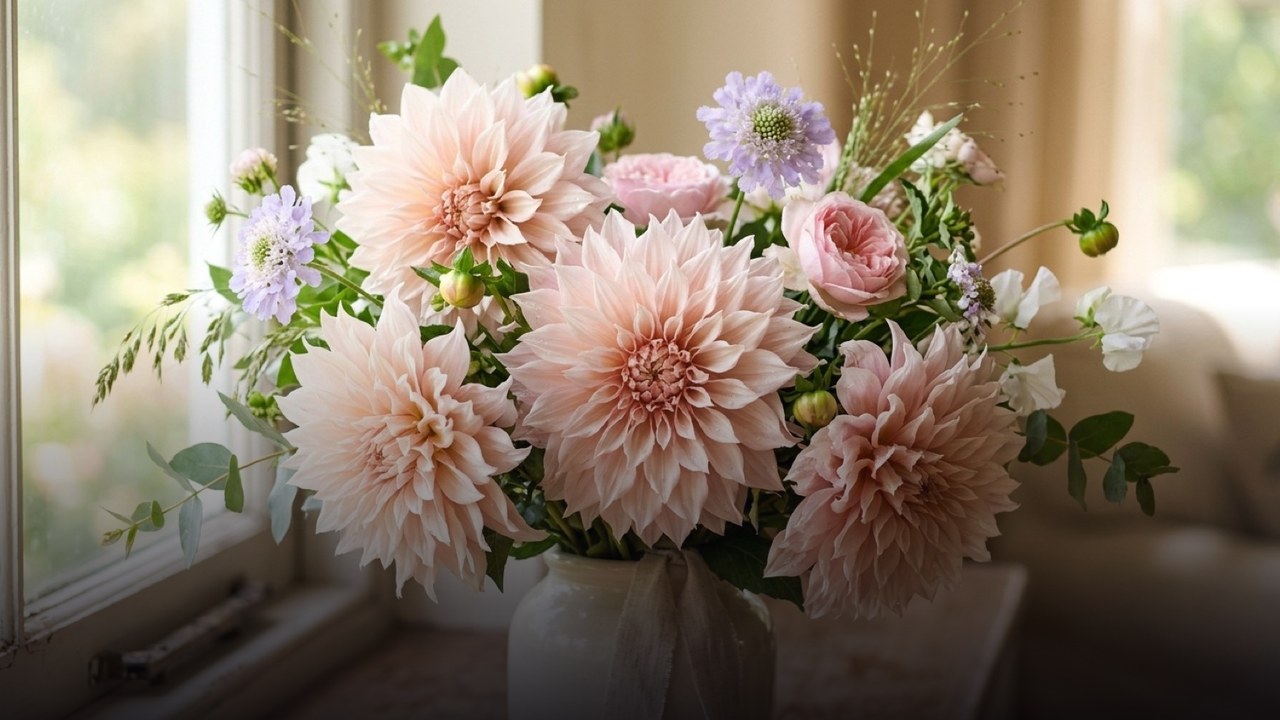
The best way to cut flower stems is to use a clean, sharp blade or suitable flower snips, remove roughly 1–2 cm from the base, and place the stems promptly into a clean vase of fresh water. A slight diagonal cut works well for most firm stems; the important thing is to make a smooth cut without crushing the tissue.
Before you trim, choose your vase and check how much length the arrangement actually needs. Different stems respond differently to handling, so a rose, a soft tulip and a woody branch should not all receive the same treatment. The steps below help you make a useful first cut, keep leaves out of the water and recognise when another trim may help.
1. Prepare the vase and tools before making a cut
Wash your vase with washing-up liquid, rinse it thoroughly and fill it before you start trimming. A narrow neck can hide residue, so use a bottle brush if you cannot reach inside. Preparing the water first means freshly cut stems can go straight into it instead of sitting on the worktop while you search for a suitable container.
Choose sharp flower snips or bypass secateurs for firm stems. A sharp knife can also make a clean cut, but use it only if you can handle it safely on a stable surface. Ordinary household scissors may squash thicker stems between their blades. If the end looks flattened, ragged or split after cutting, switch to a sharper, more suitable tool.
Clean the blades before working on the bouquet, especially if they were last used in the garden or on decaying plant material. Wash away visible debris and dry them; if using a tool disinfectant, follow its label. Keep a bowl or sheet of paper nearby for offcuts so that discarded leaves and damaged stem ends do not fall into the vase.
2. Measure the length, then make one clean cut
Hold a stem beside the vase with its base level with the bottom, then judge where you want the flower head to sit. Allow enough stem inside the vase to support the bloom and reach the water comfortably. Cut conservatively at first: you can shorten a stem again, but an over-trimmed flower may need a smaller vase of its own.
For most firm stems, make a modest diagonal cut in one controlled movement. This helps prevent the cut end from sitting flat against the vase base. You do not need to measure an exact 45-degree angle or carve a long point. A clean, intact end matters more than a dramatic slant, and repeated little snips can leave damaged tissue.
For a newly received bouquet, removing about 1–2 cm is a useful starting point, provided the remaining length suits your vase. If the base is discoloured, soft or visibly damaged, cut above that area into firm tissue. Work through a few stems at a time and put them in water promptly rather than leaving the entire trimmed bouquet lying out.
Bouquets we can deliver




3. Adjust your technique for soft, firm and woody stems
Firm flower stems, such as roses and chrysanthemums, generally suit a clean angled cut with sharp snips. Support the stem while cutting so its weight does not tear the last fibres. On roses, remove leaves that would sit under water, but avoid scraping the stem or stripping every thorn: unnecessary wounds add damage without improving the arrangement.
Soft stems need a gentler approach. For tulips, use a sharp blade or snips that cut without pinching; a straight or slightly angled cut is sufficient. Hollow stems also need careful handling because pressure can split or flatten them. There is no need to force every flower into the same cutting angle if doing so damages its structure.
Woody stems may need bypass secateurs rather than small flower scissors. Avoid hammering or crushing their ends, which creates torn tissue and loose debris. Some flowers, including those with milky sap or unusual stem structures, benefit from species-specific preparation. Follow any care instructions supplied with the bouquet before trying treatments such as heat, deep splits or prolonged soaking.
4. Keep the water clean and the stems properly submerged
Remove every leaf that would fall below the waterline, while keeping healthy foliage above it where practical. Submerged leaves decay and make the water harder to keep clean. Check the arrangement after placing it in the vase: a leaf that seemed safely above the surface can dip into the water when a stem settles or turns.
Use fresh water and, if you have a packet of cut-flower food, mix it according to the instructions for the amount of water in your vase. Guessing the dose or adding several packets to a small container is unhelpful. Avoid improvised mixtures of sugar, coins, aspirin or household cleaners; plain clean water is a sensible option when suitable flower food is unavailable.
Check the level daily, particularly during the first day, and make sure all cut ends remain submerged. Replace the water when it becomes cloudy or develops an odour, and wash away any film inside the vase. Keep the bouquet away from direct sun, heaters and ripening fruit. A careful cut supports good care, but it cannot compensate for dirty water or excessive warmth.
5. Recut when needed and assess drooping realistically
Inspect the stem ends when you change the water. If they feel slippery or show deterioration, rinse the stems, clean the vase and cut back to sound tissue with clean tools. There is no need to remove several centimetres every day as a fixed ritual. Recut according to the condition of the bouquet and the length you still have available.
If flowers have spent time out of water during a journey, a fresh cut followed by prompt placement in water is a reasonable first step. Support the blooms in a suitable vase and give them time to take up water before rearranging them repeatedly. Drooping can have several causes, so trimming is a care measure rather than a promise that every flower will recover.
A sharply creased, snapped or mushy stem needs a different decision from a dry-looking cut end. Where possible, shorten it above the damaged section and display the usable bloom in a small clean vase. Leave enough stem to reach the water. Our guide to cutting flower stems short explains how to adapt the arrangement when its original height is no longer practical.
6. Help someone in Russia enjoy the bouquet after delivery
When sending flowers to someone else, keep any care message friendly and brief: use a clean vase, trim the ends and keep leaves out of the water. A free card with your text is included, so you can reserve that for your personal message. Delivery is anonymous by default, and the courier does not name the sender; sign the card if you want the recipient to know who sent it.
You can choose from the bouquets catalogue for delivery across Russia. City delivery costs 500 RUB; for remote districts and suburbs, the operator confirms the price when confirming the order. Contact a manager on WhatsApp for help choosing a bouquet, agreeing the address, delivery time and card text, or arranging a photo of the bouquet before delivery.
Choose a time when the recipient can receive the flowers and put them in water. In large cities, express delivery is available 1–2 hours after order confirmation; other options include an exact time within ±30 minutes, the windows 09–12, 12–15, 15–18 or 18–21, and pre-ordering 1–30 days ahead. See delivery and payment for practical details. Online checkout uses CloudPayments; check the options displayed there, as acceptance of every foreign card is not guaranteed.
Frequently asked questions
Should I cut flower stems straight or at an angle?
A slight diagonal cut is a useful choice for most firm stems because it helps keep the end from resting flat against the vase bottom. For soft stems, a clean straight cut can also be suitable; avoid crushing the stem to achieve a particular angle.
Do I need to cut flower stems underwater?
For routine home care, you can cut stems with a clean, sharp tool and place them promptly into prepared water. Cutting underwater is not essential for every bouquet, and working in an awkward position can make a clean cut harder.
Can I cut flower stems with kitchen scissors?
Sharp, clean kitchen scissors may work for thin, soft stems if they leave a smooth end. If they flatten, tear or struggle through the stem, use suitable flower snips or bypass secateurs instead.
How much stem should I remove from a new bouquet?
Start with roughly 1–2 cm, checking that the flowers will still fit your vase and reach the water. Remove more if necessary to get above a damaged section, and use a smaller vase if the remaining stems become too short.
Will recutting revive every wilted flower?
A fresh cut and clean water may help a flower that has struggled to take up water. They cannot repair a broken stem or reverse advanced deterioration, so inspect the flower before deciding whether to shorten it or remove it.
Ready to send flowers?
Pick the city, choose the bouquet, and a local florist takes it from there.
Choose a city →