Blue Statice Flower: A Practical Guide to Fresh and Dried Stems
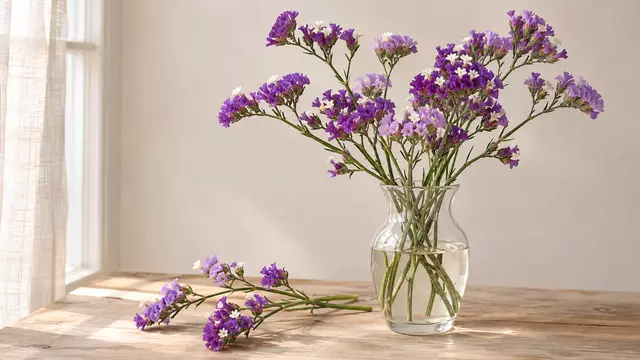
The blue statice flower is a branching cut flower with clusters of small, papery blooms, usually in blue-violet shades. Commonly sold as statice or sea lavender, it belongs to the genus Limonium; its lasting colour comes mainly from the papery calyces surrounding the tiny true flowers. You can use it fresh in a bouquet or dry it for an arrangement that needs no water.
If you are choosing flowers from a photograph, look closely at the shade and the shape of the clusters. Blue statice often reads as lavender, violet or indigo rather than a clear sky blue, and lighting can change its appearance on screen. Its airy branches bring texture between larger blooms, while a bunch of statice alone creates a fuller, more informal display.
What blue statice looks like, and why it feels dry
The statice most often used in cut-flower arrangements is Limonium sinuatum. Its stems divide into smaller branches topped with compact clusters, giving you several points of colour from a single stem. The coloured calyx is the outer structure around the flower; the tiny true flowers may appear pale or white within it. This structure explains the crisp texture that can surprise someone expecting soft petals.
A papery feel does not mean that fresh statice has already dried out. Judge the whole stem instead: look for firm branches, clean cut ends and clusters without mould or a musty smell. Some tiny true flowers may have faded while the coloured calyces still look attractive. Wet, blackened or collapsing material is a different matter and should be removed from the arrangement.
Names can be confusing when you search in English. Sea lavender is a common name, but statice is not the fragrant lavender used in herb gardens; do not choose it expecting that scent. For a closer explanation of its structure and naming, see our statice definition guide. When discussing a bouquet, specifying both the colour and the reference photograph is more useful than relying on the flower name alone.
Choosing the shade and combining it with other flowers
Start by deciding whether you want blue statice to lead the arrangement or support another flower. In a mixed bouquet, small clusters can carry the blue-violet colour through gaps between larger heads. In a statice-only bunch, the branching stems become the main feature. Keep some space between the clusters so the result has depth instead of becoming a tightly compressed block.
White roses or white chrysanthemums give blue-violet statice a clear, restrained background. Pale pink flowers soften the combination, while yellow flowers create a stronger contrast. These are design suggestions, rather than a statement of current stock. If a particular pairing matters to you, check the flowers and shade before placing your order rather than assuming every photograph represents an available combination.
Consider the outline as well as the colour. Statice offers many small clusters, whereas a hydrangea gives you a large rounded head and a delphinium creates a taller line. They produce different effects even when described as blue. For a large, rounded focal flower, our blue hydrangea bouquet guide helps you compare the appearance and care involved.
Bouquets we can deliver




Fresh blue statice care, from unwrapping to changing the water
Use a clean vase and remove any wrapping that would sit in the water. With clean, sharp scissors or secateurs, trim the stem ends and remove leaves or small side shoots below the intended waterline. Put the stems into clean water promptly. The papery flower heads stay above the rim: soaking them does not revive them and can leave moisture trapped among the dense clusters.
Check the water daily, change it regularly and wash the vase whenever you see a film or cloudiness. If flower food is supplied, follow the packet instructions for the amount of water you use. Keep the arrangement away from direct sun, radiators and ripening fruit. Avoid misting the flower heads; you want hydrated stems and dry, well-aired clusters.
In a mixed bouquet, inspect each flower separately rather than judging everything by the statice. Remove deteriorating stems so they do not foul the water, and trim remaining stems if necessary. Statice can retain its coloured structure after softer flowers have faded, but there is no single reliable vase-life figure for every bunch: freshness, handling and conditions in your room all affect the result.
How to dry blue statice and keep its shape
If you want to preserve some stems, choose them while the clusters still look clean and well shaped. Waiting until a bouquet has developed mould or badly damaged branches will not improve it through drying. Lift out the stems you want to keep, remove unwanted foliage and separate tangled branches gently. Statice branches can catch on one another, so pulling a handful apart can snap them.
Make small, loose bundles and hang them upside down in a dry, shaded place with good air circulation. Leave room around the flower heads rather than packing them together. Drying time depends on humidity and bundle size; check that the stems and clusters are fully dry before arranging them. Expect some change in shade, and avoid treating the fresh colour as a promise of the final dried result.
Once dry, display statice in an empty vase away from steam, damp windowsills and direct sunlight. Do not add water to a dried arrangement. Handle it by the stems and remove dust gently with a soft brush, supporting the branches as you work. Dried statice is useful for a keepsake display, but the papery clusters can become brittle and will not stay pristine indefinitely.
Meaning, gift etiquette and choosing the right occasion
Statice is often associated with remembrance and lasting affection in flower-language traditions. Blue is also commonly used to suggest calm or thoughtfulness, but these associations are interpretations rather than a universal code. Your recipient may simply enjoy the colour and texture. A clear personal message does more to explain your intention than expecting someone to recognise a particular floral meaning.
For a birthday, thank-you or supportive gesture, choose the overall mood around the person receiving it. Blue-violet statice with pale flowers can feel gentle; a brighter mixed palette can feel more celebratory. For a condolence gift, take your cue from the family's preferences and customs. If the recipient has expressed a favourite flower or colour, that personal knowledge is a better guide than symbolism.
When sending flowers to Russia, remember that many recipients observe the custom of giving an odd number of flowers for celebrations and reserving even numbers for mourning. Counting a branching filler such as statice is less straightforward than counting prominent roses, so discuss the intended occasion if the count matters. Turboflora delivery is anonymous by default: the courier does not name the sender. A card with your text is free, so include your name there if you want it known.
Ordering flowers to Russia with clear colour and delivery details
You can start with the bouquets catalogue and ask whether blue statice can be included in your chosen arrangement. Send a reference image if the shade is important, and explain whether statice is the main flower or an accent. Contact a manager on WhatsApp for help choosing the bouquet, agreeing the address, timing and card text, and arranging a photo of the bouquet before delivery.
We deliver flowers across Russia. City delivery costs 500 RUB; for remote districts and suburbs, the operator confirms the delivery price when confirming the order. Express delivery in large cities takes 1–2 hours after the order is confirmed. Other options are an exact time with a margin of plus or minus 30 minutes, the windows 09–12, 12–15, 15–18 or 18–21, or pre-ordering 1–30 days ahead. If you are abroad, specify the recipient's local date and time when agreeing delivery.
Online checkout uses CloudPayments; check the payment options displayed there rather than assuming your foreign card will be accepted. The courier calls the recipient about 15 minutes before arrival. If the recipient is absent, we agree a second delivery the same day or, with the sender's consent, handing the flowers to a neighbour or concierge. Give clear address details when ordering so the delivery arrangements match the recipient's situation. Availability and timing of delivery across Russia are confirmed for the chosen city, address, date and bouquet.
Frequently asked questions
Is blue statice naturally blue or dyed?
Statice varieties can naturally have blue-violet calyces, so blue colouring does not automatically mean a stem is dyed. A photograph alone cannot establish whether a particular bunch has been treated; ask about the specific flowers if this matters to you.
Why does fresh blue statice already feel like a dried flower?
Its coloured calyces have a naturally papery texture, even when the stems are fresh. Keep fresh stems in clean water and assess their condition by the whole branch, including signs of mould or deterioration.
Can I keep blue statice after the rest of a bouquet fades?
Yes, you can separate healthy stems and dry them in small bundles in a shaded, well-ventilated place. Select them before they deteriorate, then display the fully dried stems without water.
What does a blue statice flower mean?
Statice is often linked with remembrance and lasting affection, while blue can suggest calm or thoughtfulness. These meanings vary, so use the card message to make your intention clear.
Can I order blue statice for someone in Russia from abroad?
You can discuss your preferred bouquet and delivery details with our manager, including whether blue statice is available for the arrangement. Checkout uses CloudPayments; check the options shown there, as acceptance of every foreign card is not guaranteed.
Ready to send flowers?
Pick the city, choose the bouquet, and a local florist takes it from there.
Choose a city →