How Many Stems Is Enough? Bouquet Size Norms in Russia
You have chosen the flowers, picked the colour, and then the question stops you cold: how many stems should you actually order? In Russia, bouquet size carries real social weight. Too small and the gesture feels halfhearted; too large and it tips into something theatrical that embarrasses the recipient. The good news is that florists here follow fairly consistent unwritten rules, and once you understand them, choosing the right quantity becomes straightforward.
Why Stem Count Matters More in Russia Than You Might Expect
In many Western countries, a bouquet is judged mostly by its colour and freshness. In Russia, the number of stems is read almost like a sentence — it communicates the weight of the occasion and the closeness of the relationship. Guests at a birthday notice whether the flowers are a modest five-stem posy or a generous fifteen-stem arrangement, and they draw conclusions about the sender's feelings accordingly.
This does not mean you need to spend a fortune. What matters is that the quantity matches the moment. A colleague's work anniversary and a mother's sixtieth birthday are both celebrations, but they call for very different volumes. Getting this calibration right is what separates a thoughtful gift from a generic one.
There is also a practical dimension. Russian apartments are often smaller than Western European ones, and a truly enormous bouquet can overwhelm a kitchen table or a hallway shelf. Florists here think about where the flowers will actually live for the next week. A well-proportioned arrangement of eleven roses in a tall vase fits the space and stays elegant for longer than twenty-five stems crammed into a jar.
The other thing worth knowing is that odd numbers are the traditional standard for living recipients in Russia. Even numbers are historically associated with mourning, so a bouquet of ten tulips can feel subtly wrong to a Russian eye even if the sender had no idea. Stick to odd counts — seven, nine, eleven, fifteen — and you are already ahead of most senders who order from abroad.
Bouquets we can deliver

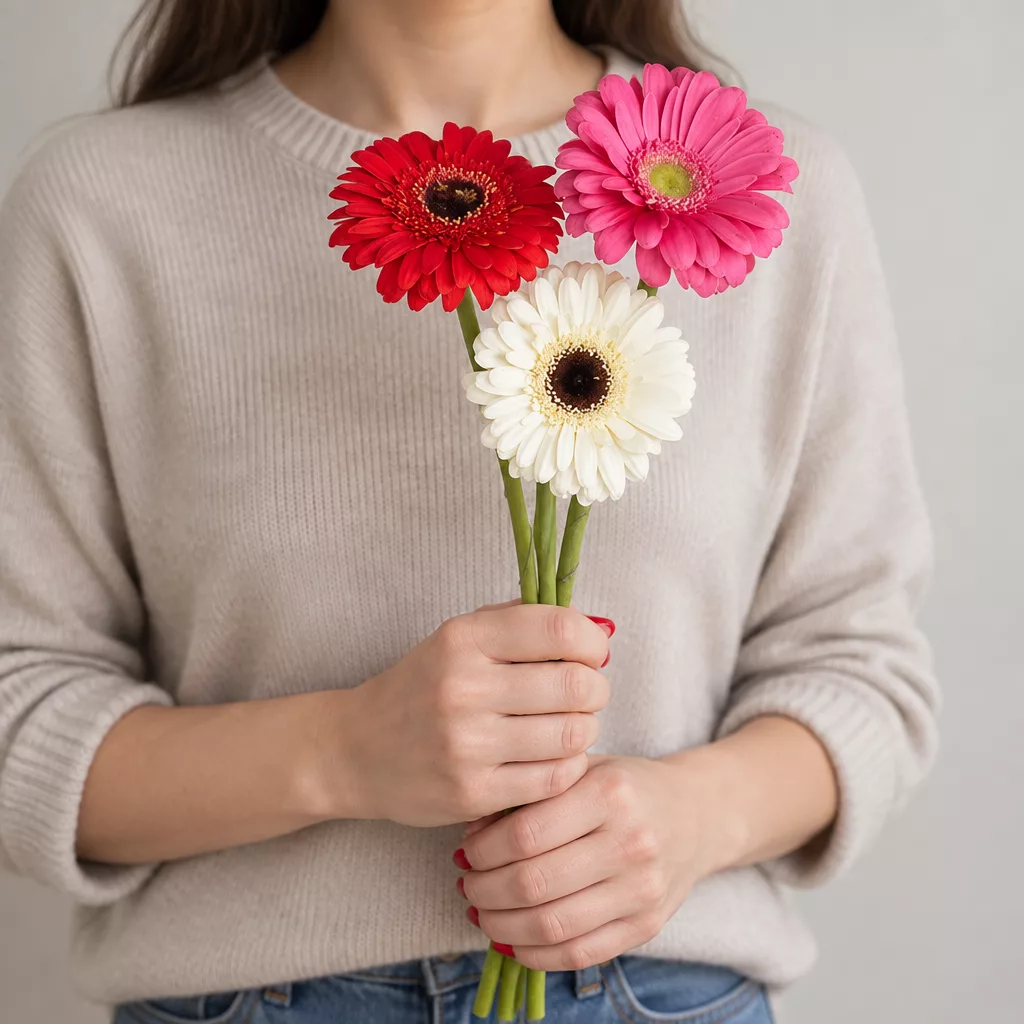

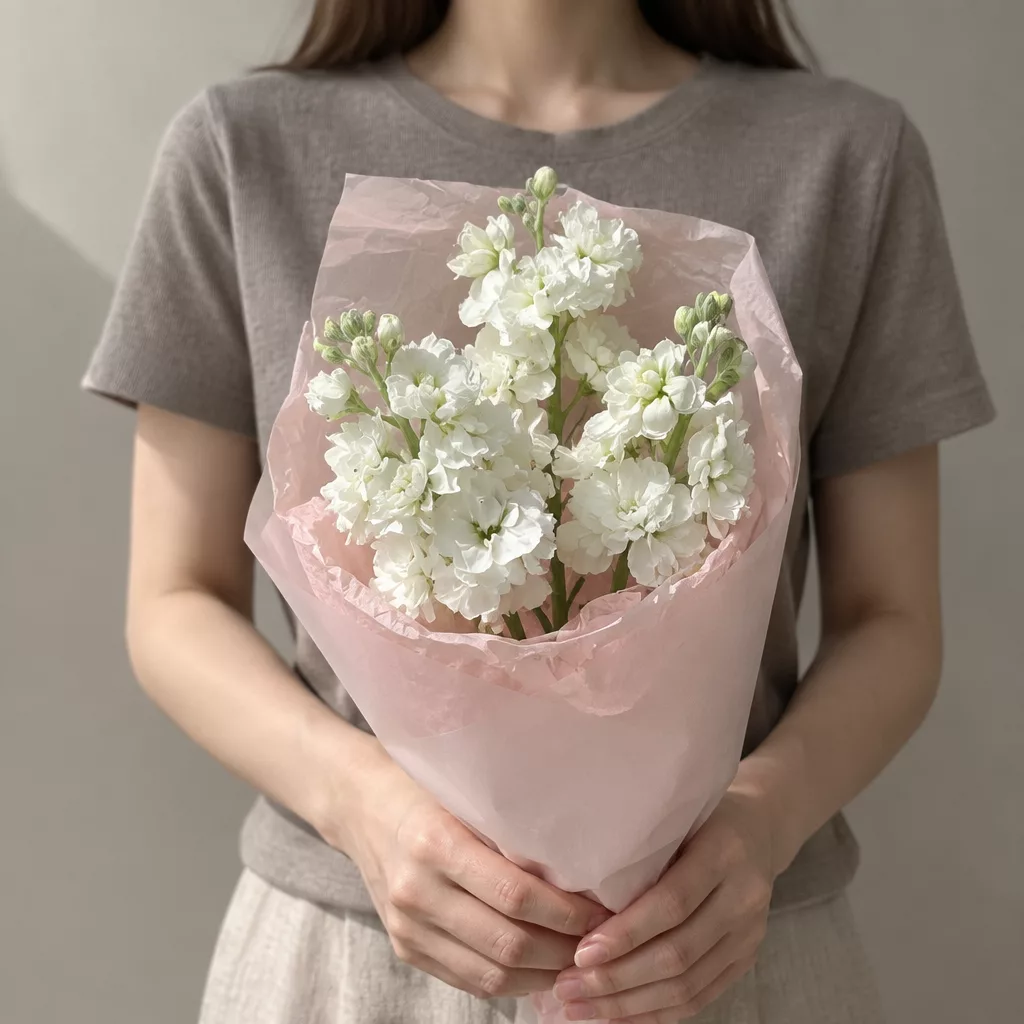
Casual Occasions: When Five to Seven Stems Is Exactly Right
Not every flower delivery needs to be a grand gesture. A small, well-made bouquet for a casual occasion is one of the most underrated things a florist can put together. Think of a colleague's last day at the office, a thank-you for a neighbour who looked after your cat, or a spontaneous visit to a friend. In these situations, five to seven stems is not stingy — it is precisely calibrated.
For these smaller bouquets, the variety choice matters more than the volume. A tight cluster of seven spray roses in a single saturated colour, wrapped in kraft paper with a ribbon, looks intentional and polished. Alternatively, five garden-style stems mixing lisianthus with a couple of ranunculus and a sprig of eucalyptus reads as relaxed and personal. The key is that every stem earns its place because there is no filler hiding behind sheer quantity.
Timing is also relevant here. Smaller bouquets travel better in warm weather. In July in Saint Petersburg, when temperatures regularly reach twenty-five degrees, a compact five-stem bouquet of alstroemeria or chrysanthemum will arrive in better condition than a dense fifteen-stem mixed arrangement that generates its own heat in transit. Turboflora delivers within one to two hours, which helps enormously, but a smaller volume still gives the flowers more breathing room.
For a casual daytime visit, this size also avoids putting the recipient in the awkward position of needing to find a large vase immediately. A slim seven-stem bouquet slides into almost any vessel — a wine bottle, a tall glass, a simple ceramic jug — which makes the whole experience easier and more enjoyable for everyone.
Birthdays and Name Days: The Sweet Spot of Nine to Fifteen Stems
Birthdays are the most common reason people order flowers in Russia, and the expectations here are well established. Nine stems is the comfortable minimum for a friend or family member whose birthday genuinely matters to you. Fifteen stems is a strong, warm statement that works beautifully for a close friend, a sister, or a partner's parent. In this range, the bouquet feels celebratory without becoming unwieldy.
For a birthday, the composition can carry more personality than a casual gift. This is where you can mix varieties with intention: seven peony-shaped garden roses paired with four stems of white lisianthus and a few trailing eucalyptus branches gives you fifteen stems that look abundant and cohesive at the same time. Alternatively, eleven single-variety tulips in a deep burgundy or coral make a strong visual impact through repetition rather than complexity.
The recipient's age and personality should influence your choice within this range. A young woman in her twenties often appreciates something more playful — a mix of ranunculus, anemones, and sweet peas in a loose, meadow-style wrap. An older recipient, particularly one who values tradition, tends to respond better to roses or chrysanthemums in a structured round bouquet. Neither preference is wrong; they are just different.
One common mistake in this range is over-relying on greenery to bulk up a smaller stem count. If you order nine roses but the florist pads the bouquet with five large branches of ruscus, the recipient will notice. Ask specifically for the greenery to complement rather than dominate, and make sure the stem count refers to the feature flowers, not the total including foliage.
Significant Milestones: When Nineteen to Twenty-Five Stems Sends the Right Signal
Some occasions call for something that stops a person in their tracks when the door opens. A fortieth or fiftieth birthday, a wedding anniversary, a graduation after years of study, a promotion that was hard-earned — these moments deserve a bouquet that communicates genuine significance. In Russian custom, nineteen to twenty-five stems is the range that achieves this without crossing into excess.
At this volume, the bouquet becomes an event in itself. A nineteen-stem arrangement of garden roses in blush and cream, loosely wrapped with dried pampas grass and a satin ribbon, photographs beautifully and fills a large vase on a dining table. Twenty-five stems of peonies in season — late May through June in Russia — is one of the most universally beloved choices at this scale. Peonies are full-headed enough that twenty-five stems creates genuine visual drama.
For wedding anniversaries specifically, the number of years can guide the stem count in a charming way. A couple celebrating their fifteenth anniversary might receive fifteen stems, but if the sender wants to acknowledge the milestone more generously, rounding up to nineteen or twenty-one is a graceful solution. This kind of thoughtfulness is noticed and remembered.
Presentation at this scale needs to be proportional. A twenty-three-stem bouquet wrapped in a single sheet of craft paper looks underdressed. It benefits from layered wrapping — a soft tissue inner layer, a structured outer wrap, and a wide ribbon — so that the unwrapping itself becomes part of the experience. Florists who work at this size think about the bouquet as something the recipient will carry through a room full of people, and the presentation should hold up to that moment.
Romantic Gestures: Reading the Relationship Before You Count the Roses
Flowers between romantic partners follow a slightly different logic than other occasions, because the stem count communicates the intensity of feeling rather than just the scale of the event. A single rose is a classic and still works in the right context — a spontaneous midweek gesture, a note left with one perfect stem of a David Austin variety like Juliet or Keira. But for anything more deliberate, seven to eleven stems is the comfortable starting point.
The famous Russian tradition of giving one hundred and one roses exists, and it is real — but it is a very specific grand gesture, usually associated with a proposal or a significant reconciliation. For most romantic occasions, this scale is overwhelming rather than moving, and it puts enormous pressure on the moment. Eleven well-chosen roses or fifteen mixed stems of garden flowers communicate warmth and attentiveness far more effectively for a Valentine's Day delivery or a anniversary dinner.
Red roses remain the dominant choice for romance in Russia, more so than in Western Europe where garden-style mixed bouquets have become equally common. If you are sending to someone with traditional tastes, a structured bouquet of eleven or fifteen red roses in a single-stem arrangement is never wrong. If the recipient is younger or has a more contemporary aesthetic, a mix of peach roses, white ranunculus, and a few stems of burgundy scabiosa in an asymmetric wrap reads as equally romantic but more personal.
Avoid the mistake of choosing quantity over freshness. Eleven roses that are tightly budded and will open over the next four days are far more romantic than twenty-one roses that are already fully open and will drop their petals within forty-eight hours.
Professional and Formal Contexts: Keeping It Appropriate
Sending flowers in a professional context requires a different kind of calibration. The goal is warmth and respect without anything that could be misread as personal or excessive. For a teacher, a doctor, a business partner, or a senior colleague, seven to eleven stems is almost always the right range. It is generous enough to feel meaningful and contained enough to feel professional.
Variety choice matters enormously here. Roses in deep red are strongly associated with romance in Russia, so they can feel awkward in a professional context unless the relationship is very long-standing and warm. Chrysanthemums, alstroemeria, and gerbera are all excellent choices — they are cheerful, long-lasting, and carry no romantic connotation. Lisianthus in white or soft purple is particularly elegant for a formal gift and holds its shape well even in a warm office environment.
For a teacher at the end of the school year — one of the most flower-intensive occasions in the Russian calendar, typically in late May — a bouquet of nine to eleven stems is standard from a single student. If a class is pooling together for a collective gift, fifteen to nineteen stems is appropriate and makes a stronger impression without being over the top.
One practical note for professional deliveries: many offices have reception desks or security points where flowers wait before reaching the recipient. A bouquet that needs immediate water should be noted in the delivery instructions. Alstroemeria and chrysanthemum handle a wait of two to three hours at room temperature reasonably well. Cut roses, particularly in summer, benefit from being placed in water within an hour of arrival, so timing the delivery to coincide with the recipient's presence is worth planning.
Making the Bouquet Last: Care Advice That Matches the Occasion
Choosing the right number of stems is only half the equation. How the recipient cares for the bouquet determines whether that carefully calibrated gesture lasts three days or ten. Sharing a few simple care tips with your delivery — either in the card message or through the florist — is one of the most thoughtful additions a sender can make.
For a larger bouquet of fifteen stems or more, the single most important step is recutting the stems at a forty-five-degree angle as soon as the flowers arrive, then placing them in a clean vase with cool, fresh water. Warm water accelerates bacterial growth and shortens vase life significantly. In Russian homes, which can be quite warm in winter due to central heating, this matters more than many people realise — a bouquet sitting in a heated hallway will fade twice as fast as one placed near a window away from the radiator.
For mixed bouquets that include both soft-stemmed flowers like tulips or anemones and woody-stemmed varieties like roses or lisianthus, it helps to know that they drink at different rates. Checking the water level daily and topping it up keeps everything fresh. Removing any leaves that fall below the waterline prevents the water from clouding.
Smaller bouquets of five to seven stems are often placed in narrower vessels, which can cause the stems to bunch and trap air. A gentle shake to loosen the arrangement when placing it in the vase helps each stem reach the water properly. With this simple attention, even a modest seven-stem bouquet of alstroemeria — one of the most durable cut flowers available — can stay vibrant for twelve to fourteen days, long enough to become a genuine part of the recipient's week.
Bouquet size in Russia is a quiet language, and once you understand its basic grammar, you will never second-guess your order again. Match the stem count to the relationship and the occasion, keep the variety choices appropriate to the context, and let the presentation do the rest of the work. A thoughtfully sized bouquet — not the largest, not the smallest, but the right one — is what a recipient remembers long after the petals have fallen.
Frequently asked questions
Is it really bad to give an even number of flowers in Russia?
Even numbers are traditionally associated with mourning in Russian culture, so most recipients will notice if a bouquet contains ten or twelve stems rather than eleven or thirteen. It is not a catastrophic mistake, but sticking to odd numbers is an easy way to show cultural awareness and avoid any unintended connotation. Most Russian florists default to odd counts automatically.
What is the minimum stem count that still feels like a real gift?
Five stems is the practical minimum for a gift that feels considered rather than token. Below that, a single stem or a trio of flowers reads more as a symbolic gesture than a bouquet. Five well-chosen stems of a quality variety — spray roses, lisianthus, or ranunculus — presented with good wrapping can be genuinely beautiful and appropriate for a casual or spontaneous occasion.
Do Russians count greenery and filler flowers in the stem total?
Traditionally, the stem count refers to the feature or focal flowers, not the supporting foliage or filler. When someone says they received eleven roses, they mean eleven roses, not eleven total stems including eucalyptus branches. When ordering, it is worth clarifying this with your florist so the count you pay for reflects the flowers the recipient will actually see and appreciate.
Is a very large bouquet of fifty or more stems ever appropriate outside a proposal?
It does happen for milestone birthdays — a fiftieth or sixtieth — or for a public figure receiving flowers after a performance. In everyday gifting, however, fifty-plus stems creates logistical problems for the recipient: finding a vase large enough, fitting the bouquet in an apartment, and keeping it fresh. Nineteen to twenty-five stems achieves the feeling of abundance without those complications.
How does the season affect which stem count makes sense?
In peak seasons, certain flowers are available in greater quantities and at better quality, which makes larger bouquets more practical. Peonies in late May and June, for example, are so full-headed that fifteen stems creates genuine visual impact. In winter, when many varieties are imported and more delicate in transit, a tighter bouquet of nine to eleven premium stems often looks better and lasts longer than a sprawling twenty-stem mixed arrangement.
Ready to send flowers?
Pick the city, choose the bouquet, and a local florist takes it from there.
Choose a city →