Carnations in Russia: Why This Flower Deserves a Second Look
Ask most people in Russia what flower they associate with carnations and the answer comes quickly — Soviet-era ceremonies, stiff bouquets, something handed to a teacher on the first of September. That reputation has stuck for decades, and it is almost entirely undeserved. The carnation grown and sold today is a different flower: longer-lasting than almost anything else in the shop, available in colours that range from soft blush to deep burgundy, and cheap enough that you can build a genuinely generous bouquet without stretching a budget. If you have been overlooking carnations, this article is the case for reconsidering them.
Why Carnations Got a Bad Reputation — and Why That Is Changing
The carnation's image problem in Russia is rooted in specific history. During the Soviet period, red and white carnations were the default flower for official occasions — Victory Day, International Women's Day rallies, school graduations. They were inexpensive, hardy enough to survive long transport in unrefrigerated trucks, and available in state flower kiosks year-round. That association with stiff, obligatory celebration lodged itself in collective memory.
What changed is the flower itself — or rather, the way it is grown and presented. Modern carnation cultivation, much of it coming from Dutch and Colombian growers, has produced varieties with fuller, more layered petals, a wider colour palette, and stems that are straighter and more elegant than the short, slightly wilted specimens of the past. The spray carnation — a single stem carrying several smaller blooms — has become particularly popular in contemporary Russian floristry because it photographs beautifully and fills space in an arrangement without looking heavy.
Younger florists working in Saint Petersburg and Moscow have been pairing carnations with eucalyptus, dried grasses, and ranunculus, producing bouquets that appear in wedding editorials and lifestyle blogs. The flower has not changed its fundamental character — it is still tough, long-lasting, and honest — but the context around it has shifted entirely. Customers who receive a well-made carnation bouquet today are often surprised by how refined it looks in person.
Bouquets we can deliver

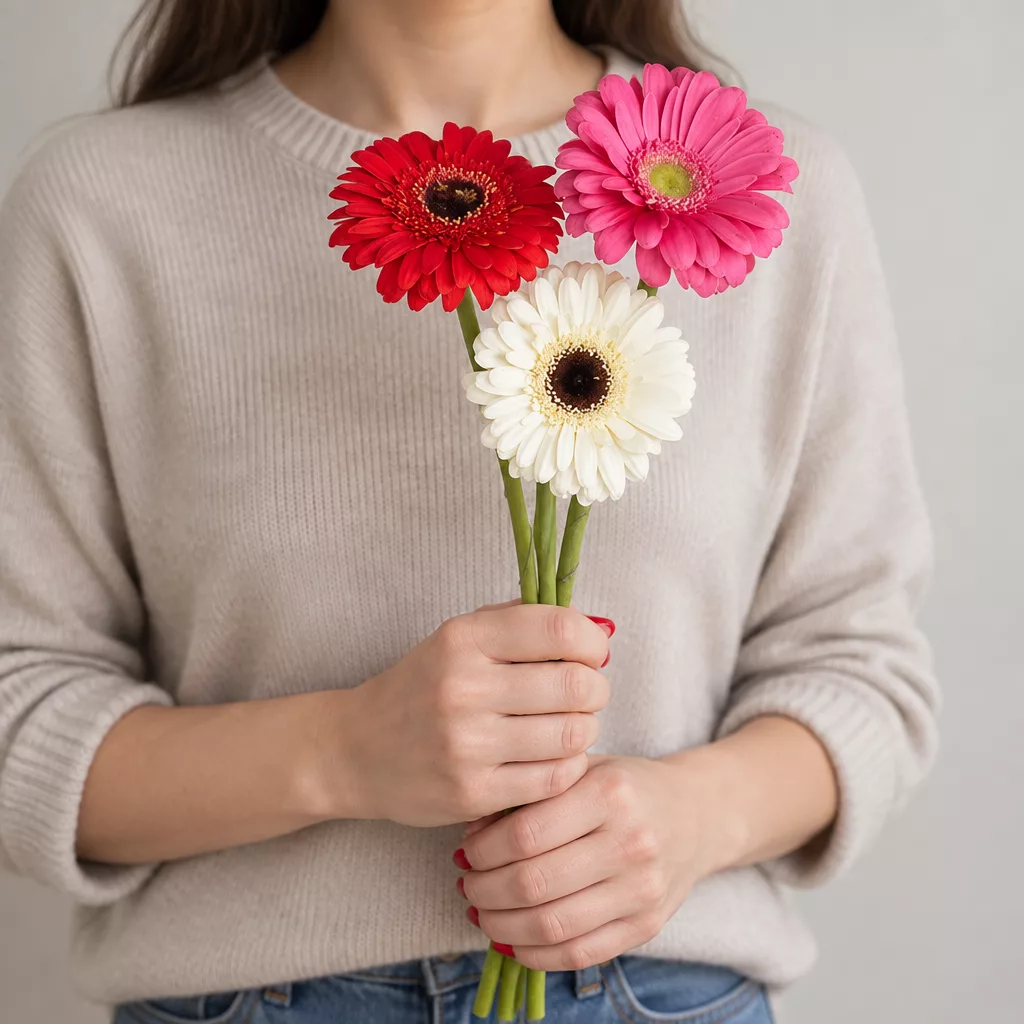


Sending Carnations for a Birthday or Anniversary? Here Is What to Consider
The first question to ask is not which colour to choose — it is what mood you want the recipient to open the door to. Carnations carry warmth rather than drama. They suit occasions where you want to say something affectionate and lasting rather than something urgent and overwhelming. A birthday bouquet built around blush and cream carnations with a few stems of white lisianthus feels generous and thoughtful. An anniversary arrangement in deep raspberry or burgundy reads as genuinely romantic without the pressure that a dozen red roses can sometimes create.
Colour matters more with carnations than with many other flowers because the range is wide and the associations are real. In Russian culture, yellow flowers have historically been linked to separation or jealousy, so unless you know the recipient well and they appreciate bold, sunny tones, it is safer to stay with pinks, whites, corals, and reds for celebratory occasions. This is not a hard rule — modern sensibilities have softened many old superstitions — but it is worth knowing if you are sending to someone whose family holds traditional views.
Presentation makes a significant difference. Carnations look best when they are given room to breathe in an arrangement, not packed tightly together. A bouquet that mixes different sizes — standard carnations alongside spray carnations — creates depth and texture. Add a few stems of something with contrasting structure, like a green button chrysanthemum or a silvery dusty miller leaf, and the result looks considered and contemporary rather than simple.
Vase Life That Actually Lasts: What Three Weeks Means in Practice
The carnation's most practical advantage is also its most underappreciated one. Under proper conditions, a fresh carnation can remain in good condition for up to three weeks. That is roughly twice the lifespan of a tulip and three times that of a garden rose. For someone receiving flowers as a gift, this means the gesture stays visible on their desk or kitchen table for nearly a month — a kind of extended presence that most flowers cannot offer.
Achieving that three-week lifespan requires a few consistent habits. The water in the vase should be changed every two to three days, and the stems should be recut at an angle each time — about one to two centimetres from the bottom. Carnations are sensitive to ethylene gas, which is produced naturally by ripening fruit. Keeping the vase away from a fruit bowl is not a decorating tip but a genuine preservation measure; ethylene accelerates petal drop noticeably.
Temperature is the other key variable. Carnations prefer a cool environment, ideally between fifteen and eighteen degrees Celsius. A warm room above twenty-two degrees will shorten their life significantly. In a Russian apartment during winter, placing the vase near a window — away from a radiator — gives the flowers the cool air they need without exposing them to a draught. In summer, keeping them out of direct afternoon sunlight is equally important. These are small adjustments, but they are the difference between a bouquet that looks fresh for a week and one that looks fresh for three.
Budget Options That Look Generous: Building a Bouquet Around Carnations
One of the most honest things a florist can say is that carnations allow you to give more for less. Because the flower is priced lower than roses, peonies, or orchids, you can build a bouquet with genuine volume and visual impact without the cost that those stems carry. The key is in the composition — how you combine carnations with other elements to make the arrangement feel deliberate and full rather than simply inexpensive.
A reliable approach is to use carnations as the primary flower and add one or two accent varieties that bring a different texture or silhouette. Waxflower — small, delicate, and fragrant — works beautifully alongside white or pale pink carnations and extends the bouquet's sense of detail. Gypsophila, which Russians often call 'zhivuchka' informally, adds a cloud-like softness that lifts a dense carnation arrangement. For something more structured, a few stems of green hypericum berry or eucalyptus pods introduce colour contrast and a slightly botanical feel.
Spray carnations deserve particular mention here. Because each stem carries multiple blooms, they fill space efficiently and create the impression of abundance. A bouquet that is half standard carnations and half spray carnations, wrapped in kraft paper with a ribbon, can look like something from a high-end florist even when the component costs are modest. The wrapping and presentation are doing real work in how the gift is received — which is true of all flowers but especially true of carnations, where overcoming the preconception requires a strong first visual impression.
Colours and Their Meanings: Choosing the Right Carnation for the Right Person
Carnations come in a wider natural colour range than almost any other cut flower, and that range is not just decorative — it shapes how the bouquet is read by the person receiving it. White carnations are associated with purity and sincerity in Russian tradition, making them a strong choice for a teacher, a mentor, or an older relative. They are also one of the few flowers that work well in a minimalist, monochromatic arrangement where the texture of the petals carries all the visual interest.
Pink carnations, particularly the softer blush and salmon tones, are the most universally safe choice. They read as warm, affectionate, and celebratory without carrying any specific cultural weight. Deep pink and magenta varieties have a more energetic quality and suit recipients who have a bold personal style. Red carnations are genuinely romantic and have a long history in that role — they predate the rose as a symbol of love in European tradition and that meaning carries through in Russia as well.
Bicolour and picotee carnations — where the petal edge is a different shade from the centre — are increasingly available and add a level of visual interest that makes a bouquet look more curated. A cream carnation with a raspberry edge, for example, pairs naturally with burgundy roses or deep plum lisianthus. These combinations move the flower firmly into contemporary territory. When choosing for someone you do not know well, a mix of blush, white, and soft coral covers most preferences and avoids any colour that might carry an unwanted association.
When Carnations Work Best: Occasions and Combinations That Suit Them
Carnations are at their best when the occasion calls for warmth, generosity, and longevity rather than drama or spectacle. Teacher appreciation — especially around Knowledge Day on the first of September, when Russian students traditionally bring flowers to school — is one of their strongest contexts. A well-made carnation bouquet is appropriate, beautiful, and practical for a teacher who will receive many flowers that day and needs them to last.
For a colleague's birthday or a thank-you gift for a host, carnations offer the right register: celebratory without being over-the-top, personal without being too intimate. They suit professional relationships well. A monochromatic bouquet of white spray carnations with eucalyptus is elegant enough for an office setting and understated enough not to embarrass anyone.
Carnations also work exceptionally well in mixed seasonal arrangements where they play a supporting role rather than the lead. Combined with tulips in spring, they add structure and staying power — the carnations will outlast the tulips by two weeks and keep the arrangement looking fresh long after the other flowers have faded. In autumn and winter arrangements, deep red and burgundy carnations pair naturally with dried orange slices, cinnamon sticks, and eucalyptus for something that feels seasonal and considered.
The one context where carnations underperform is when the occasion demands obvious luxury — a grand romantic gesture, a significant milestone anniversary, or a first impression that needs to land with immediate visual weight. In those cases, they are better used as supporting elements rather than the centrepiece.
Ordering Carnations for Delivery: What to Ask For and What to Expect
When you order carnations for delivery, the most important variable is freshness at the point of cutting, not at the point of growing. Carnations that have been held in a cooler at the correct temperature — between two and five degrees Celsius — and cut fresh before arrangement will have the full potential of their three-week vase life ahead of them. This is why same-day or rapid delivery matters more than people often realise: a flower that has been sitting in a warm van for three hours has already lost days of its lifespan.
If you are ordering a specific colour combination, be concrete about what you want. Saying 'pink carnations' can mean anything from pale blush to deep fuchsia. If you have a reference image or can describe the occasion — 'soft and romantic for a birthday,' 'bold and colourful for a celebration' — a florist can make choices that fit the mood rather than defaulting to whatever is most available that day.
Carnations travel well, which is one of their practical strengths for delivery. Unlike roses, which can bruise if jostled, or tulips, which bend toward light and arrive at odd angles, carnations hold their shape and their heads stay upright. They are a reliable choice for delivery to an address where you cannot be certain of the conditions — a workplace, a building with a doorman, or a recipient in another city who will receive the flowers without you being present to arrange them. What arrives will look close to what was made, which is not something every flower can promise.
The carnation's reputation in Russia is a case of history outrunning reality. The flower available today is fresher, more varied, and more versatile than the stiff Soviet-era specimens that defined how most people think about it. It lasts longer than almost anything else in the shop, it combines beautifully with modern accent varieties, and it allows you to build a genuinely generous bouquet at a price that does not require a special occasion to justify. Whether you are sending something warm to a teacher, something affectionate to a friend, or something quietly romantic to a partner, a well-made carnation bouquet will stay on their table long after the card has been read — and that staying power is its own kind of message. We deliver bouquets across Russia in 1–2 hours.
Frequently asked questions
Are carnations appropriate for a birthday gift in Russia, or do they carry negative associations?
Carnations are perfectly appropriate for birthdays. The negative associations in Russia are mainly linked to specific colours — yellow in particular — and to very formal Soviet-era contexts. A bouquet of pink, white, coral, or red carnations reads as warm and celebratory. Presented well, with complementary greenery and thoughtful wrapping, they make a genuinely lovely birthday gift.
How long will carnations actually last in a vase if I follow the care instructions?
Under good conditions — cool room temperature between fifteen and eighteen degrees, fresh water changed every two to three days, and stems recut each time — carnations can last up to three weeks. Keeping them away from fruit bowls is important because ethylene gas from ripening fruit accelerates petal drop. Avoid radiators and direct afternoon sunlight to get the maximum lifespan.
What flowers combine well with carnations in a modern bouquet?
Carnations pair well with eucalyptus, waxflower, lisianthus, gypsophila, and dusty miller for a soft, contemporary look. For something bolder, try them with ranunculus or hypericum berries. Spray carnations alongside standard carnations in the same bouquet add depth and texture. The key is choosing one or two accent varieties rather than mixing too many different flowers at once.
Can I order carnations for delivery to another Russian city, not just Saint Petersburg?
Yes. Carnations are one of the best flowers for longer-distance delivery because they travel well — their heads stay upright and the petals are less prone to bruising than roses or tulips. Turboflora delivers fresh flowers across Russia within one to two hours, so the recipient receives a bouquet that still has most of its vase life ahead of it.
What is the difference between standard carnations and spray carnations?
A standard carnation has one large bloom per stem, while a spray carnation carries several smaller blooms branching from a single stem. Spray carnations fill space efficiently and create a sense of abundance in an arrangement. They photograph particularly well and are popular in contemporary bouquets. Many florists mix both types in the same bouquet to create variety in scale and texture.
Ready to send flowers?
Pick the city, choose the bouquet, and a local florist takes it from there.
Choose a city →