Colombia Flower Seasons: A Practical Guide to Timing Flowers
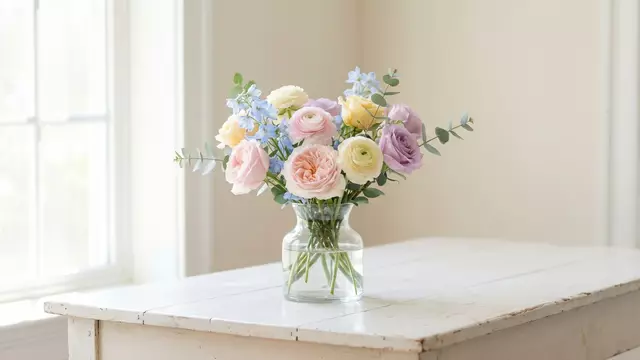
Colombia’s main commercial cut flowers, including roses and carnations, are grown throughout the year, so there is no single Colombian flower season. Near-equatorial daylight and suitable highland growing conditions support continuous cultivation, while rainfall, altitude and the individual flower influence natural flowering cycles.
For you as a bouquet buyer, the useful distinction is between when a flower grows in Colombia and when a particular stem is available for your recipient. A year-round crop does not mean every variety, colour or stem length will be available on every date. If you are sending flowers to Russia, start with the delivery city and occasion, then check the exact flowers before building your plans around them.
Why Colombia does not have one spring flower season
A spring-to-summer flowering calendar is a poor fit for Colombia. The country lies close to the equator, where day length changes relatively little through the year. Altitude creates substantial differences between growing areas: a cool highland location and a warm lowland location can have very different conditions even when they are not far apart on a map.
Rainfall is often a more useful seasonal reference than the four temperate seasons, but Colombia has no single national wet-and-dry calendar. Patterns vary by region, and individual years can differ. A statement such as “all Colombian flowers bloom in April” therefore gives you little reliable guidance about a particular species, growing area or bouquet.
Commercial cultivation also follows a different rhythm from wild flowering. Growers manage planting, pruning and crop conditions to produce successive harvests. When you read that Colombian roses are available year-round, understand this as a description of ongoing production, rather than a claim that each plant flowers continuously or that every rose variety is always ready.
Which Colombian cut flowers are grown throughout the year?
Roses and carnations are central examples of Colombia’s year-round cut-flower production. Chrysanthemums and alstroemeria are also established commercial crops. These are useful flower names to recognise when comparing bouquet styles, but a country-level growing calendar cannot confirm the contents of a particular catalogue listing or identify where an individual bouquet’s flowers were grown.
Choose between these flowers by the effect you want. Roses give a bouquet a clear focal shape; carnations add softly ruffled texture; chrysanthemums can provide rounded heads or branching sprays; and alstroemeria brings several smaller flowers to a stem. Variety and arrangement matter as much as the flower name, so look closely at the pictured shape and overall proportions.
Be more cautious with a request for an exact cultivar, an unusual shade or a very specific stem length. Those details narrow your options even within a crop grown all year. Decide which feature matters most before you order: the named flower, the colour palette or the overall style. That helps you ask precise questions without assuming that similar-looking flowers are interchangeable.
Bouquets we can deliver




How holidays affect buying without creating a bloom season
Valentine’s Day and Mother’s Day are important dates for flower demand, but they are not botanical seasons. A rose offered in February has not necessarily reached its only natural flowering window. Commercial harvest planning and demand influence what buyers encounter, alongside the plant’s growing cycle. Keep that distinction in mind when a calendar describes a month as “rose season”.
Mother’s Day falls on different dates in different countries, so check the recipient’s calendar rather than relying on the date where you live. For someone in Russia, 8 March may also be a significant flower-giving occasion. The practical question is whether your chosen bouquet and delivery arrangements suit that particular date, not whether Colombia is entering spring.
If a named flower is essential, make your enquiry early and give the complete request at once: delivery city, date, preferred time, flower, colour and any important size preference. Avoid treating a photograph saved months earlier as a current availability confirmation. A clear brief makes it easier to establish what can actually be ordered before the occasion gets close.
What Colombia’s growing calendar means for flowers in Russia
A flower’s production season abroad and its availability in Russia are separate questions. Year-round cultivation can make a flower a sensible starting point for an enquiry, but it does not establish what is available in a particular Russian city today. Browse the bouquets catalogue for a style you like, then confirm any flower or colour that is essential to your gift.
Keep the recipient’s preferences ahead of the growing-country story. Red roses commonly suggest romance, while a mixed bouquet may feel more appropriate for a friend or colleague. These associations are conventions, not rules. If you know that someone dislikes a flower or a scent, that knowledge is more useful than choosing a bouquet simply because its flower has a long production season.
For a personal celebration in Russia, an odd number is the usual convention when giving a small, countable number of flowers; even counts are traditionally associated with mourning. If the stem count is part of your message, state it explicitly. In a mixed arrangement, focus your request on the intended occasion and composition rather than trying to infer the total from a photograph.
How to care for a bouquet after it arrives
Prepare a clean vase before unwrapping the bouquet. For flowers intended to stand in water, remove any leaves that would sit below the waterline and trim the stem ends with a clean, sharp tool. Follow any flower-food instructions supplied. If the arrangement is built into a container or floral foam, keep its structure intact and ask for care guidance suited to that design.
Check the water daily and refresh it regularly, cleaning the vase when needed. Keep cut flowers away from direct sun, radiators and ripening fruit. These steps help you manage the conditions around the bouquet; they do not create a fixed vase-life guarantee. Flower type, maturity and the conditions before and after arrival all affect how an arrangement develops.
In Russian winter conditions, have the vase and an indoor space ready so the bouquet does not remain outside while you organise things. Avoid placing it beside a heater to warm it quickly. For a gift involving tropical flowers, read our guide to sending tropical arrangements in colder seasons and discuss the specific arrangement before choosing it.
How to arrange flower delivery to Russia
We deliver flowers across Russia. City delivery costs 500 RUB; for remote districts and suburbs, the operator confirms the delivery price when confirming the order. Send the city, full address, recipient’s contact details and preferred date when discussing your bouquet. You can use WhatsApp for help choosing flowers, agreeing the address, time and card text, and arranging a photo of the bouquet before delivery.
In large cities, express delivery is available 1–2 hours after order confirmation. Other options are delivery at an exact time within a margin of 30 minutes, the windows 09–12, 12–15, 15–18 or 18–21, and pre-ordering 1–30 days ahead. If you are ordering from another country, state the intended time in the recipient’s city explicitly so the request is clear.
Delivery is anonymous by default: the courier does not name the sender. A card with your text is free, so include your name there if you want the recipient to know who sent the gift. The courier calls about 15 minutes before arrival. If the recipient is absent, we agree a second delivery that day or, with your consent, hand the flowers to a neighbour or concierge.
Online checkout uses CloudPayments. Check the payment options displayed at checkout; acceptance of every foreign card cannot be assumed. Review the delivery and payment information alongside your chosen bouquet, and use WhatsApp to agree any outstanding address or timing details. Colombia’s growing seasons provide useful background, while your order should rest on the flowers and delivery details confirmed for the recipient.
Frequently asked questions
What is the main flower season in Colombia?
Colombia has no single national flower season. Major commercial cut flowers such as roses and carnations are grown year-round, while natural flowering patterns depend on the species, altitude and regional rainfall.
Are Colombian roses seasonal?
Colombian roses are commercially produced throughout the year. That does not mean every variety, colour or stem length is available for every bouquet or delivery date.
Does Colombia’s rainy season stop flower production?
A rainy period does not by itself mean commercial flower production stops. Rainfall patterns differ between regions, and managed cultivation makes a simple national wet-season availability rule unreliable.
Does year-round production mean I can order the same flowers in Russia at any time?
Year-round production in Colombia does not confirm availability in a particular Russian city. Check the exact flower, colour and delivery date before making those details central to your gift.
Can I order flowers to Russia while living abroad?
You can arrange flower delivery across Russia and discuss the bouquet, address and timing with a manager. Online checkout uses CloudPayments; check the displayed payment options because acceptance of every foreign card is not guaranteed.
Ready to send flowers?
Pick the city, choose the bouquet, and a local florist takes it from there.
Choose a city →