Cornish Lily: What It Is and How to Care for It
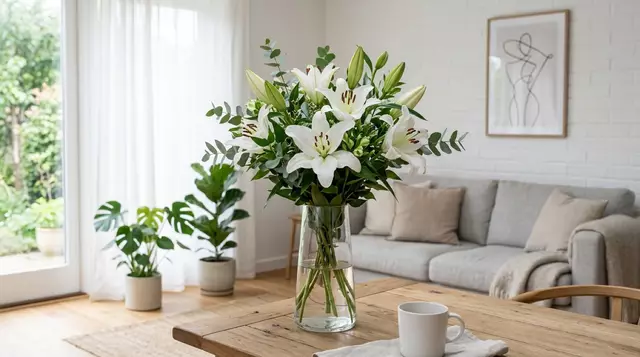
Cornish lily usually refers to Nerine bowdenii, a South African bulb grown for its clusters of pink, curled flowers in autumn. Despite the name, it is neither native to Cornwall nor a true lily of the genus Lilium. If you are identifying a plant or requesting flowers, the botanical name helps avoid confusion with other nerines.
Its appeal is the contrast between slender, almost bare stems and open, airy flower heads. In a garden, it brings colour as many summer flowers finish; in a vase, its narrow, rippling petals give an arrangement movement without making it look heavy. For a gift, start by deciding whether you want this particular flower or simply its pink colour and delicate shape: those are different requests.
How to recognise a Cornish lily
Look for several flowers radiating from the top of one leafless stem. Each flower has six narrow petal-like segments with wavy edges, often curling backwards, and conspicuous stamens extending beyond them. Nerine bowdenii is typically pink, although named cultivars vary in shade. The overall outline is more open and spidery than the broad trumpet of a familiar garden lily.
The strap-shaped leaves and flowering stems emerge separately from a bulb. Leaves may be fading or absent when flowers are open, so a bare-looking stem is not, by itself, a sign that something is wrong. For identification, photograph the whole plant as well as a close-up: flower colour alone is a weak guide, particularly when several nerine species or hybrids are involved.
Common names overlap. Guernsey lily often refers to Nerine sarniensis, while Cornish lily commonly points to N. bowdenii; nursery labels and everyday usage can be inconsistent. Our guide to Nerine sarniensis explains the related plant. When buying bulbs, check the species and cultivar on the label rather than relying on a regional nickname.
Growing Cornish lilies: position, planting and patience
Choose a sunny position with soil that drains freely. A sheltered border beside a sunny wall can suit nerines, provided water does not collect around the bulbs. In a container, use drainage holes and a free-draining growing mix; a decorative outer pot must not leave the planting pot standing in water. Persistent wetness is a more useful warning sign than a dry-looking soil surface.
Plant with the bulb neck at or just above the soil surface, following any more specific instructions supplied with your bulbs. Avoid repeatedly lifting an established clump: nerines can take time to settle, and disturbance may delay flowering. If you need to divide a crowded planting, expect a period of recovery rather than assuming every newly separated bulb will flower immediately.
Water during active growth when needed, adjusting to rainfall and the growing medium. Let leaves yellow naturally so they can replenish the bulb, and avoid heavy feeding with nitrogen-rich fertiliser, which can encourage leafy growth. For outdoor planting in Russia, check advice for your particular climate; the Cornish name is not evidence that a bulb can remain outside through your winter.
Bouquets we can deliver




When nerines flower and why a bulb may not bloom
Nerine bowdenii normally flowers in autumn, but the exact weeks depend on location, growing conditions and cultivar. Treat garden flowering season and cut-flower availability as separate questions. A photograph of a flowering garden in October does not establish that the same stems can be supplied for a particular gift in another country on that date.
If a planted bulb produces leaves but no flowers, review its recent history before changing everything. Was it planted or divided recently? Is the position shaded? Has the foliage been cut off while still green? These clues are more useful than adding fertiliser automatically. A newly established planting may need patience, while a shaded one may need a better position.
For an event, raise a request for nerines early and ask about the intended date before building the whole arrangement around them. Our delivery orders can be placed 1–30 days ahead, but that booking window does not confirm availability of a particular flower. If nerines are essential, say so explicitly; if colour and shape matter more, explain which qualities you want to preserve.
Caring for Cornish lily stems in a vase
Begin with a clean vase and fresh water. Recut the stem ends with a clean, sharp blade or secateurs, and remove any foliage that would sit below the waterline. If flower food is supplied, mix it according to the packet instructions. Choose a vase that supports the stems without squeezing the flower heads together; their open shape needs a little breathing room.
Keep the arrangement away from radiators, direct sun and ripening fruit. Check the water daily, top it up as needed and replace it when it becomes cloudy, cleaning the vase at the same time. Remove individual fading flowers carefully to keep the cluster tidy. If a stem end becomes soft or discoloured, trim back to healthy tissue before returning it to clean water.
There is no reliable fixed vase-life promise for every nerine stem: freshness at cutting, transport, room conditions and care all affect the result. Judge the flowers by firm stems and petals that retain their shape, rather than by a countdown alone. When carrying a bouquet, protect the projecting petals and stamens from rubbing against bags, clothing or tight wrapping.
Meaning, colour and choosing the right occasion
Cornish lily has no single universally accepted symbolic meaning. Its pink colour and delicate outline can suggest affection or celebration, but that is an interpretation rather than a message every recipient will recognise. You can make the intention clear with a short card: a specific thank-you or birthday wish says more than an unsupported claim about the flower's traditional meaning.
For someone who gardens, the botanical identity may be part of the pleasure. For someone receiving flowers at work or at home, colour, size and ease of display may matter more. Before choosing, consider whether the recipient enjoys unusual flowers or prefers familiar, fuller shapes. A photograph can help communicate your taste, although it does not establish current availability.
You can browse our bouquets catalogue to consider colours and arrangement styles, then explain whether nerines themselves are essential. Avoid treating a catalogue title as a botanical identification: an appealing name alone cannot confirm the stems inside a bouquet. If the gift is for a formal or sensitive occasion, keep the card wording direct and personal rather than relying on flower symbolism.
Planning a flower delivery to Russia
We deliver flowers across Russia. To discuss a Cornish lily request, contact a manager on WhatsApp with the delivery city, date, address and a reference image if you have one. Explain whether you mean Nerine bowdenii specifically. The manager can help you choose a bouquet, agree the delivery details and card text, and arrange a photo of the bouquet before delivery.
City delivery costs 500 RUB; for remote districts and suburbs, the operator confirms the delivery price when confirming your order. In large cities, express delivery takes 1–2 hours after order confirmation. You can also arrange an exact time within a ±30-minute tolerance, choose a 09–12, 12–15, 15–18 or 18–21 window, or pre-order 1–30 days ahead. Agree the recipient's local time, especially when ordering from abroad.
Delivery is anonymous by default: the courier does not name the sender, and a card with your text is free. The courier calls the recipient about 15 minutes before arrival. If they are absent, we agree a second delivery that day or, with your consent, hand the flowers to a neighbour or concierge. Online checkout uses CloudPayments; check the options displayed there, as acceptance of every foreign card is not guaranteed. See delivery and payment details when planning your order.
Frequently asked questions
Is Cornish lily a true lily?
Cornish lily usually means Nerine bowdenii, which belongs to the amaryllis family, Amaryllidaceae. It is not a member of the true lily genus Lilium, so use the botanical name when identifying or requesting it.
Does Cornish lily come from Cornwall?
Nerine bowdenii is native to South Africa. Its common name should not be taken as evidence of its origin or suitability for a particular winter climate.
Why is my Cornish lily growing leaves but no flowers?
Recent planting or division, insufficient sun and removing green foliage can all contribute to poor flowering. Review the plant's position and treatment before adding fertiliser, and allow disturbed bulbs time to establish.
Can I order Cornish lilies for delivery in Russia?
You can ask a manager about Nerine bowdenii for your city and date, but this article does not confirm its availability. If the exact flower is essential, make that clear before choosing and confirming your bouquet.
Can I send flowers without revealing my name?
Yes, delivery is anonymous by default, and the courier does not name the sender. You can include a free card with your own text; sign it if you want the recipient to know who sent the flowers.
Ready to send flowers?
Pick the city, choose the bouquet, and a local florist takes it from there.
Choose a city →