Running Business Flower Orders? Open a Corporate Account First
Every office manager who has scrambled to find a presentable bouquet an hour before a client meeting knows the feeling: rushed choices, uncertain quality, and a receipt that is awkward to put through accounts. A corporate account with a Saint Petersburg florist changes that dynamic entirely. You get pre-agreed terms, a single point of contact who already knows your preferences, and flowers that arrive looking as though someone planned them — because someone did.
Why Businesses in Russia Order Flowers More Often Than You Might Expect
Flower-giving is woven into Russian professional culture in ways that can surprise foreign companies setting up offices here. Birthdays of senior colleagues are rarely let pass without a bouquet on the desk. Women's Day on the eighth of March is essentially a company-wide event, and arriving without flowers for every woman in the office would be noticed. New business partnerships are often marked with an arrangement in the reception area, and client visits frequently call for something on the meeting-room table.
Beyond the calendar peaks, there are the unpredictable moments: a contract signed, a promotion announced, a long-standing client flying in from Moscow. These occasions do not give much notice, which is exactly where a pre-arranged corporate account earns its value. Because your details, preferences, and delivery addresses are already on file, an order that would otherwise take twenty minutes of back-and-forth can be placed in under two.
For international businesses, it helps to know that the flowers themselves carry meaning here. A single red rose reads as romantic rather than professional. White chrysanthemums and lilies are associated with mourning and should be avoided in a business context. Bright mixed bouquets of roses, alstroemeria, and lisianthus in warm or corporate colours are almost always the right call. Your account manager will steer you through these conventions so you never have to second-guess a choice.
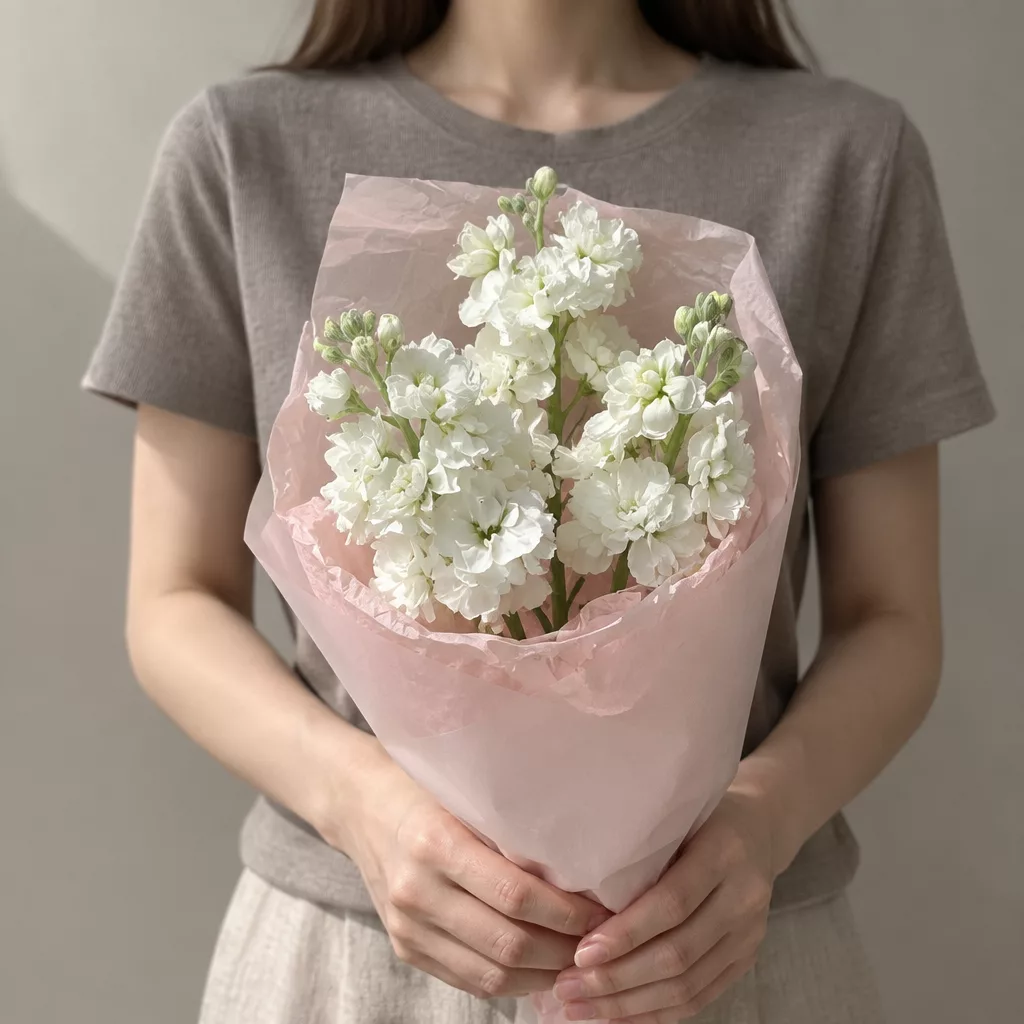
Bouquets we can deliver



What the Registration Process Actually Looks Like
Opening a corporate account does not require a long procurement process. The initial step is a short conversation — by phone, email, or in person at the shop — where you describe the volume and frequency of orders your business expects. This does not need to be precise. An estimate of how many occasions per month, the typical budget range per bouquet, and the main delivery zones is enough to get started.
From there, you provide standard company details: the legal name of your organisation, your INN (the Russian tax identification number), and the name of the person who will be authorised to place orders. If your company is registered outside Russia but operating here, the team will walk you through the equivalent documentation. The process is straightforward and the paperwork is minimal compared to most supplier agreements.
Once the account is active, you receive login access to a dedicated ordering portal where past orders, invoices, and delivery confirmations are stored in one place. This matters enormously at the end of the quarter when the finance department asks for receipts. Every transaction is timestamped, itemised, and available to download as a formal invoice that meets Russian accounting requirements, including the correct VAT lines.
The whole setup typically takes one to two business days from first contact to first order. There is no minimum spend to open the account, and no obligation to order on any fixed schedule. The account simply sits ready for whenever the next occasion arises, which in most offices is sooner than expected.
Credit Terms and Invoicing: Getting the Finance Side Right
One of the main reasons companies formalise their flower spending through a corporate account is to move away from cash or personal card payments that then require reimbursement. Under a corporate account, orders are consolidated and invoiced on a schedule that suits your finance team — typically weekly or monthly, depending on order volume.
Credit terms are agreed during setup and are based on the expected order frequency and total monthly spend. A company placing several large orders a week will generally qualify for longer payment windows than one ordering occasionally. The terms are set out clearly in the service agreement, and there are no hidden fees for the invoicing service itself.
Russian accounting requires that flower purchases be documented as business expenses with proper supporting paperwork. Turboflora issues a full package: a tax invoice, a delivery confirmation act, and where required, a UPD (universal transfer document) that satisfies both VAT and income tax records simultaneously. If your accountant has specific formatting requirements, the account manager can accommodate them before the first invoice is issued rather than after.
One practical note on timing: the eighth of March and Valentine's Day are the two dates when order volumes spike sharply across the city. Placing your seasonal orders — say, flowers for every woman on the team — at least four to five days in advance locks in both the varieties and the delivery slots. Corporate accounts get priority scheduling during these peaks, but early confirmation still makes a real difference to what is available in the cooler at the right moment.
Your Dedicated Account Manager: What They Actually Do for You
A dedicated account manager is not simply a named contact who forwards your emails to someone else. In practice, this person holds your preferences in memory and applies them proactively. They know that your CEO dislikes strong scents, that your reception area has a tall cylindrical vase that suits architectural stems like amaryllis or tall garden roses, and that your main client tends to receive peonies when they are in season because someone once mentioned they were a favourite.
This accumulated knowledge is what separates a corporate account from placing individual orders cold each time. You do not need to re-explain context or re-specify style. You say the occasion and the budget, and you receive a proposal within minutes rather than browsing a catalogue from scratch.
The account manager also handles the logistics that are easy to overlook. If a delivery address changes because a client has moved offices, they update the records. If a standing order for Monday morning reception flowers needs to pause for two weeks while the office is renovated, one message takes care of it. They track seasonal availability so they can flag, for example, that Dutch tulips will be at their best and most cost-effective in February and March, or that garden roses from local growers arrive in July and August with a noticeably shorter vase life than cold-chain imports — something worth knowing if the flowers need to last through a week-long conference.
For companies with multiple offices or delivery destinations across Russia, the account manager coordinates routing so that a single order confirmation covers several cities simultaneously.
Choosing Flowers That Work in a Professional Setting
The best corporate flowers share a few practical qualities: they are long-lasting, they look composed rather than wild, and they do not overpower a room with fragrance. Roses, spray roses, lisianthus, and alstroemeria are workhorses for a reason — they hold well at room temperature, they photograph cleanly for social media posts about the occasion, and they read as generous without being ostentatious.
For reception and meeting-room arrangements, structure matters more than abundance. A tight cluster of white and blush garden roses in a low bowl creates a sense of quiet confidence. Tall stems of eucalyptus or ruscus as a background layer add depth without competing with the flowers themselves. Avoid arrangements that place pollen-heavy lilies at nose height — open lilies shed pollen that stains tablecloths and suits, and the fragrance in an enclosed meeting room can be distracting.
For personal gifts to colleagues or clients, the combination approach works better than a single-variety bouquet. Mixing textures — something soft like ranunculus with something graphic like protea, or combining the reliable structure of roses with the movement of wax flower — makes a bouquet feel considered rather than assembled. Your account manager can suggest combinations that suit the season, since flowers ordered in their natural season are both fresher and more resilient in transit.
When flowers are being delivered in winter across Russian distances, the cold chain matters. Turboflora delivers in temperature-controlled conditions, which means the recipient in Novosibirsk or Yekaterinburg receives flowers in the same condition as someone in central Saint Petersburg.
Care Instructions Worth Passing On to Your Recipients
A beautiful bouquet that wilts by the next morning reflects poorly on the sender, so it is worth including brief care notes with corporate deliveries. Turboflora attaches care instructions to every order, but knowing the basics yourself means you can set expectations when the flowers arrive.
The single most important step is a fresh diagonal cut on each stem, made under running water or submerged in the sink. This reopens the water-uptake channels that close during transit. Stems should then go immediately into a clean vase filled with cool water — not cold, not warm. Flower food sachets, which come with most bouquets, lower the pH of the water and release a small amount of sugar that extends vase life noticeably.
Office environments create specific challenges. Central heating in Russian winters drops humidity significantly, which accelerates petal desiccation. Placing arrangements away from radiators and direct sunlight adds two to three days to vase life in practical terms. Air conditioning in summer has a similar drying effect. A spot near a window that receives indirect light is ideal.
For roses specifically, if petals begin to droop before the stems show any sign of decay, the cause is usually an airlock in the stem rather than age. Re-cutting two centimetres from the base and placing the stems in warm water for thirty minutes usually revives them. Alstroemeria and lisianthus are more forgiving and will last seven to ten days with basic care, making them a sensible choice for arrangements that need to look good through a full working week without replacement.
Scaling Up: Managing Flowers Across Multiple Occasions and Offices
As companies grow comfortable with their corporate account, the way they use it tends to evolve. What starts as ad hoc orders for birthdays becomes a standing arrangement for the reception area refreshed every Monday. What begins as occasional client gifts becomes a coordinated gifting programme around key dates in the business calendar.
Managing this at scale is where the account structure genuinely earns its place. You can set recurring orders in the portal — a fixed arrangement delivered every week, for instance — and adjust or cancel them with a single message rather than re-placing the order each time. For companies with branch offices in other Russian cities, a single order can route deliveries to multiple addresses, each with a personalised message and the correct recipient name.
The eighth of March deserves particular planning attention for larger companies. An office of fifty people means fifty individual bouquets, each needing a name card, each going to a specific desk or being collected at reception. Corporate accounts handle this through a bulk order process: you submit a list of names and any individual notes, and the team prepares, labels, and sequences the deliveries so that the morning runs without confusion.
For international companies, it is worth noting that flower gifting in Russia follows the odd-number convention for personal bouquets — even numbers are associated with mourning and are never given as a gift. Corporate arrangements for tables and reception areas are not subject to this rule, but personal bouquets for colleagues and clients should always contain an odd number of stems. Your account manager will apply this automatically, but it is useful context to have.
A corporate flower account removes the friction that makes business gifting feel like a chore. Registration takes a day or two, the invoicing fits cleanly into Russian accounting requirements, and a dedicated manager holds enough context about your business to make every order feel considered rather than rushed. Whether you are marking the eighth of March across a large team, welcoming a client to your Saint Petersburg office, or maintaining a standing arrangement that tells visitors something about how you work, the account is simply there — ready, stocked, and already familiar with what you need.
Frequently asked questions
Does a company need to be registered in Russia to open a corporate account?
No. Foreign companies operating in Russia can open a corporate account using their local registration documents. The team will confirm which paperwork is needed during the initial call. Invoices can be formatted to match the requirements of your finance department, including documentation that satisfies both Russian tax rules and internal company reporting standards.
How far in advance should we place large orders, such as Women's Day bouquets for the whole office?
For large seasonal orders, four to five days ahead is the practical minimum. The eighth of March is the busiest single day in the Russian flower calendar, and specific varieties — particularly tulips and roses in popular colours — are reserved on a first-confirmed basis. Corporate accounts receive scheduling priority, but early confirmation still determines what is available and at its freshest.
Can we set a standing weekly order and adjust it when needed?
Yes. Recurring orders are one of the most used features of a corporate account. You can set a fixed arrangement on a weekly or fortnightly schedule and modify it — change the flowers, pause delivery, or update the address — with a single message to your account manager or directly through the ordering portal. No minimum notice period is required for routine adjustments.
What happens if a delivery is going to a city outside Saint Petersburg?
Turboflora delivers across Russia within one to two hours of order confirmation, using temperature-controlled transport to maintain flower condition in transit. For orders going to multiple cities simultaneously, your account manager coordinates routing so that a single order confirmation covers all destinations. Each delivery includes a timestamped confirmation that can be stored against the invoice.
Are there flower types we should avoid for professional gifting in Russia?
Yes. Even numbers of stems in a personal bouquet are associated with mourning and should always be avoided. White chrysanthemums and lilies carry similar associations in a personal gift context. For office arrangements, strongly fragrant lilies at table height can be disruptive in meetings. Your account manager applies these conventions automatically, but they are worth knowing if you are briefing colleagues who place orders independently.
Ready to send flowers?
Pick the city, choose the bouquet, and a local florist takes it from there.
Choose a city →