Budgeting Corporate Flowers for New Year and Key Russian Holidays
Every December, office managers across Russia face the same quiet panic: the holiday calendar arrives, the budget spreadsheet opens, and suddenly there are forty colleagues, three department heads, two dozen clients, and a reception desk that needs to look festive by Friday morning. Getting the flowers right matters more than it might seem — in Russian corporate culture, a well-chosen arrangement signals that a company values its people and its relationships. This article is for the finance and office managers who want to plan that spending clearly, avoid last-minute surprises, and still have something beautiful to show for it.
Why the Russian Corporate Holiday Calendar Demands Early Planning
Russia's corporate gifting season is more compressed than in many countries, and that compression creates real logistical pressure. The two biggest peaks are New Year, celebrated on January 1st and often observed through January 8th, and International Women's Day on March 8th. These are not optional occasions in a Russian office — Women's Day in particular is treated as a major workplace event, with flowers expected for every woman on the team, from the receptionist to the CEO. Missing it is noticed.
Between those two peaks sit several smaller moments: Russian Christmas on January 7th, Defender of the Fatherland Day on February 23rd (when male colleagues are sometimes acknowledged), and Valentine's Day, which has grown in popularity among younger urban offices. Each of these can generate a flower order if the company culture calls for it.
The problem is that florists, couriers, and cold-storage capacity all tighten at exactly the same time. Roses, which are the default choice for Women's Day, arrive in Russia from Ecuador and the Netherlands, and import logistics slow around major holidays. Offices that place orders two or three weeks in advance get better stem quality and more variety. Offices that call on March 7th get whatever is left. Finance managers who build a seasonal flower line into Q1 and Q4 budgets — rather than treating each occasion as a surprise expense — find the whole process far less stressful and meaningfully cheaper per stem.
Bouquets we can deliver



Choosing Flowers That Fit the Occasion, Not Just the Price Tag
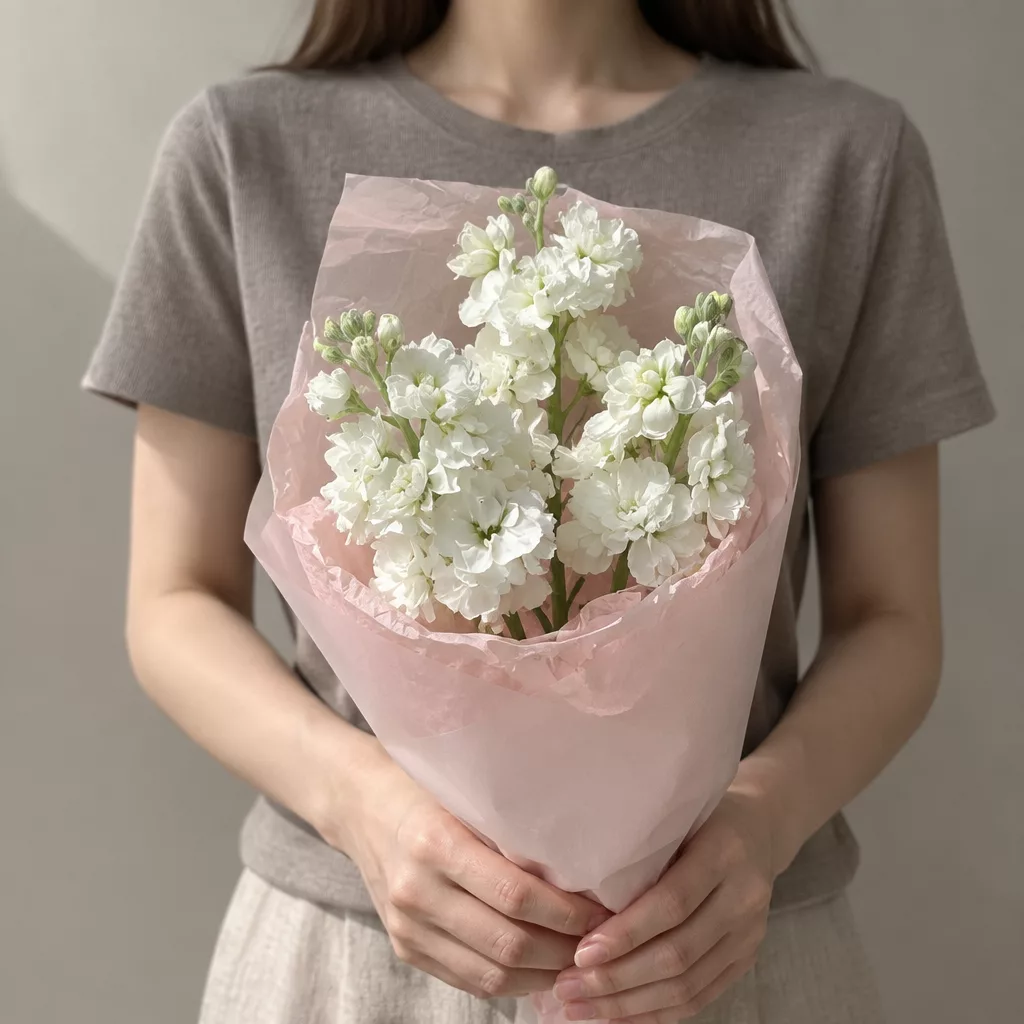
The instinct when managing a budget is to standardize everything — same arrangement, same size, same flower, repeated across the office. That approach is efficient but it misses something important. Recipients notice when a gift has been chosen with care, even if they cannot articulate exactly why. A well-composed mixed bouquet of white spray roses, eucalyptus, and lisianthus reads as thoughtful. A single-variety bunch of carnations in a uniform color reads as an afterthought, regardless of price.
For New Year, the mood is celebratory and slightly theatrical. Deep reds, burgundies, and rich whites work well. Amaryllis, hypericum berries, and pine branches add a seasonal texture that generic roses cannot. Arrangements placed in reception areas or boardrooms benefit from height and volume — something that commands attention when clients walk in.
For Women's Day, the register shifts. This is a personal occasion, and flowers given to individual colleagues should feel personal too. Soft pinks, lavenders, and creams are universally well-received. Garden roses, ranunculus, and tulips — which are beautifully in season in early March — carry a freshness that heavy tropical imports cannot match. Tulips in particular are a strong Women's Day choice: they are elegant, affordable in volume, and deeply associated with the holiday in Russian culture.
For client gifting, presentation matters as much as variety. A flower box or a wrapped arrangement with a handwritten card elevates the gesture. Budget for the packaging when you budget for the stems — the two together create the impression, not the flower alone.
Tiered Budget Options for Teams of Different Sizes
Corporate flower budgets work best when they are structured in tiers rather than applied uniformly. A practical framework divides recipients into three groups: the whole team, key internal colleagues, and senior leadership or important clients. Each tier gets a different level of spend, and the total budget becomes predictable and justifiable to finance.
For the whole-team tier — think of this as the base layer — a single-stem or small mixed posy works well. Three to five stems of tulips or spray roses, simply wrapped with a ribbon, deliver warmth without excess. This is the tier that covers every woman in the office on Women's Day or every desk on New Year's morning. Volume is the priority here, and ordering in bulk makes the per-stem cost much more manageable.
The mid-tier covers team leads, long-serving staff, or colleagues with whom the company has a closer relationship. Here a medium bouquet of seven to ten stems, with some variety — perhaps garden roses combined with waxflower or pittosporum greenery — makes a visible step up without requiring a separate budget category.
The top tier is reserved for directors, board members, VIP clients, and the reception or boardroom display. These arrangements should have presence: large-headed roses, orchid stems, or structured compositions in a box or low vase. Seasonal additions like cotton stems in winter or ranunculus in spring add distinction.
Writing these three tiers into a planning document before the season begins means the order can be placed early, quantities confirmed, and delivery scheduled without the scramble that hits every office on the eve of a major holiday.
New Year Arrangements: What Works in a Russian Office Setting
New Year in Russia is the dominant holiday of the year — far larger in cultural weight than Christmas in many Western countries. Offices celebrate with parties, gifts, and decorations, and flowers are part of the visual language of that celebration. The challenge for office managers is that New Year falls in the heart of winter, when natural light is scarce and Moscow and Saint Petersburg can sit below minus fifteen degrees Celsius for weeks.
That temperature matters for flower delivery. Arrangements exposed to extreme cold even briefly — left in an unheated lobby, or transported in a vehicle without heating — can suffer petal damage that appears hours later as browning edges or collapsed stems. When ordering for New Year, specify indoor delivery to a staffed reception point, and make sure someone is present to receive the flowers and move them into a warm space immediately.
For the arrangements themselves, think about longevity as well as beauty. The office will be partially empty between January 1st and January 8th, so flowers placed in reception before the break need to last. Chrysanthemums, alstromeria, and carnations are not glamorous, but they hold for ten to fourteen days in a cool interior. If you want roses or amaryllis for the visual impact, time the delivery for the last working day before the break rather than a week before.
New Year corporate arrangements also benefit from non-floral texture: pine cones, dried cotton bolls, cinnamon sticks, and eucalyptus branches extend the seasonal feel and reduce the proportion of perishable stems, which helps the whole composition last longer and look intentional rather than improvised.
Women's Day at Scale: Organizing Flowers for the Whole Office
March 8th is the occasion that tests every office manager's organizational ability. In a Russian company, it is genuinely expected that female employees will receive flowers — not a token gesture, but an actual bouquet or arrangement. In large teams this means coordinating dozens of individual gifts, ensuring they arrive before the working day begins, and managing the logistics of who receives what without creating visible inequity.
The most common mistake is ordering everything to arrive at the same time on the morning of March 8th. Delivery windows that work for five bouquets do not work for fifty. A better approach is to arrange delivery in two or three batches across the morning, or to have arrangements delivered the afternoon of March 7th so they are waiting at each desk when staff arrive. This also avoids the bottleneck of a single courier visit overwhelming a small reception area.
For the flowers themselves, tulips are the seasonal and cultural default. They are harvested in volume in the Netherlands and arrive in Russia in excellent condition in early March. A bunch of ten mixed-color tulips, wrapped in kraft paper with a simple ribbon, is affordable, recognizable, and genuinely well-received. For the mid-tier, combine tulips with ranunculus or freesia for fragrance and visual variety.
One detail that is often overlooked: Women's Day flowers should be accompanied by a card, even a simple printed one with the company name. The flower alone is a gift; the card makes it a message. Office managers who include this step consistently report that the gesture lands better with recipients, which is ultimately the point of the exercise.
Care Instructions to Share With Your Team
Corporate flower orders arrive at offices that are not always set up to care for them properly. A quick briefing to the person receiving the delivery — or a printed care card included with each arrangement — extends vase life significantly and protects the value of the order.
The first step is always water. Cut stems should go into clean water within thirty minutes of arrival. For bouquets delivered wrapped, remove the paper, trim the stems at a diagonal with scissors or a clean knife, and place them in a vase filled with fresh, cool water. Warm water encourages bacteria and shortens vase life. Flower food sachets, which Turboflora includes with deliveries, should be dissolved in the water at the correct ratio — using more than recommended does not help and can damage stems.
Location matters more than most people realize. Flowers placed near a radiator, in direct sunlight, or next to a bowl of fruit will deteriorate two to three times faster than those kept in a cool, shaded spot. In a Russian winter office, radiators run at full capacity, and a bouquet placed on a windowsill above a heating unit can collapse within twenty-four hours. The ideal spot is a cool interior surface away from heat sources.
For arrangements in foam or a vase, check the water level daily. Foam dries out faster than it appears to from the outside, and arrangements in foam that run dry lose their stems quickly. A simple daily top-up with cool water, combined with removing any wilted individual stems before they affect the others, keeps a well-made arrangement looking good for seven to ten days in a typical office environment.
Building a Seasonal Flower Plan That Finance Will Approve
The most effective way to manage corporate flower spending is to treat it as a planned line item rather than a reactive expense. Finance teams respond well to predictability, and flower budgets that arrive as emergency requests on the day before a holiday are far more likely to be cut or questioned than those built into a quarterly plan.
Start by mapping the occasions. For most Russian companies, the core calendar includes New Year decorations and gifts in late December, Women's Day bouquets in early March, and potentially smaller moments around February 23rd and company anniversaries or client milestones. Write out the approximate recipient count for each occasion and assign a tier — base, mid, or top — to each group.
From that map, a total annual flower budget becomes calculable rather than estimated. It also becomes defensible: when a finance director asks why the March flower budget is higher than February, the answer is clear and documented. This kind of transparency builds trust and makes future approvals easier.
Building in a small contingency — around ten to fifteen percent of the total — covers last-minute additions, replacement stems if anything arrives below standard, or unplanned occasions like a client visit that deserves acknowledgment. This buffer is not waste; it is the difference between a plan that works smoothly and one that creates a stressful call to the florist at nine in the morning.
Office managers who share their annual plan with Turboflora in advance also benefit from more consistent quality across the year, because we can plan our own sourcing around your schedule rather than treating each order as a standalone request. Early planning is genuinely one of the most effective things a corporate client can do.
Corporate flower spending in Russia does not have to be a source of seasonal stress. When it is planned with the same attention given to other office expenses — mapped to the calendar, tiered by recipient, and ordered with enough lead time — it becomes one of the more straightforward line items to manage. The flowers themselves do real work: they mark occasions that matter to your colleagues, they make a reception area feel welcoming to clients, and they communicate that your company pays attention to the people around it. That is worth planning for properly.
Frequently asked questions
How far in advance should we place a corporate flower order for Women's Day?
Ideally two to three weeks before March 8th. This gives us time to source the best quality tulips and roses at volume, confirm delivery windows across multiple batches, and prepare any custom packaging or cards. Orders placed on March 7th are possible but carry higher risk of limited variety and compressed delivery slots.
Can we order flowers for different recipients at different address locations across Russia?
Yes. Turboflora delivers fresh flowers across Russia within one to two hours of ordering. For corporate clients with staff or clients in multiple cities, we coordinate deliveries to different addresses from a single order. Share a recipient list with locations and timing preferences and we handle the logistics from there.
What flowers last longest in a heated Russian office in winter?
Chrysanthemums, alstromeria, and carnations consistently hold for ten to fourteen days even in warm interiors. Roses and tulips are beautiful but more temperature-sensitive — place them away from radiators and change the water every two days. Adding eucalyptus or other foliage to an arrangement also helps by slowing bacterial growth in the vase water.
Is it appropriate to give flowers to male colleagues on Russian corporate holidays?
Flowers for men are less common but not unusual, particularly for senior figures or valued clients. Defender of the Fatherland Day on February 23rd is the occasion most associated with acknowledging male colleagues, though gifts there are more typically small non-floral items. A single-stem rose or a small plant can work well for individual male recipients when the gesture fits your company culture.
How do we handle flower delivery to an office building with security or restricted access?
When placing your order, include the building's entry procedure in the delivery notes — pass requirements, security desk contact name, or a staff member to call on arrival. Our couriers are experienced with corporate addresses across Russia. Arranging for a staff member to meet the delivery at reception is the simplest solution for large orders arriving in multiple batches.
Ready to send flowers?
Pick the city, choose the bouquet, and a local florist takes it from there.
Choose a city →