Sending Flowers to Russian Colleagues or Clients? Read This First
Flowers carry weight in Russian business culture in a way that can surprise senders from other countries. Get the occasion right and your arrangement signals respect, warmth, and genuine attention. Get it slightly wrong — the wrong colour, an odd number of stems, or a bouquet that reads as romantic — and the gesture can create quiet awkwardness instead of goodwill. This guide walks you through the real norms, the occasions that call for flowers, and the choices that keep everything professional and well-received.
Why Flowers Still Matter in Russian Business Culture
In many Western office cultures, flowers have drifted out of professional settings almost entirely. Russia is different. Presenting flowers to a colleague, a client, or a business partner on the right occasion is still read as a mark of genuine respect, not as something old-fashioned or excessive. The gesture says you paid attention to the person, not just the transaction.
This matters especially when you are building a relationship with a new client or acknowledging a long-standing one. Russian business relationships tend to be personal in tone even when they are entirely professional in nature. A well-chosen bouquet at the right moment reinforces that personal layer without overstepping it.
For senders based outside Russia, the main thing to understand is that flowers are expected at certain moments. Arriving at a meeting or event without them when the occasion calls for them can read as indifference. Knowing those occasions, and knowing what to send, puts you immediately on the right footing. The florist's job is to make sure the arrangement matches the message you want to send — considered, warm, and entirely appropriate.
Bouquets we can deliver



The Occasions That Actually Call for a Corporate Bouquet
Not every moment in a business relationship needs flowers, but some moments genuinely do. The clearest one is a woman colleague's or client's birthday. In Russia, birthdays are taken seriously as personal celebrations, and acknowledging a female colleague's birthday with flowers is standard and expected. For male colleagues, a handshake, a card, or a small gift is more typical — flowers for men are less common in a professional setting.
International Women's Day on the eighth of March is the single biggest flower occasion in the Russian calendar, including in business. Every woman in an office, from the receptionist to the senior director, typically receives flowers that day. If you have female clients or partners in Russia, sending an arrangement on the eighth of March is one of the most natural and well-received things you can do.
Company anniversaries and significant milestones — a new office opening, a major contract signing, the launch of a new project — are also strong occasions. These call for larger, more formal arrangements rather than a personal bouquet. New Year, which is the main winter celebration in Russia, is another moment when flowers or a plant sent to a client's office lands warmly. Professional achievements, such as a promotion or a public award, round out the list of moments when a floral gesture fits naturally.
Choosing Blooms That Feel Professional, Not Personal
The line between a professional bouquet and a romantic one is mostly drawn by flower choice and colour palette. Roses are the most popular flower in Russia, but a dozen red roses sent to a female client can read as a romantic gesture rather than a business one. That does not mean roses are off the table — it means you need to think about variety and colour.
For corporate gifts, cream, white, and pale pink roses work well. Spray roses in mixed whites and blushes feel generous without being intimate. Garden-style roses such as David Austin varieties read as sophisticated and contemporary rather than traditionally romantic. Pair them with eucalyptus, white lisianthus, or ranunculus and the overall feel shifts firmly into elegant professional territory.
Orchids — particularly Phalaenopsis in white or pale purple — are an excellent corporate choice, especially as a potted plant sent to an office. They last for weeks, require minimal care, and signal taste without any romantic connotation. Chrysanthemums in large-headed white or yellow varieties are popular in Russian offices and carry no problematic associations. Tulips in spring are universally liked and feel fresh and seasonal. Avoid lilies with heavy fragrance in enclosed office spaces — they can overwhelm a room and trigger sensitivities. Stick to flowers that are beautiful to look at rather than flowers whose scent fills a corridor.
The Number of Stems: One Rule You Cannot Ignore
This is the one rule that every sender needs to know before ordering flowers for Russia. Even numbers of flowers are associated with mourning and funerals. When you send flowers for a happy occasion — a birthday, a celebration, a professional milestone — the bouquet must contain an odd number of stems. Three, five, seven, nine, eleven: any odd number is correct. An even number is not a neutral choice; it carries a specific and unwelcome association that the recipient will notice immediately.
Most professional florists who work with business clients apply this rule automatically, but if you are ordering remotely and specifying stem counts yourself, always go odd. The easiest way to avoid the issue entirely is to order by arrangement size — small, medium, or large — and let the florist compose the count. A florist who understands Russian customs will handle it correctly.
Beyond the number, size matters for the context. A bouquet sent to one person should feel personal enough to carry — something a woman can hold or place on her desk without it taking over the room. An arrangement sent to an office or a company address can be larger and more architectural, designed to sit in a reception area and represent the company rather than an individual. Getting the scale right shows that you thought about where and how it will be received.
What to Write on the Card Without Overstepping
The card is where many business senders either say too little or accidentally say too much. A card that simply reads 'Congratulations' with a company name is cold and impersonal. A card that uses affectionate language or personal compliments crosses into territory that feels inappropriate in a professional context. The right tone sits between those two points.
For a birthday, something like 'Wishing you a wonderful birthday and continued success — with warm regards from the team at [Company Name]' lands well. It is personal enough to feel genuine and professional enough to stay appropriate. For International Women's Day, a short line acknowledging the occasion and expressing appreciation for the working relationship is exactly right. For a milestone or achievement, focus on the accomplishment itself — acknowledge what the person or company has done rather than making it about your relationship with them.
If you are sending in English to a Russian-speaking recipient, that is generally fine in an international business context. If you want to include a line in Russian, keep it simple: 'S dnem rozhdeniya' means 'Happy Birthday,' and 'Pozdravlyaem' means 'Congratulations.' A small gesture toward the language is noticed and appreciated, even if you write the rest of the card in English. Keep the card short — two or three lines is ideal. Long messages on a florist's card can feel overwrought in a business context.
Timing and Delivery in a Russian Office Context
Timing a flower delivery to a Russian office takes a little thought. The best window for delivery is during core business hours, typically between ten in the morning and five in the afternoon on a weekday. Arriving too early means the recipient may not be there. Arriving late in the afternoon risks the flowers sitting overnight in an office with no one to put them in water, which shortens their life significantly.
For International Women's Day on the eighth of March, order well in advance — this is the single highest-demand day for flowers in Russia, and delivery slots fill quickly. Placing your order two to three days ahead is sensible. For birthdays and other personal occasions, same-day or next-morning delivery is usually achievable if you order before midday.
Winter delivery across Russian cities deserves a mention. Temperatures in Saint Petersburg and most major Russian cities drop well below freezing from November through March. Cut flowers are vulnerable to cold damage during transit — even a few minutes in severe cold can cause petal edges to blacken or stems to collapse. A florist who delivers their own arrangements handles this with insulated packaging and temperature-controlled transport. When you receive confirmation that your order is on the way, the flowers are already protected for the journey. If you are sending to an address where no one will be present to receive the delivery, always arrange for someone to be there — leaving flowers outside in a Russian winter is not an option.
Arrangements That Work for Groups and Company Events
When flowers are going to a company rather than an individual — for an office opening, a corporate anniversary, or a large event — the logic shifts. You are no longer choosing something one person will hold; you are choosing something that will represent your gesture in a shared space. This calls for a different kind of arrangement.
Large statement compositions in neutral or brand-complementary colours work well for reception areas and conference rooms. Think tall arrangements with white Eustoma lisianthus, green Anthurium, white Amaryllis in season, or structured compositions using Monstera leaves alongside roses and orchids. These read as sophisticated and intentional rather than personal.
For events where multiple people will receive flowers — such as an International Women's Day gesture for an entire team — individual small bouquets are more meaningful than one large arrangement divided among many people. Each woman receiving her own flowers, however modest, feels genuinely acknowledged. A tight posy of five spray roses with a few stems of wax flower or seasonal greenery is affordable to replicate across a team and lands far better than a single vase arrangement passed around.
If you are sending to a company with whom you have a long relationship, consider a potted orchid or a lush green plant for the office rather than cut flowers. It lasts longer, takes up a natural place in the office environment, and is a reminder of your gesture for weeks or months rather than days. In a business relationship built over years, that kind of lasting presence is a thoughtful touch.
Sending flowers in a Russian business context is genuinely straightforward once you know the key moments and the few rules that matter most. Odd numbers, appropriate colour palettes, the right occasion, and a card that strikes a warm but professional tone — these four things cover most of what you need. The gesture itself, when it lands correctly, carries real weight. It tells a client or colleague that you understand their culture, that you pay attention, and that the relationship matters to you beyond the purely transactional. That is a message worth sending.
Frequently asked questions
Is it appropriate to send flowers to a male business colleague in Russia?
It is less common than sending to women, but not unheard of for significant occasions like a major promotion or a landmark company anniversary. If you do, choose a structured, minimal arrangement — a small orchid plant or a tight bouquet of sunflowers or green Anthurium reads as respectful rather than personal. Avoid anything that could read as romantic.
Can I send flowers to a Russian client I have never met in person?
Yes, and it can actually be a strong first impression. International Women's Day on the eighth of March is the easiest occasion to use — it requires no prior personal relationship and is universally understood. A birthday bouquet works well too if you know the date. Keep the card warm but brief, and the gesture will be received positively.
Are there any flowers I should definitely avoid for corporate gifts in Russia?
Avoid heavily fragrant lilies in office environments — the scent can be overwhelming in enclosed spaces. Yellow flowers, particularly yellow chrysanthemums, are sometimes associated with separation or farewell in Russian folk tradition, though this is not a strict rule. When in doubt, white, cream, and blush tones are universally safe and professional for any business occasion.
How far in advance should I order corporate flowers for the eighth of March?
At least two to three days before the date. The eighth of March is the busiest flower day in the Russian calendar by a significant margin — demand peaks sharply in the days leading up to it. Ordering early ensures your preferred arrangements are available and that delivery can be scheduled for the morning of the day itself, when it matters most.
Does the packaging of a corporate bouquet matter in Russia?
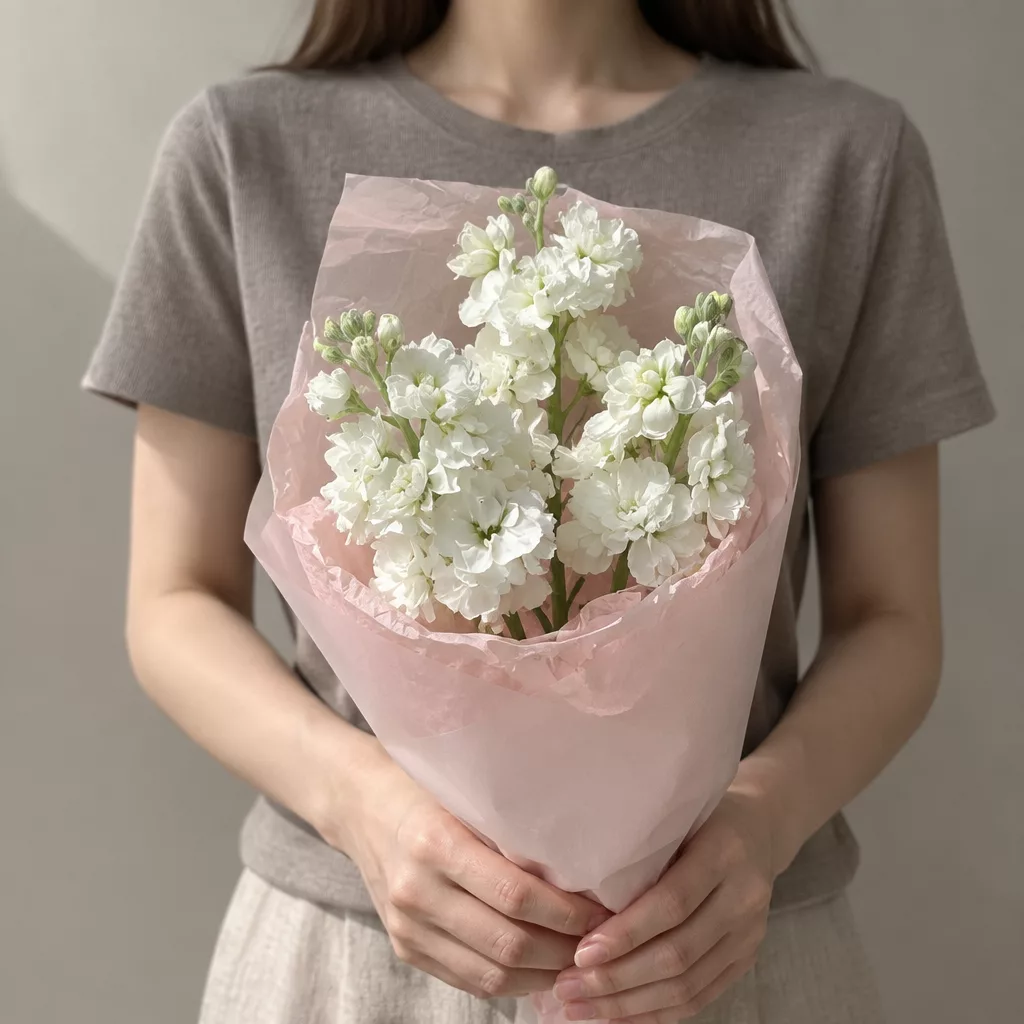
Yes — presentation is taken seriously. A loosely wrapped or plainly packaged bouquet can undermine an otherwise beautiful arrangement. Structured wrapping with quality paper, a ribbon, and a properly written card signals that the gift was intentional and considered. For high-value client relationships especially, the way flowers are presented reflects directly on your company's attention to detail.
Ready to send flowers?
Pick the city, choose the bouquet, and a local florist takes it from there.
Choose a city →