Sending Flowers to a Business Partner in Russia: What to Choose and When
A well-chosen bouquet handed to a business partner at the right moment says something no printed card can quite manage — that you noticed the occasion, that you understand the culture, and that the relationship matters to you personally. In Russia, flowers at a formal meeting or deal signing are not an afterthought. They are a deliberate gesture, and the people receiving them will notice the detail, the freshness, and the thought behind the selection. This article will help you get every one of those details right.
Why Flowers Still Matter in Russian Business Culture
Russia has a long tradition of marking significant moments with fresh flowers. This goes well beyond romantic occasions — flowers appear at graduations, anniversaries, the opening of a new office, and the conclusion of an important contract. For a foreign partner or a company new to working in Russia, understanding this context is genuinely useful. Bringing flowers to a first serious meeting or a deal-signing ceremony is not considered old-fashioned. It is read as a sign of cultural awareness and personal warmth, two qualities that build trust faster than almost anything else in a business relationship.
The gesture works because it is personal without being overly familiar. A carefully arranged bouquet acknowledges the person across the table — their role, the significance of the day — without crossing into informality. Russian business culture tends to be formal in early stages, and flowers occupy a comfortable middle ground: they are warm but structured, generous but not excessive.
One practical point worth knowing: flowers given in a business context are almost always presented to an individual rather than left in a reception area. If you are meeting a director or a senior partner, the bouquet is for them specifically. This is why the choice of flowers and the quality of the arrangement carry real weight. A bouquet that looks assembled in a hurry, or one that has already started to droop, creates exactly the wrong impression — it suggests the gesture was obligatory rather than considered.
Bouquets we can deliver



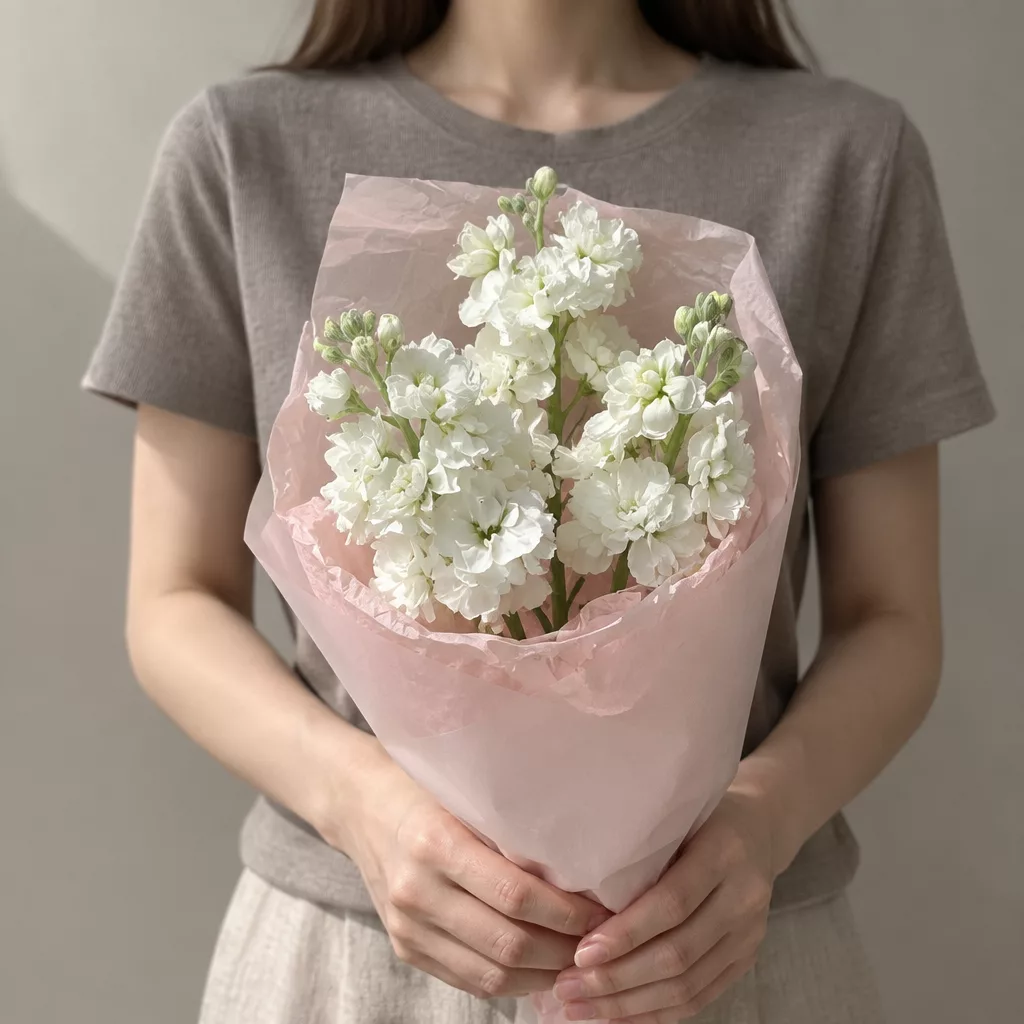
Reading the Occasion Before You Choose the Flowers
Before you think about varieties or colours, think about the moment itself. A deal-signing ceremony calls for something more formal and structured than a thank-you bouquet sent after a successful project. An opening event at a new office might suit something abundant and celebratory. A first meeting where you want to make a good impression without overwhelming your counterpart needs restraint and elegance rather than scale.
For a formal handover or contract signing, the arrangement should feel considered and deliberate. Tall, structured bouquets built around roses, calla lilies, or lisianthus in white, cream, or deep burgundy read as professional and serious. These are not colours chosen by accident — white and cream suggest clarity and respect, while deep burgundy carries a sense of occasion without veering into anything too personal.
For a congratulatory gift — perhaps a partner's company anniversary or the launch of a new branch — you have more room to work with colour and volume. Warm tones like peach, coral, and gold work well in mixed arrangements that include roses, alstroemeria, and spray chrysanthemums. These combinations last well in an office environment, which matters when the bouquet will sit on a desk or in a meeting room for several days.
Always consider the setting the flowers will go into. A sleek, minimalist boardroom calls for a clean, architectural arrangement. A warmer, more traditional office can carry something fuller and more layered. When you place your order, describing the setting to your florist helps them make the right call on shape and proportion.
Which Flowers Work Best for Formal Business Occasions
Roses remain the default choice for corporate gifting in Russia, and for good reason — they are universally understood as a mark of respect and quality. For business settings, long-stemmed roses in white, cream, or red are the most reliable option. Red roses are entirely appropriate in corporate contexts here, unlike in some other cultures where they carry exclusively romantic meaning. A monochromatic bouquet of fifteen or twenty-one long-stemmed red roses, tightly arranged and finished with minimal greenery, is a classic that reads as both generous and tasteful.
Calla lilies are an excellent alternative or complement. Their architectural shape suits a formal setting, they last well out of water for several hours during transport, and they carry a sense of understated elegance that works across industries. A bouquet combining white calla lilies with deep green foliage and a single accent colour — perhaps dusty rose or burgundy ranunculus — photographs beautifully and makes an impression in the room.
Lisianthus is worth knowing about. It resembles a refined peony, holds its shape well, and comes in white, purple, and pale pink. It works particularly well in mixed arrangements where you want texture and softness without the arrangement looking casual. Eustoma, as it is also called, is a favourite in premium corporate work precisely because it elevates a bouquet without demanding attention the way an orchid might.
Avoid sunflowers, bright mixed wildflowers, or anything that reads as informal or garden-style for a first formal meeting. These are lovely flowers, but they signal a different kind of relationship — one that has not yet been established.
Choosing by Budget Without Losing the Effect
The size and cost of a corporate bouquet should feel proportional to the occasion and the relationship, not simply as large as possible. A modest but immaculately presented arrangement of fifteen white roses with clean ribbon and a handwritten card will outperform an oversized mixed bouquet that looks thrown together. Presentation and freshness carry more weight than volume.
At a moderate budget, a tight round bouquet of spray roses or standard roses in a single colour, finished with a satin ribbon and kraft paper, is a dignified and appropriate choice. Spray roses give the impression of a fuller arrangement while using fewer stems, and varieties like Bombastic or Lydia hold their form and fragrance well. This kind of bouquet is ideal for a thank-you gift or a secondary meeting where a gesture is appropriate but a grand statement is not.
At a higher budget, consider combining two or three premium varieties. A bouquet built around garden roses — varieties like David Austin types with their cupped, layered form — paired with white lisianthus and eucalyptus creates something that feels genuinely luxurious without being showy. These arrangements work for significant milestones: a contract anniversary, a major deal close, or a first meeting with a very senior partner.
For the highest-tier occasions, a structured arrangement in a presentation box or a low, wide design in a hat box adds an extra layer of polish. Box arrangements travel particularly well, arrive looking exactly as they were packed, and sit elegantly on a boardroom table without needing a vase. They also photograph well, which matters when the moment will be documented.
Presentation, Wrapping, and the Details That Get Noticed
In Russian corporate culture, the wrapping and presentation of a bouquet are read as carefully as the flowers themselves. A loosely wrapped bouquet in plain cellophane suggests the gift was purchased in haste. A bouquet finished with quality kraft paper, a grosgrain or satin ribbon, and a clean, minimal card suggests care and intention. These details are noticed immediately, often before the flowers themselves are properly examined.
Colour coordination between the wrapping and the flowers matters more than many people expect. A bouquet of white and cream roses wrapped in ivory kraft and finished with a champagne ribbon feels cohesive and refined. The same flowers wrapped in bright red cellophane feel mismatched and slightly chaotic. When in doubt, neutral wrapping — kraft, white, or grey — works with almost any flower colour and reads as professional.
A handwritten card is almost always better than a printed one for a personal business gift. It does not need to be long — two or three sentences acknowledging the occasion and the partnership is exactly right. If you are sending on behalf of a company rather than an individual, a short printed card on company letterhead is also appropriate, but it should still be warm in tone rather than purely formal.
One detail that often gets overlooked: the stem ends. When a bouquet arrives with cleanly cut, fresh stems and the flowers are at the right stage of opening — not fully blown, not completely tight — it signals that the florist knew what they were doing and that the flowers were prepared recently. This is exactly what you want your business partner to see when they unwrap the arrangement.
Arranging Same-Day Delivery for a Business Meeting
Timing is everything with corporate flower gifts, and same-day delivery requires a clear plan. The most common mistake is leaving the order too late — placing it an hour before a meeting and hoping the bouquet arrives looking perfect. Flowers need time to be properly assembled, conditioned, and packaged, and delivery logistics in a large city like Saint Petersburg or Moscow require a realistic window.
For a morning meeting or ceremony, placing your order the evening before or early the same morning gives the best results. The florist can condition the stems overnight, ensure the flowers have opened to the right stage, and have the arrangement ready well before the delivery window begins. Flowers that are assembled and immediately rushed into a vehicle on a hot day will not arrive in the same condition as flowers that were properly prepared.
Temperature is a real factor, particularly in summer. Roses and calla lilies are sensitive to heat, and a bouquet left in a warm car for more than twenty or thirty minutes will begin to wilt noticeably. A good delivery operation accounts for this — using insulated packaging in warm months and ensuring the transit time is genuinely short. When you place your order, it is worth asking specifically about the delivery window and how the flowers will be protected during transit.
Turboflora delivers across Russia within one to two hours of an order being placed, which makes same-day corporate gifting genuinely practical rather than just theoretically possible. If you know the address, the preferred delivery time, and the name of the recipient, the rest can be handled quickly and reliably, even on the day of the meeting itself.
Keeping the Flowers Fresh Once They Arrive
A beautiful bouquet that wilts within two days reflects poorly on the giver, even if the flowers were perfect at the moment of delivery. Helping your recipient — or briefing your assistant to pass on care instructions — is a small step that extends the life of the arrangement and keeps the gesture visible for longer.
The first thing to do when a bouquet arrives is to recut the stems at a forty-five degree angle, removing about two centimetres from the bottom. This opens up the stem and allows the flower to draw water immediately. Use a sharp knife rather than scissors, which can crush the stem tissue. Place the flowers in clean, cool water as soon as possible — ideally within twenty minutes of unwrapping.
Roses and lisianthus prefer cool environments and will last significantly longer away from direct sunlight, heating vents, and fruit bowls. Ethylene gas released by ripening fruit accelerates wilting in cut flowers, and a bouquet placed near a fruit bowl in a boardroom can lose two or three days of vase life as a result. A spot near a window with indirect light and away from heat sources is ideal.
Change the water every two days and recut the stems each time. Remove any leaves that fall below the waterline, as they decompose quickly and cloud the water. With proper care, roses will last seven to ten days, calla lilies eight to twelve days, and lisianthus up to two weeks. A bouquet that is still looking good a week after delivery is a quiet reminder of the relationship and the occasion — which is exactly the point of sending it in the first place.
Flowers given thoughtfully in a Russian business context do real work — they open conversations, mark milestones, and signal that the person across the table is worth the effort of a considered gesture. The variety you choose, the way it is wrapped, the freshness when it arrives, and the timing of the delivery all contribute to the impression it makes. Get these details right and the bouquet becomes part of the story of the relationship, remembered long after the meeting itself.
Frequently asked questions
Is it appropriate to send flowers to a male business partner in Russia?
Yes, entirely. In Russian business culture, flowers are given to both men and women to mark significant occasions. A structured, formal arrangement — long-stemmed roses or calla lilies in neutral or deep colours — is the right choice. The key is keeping the style formal and the occasion clear, which removes any ambiguity about the gesture.
How many flowers should a corporate bouquet contain?
Russian tradition holds that even numbers of flowers are associated with mourning, so bouquets for celebratory or professional occasions should always contain an odd number of stems — fifteen, seventeen, twenty-one, or twenty-five are all appropriate for a corporate gift. This is a widely observed custom and worth following even if the recipient may not consciously count the stems.
What colours should I avoid for a business bouquet in Russia?
Yellow flowers carry associations with separation and bad luck in Russian popular culture, so they are best avoided in a business context unless specifically requested. Bright, informal colours like orange or mixed rainbow arrangements can feel too casual for a formal first meeting. White, cream, burgundy, deep red, and soft pink are all safe and well-received choices for professional settings.
Can I arrange delivery directly to a meeting room or office reception?
Yes. When placing your order, provide the full address including floor and office number, the name of the recipient, and your preferred delivery window. For high-security office buildings, it helps to notify reception in advance that a delivery is expected. Turboflora will coordinate the timing to ensure the bouquet arrives before your meeting begins.
How far in advance should I order flowers for a same-day business event?
Ordering at least three to four hours before the required delivery time gives the best results for a corporate arrangement. This allows the florist to source the freshest stems, condition them properly, and assemble the bouquet without rushing. For very early morning deliveries, placing the order the previous evening is strongly recommended to guarantee both quality and punctuality.
Ready to send flowers?
Pick the city, choose the bouquet, and a local florist takes it from there.
Choose a city →