Sending Flowers Across Russia: Cities, Timing, and What to Expect
You want to send flowers to someone who lives three time zones away, and you want them to arrive fresh, on time, and looking like you chose them yourself. That is exactly the kind of order we handle every day at Turboflora — from Saint Petersburg to Vladivostok, from Murmansk to Sochi. This article walks you through where we deliver, how timing works depending on the city, and what you should know before you place your order.
The Core Coverage: Major Cities Where Same-Day Delivery Is Standard
In Russia's largest cities — Moscow, Saint Petersburg, Novosibirsk, Yekaterinburg, Kazan, Nizhny Novgorod, Chelyabinsk, Omsk, Samara, and Rostov-on-Don — same-day delivery within one to two hours is the norm rather than the exception. These cities have the density and infrastructure that allow a fresh bouquet to travel from our cooler to a doorstep while the roses are still firm and the tulips have not yet opened past their first blush.
For the recipient, this means the flowers arrive the way a florist intends them to: tight buds that will open slowly over the next three to five days, stems that have not been sitting in transport water for hours, and wrapping that is still crisp. A peony delivered within ninety minutes of being arranged looks entirely different from one that has traveled in a warm vehicle for half a day.
If you are ordering for someone in one of these cities and you place your order before noon local time, you can reliably expect delivery the same afternoon. Evening orders placed before 8 p.m. local time are typically fulfilled the same night or early the following morning, depending on the arrangement you choose. For occasions like birthdays or anniversaries where the timing matters as much as the flowers themselves, these cities give you the most flexibility.
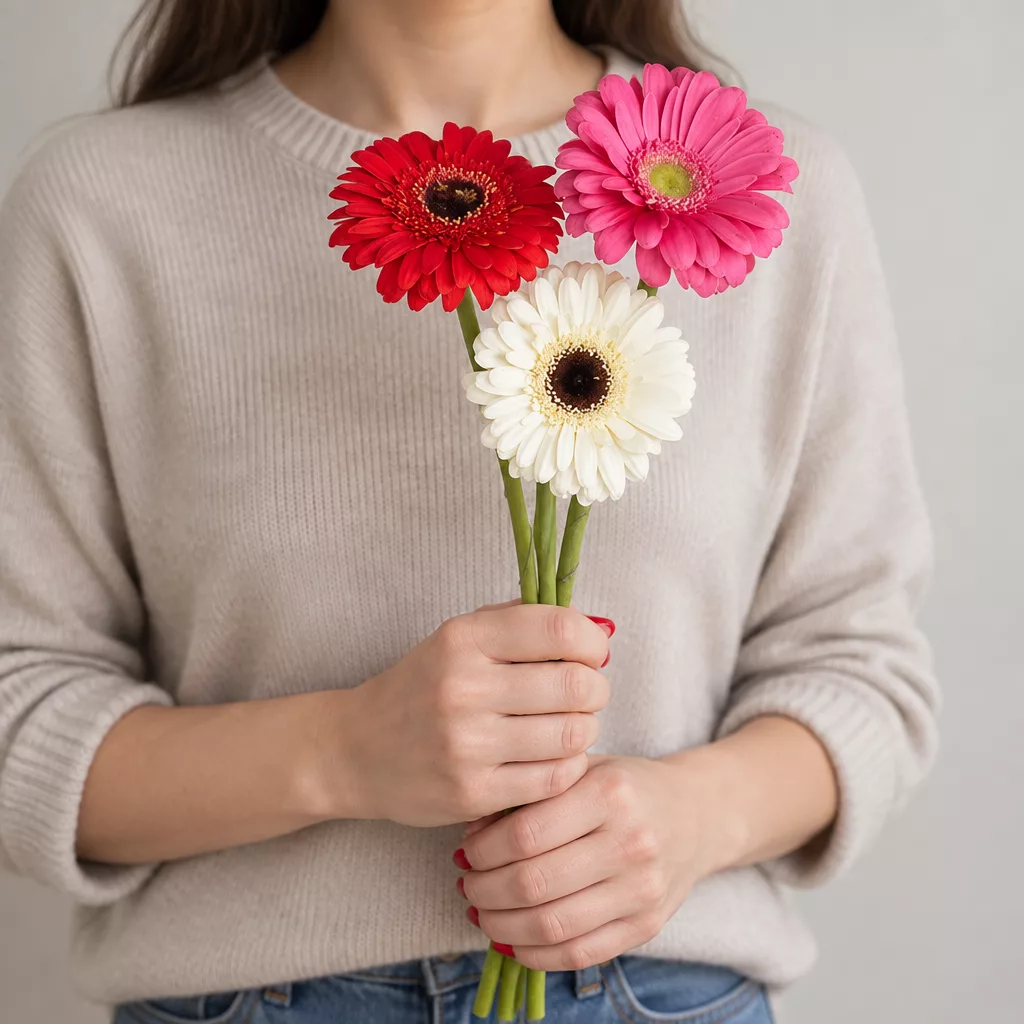
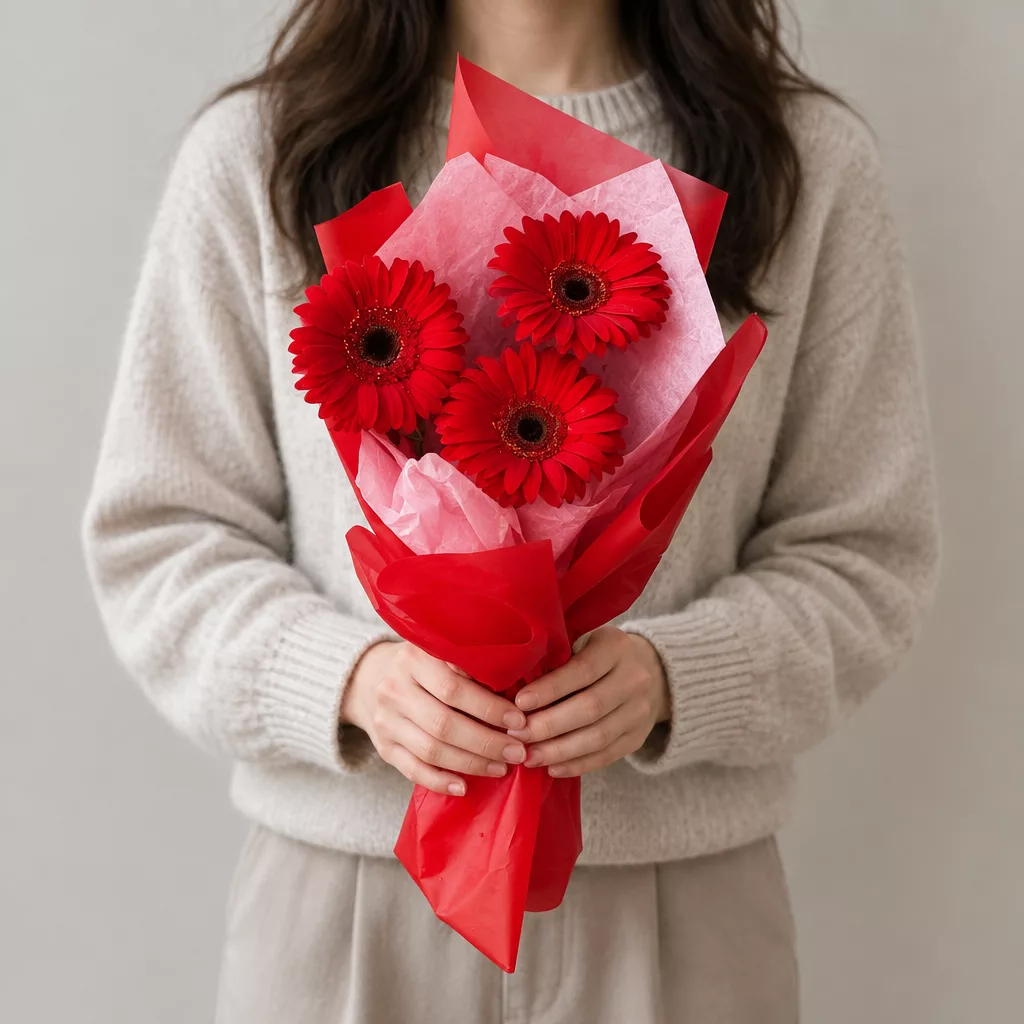
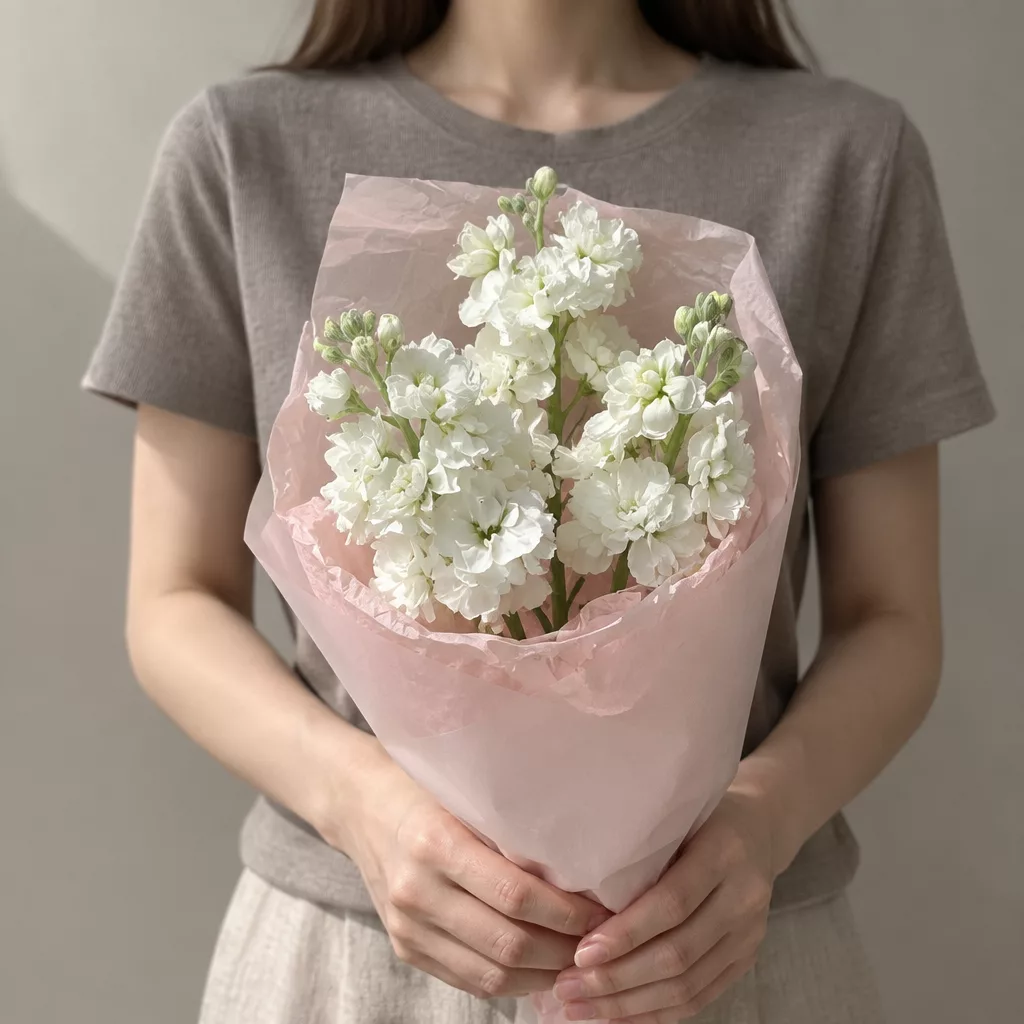
Bouquets we can deliver

Sending Flowers to Kazan? Here Is What to Expect
Kazan is one of the most popular destinations for flower deliveries from Saint Petersburg, partly because of the large student population and partly because of the city's strong culture of gift-giving tied to Tatarstan's own calendar of celebrations alongside national Russian holidays. If you are not familiar with Russian customs, it is worth knowing that flowers are given in odd numbers — three, five, seven, eleven — because even numbers are traditionally reserved for funerals. This applies across the country, not just in Kazan.
Delivery to Kazan from our Saint Petersburg base works on a same-day basis for orders placed in the morning. The city is in the same time zone as Moscow, which makes coordination straightforward. We typically recommend roses, spray chrysanthemums, or alstroemeria for long-distance deliveries to Kazan because these varieties hold their structure well even during transit and do not drop petals under mild temperature changes.
For autumn and winter orders, Kazan gets genuinely cold, and we account for that in how we package the bouquet. Flowers going into temperatures below minus ten degrees Celsius need insulated wrapping, not just decorative paper. A bouquet that looks beautiful when it leaves our hands should look the same when the recipient opens the door. We adjust our packaging seasonally rather than using a single year-round approach, which makes a real difference in January when the temperature gap between indoors and outdoors can exceed forty degrees.
Smaller Cities and Regional Centres: How Coverage Works Beyond the Obvious
Beyond the top ten or fifteen cities, Russia has dozens of regional centres — places like Ulan-Ude, Chita, Magnitogorsk, Saransk, or Syktyvkar — where the demand for flower delivery exists but the logistics are more complex. We cover many of these cities, but the honest answer is that delivery windows are wider and same-day service is not always guaranteed depending on the time of order and the current season.
For these locations, we recommend ordering at least a day in advance when possible. This is not about distance alone — it is about ensuring the flowers are arranged and packaged at the right moment so they arrive at peak freshness rather than slightly past it. A bouquet of garden roses, for example, has a much shorter window of perfection than a bouquet built around alstroemeria or waxflower, which are naturally more robust. For smaller city deliveries, we often suggest leaning toward varieties with longer vase life as a practical choice.
If you are unsure whether we deliver to a specific smaller city, the most reliable thing to do is check at checkout or contact us directly before placing the order. We would rather tell you the honest delivery window upfront than have you expect a two-hour turnaround in a city where the realistic timeframe is next-morning. Transparency about timing is part of what makes the experience feel reliable rather than stressful, especially when you are sending flowers for an occasion that has a fixed date.
How Russian Geography and Time Zones Affect Your Order
Russia spans eleven time zones, which is something that catches people off guard when they are ordering from outside the country or from the European part of Russia for someone living in Siberia or the Far East. When it is noon in Saint Petersburg, it is already 5 p.m. in Novosibirsk and 8 p.m. in Vladivostok. This matters enormously for same-day delivery.
When you place an order, the delivery window we quote is always based on the local time at the destination city, not the time where you are sitting. So if you are in Saint Petersburg at 10 a.m. and you want to send flowers to Khabarovsk, where it is already 5 p.m., the same-day window may already be closing. We flag this clearly during the ordering process so there are no surprises.
The practical advice here is simple: if you are sending flowers to a city that is more than three or four time zones east of Moscow, try to place the order the evening before or early in the morning your time. That gives enough local daytime at the destination to arrange, pack, and deliver properly. Flowers rushed into a vehicle at the last moment of a delivery window often arrive with more damage than flowers that had time to be handled carefully. The time zone difference is not a problem — it just requires a small amount of planning that we are always happy to help you with when you reach out.
Seasonal Conditions and How They Shape What We Send
Russia's climate is not uniform, and what works as a delivery bouquet in Sochi in February is not the same as what works in Novosibirsk in the same month. Sochi sits on the Black Sea coast and rarely drops below freezing; Novosibirsk in February can reach minus thirty degrees Celsius. These are not abstract facts — they directly affect which flowers we recommend and how we prepare the bouquet for transit.
In cold conditions, we avoid flowers with very delicate petals or high water content, like open hydrangeas or fully bloomed garden roses, because they are vulnerable to frost damage even in brief exposure. Instead, we lean toward roses in tight bud stage, carnations, solidago, and chrysanthemums, which tolerate cold transitions much better. We also use thermal packaging for deliveries in winter months in Siberian and northern cities, wrapping the bouquet in insulating material before the decorative outer layer.
In summer, the challenge reverses. Heat above twenty-five degrees Celsius accelerates the opening of flowers and shortens vase life. For summer deliveries to southern cities like Krasnodar or Volgograd, we prioritize delivery in the cooler parts of the day — morning or early evening — and choose varieties that are naturally more heat-tolerant. Sunflowers, for instance, are a wonderful summer choice not just aesthetically but practically: they handle warmth far better than, say, lisianthus, which wilts quickly outside refrigeration. Knowing the season at the destination is just as important as knowing the occasion.
What Happens After Delivery: Care Tips for the Recipient
Once the flowers arrive, what the recipient does in the first hour makes a significant difference in how long they last. This matters especially for deliveries to cities far from Saint Petersburg, where the flowers have already been through some degree of transit. Giving the recipient a simple heads-up about care is one of the kindest things you can do alongside the gift itself.
The first step is always a fresh cut. Even if the stems look fine, cutting two to three centimetres off the base at an angle — ideally under water or immediately before placing in water — reopens the vascular tissue that draws water up the stem. Flowers that have been in transit, even for a short time, benefit enormously from this. Use a clean, sharp knife rather than scissors, which can crush the stem.
The vase water should be cool and clean. Tap water is fine in most Russian cities; there is no need for special additives if the vase is clean and the water is changed every two days. Keep the bouquet away from direct sunlight, radiators, and fruit bowls — ethylene gas from ripening fruit shortens the life of roses and carnations noticeably. In a well-maintained vase with fresh water, roses should last seven to ten days, alstroemeria up to two weeks, and chrysanthemums often longer. These are realistic numbers for flowers that arrive fresh, not optimistic marketing claims. The care the recipient gives in the first day largely determines where in that range the bouquet lands.
Choosing the Right Bouquet for a Long-Distance Delivery
Not every bouquet is equally suited to travel, and when you are sending flowers across Russia rather than across town, the composition of the arrangement matters more than it might seem. The goal is to choose flowers that will look their best at the moment of arrival, not at the moment of arrangement — those can be two different things.
For long-distance deliveries, we generally recommend building around flowers that travel in tight bud and open gradually: roses, alstroemeria, carnations, and lisianthus are reliable choices. Spray chrysanthemums are excellent for mixed bouquets because they add volume without fragility. Avoid arrangements built primarily around open blooms or very delicate flowers like anemones or ranunculus if the delivery window is longer than two hours — these are at their most beautiful right after arrangement, and they do not hold that peak for long.
Presentation also plays a role. A bouquet wrapped in quality kraft paper with a water-retaining base at the stem end arrives in far better condition than one in purely decorative wrapping with no moisture source. For deliveries beyond four or five hours of transit, we include a small water-holding element at the base of the stems, which is not glamorous but makes a real difference in how the flowers look when unwrapped.
Think of the bouquet as a gift that has to survive a small journey before it can be fully appreciated. Choosing varieties and presentation with that journey in mind is not a compromise — it is what a thoughtful florist does.
Sending flowers across Russia is entirely possible, and with the right choices it can feel just as personal and precise as ordering for someone across the street. The key is understanding the time zone at the destination, the season, and which varieties travel well — and then letting us handle the rest. Whether you are sending a bouquet of tight-budded roses to a friend in Yekaterinburg or a lush mixed arrangement to someone celebrating in Vladivostok, the goal is always the same: flowers that arrive looking like you chose them in person, because in every way that matters, you did. We deliver bouquets across Russia in 1–2 hours.
Frequently asked questions
Do you deliver to cities in Siberia and the Russian Far East?
Yes, we deliver to many cities across Siberia and the Far East, including Novosibirsk, Krasnoyarsk, Irkutsk, Khabarovsk, and Vladivostok. Because of the time zone difference with Saint Petersburg, we recommend placing orders for these destinations a day in advance or early in the morning to ensure delivery within local business hours.
How do you keep flowers fresh during long deliveries in winter?
For deliveries in cities where winter temperatures drop significantly, we use insulated thermal packaging around the bouquet before adding any decorative wrapping. We also choose varieties that tolerate cold transitions well, such as roses in tight bud, carnations, and chrysanthemums, rather than open or high-moisture blooms that are vulnerable to frost damage.
Can I schedule a delivery for a specific time in another city?
Yes, you can request a delivery window when placing your order. We always quote delivery times in the local time of the destination city, not Saint Petersburg time. For cities more than three time zones east of Moscow, we strongly recommend scheduling at least the evening before to ensure the local team has enough daytime to complete the delivery comfortably.
Why do Russian bouquets always have an odd number of flowers?
In Russian tradition, even numbers of flowers are associated with mourning and are placed at graves. Giving an odd number — three, five, seven, or more — is the standard for any celebratory or affectionate occasion. This custom applies nationwide and across all age groups, so we always arrange bouquets with this in mind unless a customer specifically requests otherwise.
Which flowers last longest after a long-distance delivery?
Alstroemeria consistently offers the longest vase life, often lasting ten to fourteen days with proper care. Spray chrysanthemums and carnations are also excellent for longevity. Roses last seven to ten days when cut and watered correctly on arrival. We generally avoid building long-distance bouquets around anemones, ranunculus, or fully open peonies, as these have a shorter peak window.
Ready to send flowers?
Pick the city, choose the bouquet, and a local florist takes it from there.
Choose a city →