Writing a Card in English for a Russian Recipient — Everything You Need
You are ordering flowers from abroad, or simply more comfortable writing from the heart in English, and now you are staring at the card message field wondering whether your words will actually reach the person you are sending them to. The short answer is yes — English card messages are accepted, delivered exactly as written, and often treasured precisely because they feel personal and unhurried. But there are a few things worth knowing before you type the first word, from character limits to how Russian recipients typically respond to a foreign-language note.
Yes, English Messages Are Accepted — Here Is What That Means in Practice
When you place your order through Turboflora, the card message field accepts Latin characters without any restriction. You can write in English, French, Spanish, or any language that uses a standard Latin alphabet. The message is printed or handwritten onto the gift card exactly as you submitted it, character by character, with no automatic alteration to spelling, punctuation, or line breaks. Nothing is paraphrased or shortened without your knowledge.
What this means practically is that your recipient in Saint Petersburg, Moscow, Kazan, or anywhere else Turboflora delivers will see your words precisely as you intended them. There is no software translation layer sitting between your sentiment and the card. If you write "You make every ordinary Tuesday feel like a celebration," that is the sentence your recipient reads.
One thing to keep in mind is that the courier hands the bouquet over in person, and the card travels with the flowers inside a small sealed envelope. The recipient opens it privately, in their own time, which gives even a simple English message a quiet, intimate quality. Many senders from the United Kingdom, the United States, and Western Europe find this detail reassuring — your words are not read aloud at the door, they are discovered. That moment of unfolding a handwritten card alongside fresh ranunculus or garden roses is something recipients remember long after the petals have faded.
Bouquets we can deliver

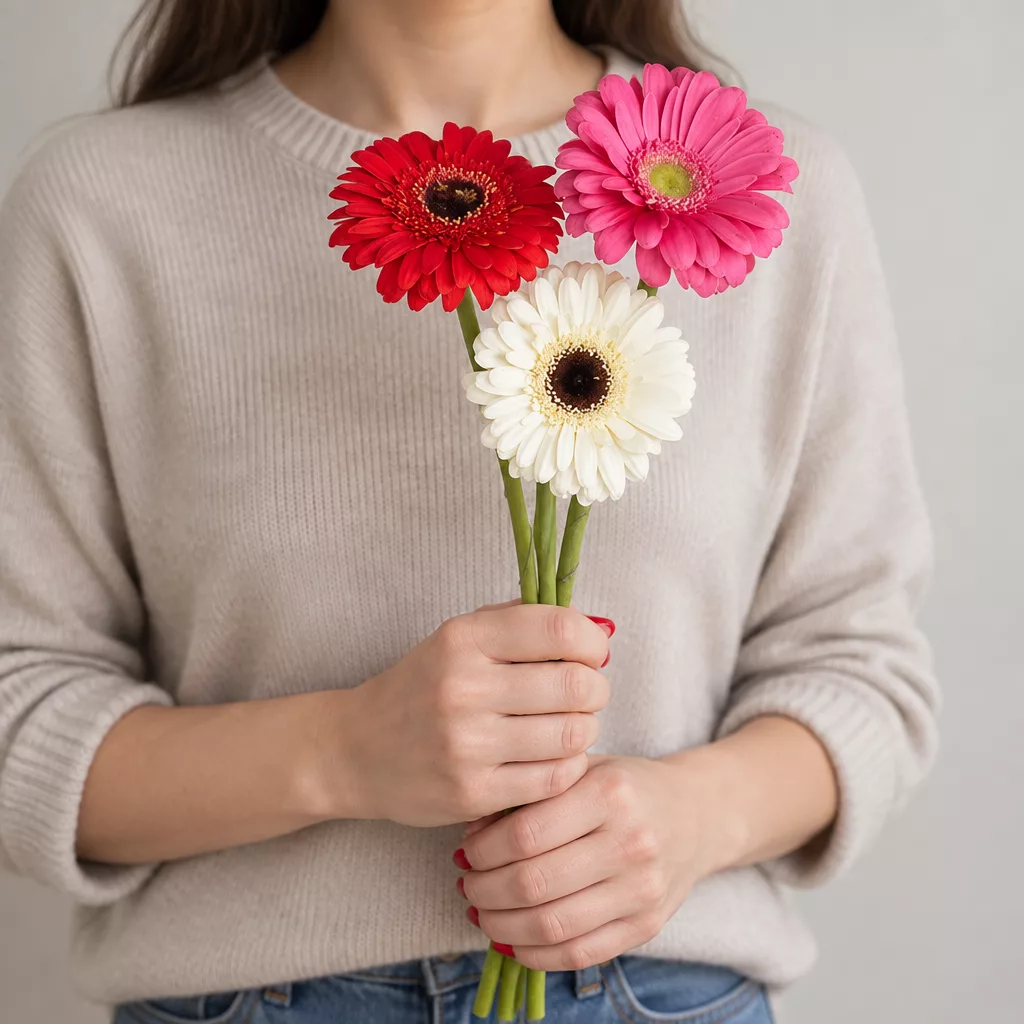

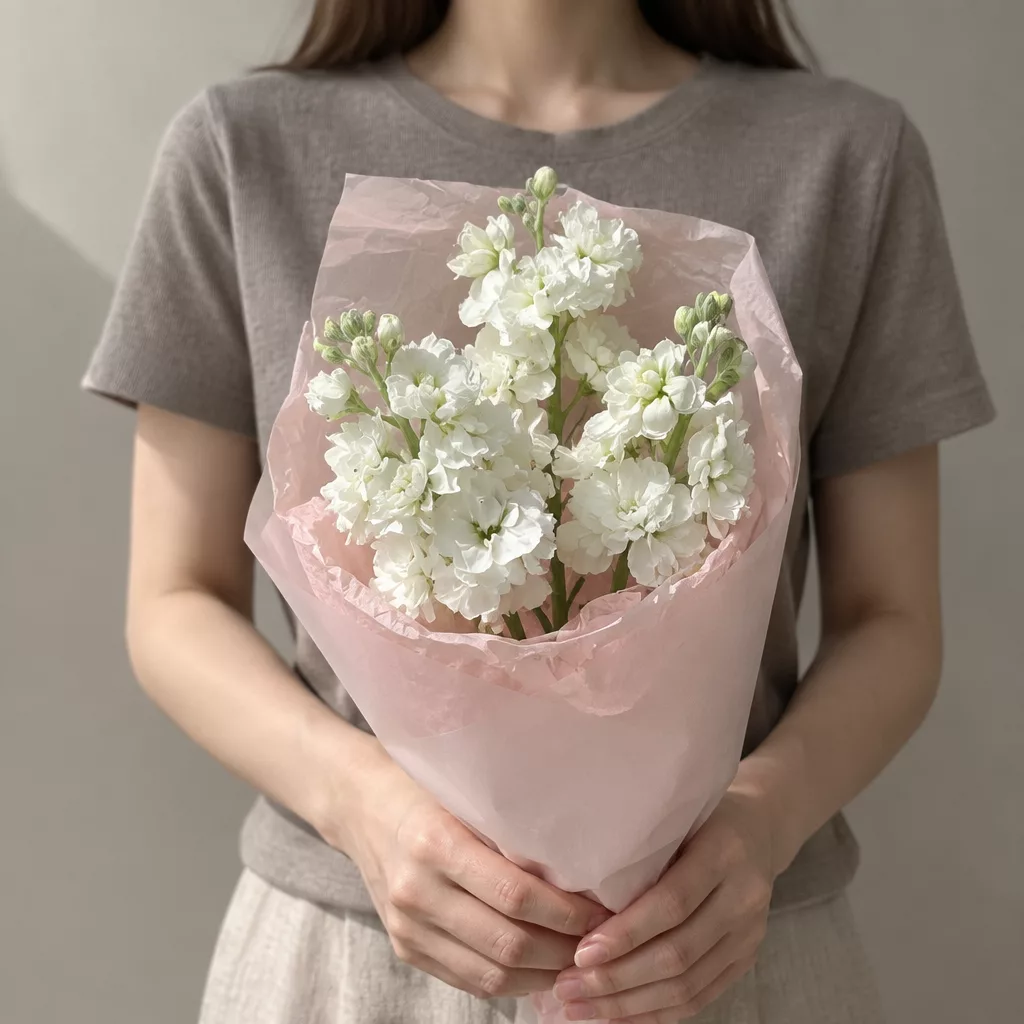
Will Your Russian Recipient Actually Understand an English Message?
This is the question most senders hesitate to ask out loud, and it deserves a direct, honest answer. English literacy in Russia varies significantly by generation, city, and profession. Younger recipients, particularly those under forty living in major cities, typically read English with ease — many studied it at school, use it at work, or consume English-language media daily. For this group, receiving a card in English often feels modern and genuinely touching.
For older recipients or those in smaller towns, English may feel unfamiliar. A warm message in a language they cannot read fully is not offensive — Russians generally understand that an international sender is expressing care — but the emotional precision of your words may not land the way you hoped. If you are sending to a grandmother, a colleague of a previous generation, or anyone you know is not comfortable with English, it is worth considering a bilingual approach.
A practical solution many senders use is to write a short English phrase — "With all my love" or "Thinking of you today" — followed by a Russian transliteration or a second sentence in Russian that they have had a friend help them write. Even a single Russian line shows effort and warmth. Turboflora does not alter what you submit, so the combination you craft is exactly what gets printed. You are in full control of how much of yourself comes through in both languages, and that flexibility is one of the quiet strengths of ordering with intention rather than rushing through the checkout.
Translation Into Russian — What the Shop Offers and What You Arrange Yourself
Turboflora does not provide an in-house translation service as part of the standard ordering process. The card message you submit is the card message that goes out. This is intentional: a florist translating your personal words introduces the risk of losing your voice, softening a phrase that was meant to be bold, or adding formality to something tender. Your message belongs to you, and the shop treats it that way.
If you want your message in Russian, the most reliable approach is to write it yourself — or with help — before you reach the card field. Free translation tools like DeepL handle Russian well for short, affectionate phrases, though they can occasionally produce slightly stiff results. A native Russian speaker reviewing the output before you copy it into the order form takes less than five minutes and makes a real difference. If you have a Russian-speaking friend or colleague, a quick message asking them to check two sentences is a small favour with a large payoff.
For professional or formal occasions — a business congratulation, a milestone anniversary for a senior colleague — investing a few minutes in a properly phrased Russian message signals respect for the recipient's language and culture. Russians place genuine value on the effort of communication, and a well-chosen phrase in their own language, even a brief one, is noticed and appreciated. For romantic or close personal relationships, English often works beautifully on its own, carrying the warmth of your natural voice without any translation at all. Choose the approach that fits the relationship, not the one that feels easiest at checkout.
Character Limits on Gift Cards — How Much Space You Actually Have
The card message field on the Turboflora order form accepts up to two hundred and fifty characters. That is roughly two to four sentences of natural, flowing language — enough to say something real without turning the card into a letter. Think of it as the length of a thoughtful text message rather than an email, and you will naturally write at the right scale.
Two hundred and fifty characters sounds modest until you start writing. "Happy birthday — you deserve every beautiful thing, and I hope these flowers remind you of that every time you walk past them" is one hundred and twelve characters. You have room for that and a personal closing. The constraint is actually a gift: it pushes you toward clarity, and the most memorable card messages are almost always the ones that do not try to say everything at once.
A few practical notes on formatting within that limit. Line breaks are preserved when you press enter in the field, so you can structure your message across two or three short lines if you prefer the visual rhythm of poetry over prose. Punctuation counts toward the character total, but standard marks — commas, dashes, exclamation points — are all accepted. Avoid pasting text copied from a word processor without checking for smart quotes or special characters, as these occasionally display incorrectly on the printed card. Type directly into the field, or paste as plain text, and what you see on screen is what the recipient will hold in their hands alongside a bunch of freshly cut stems still cool from the refrigerated van.
What Russian Recipients Think When They Receive an English Card
Russian gift-giving culture places enormous importance on the gesture of choosing and sending flowers. The act of ordering fresh blooms — especially a same-day or next-day delivery — signals effort and attention. An English card message, particularly from someone abroad, fits naturally into that frame: it says that the sender cared enough to reach across distance, language, and time zones.
For recipients who read English, a message in the sender's native language often feels more intimate than a translated one. There is something in the rhythm of someone's natural phrasing — the words they reach for instinctively — that a translation cannot fully replicate. A card that reads "I have been thinking about you more than you know" carries the sender's voice. A translated equivalent carries the translator's.
For recipients who do not read English fluently, the response is usually curiosity rather than confusion. They may ask a family member or friend to help them understand the message, which turns a private moment into a small, warm shared experience. More than one recipient has kept a card in English precisely because it felt like a little mystery, something to return to.
What Russian recipients rarely appreciate — and this is worth knowing — is a message that feels generic or copy-pasted. A bouquet of blush peonies with a card that says only "Best wishes" lands differently than the same flowers with a line that references something specific: a shared memory, a running joke, a quality you genuinely admire. Specificity is the real language everyone reads.
Tips for Writing a Card Message That Works Across Any Language Barrier
The most effective card messages for cross-language situations share a few qualities. They are short, they are specific, and they lead with feeling rather than information. "I am so proud of you" is immediately understood in any context. "Congratulations on your successful completion of the project" is technically accurate but emotionally flat and harder to parse for someone reading in a second language.
If you are writing in English for a recipient who may not be fully fluent, favour short sentences and common words. Avoid idioms that do not translate cleanly — phrases like "over the moon" or "knock it out of the park" may read as strange rather than warm. Instead, reach for direct emotional language: love, pride, gratitude, joy, missing you. These words carry across cultures with very little friction.
Consider the occasion as your anchor. A birthday card for a close friend can be playful and full of personality. A card for a new mother should feel soft and unhurried. A congratulations for a professional achievement should be warm but clear. Let the occasion set the register, and then write one true thing within that register. One true thing is always enough.
Finally, sign with your name even if the recipient knows the flowers are from you. The signature on a physical card has a different weight than a name in a text message. It is a small gesture, but it makes the card feel finished — a complete object rather than a note that got cut off. Flowers and a signed card together form a whole, and that wholeness is what the recipient keeps.
Ordering From Abroad — Timing, Confirmation, and What Happens at Delivery
If you are ordering from outside Russia, a few logistical details are worth understanding before you finalise your message. Turboflora operates in Saint Petersburg time, which is UTC plus three. If you are placing an order from New York, London, or Tokyo, factor in the time difference when selecting your delivery window. A delivery scheduled for two in the afternoon Saint Petersburg time may require you to order the evening before from the eastern United States.
Once your order is confirmed, you will receive a confirmation that includes the details you submitted — including your card message exactly as written. This is your chance to catch any typos before the card goes to print. Read it once more with fresh eyes. A single transposed letter in a name or a missing word in a key phrase is worth correcting at this stage rather than discovering in a photograph the recipient sends you later.
At delivery, the courier arrives within the one to two hour window, presents the bouquet, and hands over the sealed card envelope. The recipient does not need to sign for the flowers in most cases, but the courier confirms delivery. You may receive a notification when the delivery is completed, depending on the contact details you provided at checkout.
The flowers themselves — whether a structured arrangement of garden roses and eucalyptus, a loose bunch of seasonal tulips, or a bold display of tropical protea — arrive in water-conditioned packaging designed to maintain stem hydration during transit. The card travels separately from the wrapping, protected from moisture, so your message arrives as legible and clean as when you typed it.
Sending flowers with an English card message to a Russian recipient is genuinely straightforward, and the personal quality of writing in your own language often makes the message more moving, not less. Know your character limit, write one true thing with clarity and warmth, and trust that the gesture of sending fresh flowers across any distance speaks before the card is even opened. When the stems are well chosen and the message is honest, the combination does everything you need it to do. We deliver bouquets across Russia in 1–2 hours.
Frequently asked questions
Can I write my card message in a language other than English or Russian?
Yes. The card message field accepts any language written in standard Latin characters, including French, German, Spanish, and Italian. Cyrillic characters for Russian are also supported. If your language uses a different script — Arabic, Chinese, Japanese — contact Turboflora directly before placing your order to confirm compatibility with the card printing process.
What happens if I exceed the character limit in the card message field?
The field will stop accepting input once you reach two hundred and fifty characters, so you cannot accidentally submit a message that is too long. If you find yourself cut off mid-sentence, trim a phrase rather than abbreviating words, as abbreviations can read as rushed or unclear, especially for a recipient reading in a second language.
Will the courier read my card message before delivering it?
No. Your card message is sealed inside an envelope that travels with the bouquet and is intended to be opened by the recipient. The courier handles the envelope as a sealed item. Your words are private, which is exactly why a personal and honest message is always worth writing rather than defaulting to something generic.
Can I update my card message after placing the order?
Contact Turboflora as quickly as possible after placing the order if you need to change your card message. Because delivery happens within one to two hours, the window for amendments is short. Include your order number and the corrected message in your message to the team, and they will do their best to update it before the card is printed.
Is it appropriate to send flowers with an English message for a formal Russian occasion like a business congratulation?
It is appropriate, though a bilingual message tends to land better in formal professional contexts. Consider writing your main sentiment in English and adding a brief Russian phrase — even just a closing word like "Поздравляю" meaning congratulations — to show respect for the recipient's language. A native speaker can verify the Russian portion takes only a few minutes.
Ready to send flowers?
Pick the city, choose the bouquet, and a local florist takes it from there.
Choose a city →