Red, White, Yellow: What Flower Colours Mean When Sending Flowers in Russia
Choosing the right flower is only half the decision. The colour you pick carries its own message in Russia — one that your recipient will read instantly, even if they never say a word about it. Russian flower culture has strong, living associations with specific shades, and understanding them means the difference between a bouquet that feels perfectly chosen and one that quietly misses the mark. This guide walks through the colours that matter most, what they communicate, and how to use them with confidence whether you are sending from across town or from another country entirely.
Red: Passion, Respect and the Most Loaded Colour in the Vase
Red is the colour Russians reach for when the feeling is large and unambiguous. A bouquet of red roses — whether it is five long-stemmed Naomi roses or a dense arrangement of Explorer — signals romantic love, deep admiration or serious respect. It is the go-to choice for anniversaries, Valentine's Day and moments when someone wants to make an unmistakable declaration. Russians take red flowers seriously, and the recipient will take your gesture seriously in return.
That intensity is worth keeping in mind. Sending red roses to a colleague you have known for two weeks reads very differently than sending them to a partner of five years. The colour sets a high emotional register, so it suits occasions where you want to match that register — a significant birthday, a long-awaited reunion, a heartfelt thank you to someone who has done something exceptional.
Red also works beautifully in mixed arrangements when it is used as the anchor rather than the whole story. Pairing deep red roses with white gypsophila or cream lisianthus softens the intensity while keeping the warmth. If you want passion with a little elegance, try red spray roses alongside burgundy astrantia — the tonal variation adds depth without diluting the message. Avoid combining red with yellow in Russia if the relationship is romantic; that particular pairing carries its own separate cultural weight, which we will cover shortly. Stem length matters too: longer stems on red roses read as more formal and grand, while shorter, garden-style cuts feel intimate and modern.
Bouquets we can deliver

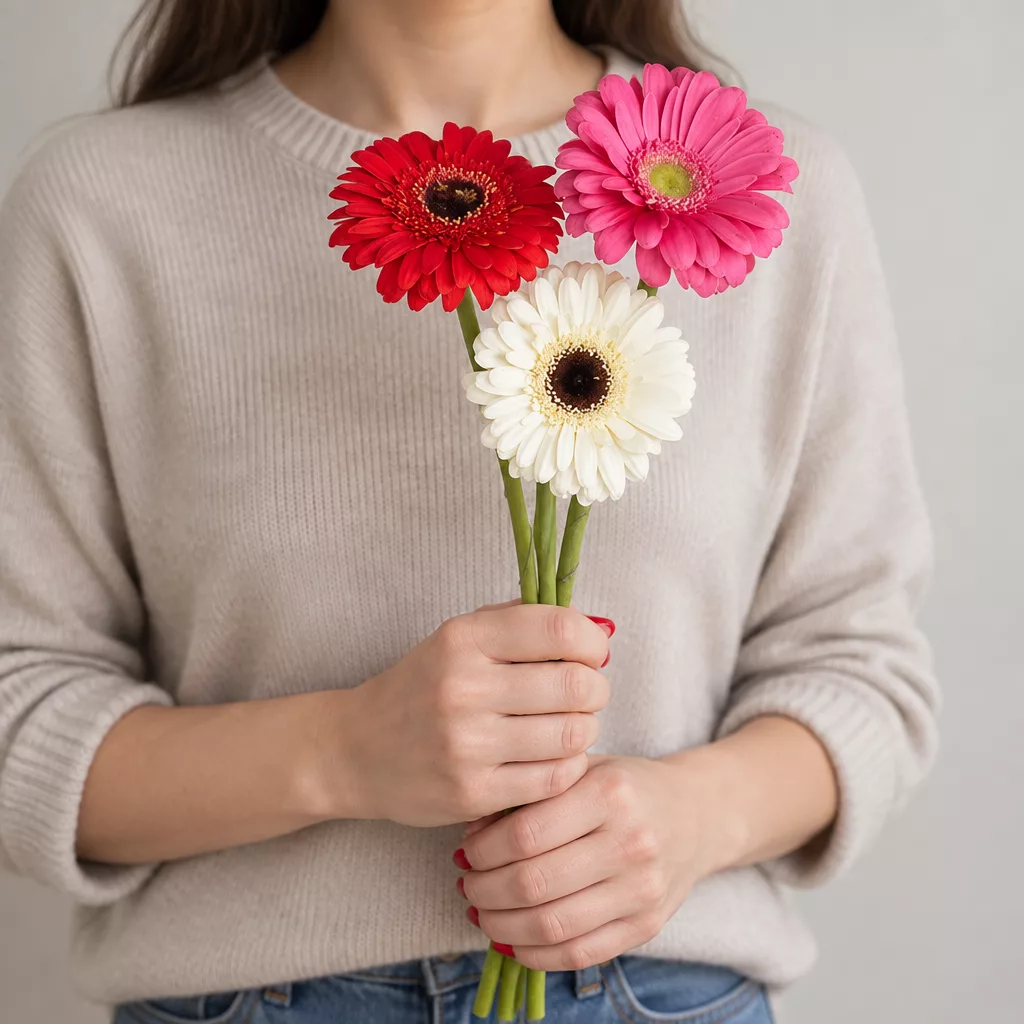
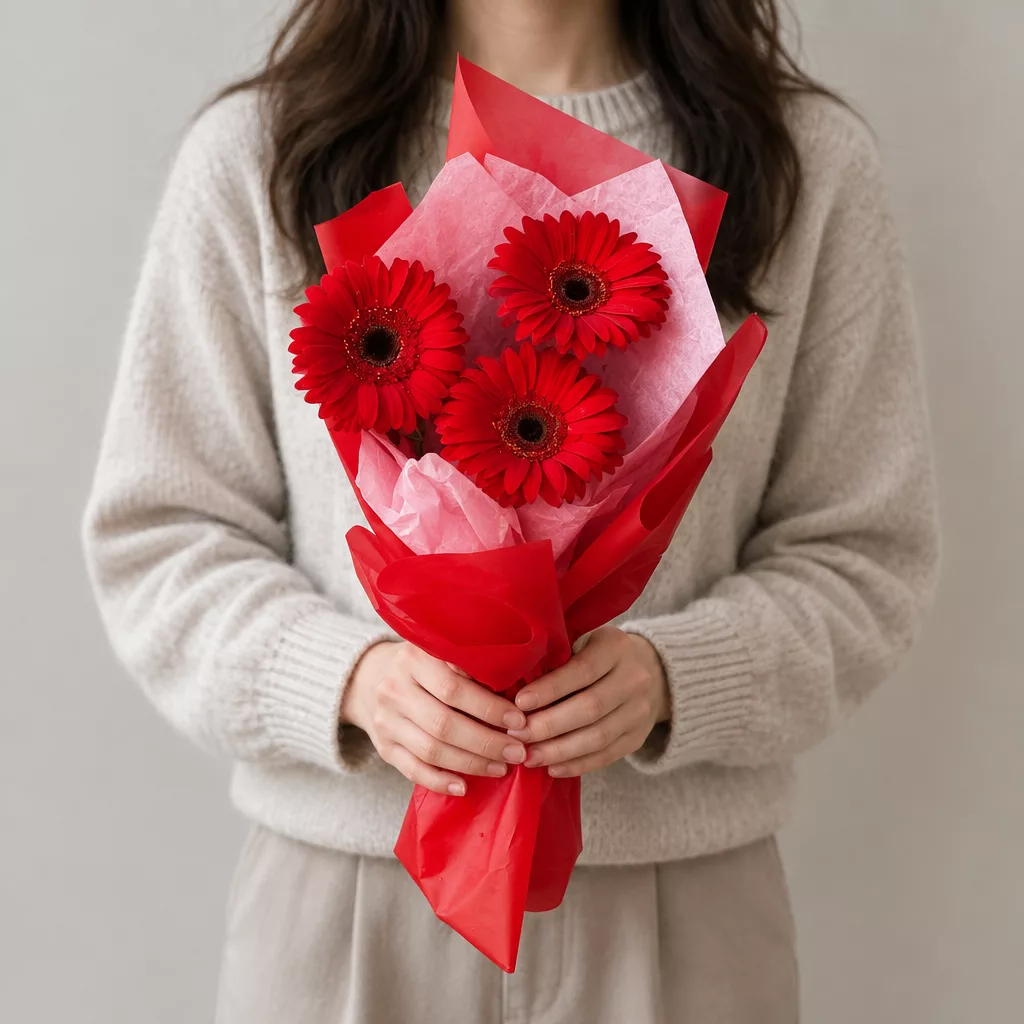
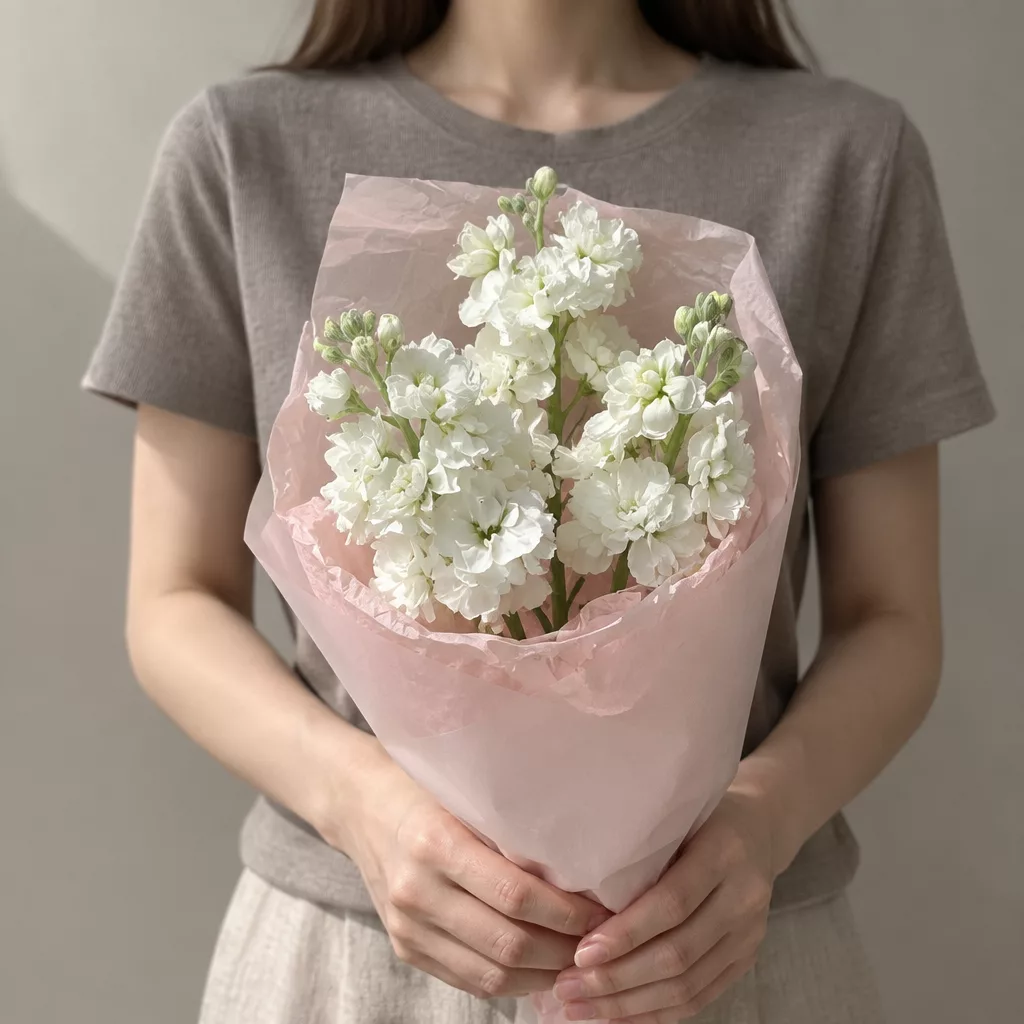
White: Purity, New Beginnings and the Colour of Celebration
White flowers in Russia are associated with sincerity, purity and fresh starts rather than with any solemn occasion. This is an important distinction for senders who may associate white blooms with western funeral customs. In Russia, white is genuinely celebratory — it is the colour of weddings, graduations, the birth of a child and the kind of heartfelt congratulation that wants to feel clean and luminous rather than loud.
White roses such as Avalanche or Mondial are perennial favourites for wedding bouquets and anniversary gifts. White peonies, in season from late spring through early summer, carry a particularly romantic connotation and are among the most requested flowers Turboflora delivers during May and June. White eustoma, also called lisianthus, is a more understated choice — its ruffled petals and long vase life of up to ten days make it a reliable addition to any white arrangement that needs to last.
For a gift that feels genuinely Russian in spirit, consider a monochrome white bouquet with varied textures: Avalanche roses, white freesia and white waxflower create a layered, fragrant result that photographs beautifully and fills a room with scent. White flowers also pair exceptionally well with greenery alone — eucalyptus, ruscus or pittosporum — for a contemporary look that feels fresh rather than sparse. One practical note: white petals show water spots and bruising more readily than darker colours, so keep them away from direct sunlight and change the vase water every two days to maintain that pristine appearance.
Yellow: The Colour That Needs Context — and Why It Is Worth Using
Yellow flowers carry the most complicated reputation of any colour in Russian flower culture. The widely held belief — and it is genuinely widespread, not a myth — is that yellow flowers signal separation, betrayal or the end of a relationship. Many Russians, particularly those over forty, will feel a flicker of unease receiving a purely yellow bouquet in a romantic context. It is one of the most common mistakes senders make when choosing flowers without local knowledge.
That said, the association is generational and context-dependent. Younger urban Russians, particularly in Saint Petersburg and Moscow, are far less likely to attach the old meaning to yellow flowers, and in a non-romantic context — a friend's birthday, a congratulation for a colleague, a cheerful get-well gift — yellow works beautifully. Yellow mimosa, which floods Russian markets every March around Women's Day, is universally adored and carries no negative connotation whatsoever. Yellow tulips in spring are bright and joyful. Yellow sunflowers read as warmth and generosity rather than farewell.
The safest approach with yellow is to mix it. A bouquet that combines yellow ranunculus with white roses and blush spray roses reads as cheerful and warm without triggering any cultural alarm. If you are uncertain about the recipient's age or sensibility, lean toward peach, apricot or coral tones instead — they carry yellow's warmth with none of the ambiguity. When in doubt, ask the florist at the time of ordering: a single detail about the recipient and the occasion is enough to steer the palette in the right direction.
Pink: The Safe Warmth That Works for Almost Everyone
Pink is perhaps the most universally well-received colour in Russia precisely because it sits between the intensity of red and the complexity of white and yellow. It signals affection, tenderness and care — emotions that are appropriate for a wide range of relationships without demanding the same level of romantic declaration that red requires. Pink flowers are a sensible choice when you want the bouquet to feel warm and personal but the relationship is not explicitly romantic.
Light pink roses such as Keira or Constance carry a soft, almost nostalgic quality that Russian women in particular respond to warmly. Hot pink, on the other hand — think cerise gerbera or magenta alstroemeria — reads as energetic and celebratory, perfect for a birthday where you want the flowers to feel as festive as a party. Blush pink peonies, when they are available in season, are among the most emotionally resonant flowers Turboflora arranges: they feel genuinely generous and a little luxurious without being showy.
Pink combinations are where florists have the most creative freedom. Pale pink roses with dusty miller and white veronica create a romantic, garden-gathered aesthetic. Deep pink gerbera with orange spray roses and yellow solidago produces something vibrant and modern. For a gift to a new mother, soft pink ranunculus with white chamomile and a few stems of eucalyptus strikes the right note — tender, fresh and genuinely lovely. Pink also has excellent vase life when cut varieties are chosen carefully: standard pink roses will hold for seven to ten days in cool conditions, away from ripening fruit.
Orange and Coral: Energy, Friendship and the Colours of Warmth
Orange and coral sit in a cheerful, uncomplicated space in Russian flower culture. They are associated with energy, enthusiasm and warmth — the kind of feelings you want to express to a close friend, a lively colleague or someone who has just achieved something worth celebrating. Unlike red, orange carries no romantic weight, which makes it genuinely useful when you want to send something heartfelt without sending the wrong signal.
Orange gerbera is one of the most popular single-variety choices in Russia for exactly this reason: it is bright, long-lasting and impossible to misread. A gerbera holds well in a vase for up to two weeks if the water is kept clean and the stems are re-cut every few days. Orange roses — varieties like Naranja or Terracotta — have become increasingly fashionable in recent years, particularly in arrangements that lean into the earthy, warm palette that younger buyers tend to prefer.
Coral is a softer, more sophisticated version of orange and works beautifully in mixed bouquets. Coral charm peonies, available briefly in late spring, are among the most sought-after flowers of the season — their colour shifts from coral-pink in bud to a soft blush as they open, which means the arrangement actually changes and improves over several days. Combining coral roses with peach lisianthus and terracotta-toned dried pampas grass creates a contemporary arrangement that feels both warm and considered. For autumn deliveries, orange dahlias paired with burgundy amaranthus and rust-coloured chrysanthemums capture the season perfectly and last well even in centrally heated Russian apartments.
Purple and Lavender: Admiration, Mystery and the Understated Compliment
Purple flowers occupy an interesting emotional register in Russia. They are associated with admiration, enchantment and a certain thoughtful sophistication — the kind of feeling you have for someone whose company you genuinely value, whose intelligence you respect, or whose creativity you want to acknowledge. Purple is not a common everyday gift colour, which is precisely what makes it feel considered and personal when it arrives.
Lavender roses — varieties like Moody Blues or Ocean Song — have developed a devoted following among younger Russian buyers who want something that feels distinctive rather than conventional. They pair exceptionally well with white veronica, silver-grey eucalyptus and pale pink astrantia for a bouquet that feels genuinely original. Purple lisianthus is another strong choice: its ruffled petals and deep violet colouring hold for eight to twelve days in a vase, making it one of the most practical choices for recipients who want their flowers to last.
Lilac, which is technically a separate category but closely related in cultural feeling, deserves a mention here. Lilac branches in bloom — available in Russia from late April through May — carry an almost nostalgic warmth for Russian recipients. The scent alone is enough to evoke strong emotional responses, and a bouquet built around fresh lilac branches is a deeply personal, seasonally specific gift that cannot be replicated at other times of year. If you are sending flowers in spring and the recipient has any connection to Russian dacha culture or childhood summers, lilac is one of the most emotionally resonant choices available. Keep it in cool water and out of direct heat to extend its brief but glorious vase life.
Mixing Colours: What Combinations to Embrace and What to Avoid
Understanding individual colour meanings is useful, but most bouquets are mixed, and combinations carry their own logic. The most important rule in Russia is to pay attention to odd numbers: bouquets are traditionally given in odd numbers of stems — three, five, seven, nine — because even numbers are associated with memorial occasions. This is a deeply ingrained convention that florists follow automatically, and it is worth knowing if you are specifying quantities.
Red and white together is a classic and well-loved combination in Russia, reading as romantic and celebratory simultaneously. Red and pink create a warm, layered effect that works for both romantic and friendly occasions. White and purple together feel elegant and a little mysterious — a good choice for a creative person or someone with refined taste. Orange and yellow together reads as purely joyful and works well for birthdays and congratulations in non-romantic contexts.
The combinations to handle with care are red and yellow together in a romantic context — the yellow can introduce an ambiguous note — and pure yellow arrangements for anyone you know holds traditional views. Avoid very dark, monochromatic arrangements of deep burgundy and black-edged flowers for celebratory occasions; while they are fashionable in some international markets, they can read as heavy or unsettling to Russian recipients who are not expecting an avant-garde aesthetic.
When in doubt, a palette of two anchoring colours with one neutral — white, cream or soft green — almost always lands well. It gives the arrangement visual harmony, respects the cultural associations of the main colours and ensures the bouquet reads as intentional and well-chosen rather than assembled at random. Presentation matters as much as palette: a loosely wrapped kraft paper bouquet feels modern and personal, while a structured round arrangement in a box feels formal and generous.
Colour is a language that flowers speak before the card is even opened. In Russia, that language has specific vocabulary — red declares, white celebrates, yellow requires care, pink reassures, orange energises, purple intrigues — and knowing it means your bouquet arrives as you intended it. The best gifts are the ones where the recipient feels that someone thought about them specifically, chose something that fits the moment and made a decision rather than just placing an order. That level of attention is always visible in the result, and it starts with colour.
Frequently asked questions
Is it really true that yellow flowers are bad luck in Russia?
The association between yellow flowers and separation or bad fortune is genuine and widely held, particularly among older Russians. In a romantic context, a purely yellow bouquet can unsettle the recipient. In a friendly or professional setting, or mixed with other colours, yellow works perfectly well. Sunflowers and mimosa, for example, carry no negative connotation and are broadly loved.
Why do Russian bouquets always seem to have an odd number of stems?
Odd numbers are the convention for celebratory occasions in Russia, while even numbers are traditionally reserved for memorial use. This is a deeply held cultural norm rather than a superstition, and most Russian recipients will notice if a bouquet arrives with an even stem count. Florists in Russia follow this automatically, so ordering through a Russian shop means it is handled for you.
What colour flowers are best for a birthday in Russia?
Pink, red, orange and white are all strong birthday choices. Pink feels warm and personal, red feels grand and celebratory, orange feels energetic and friendly. White works particularly well for milestone birthdays where you want the gift to feel significant. Avoid a purely yellow arrangement unless you know the recipient well and are confident they do not hold the traditional view.
Can I send white flowers to a Russian recipient without it seeming like a funeral gesture?
Absolutely. In Russia, white flowers are celebratory and are strongly associated with weddings, graduations and new beginnings. The association of white with mourning is more common in some western contexts. White roses, white peonies and white lisianthus are all popular and well-received gift choices for happy occasions across Russia.
What is the best colour combination for a romantic bouquet delivered in Russia?
Red and white is the most classic romantic combination in Russia — it reads as passionate and elegant simultaneously. Red roses with white gypsophila or cream lisianthus is a reliable, well-loved pairing. If you want something softer, blush pink and white together feels deeply romantic without the intensity of pure red. Avoid mixing red with yellow in a romantic bouquet.
Ready to send flowers?
Pick the city, choose the bouquet, and a local florist takes it from there.
Choose a city →