Ordering Flowers Fast Across Russia? Here Is What Actually Happens
You place an order at noon and by two o'clock someone you love is holding a bouquet of garden roses or ranunculus, petals still cool to the touch. That gap between click and doorstep is short enough to feel almost impossible — yet the flowers arrive fresh, arranged, and nothing like the limp bundles you might have received from a regular courier. Understanding what happens in those ninety minutes changes the way you order, and gives you the confidence to trust a same-day delivery with something that genuinely matters.
Why the Clock Starts Before You Even Place the Order
Most of the speed you experience as a customer is built long before your order arrives. The preparation happens in the hours and days before any single purchase: flowers are sourced, conditioned, and staged so that assembly time is measured in minutes rather than hours. When you order a bouquet of white peonies or coral spray roses, those stems are already hydrated and at the correct temperature, waiting to be arranged rather than waiting to be unpacked from a shipping box.
This approach is sometimes called forward positioning — keeping ready stock close to the point of demand. It means the florist is not scrambling to find a substitute when you choose a specific variety. Tulips from Holland, for instance, travel a long distance to reach Russian warehouses, but by the time they reach our workroom they have already rested, been re-cut at an angle under water, and acclimated to a stable environment between four and six degrees Celsius.
The practical result for you is that assembly of a medium bouquet takes roughly eight to twelve minutes. Wrapping, labelling, and handing to a courier adds another five. The remaining time in that ninety-minute window belongs entirely to the road. This is why the first question any serious flower delivery operation must answer is not about vehicles or routes — it is about what the flowers are doing the night before your order.
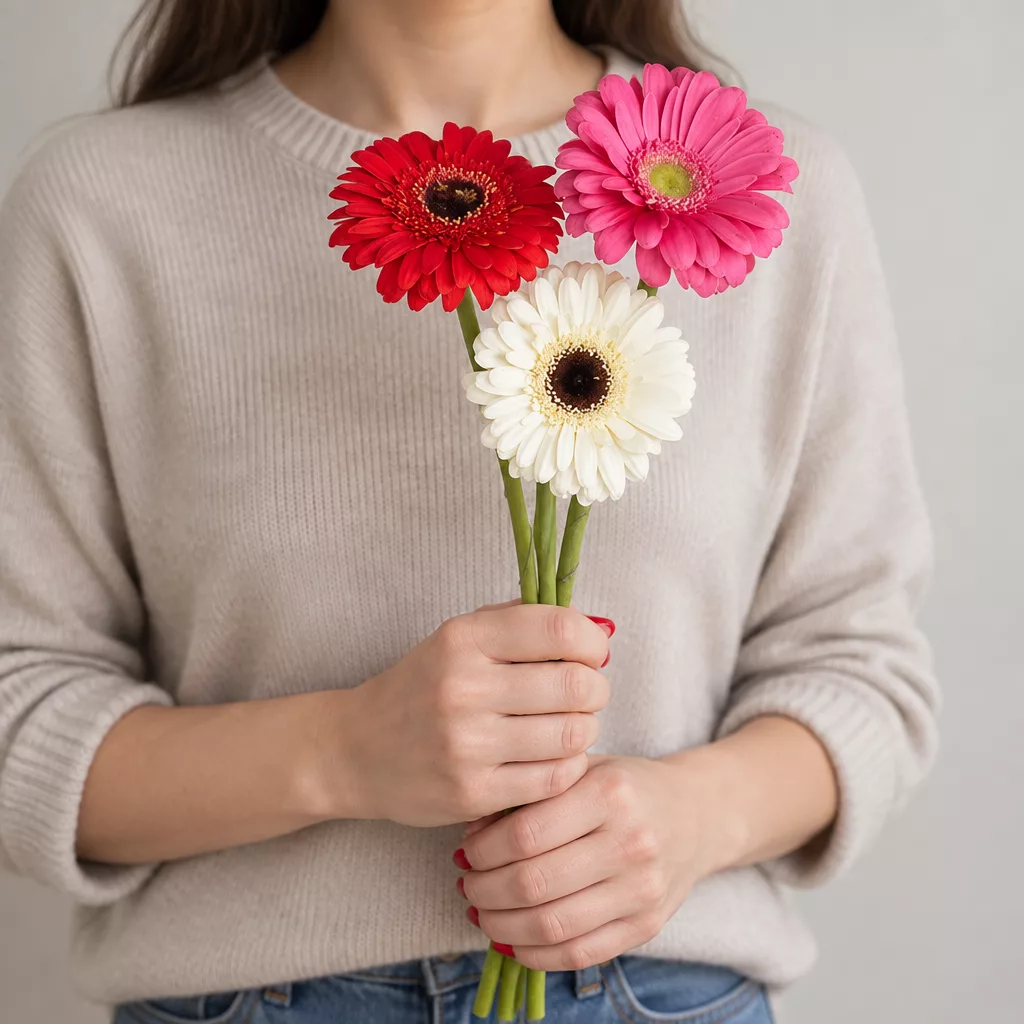
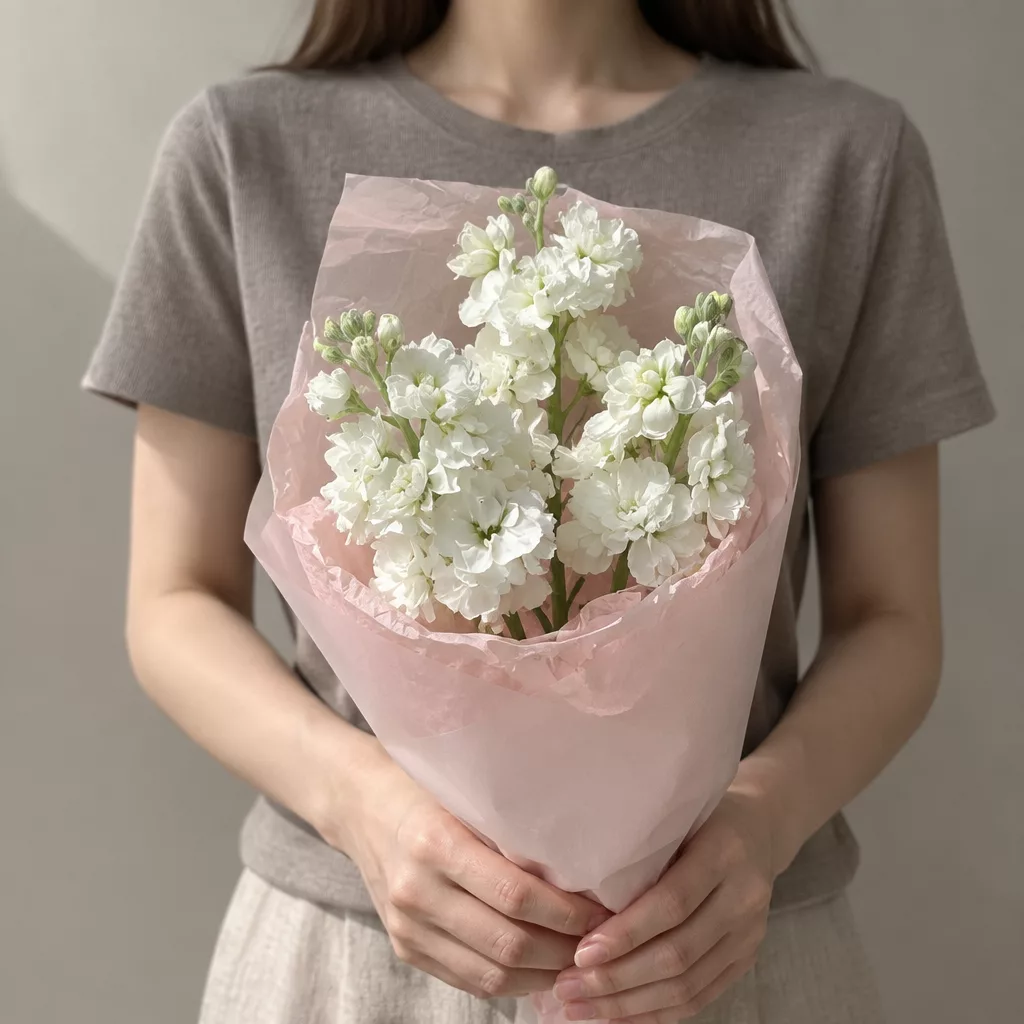
Bouquets we can deliver


The Cold Chain: What It Is and Why It Protects Your Bouquet
Flowers are living tissue. From the moment a stem is cut, it begins to lose water faster than it can absorb it — unless the environment slows that process down. Professional florists talk about the cold chain the way food producers talk about it: an unbroken sequence of controlled temperatures from source to recipient. Break the chain at any point and the damage is visible within hours, sometimes faster in summer.
For most cut flowers, the ideal holding temperature sits between two and eight degrees Celsius. Roses close their guard petals and hold their shape. Lisianthus, which looks fragile but travels surprisingly well, stays upright and saturated. Ranunculus, one of the most temperature-sensitive flowers in common use, can go from perfect to drooping in under an hour if left in a warm van. This is why the vehicle matters as much as the workroom.
Refrigerated transport is not a luxury add-on — it is the mechanism that makes ultra-fast delivery compatible with genuine freshness. A bouquet that spends forty minutes in a heated car in July arrives in a fundamentally different condition than one kept cool. The cold chain also extends to the packaging itself: kraft paper alone insulates poorly, which is why inner wrapping choices, water tubes on individual stems, and the sequence in which flowers are placed inside the wrap all contribute to what the recipient actually opens.
When the chain is maintained correctly, the bouquet the recipient holds should look and feel as though it was just finished — because, in practical terms, it was.
Choosing the Right Flowers for a Fast Delivery Occasion
Not every flower is equally suited to rapid transit, and knowing the difference helps you choose something that will genuinely impress rather than merely arrive on time. The most reliable travellers are roses, alstroemeria, chrysanthemums, and carnations — stems that are structurally robust and hold water efficiently. These are not second-choice flowers; they are the backbone of professional floristry precisely because they perform consistently.
If you want something more unexpected, freesia and waxflower both travel well and add fragrance that catalogue photos cannot convey. Delphinium spikes look dramatic in a tall vase and survive short transit without losing their vertical structure. Peonies, when in season, are excellent — their petals are dense and they open gradually, meaning the recipient gets a changing bouquet over several days rather than one peak moment.
The flowers to approach carefully for same-day delivery are those with very thin petals or high moisture sensitivity: anemones in warm weather, for example, or open garden dahlias in midsummer. This does not mean they cannot be delivered — it means the timing and packaging must be tighter, and it is worth mentioning the occasion when you order so the arrangement can be built around the conditions.
For a birthday, a mix of garden roses with eucalyptus and a few stems of veronica gives texture and longevity. For a romantic gesture, monobouquets — a single variety massed together — make a stronger visual statement than mixed arrangements and are easier to keep fresh in transit. The occasion shapes the choice as much as personal preference does.
How City Geography Shapes a Two-Hour Promise
Russia is a country of enormous distances, and the phrase 'delivery across Russia' means something different in a dense city centre than it does in a residential district fifteen kilometres from the ring road. Understanding this geography helps you set realistic expectations and, more importantly, order at the right moment.
In central Saint Petersburg, where streets are dense and addresses are close together, a ninety-minute window is genuinely comfortable — the courier has time to spare. In Moscow, where traffic patterns shift dramatically between morning, midday, and evening, the same order placed at different times of day can have very different outcomes. Peak hours between eight and ten in the morning and five and seven in the evening compress the available window significantly.
This is why the delivery time shown at checkout is calculated in real time based on current conditions, not posted as a flat promise. If the system shows two hours rather than ninety minutes for your address, that is the honest answer rather than an optimistic one. Placing an order slightly outside the peak window — say, at eleven in the morning or at three in the afternoon — often restores the faster option.
For cities beyond Saint Petersburg and Moscow, the same principle applies at a different scale. The key variable is always the distance between the preparation point and the recipient's address, combined with local traffic. Knowing your recipient's exact address, including building entrance number and floor, eliminates the delays that cost five to ten minutes at the door and can make the difference between a fresh arrival and a warm one.
What Happens to the Flowers Between Arrangement and Doorstep
The journey from workroom to front door is the part of the process customers rarely see, and it is where many flower deliveries lose the quality built up over the previous twenty-four hours. The sequence matters: how the bouquet is held, how it is placed in the vehicle, and what the courier does when they arrive at a building with a locked entrance or an absent recipient.
A finished bouquet is placed stem-down in a carrying holder that keeps it vertical and prevents the heads from pressing against each other. Horizontal transport — the bouquet lying on a car seat — causes petals to bruise along the edges, particularly with roses and peonies. The difference is visible when the recipient unwraps the paper. Vertical transit preserves the arrangement as the florist intended it.
At the door, the handover itself is a small ritual that matters in Russian culture. Flowers are almost always presented face-up, with both hands if the bouquet is large. The courier does not simply leave the bouquet at a door the way a parcel might be left — the expectation is a direct handover to a person. If the recipient is not home, a call is made before any alternative is arranged, because the flowers cannot simply wait on a warm landing for an hour.
For surprise deliveries, where the sender does not want to spoil the moment by calling ahead, the courier coordinates with the sender rather than the recipient. This requires a working phone number for both parties and a backup plan agreed in advance — usually a neighbour or building concierge who can hold the bouquet in a cool spot for a short window.
Vase Life After Delivery: Making the Bouquet Last
A flower that arrives fresh can still decline quickly if it is not cared for in the first hour after delivery. The recipient often does not know this, which is why the advice that comes with the bouquet is as important as the arrangement itself. Giving the person receiving flowers a few simple instructions — verbally or on a card — extends the life of the bouquet by several days.
The first step is re-cutting the stems. Even a bouquet delivered within ninety minutes has stems that have begun to seal at the cut end. A diagonal cut of about two centimetres under running water, made with a sharp knife rather than scissors, reopens the vascular tissue and allows the stem to drink again. Scissors crush the tissue rather than cutting cleanly, which reduces water uptake even when the cut appears clean.
Water temperature is a common point of confusion. Most cut flowers prefer cool water, between fifteen and eighteen degrees Celsius, rather than the room-temperature water that feels natural to pour from a tap. Roses are a partial exception — they can be revived with slightly warmer water if they have begun to droop, but cool water is the better default for a fresh bouquet.
Leaves below the waterline should be removed immediately, as submerged foliage accelerates bacterial growth and shortens vase life noticeably. Changing the water every two days and keeping the vase away from direct sunlight, radiators, and fruit bowls — ethylene gas from ripening fruit accelerates petal drop — will typically extend the life of roses and alstroemeria to seven or eight days, and chrysanthemums to ten or beyond.
When to Order and What to Tell Us for the Best Result
The information you share at the time of ordering has a direct effect on what the recipient receives. An order placed with a clear delivery window, a confirmed address, and a note about the occasion gives the florist the context to make decisions that a bare order form cannot communicate.
The occasion matters more than many customers expect. A bouquet for a woman celebrating her fiftieth birthday calls for a different scale and palette than one sent to a colleague as a thank-you. In Russian culture, bouquets are traditionally given in odd numbers — three, five, seven stems — though this applies more to single-variety bunches than to mixed arrangements. Mentioning the occasion lets the florist apply these conventions correctly without you having to specify every detail.
The ideal order window for same-day delivery is before two in the afternoon for an evening arrival, and before eleven in the morning for a midday delivery. This is not a hard cutoff — orders placed later are often fulfilled — but the earlier window gives the workroom more flexibility in sourcing any specific variety you have requested and avoids the afternoon traffic peak.
If you have a preference for a specific colour palette, mention it rather than leaving it to chance. 'Warm tones' or 'nothing red' is enough guidance to shift the arrangement meaningfully. If the recipient has allergies — lilies, for instance, produce a pollen that can be problematic in enclosed spaces — that note ensures the arrangement works for the person receiving it, not just the person sending it. The more context you give, the closer the result is to what you imagined when you placed the order.
Speed and quality feel like opposites until you see how the process actually works — cold storage, forward preparation, vertical transit, and a florist who knows which stems travel well and which need extra care. Every part of the ninety-minute window is accounted for before your order even arrives. What reaches the door is not a fast approximation of a proper bouquet; it is the real thing, built to last and presented the way the occasion deserves.
Frequently asked questions
Can flowers really stay fresh during a fast delivery in summer?
Yes, provided the cold chain is maintained. Refrigerated transport and proper packaging keep bouquet temperatures stable even in July heat. Stems are wrapped to retain moisture, and the transit time is short enough that temperature-sensitive varieties like ranunculus and freesia arrive in the same condition they left the workroom.
What if the recipient is not home when the bouquet arrives?
The courier calls before leaving the building. If there is no answer, we contact the sender to agree on a next step — usually a brief wait, a neighbour who can accept the flowers, or a rescheduled drop. Flowers are never left unattended in a warm hallway, as even thirty minutes in a heated space can affect delicate varieties.
Does the number of flowers in a bouquet follow any Russian tradition?
Traditionally, cut flowers given as a gift in Russia are presented in odd numbers — five roses rather than six, for example. This applies mostly to single-variety bunches. Mixed arrangements and large bouquets are not bound by this convention in the same way, so a lush mixed design does not need to conform to the counting rule.
Which flowers last longest after delivery and are best for a long-distance recipient?
Alstroemeria, chrysanthemums, and carnations consistently reach ten or more days in a vase with basic care. Roses typically last seven to eight days. Lisianthus and waxflower also perform well. Peonies and tulips are shorter-lived but so visually striking that many senders consider the four-to-five-day window worthwhile for special occasions.
How early should I order to guarantee a specific variety?
Ordering before eleven in the morning gives the workroom the most flexibility for specific requests — particular rose varieties, seasonal blooms like peonies or ranunculus, or unusual colour palettes. Later orders are often fulfilled, but availability of a precise variety narrows as the day progresses and stock is allocated to earlier orders.
Ready to send flowers?
Pick the city, choose the bouquet, and a local florist takes it from there.
Choose a city →