Ordering Flowers in Saint Petersburg and Getting Them There in Two Hours
You have just remembered an anniversary, or a friend called to say she got the job, or you simply want someone across the city to feel seen today. The gap between that impulse and a bouquet in their hands used to be a full day. In Saint Petersburg, Turboflora closes that gap to one or two hours — and the process behind that promise is more deliberate than it might look from the outside.
It Starts the Moment You Place the Order
When you complete checkout on the Turboflora website, the order does not sit in a queue waiting for a morning review. It lands immediately on the florist's screen in the workroom. The timestamp is recorded to the minute, and from that moment the two-hour window is running. This is not a marketing phrase — it is a production schedule that the whole team works around.
The first thing the florist checks is the delivery district. Saint Petersburg is a large city, and the time needed to cross from Vasilievsky Island to Nevsky Prospekt or out toward Kupchino differs considerably by time of day. Traffic conditions in the early afternoon, for example, are different from those at nine in the morning. The routing decision happens at this stage, not later.
You are also asked at checkout whether the recipient should be notified. Some customers want a complete surprise; others prefer that the person is home and not stuck in a meeting. Turboflora follows whichever instruction you give. If you choose a surprise, the courier simply arrives and calls from the door rather than announcing the delivery in advance. Getting this detail right at the start prevents the awkward situation where a beautiful bouquet waits outside a locked flat for an hour.
Bouquets we can deliver

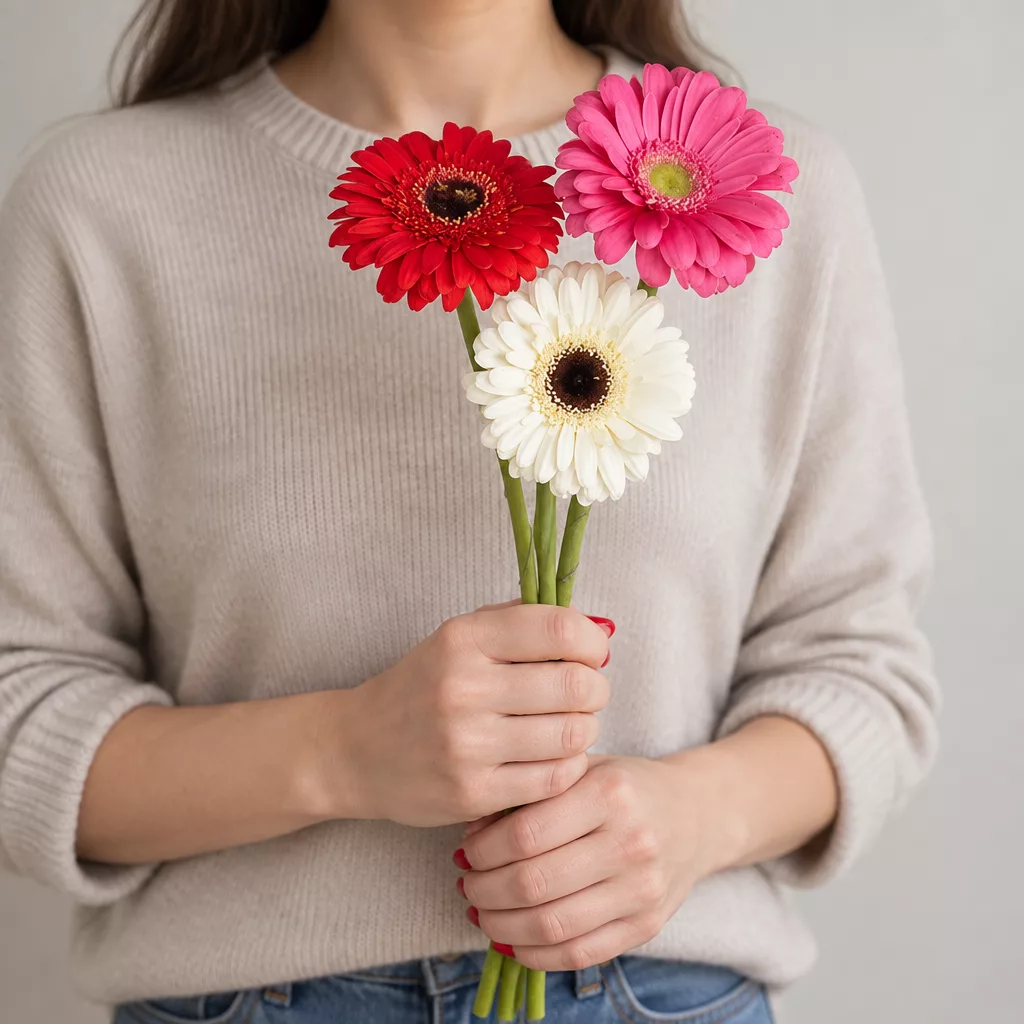

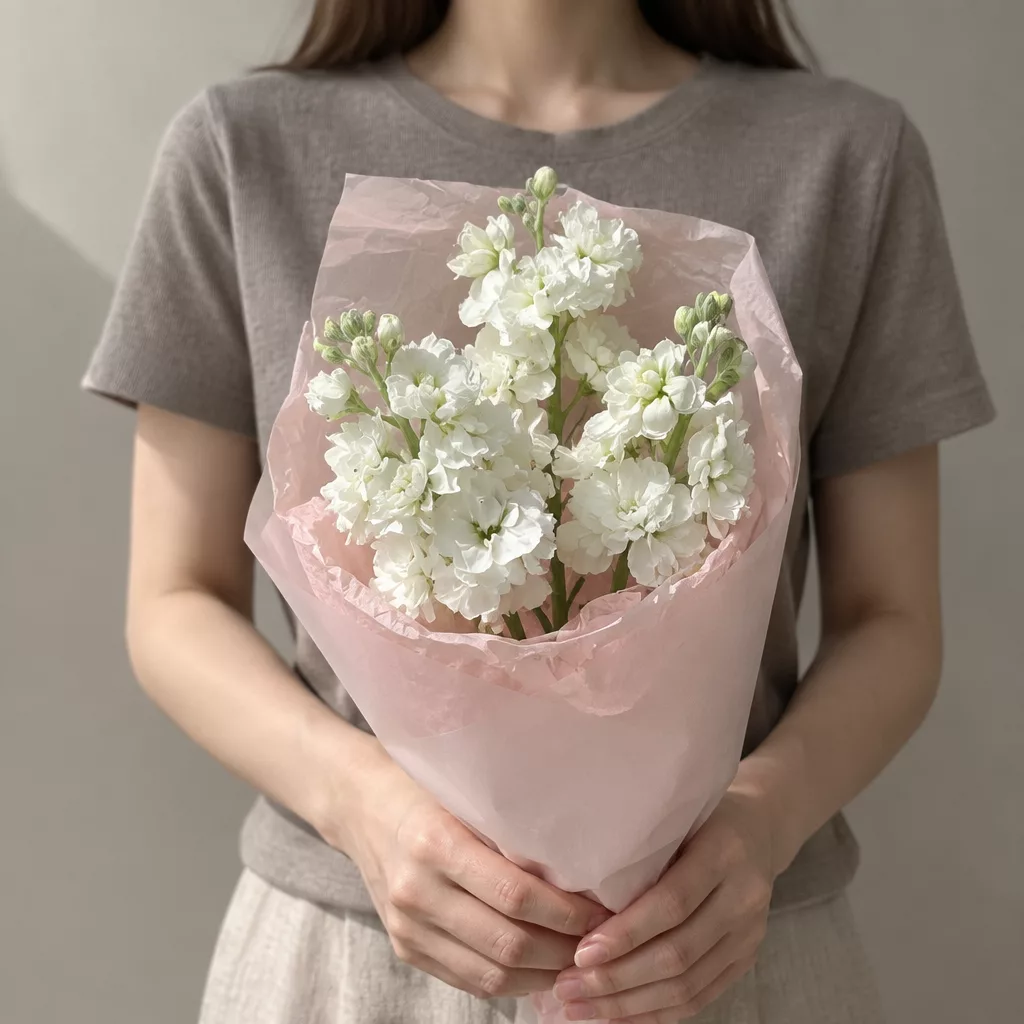
How the Florist Reads Your Order and Picks the Right Stems
A florist reading an incoming order is not just scanning a product name. They are reading the occasion, the note you wrote, and the colour palette you selected, and they are cross-referencing all of that against what is on the cooler shelf at that exact moment. Roses, ranunculus, peonies when in season, spray chrysanthemums, alstroemeria, lisianthus — the available stems change week to week depending on what arrived from the growers.
Freshness is the non-negotiable filter. Any stem that was cut more than the accepted number of days ago for its variety does not go into an express order. Roses, for instance, should show firm petals and no browning at the base of the calyx. Tulips should stand straight with no soft spots near the stem tip. A florist who has worked with flowers for years develops an almost automatic sense for this — a slight translucency in a gerbera petal, a limpness in a ranunculus stem that tells you it will not last the journey.
For express delivery the florist also considers how a flower travels. Delicate open peonies, for example, require more protective wrapping than a tight rose bud. Tall stems in a hand-tied bouquet need a water source for any journey over thirty minutes. These are practical decisions made quickly but not carelessly, because a bouquet that arrives looking tired defeats the entire point of same-day delivery.
Wrapping and Presentation: What Happens at the Workbench
Assembly is where the order becomes the gift. The florist builds the arrangement stem by stem, rotating the bunch to check balance and height from every angle. The goal is not symmetry for its own sake but a bouquet that looks generous and intentional — the kind that makes the recipient feel that someone thought carefully about them, not just clicked a button.
Colour placement matters more than most people expect. Placing two deep burgundy roses directly next to each other creates a flat, heavy patch. Distributing them with cream or blush tones between them gives the eye somewhere to travel. Greenery — eucalyptus, ruscus, pittosporum — is not filler. It is the structure that makes the flowers read as a composition rather than a cluster.
Once the bouquet is shaped, it is wrapped. For express delivery in Saint Petersburg, the wrapping must protect against temperature changes, particularly in winter when the difference between a warm workroom and the street can be fifteen degrees or more. Kraft paper, tissue, and a moisture-retaining base around the stem ends work together to keep the bouquet stable. A ribbon or twine is tied firmly but not so tight that it bruises the stems. The whole wrapped piece is then placed upright in the courier's bag — never laid flat, which would crush the outermost petals within minutes.
Leaving the Workshop: How the Courier Carries the Order
The courier receives the order with the address, the recipient's name, your delivery instructions, and the note card if you included one. They also know the deadline. That two-hour window is not a rough estimate — it is a commitment that everyone in the process takes seriously, because a late birthday bouquet loses most of its meaning.
In Saint Petersburg, the courier travels by car for most districts. The city's geography — wide avenues, rivers, and drawbridges that lift at night — means that route planning is genuinely important. A bridge being raised in the early hours, or heavy traffic on Nevsky in the late afternoon, can add significant time to a crossing. The courier adjusts the route in real time if needed.
The bouquet rides upright in a purpose-built carrier that holds it steady without compressing the wrapping. Temperature inside the vehicle is kept cool enough to protect the flowers but not so cold that condensation forms on the petals. In deep winter, the bouquet is protected from frost during the walk from the car to the building entrance — a few seconds of exposure to minus fifteen degrees can mark delicate petals permanently. These small protections are invisible to the recipient but they are the reason the bouquet arrives looking the same as it did when it left the workroom.
The Handover: What Happens at the Door
Arriving at the address is not the end of the process — the handover itself matters. In Russia it is considered polite to greet the recipient warmly and briefly, and Turboflora couriers are trained to do exactly that. They introduce themselves, hand over the bouquet carefully so the recipient has a moment to receive it properly, and pass along the note card if there is one.
If the recipient is not home despite expectations, the courier does not simply leave the flowers outside. Flowers left in a hallway or on a doorstep in a Russian apartment building — where lobbies are often unheated in winter — will deteriorate quickly. The courier contacts you, the sender, to decide whether to wait briefly, arrange a new time, or pass the bouquet to a neighbour the recipient has designated.
For a surprise delivery, the courier calls from the entrance of the building rather than ringing the flat doorbell without warning. This gives the recipient thirty seconds to compose themselves, which most people appreciate. The moment of opening the door to an unexpected bouquet is the emotional peak of the whole experience — it deserves a little staging. When it goes well, the recipient's reaction is immediate and genuine, and that is the outcome the entire process from checkout to doorstep is designed to produce.
Keeping Flowers Fresh After Delivery: What to Tell the Recipient
A bouquet that arrives in perfect condition can still disappoint if the recipient does not know what to do with it in the first hour. Many people receive flowers, admire them, and set them on a table while they finish a call or make tea — and that first hour without water shortens the vase life noticeably for many varieties.
The single most important step is cutting the stems at an angle under cool running water and placing the bouquet in a clean vase immediately. The angled cut increases the surface area through which the stem draws water. Roses benefit particularly from this — a rose that has been out of water for forty minutes will rehydrate and firm up within a few hours of being properly placed.
Vase water should be cool, not cold, and changed every two days. Removing any leaves that fall below the waterline prevents bacterial growth that clouds the water and blocks the stem. Flowers last longest away from direct sunlight, radiators, and fruit bowls — ripening fruit releases ethylene gas, which accelerates petal drop in roses, tulips, and lisianthus especially. In a Saint Petersburg apartment in winter, the air tends to be dry from central heating, so placing the vase away from radiators makes a real difference. A bouquet assembled from fresh stems and cared for properly should hold for five to seven days, sometimes longer for chrysanthemums and alstroemeria.
What Makes Express Delivery Different from Next-Day Ordering
Choosing express delivery is a different decision from ordering the night before, and it is worth understanding why. A next-day order gives the florist time to plan the composition in advance, source a specific variety if it is not in stock, and prepare a more elaborate arrangement if you want one. Express delivery works from what is on hand right now and prioritises speed and freshness in equal measure.
This does not mean express orders are lesser bouquets — it means they are designed differently. The best express compositions use flowers that are at the ideal stage of opening for immediate impact: a rose that is half-open looks beautiful on arrival and will continue to open over the following two days. A tight bud, which might be perfect for a next-day order, looks sparse when handed over at the door.
For most spontaneous occasions — a congratulations call you just received, a visit you want to mark, a day that simply calls for flowers — express delivery is the right choice. The emotional logic of sending flowers is almost always immediate: the feeling that prompted you to order is the same feeling the recipient will sense when they open the door. Waiting until tomorrow dilutes that. The one-to-two-hour window exists precisely to honour the impulse that made you reach for your phone in the first place, and the entire Turboflora process is built to make that impulse count.
Every order that moves through Turboflora's process in under two hours is the result of decisions made quickly but carefully — at the cooler, at the workbench, on the road, and at the door. The speed is real, and so is the attention behind it. Whether you are sending roses across Petrogradsky District or a mixed seasonal bouquet to a colleague in Moskovskiy, the bouquet that arrives is meant to feel like it came from someone who took time, even when time was exactly what you did not have.
Frequently asked questions
Can I really order flowers and have them delivered within two hours anywhere in Saint Petersburg?
Yes, for most districts of Saint Petersburg the one-to-two-hour window applies. Delivery time depends on your exact address and current traffic conditions. When you enter the delivery address at checkout, the estimated arrival time is shown before you confirm the order, so there are no surprises about timing.
What happens if the recipient is not home when the courier arrives?
The courier contacts you, the sender, immediately. You can ask them to wait briefly, arrange a new delivery time, or pass the bouquet to a trusted neighbour. Flowers are never left unattended in a building entrance or hallway, because temperature and time would damage them before the recipient returned.
Can I write a personal note to include with the bouquet?
Yes. There is a note field at checkout where you can write whatever you like — a few words or a longer message. The florist prints it on a card and places it with the bouquet. The courier hands it to the recipient along with the flowers, so the personal element arrives together with the gift.
How should the recipient care for the flowers once they arrive?
Cut the stems at an angle under cool water immediately and place the bouquet in a clean vase. Change the water every two days, keep the flowers away from direct sunlight, radiators, and fruit bowls, and remove any leaves below the waterline. Most fresh bouquets last five to seven days with this basic care.
Is the bouquet protected from cold weather during winter delivery?
Yes. The wrapping includes layers that buffer the flowers against temperature changes, and the courier protects the bouquet during any outdoor exposure between the vehicle and the building entrance. Even brief contact with severe frost can mark delicate petals, so this step is taken seriously on every winter delivery.
Ready to send flowers?
Pick the city, choose the bouquet, and a local florist takes it from there.
Choose a city →