Flower Delivery in Akhtubinsk: Timing, Choices and What Arrives at the Door
Akhtubinsk sits in the Astrakhan region, deep in the lower Volga steppe, where summer temperatures push past 40°C and winters can surprise you with sharp frosts. Sending flowers here is not complicated, but it does reward a little planning — the right variety, the right packaging, and an honest understanding of what the journey involves. This article walks you through every part of the process so that what arrives at the door is exactly what you imagined when you ordered.
Why Akhtubinsk Is a Particular Destination for Fresh Flowers
Akhtubinsk is a mid-sized city of roughly 35,000 people, known across Russia largely for the Ashuluk military testing range nearby and for the wide, flat landscape of the Volga-Akhtuba floodplain. It is not a city with a flower shop on every corner, which means a delivered bouquet carries real weight here. When someone receives fresh flowers in Akhtubinsk, it stands out in a way it might not in a large metropolitan centre.
The climate shapes everything about how flowers travel. From late May through September, daytime heat is intense and sustained. A bouquet left in a warm entrance hall or a sun-facing porch for even thirty minutes can begin to wilt noticeably. This is not a flaw in the flowers — it is simply the local reality, and it is why packaging, hydration gel, and delivery timing matter more here than in cooler cities.
Winter in Akhtubinsk brings a different challenge. Frosts arrive in November and can linger through February. Roses and tropical stems like anthuriums are sensitive to temperatures below four degrees Celsius, and even a brief exposure during transfer from a vehicle to a building can cause petal blackening at the edges. Understanding these seasonal rhythms helps you choose the right flowers and the right moment to send them, so the person receiving them sees something beautiful rather than something stressed by the journey.
Bouquets we can deliver

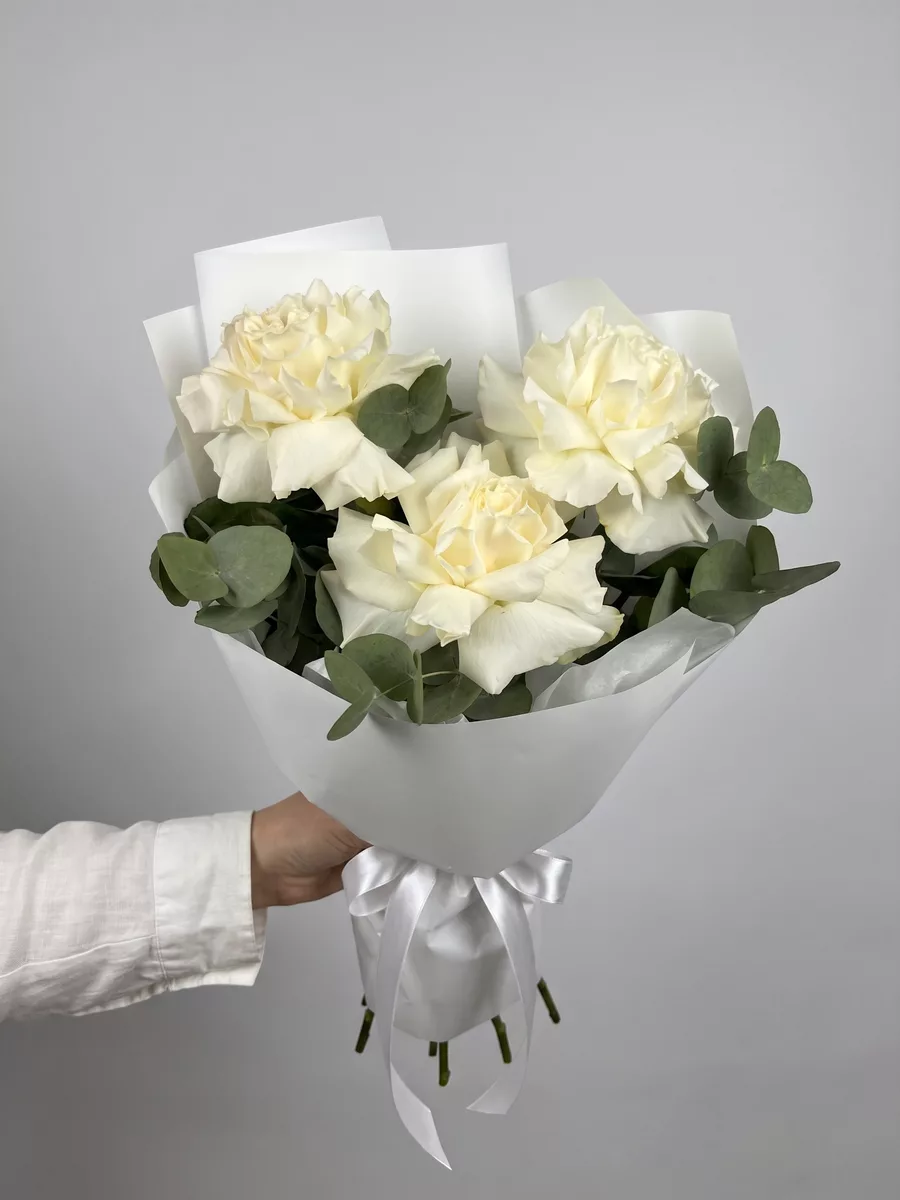
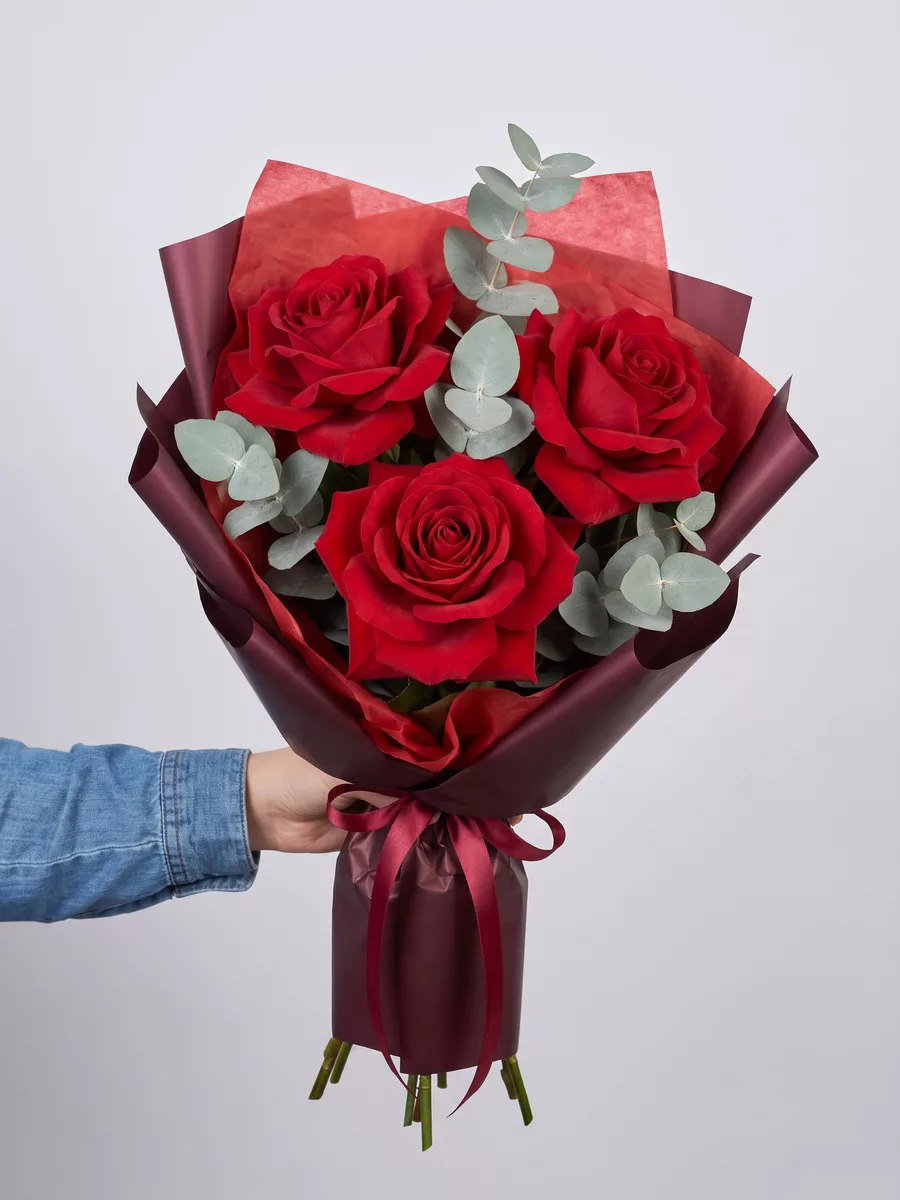
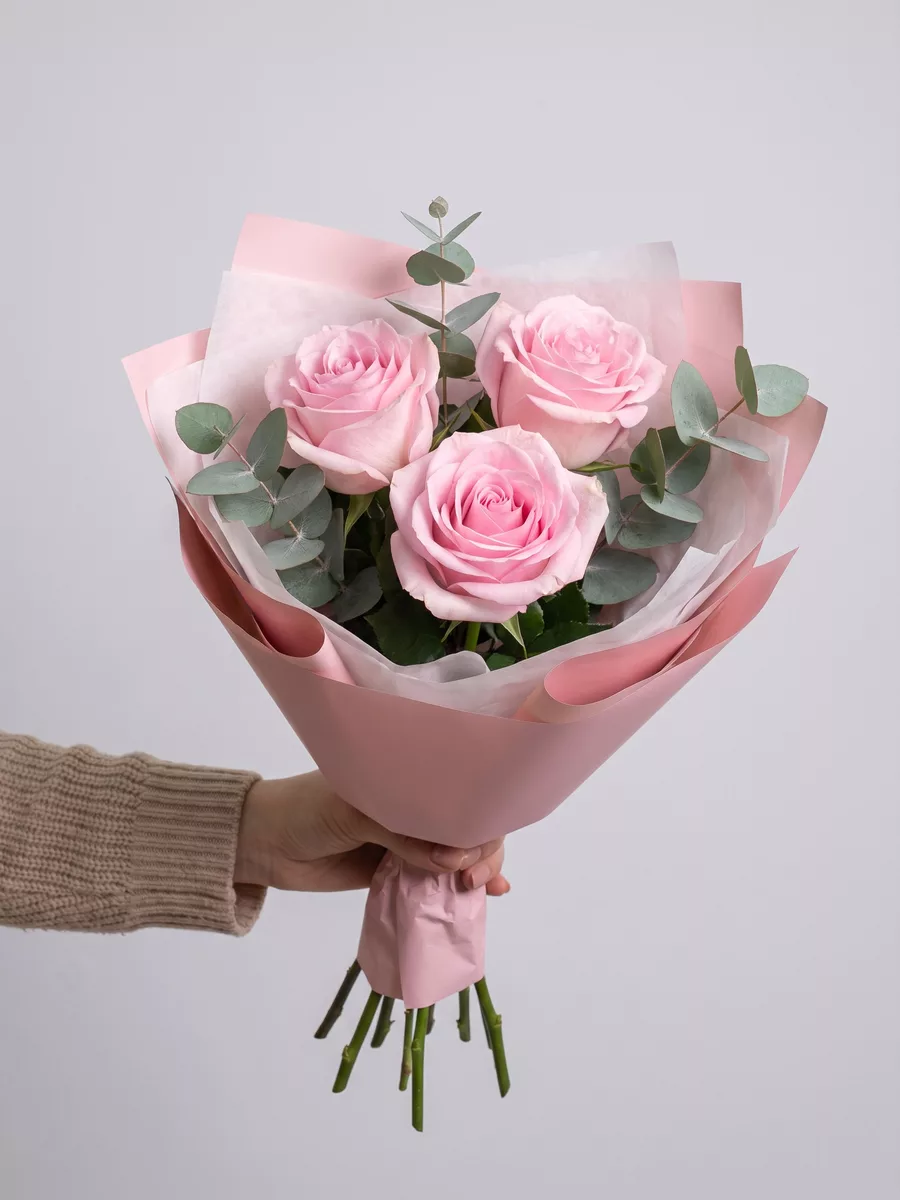
Choosing Flowers for the Person, Not Just the Occasion
Before you think about which variety to order, think about who is receiving the bouquet and what you want them to feel when they open the door. A colleague celebrating a work anniversary responds differently to a structured arrangement of white spray roses and eucalyptus than a close friend does to a loose, garden-style mix of ranunculus, lisianthus and soft greenery. The occasion gives you a starting point, but the person gives you the direction.
For romantic gestures, red and deep-pink roses remain the clearest signal in Russian floral culture, but they do not have to arrive alone. Pairing garden roses with burgundy alstroemeria and a few stems of waxflower creates texture and depth without losing the warmth of the message. The alstroemeria also extends vase life considerably, which matters in Akhtubinsk's heat.
For celebrations — birthdays, promotions, new arrivals — colour does most of the work. Sunflowers, yellow solidago, and orange gerberas read as joyful and energetic. Chrysanthemums in white or pale yellow are popular for older recipients and carry a sense of respect in Russian tradition, which is worth knowing if you are sending to someone's grandmother or a senior colleague.
For a simple thank-you or a gesture of warmth with no specific event behind it, a single-variety bouquet of tulips in spring or garden roses in summer often lands better than something elaborate. Simplicity reads as sincerity, and that translates across cultures without any explanation needed.
Delivery Timing and What the Journey Actually Looks Like
Turboflora operates from Saint Petersburg with a focus on reaching recipients within one to two hours of order confirmation. For Akhtubinsk, the logistics involve careful coordination to ensure the bouquet is assembled fresh, packed with hydration, and dispatched so it arrives in the best possible condition within the delivery window confirmed at checkout.
The assembly process matters as much as the transit. Each bouquet is cut at an angle immediately before packing, stems are placed in water-retaining material, and the outer wrapping is chosen based on the season. In summer, insulated packaging reduces heat exposure. In winter, the same insulation protects against cold shock. Neither of these details is visible to the recipient, but both determine whether the flowers look alive or tired when unwrapped.
One common mistake people make is ordering for the earliest possible slot without considering the recipient's schedule. A bouquet that arrives when no one is home in summer heat can deteriorate quickly, especially if left in a shared building entrance. When placing your order, note any information about the recipient's likely location in the delivery comments — this allows the courier to time the approach and contact the recipient before arrival.
Weekends and public holidays in Russia, including the major gift-giving dates of February 23rd, March 8th, and New Year's Eve, see significantly higher order volumes. Placing your order at least a day in advance on these dates is strongly recommended to secure your preferred delivery window and the varieties you want.
Budget Ranges and What Each One Gets You
Flower budgets are personal, and there is no single right answer. What matters is understanding what each range genuinely delivers so your expectations match what arrives.
At a modest budget, you are working with single-variety bouquets or simple two-element combinations. A clean arrangement of spray roses with ruscus, or a bundle of bright gerberas with a linen wrap, can be genuinely beautiful when composed with care. Do not underestimate a well-made small bouquet — in Russian giving culture, presentation and freshness count for more than sheer volume.
At a mid-range budget, you gain access to mixed compositions with three or four elements. This is where lisianthus, ranunculus, and eucalyptus branches come in, adding texture and a more layered visual effect. You can also specify a colour palette — all blush tones, or a mix of white and green — and the florist has enough material to execute it properly. This range suits most birthdays and personal celebrations.
At a higher budget, the composition becomes genuinely architectural. Large-headed garden roses, peonies in season from May through June, ornamental alliums, and statement greenery like monstera leaves or large eucalyptus sprays create something that fills a room. These arrangements are appropriate for significant milestones — anniversaries, major birthdays, professional achievements. They also photograph well, which matters when the recipient is likely to share the moment.
Whatever your budget, always prioritise freshness over size. A smaller bouquet of stems cut that morning will outlast a large arrangement of older stock by several days.
Seasonal Availability and What Travels Well to the Volga Region
Russian floral seasons follow a clear rhythm, and Akhtubinsk's position in the lower Volga adds its own layer of consideration. Understanding which flowers are genuinely in season helps you order something that will look its best on arrival.
Spring, from March through May, brings tulips, hyacinths, and the first ranunculus. Tulips travel exceptionally well — they are hardy, respond quickly to water, and continue to open beautifully in the vase. They are also deeply associated with March 8th, International Women's Day, which is the single largest flower-giving occasion in Russia. If you are sending for that date, tulips in any colour are always appropriate and warmly received.
Summer is peony season, running roughly from late May through June. Peonies are spectacular but require careful handling in heat — they should be ordered in bud stage so they open gradually after arrival. Full-blown peonies do not survive a hot transit well. Sunflowers and solidago are also at their peak in summer and are genuinely heat-tolerant compared to many other varieties.
Autumn is chrysanthemum season, and Akhtubinsk's mild September and October make it an excellent time for larger mixed arrangements. Chrysanthemums last up to two weeks in a vase when properly cared for, making them a practical choice for a recipient who lives alone or travels frequently.
Winter centres on roses, which are available year-round from greenhouse cultivation, and on exotic stems like anthuriums and orchid sprays that add drama to a cold-season arrangement. Protect these from frost during the final steps of delivery — even a brief chill damages tropical varieties permanently.
Care Instructions the Recipient Should Know
Even the freshest bouquet needs attention once it arrives, and in Akhtubinsk's climate that attention pays off more than in most Russian cities. Passing on a few simple care points — either verbally when you call to say the flowers are coming, or via a card included with the bouquet — can double the vase life of what you send.
The first step on arrival is always water. Stems should go into a clean vase filled with cool, not cold, water within the first thirty minutes of unpacking. In summer heat, the stems have already been working hard during transit, and immediate hydration is the single most effective thing a recipient can do. Cutting another centimetre from each stem at a 45-degree angle before placing them in the vase opens the uptake channels fully.
Keep the arrangement away from direct sunlight, especially in summer. A windowsill that looks beautiful as a display spot is often the worst place for flowers when afternoon sun reaches it. A table in a shaded part of the room, away from air-conditioning vents and fruit bowls — ethylene gas from ripening fruit accelerates wilting — is ideal.
Change the water every two days. This is the step most people skip, and it is the one that makes the biggest difference. Bacteria build up in standing water and block the stem ends, cutting off hydration even when the vase appears full. A quick rinse of the vase and fresh cool water extend the arrangement by two to three days without any other effort.
If the bouquet includes mixed varieties, remove individual stems as they fade rather than waiting for the whole arrangement to decline. Roses often outlast lisianthus, and a thinned bouquet of fresh roses still looks intentional and lovely.
Making the Moment Work: Notes, Timing and Presentation Details
The flowers themselves are only part of what the recipient experiences. The moment of delivery — the knock at the door, the unwrapping, the note — shapes how the gesture lands, and a few deliberate choices make a significant difference.
A handwritten note, or a card message you compose at checkout, does more than any upgrade in flower size. In Russian gift-giving culture, the written word carries genuine weight. Even a short, direct sentence — something specific to the person and the moment rather than a generic phrase — makes the bouquet feel personal rather than transactional. If you are sending from abroad and are unsure of the right tone, warmth and directness always work. Overly formal language can feel cold; a simple, honest line does not.
Timing the delivery to a moment when the recipient is not rushed matters. A bouquet that arrives just before someone leaves for work, or during a busy family dinner, gets a fraction of the attention it deserves. Mid-morning or early afternoon on a day when the recipient is likely to be at home is generally the most effective window. If you know their schedule, use that knowledge.
For surprise deliveries, provide as much address detail as possible in your order — apartment number, floor, entry code, and a contact phone number for the recipient. Couriers in residential buildings in Russian cities often need entry codes to access the building, and a delivery that cannot reach the door loses all its impact. A brief heads-up call to the recipient five minutes before arrival, rather than a complete surprise at the door, also gives them a moment to be present for the experience rather than caught off guard.
The combination of the right flowers, a genuine note, and a well-timed arrival is what transforms a purchase into a memory.
Sending flowers to Akhtubinsk is genuinely rewarding precisely because it is not something everyone does. The city is not overflowing with florists, and a fresh, well-composed bouquet delivered on time and in good condition stands out in a way that matters to the person receiving it. The key is treating the details seriously — seasonal variety choices, hydration packaging for the climate, a note that sounds like you wrote it — and trusting that the effort is visible even when you are hundreds of kilometres away. When all of that comes together, what arrives at the door in Akhtubinsk is not just flowers. It is evidence that someone was thinking carefully about someone else.
Frequently asked questions
Can flowers really arrive fresh after travelling to Akhtubinsk in summer heat?
Yes, with the right preparation. Turboflora uses insulated packaging and water-retaining materials for warm-season deliveries. Varieties are selected or recommended based on heat tolerance — sunflowers, spray roses, and chrysanthemums travel significantly better in high temperatures than large-headed tropical blooms. Delivery timing is coordinated to minimise the time flowers spend outside climate-controlled conditions.
What is the best flower choice for a birthday delivery in Akhtubinsk?
For a birthday, mixed compositions with clear colour work best — ranunculus and spray roses in warm tones, or gerberas with solidago for something bright and energetic. If the recipient is older, white or pale-yellow chrysanthemums carry respect in Russian tradition and last well in the vase. Always prioritise freshness over volume: a smaller, vibrant bouquet outperforms a large, tired one every time.
How much notice do I need to give for a delivery to Akhtubinsk?
For standard dates, placing your order the same day or the evening before is usually sufficient. For high-demand dates — March 8th, February 14th, New Year's Eve — order at least 24 to 48 hours in advance to secure your preferred delivery slot and the varieties you want. Last-minute orders on peak dates risk limited availability of specific flowers and delivery windows.
What should the recipient do immediately when the bouquet arrives?
The single most important step is getting the stems into cool water within thirty minutes of unpacking. Cut a centimetre from each stem at a 45-degree angle first to open the uptake channels. Place the vase away from direct sunlight and fruit bowls, and change the water every two days. In Akhtubinsk's summer heat, this simple routine can extend vase life by three to four days compared to doing nothing.
Is it possible to send flowers to a specific apartment building in Akhtubinsk?
Yes. Provide the full address including apartment number, floor, and any building entry code when placing your order. A recipient contact number is also important — couriers use it to coordinate the final approach, especially in residential blocks where building access requires a code or intercom. The more detail you provide, the smoother the handover and the better the moment of arrival.
Ready to send flowers?
Pick the city, choose the bouquet, and a local florist takes it from there.
Choose a city →