Sending Flowers to Aleksandrov: Timing, Choices and What Arrives at the Door
Aleksandrov sits in Vladimir Oblast, a city with its own quiet rhythm — historic streets, kremlin walls, residents who appreciate a gesture done properly. When you order flowers from across Russia, the question is never just which bouquet to pick. It is whether the roses will still be firm, whether the delivery will land at the right moment, and whether the whole thing will feel as warm in person as it did in your mind when you clicked the button. This article walks you through exactly what happens when Turboflora delivers to Aleksandrov — from the road to the doorstep.
Which Parts of Aleksandrov We Deliver To
Aleksandrov is a compact city, but its address geography can trip up a first-time sender. The central districts around Sovetskaya and Lenina streets are straightforward. We also deliver to residential areas further out, including neighbourhoods along Sadovaya and the quieter streets near the train station. If your recipient lives in one of the newer housing blocks on the city's edge, those are covered too.
One thing worth knowing: Aleksandrov has a number of semi-rural addresses on its outskirts, where street numbering can be inconsistent. When you place an order, include the full address with the apartment number, floor, and any building entrance code if there is one. A phone number for the recipient is genuinely useful here — not as a formality, but because our courier may need to call ahead if an entrance is locked or signage is unclear.
The city itself is not large, which works in your favour. Once our courier reaches Aleksandrov, movement within the city is quick. There are no significant traffic bottlenecks compared to larger Russian cities, and most addresses can be reached within fifteen to twenty minutes of entering the city limits. That matters when you are sending cut flowers in warm weather and every extra minute counts for freshness.
Bouquets we can deliver



How Long Delivery to Aleksandrov Actually Takes
Turboflora is based in Saint Petersburg, and Aleksandrov is roughly 700 kilometres away by road. That distance means same-day delivery is possible when orders are placed early in the day, but it requires realistic planning on your part. An order confirmed before noon gives us the best window to assemble the bouquet at peak freshness and dispatch it so it arrives the same evening.
For next-day delivery, you have much more flexibility. Orders placed any time the previous day can be scheduled for a morning or afternoon arrival in Aleksandrov, which is often the better choice — the recipient is more likely to be home, and the bouquet has not been sitting in transit through the hottest part of the day.
We always recommend choosing a delivery window rather than a single fixed time. Roads between regions can be affected by weather, especially in winter when ice and snow slow traffic on federal highways. Giving a two-hour window rather than demanding arrival at exactly 14:00 means the courier does not have to rush in conditions where rushing is dangerous, and the flowers arrive in better shape.
If you are marking a specific occasion — a birthday dinner, an anniversary evening — tell us the event time when you order. We factor that in when scheduling dispatch, so the bouquet arrives before the moment rather than after it has passed.
Choosing the Right Flowers for the Journey
Not every flower travels equally well over 700 kilometres. This is one of the most practical things a florist can tell you, and it is often left unsaid. Roses, when cut properly and conditioned in water before packing, travel very well. Spray roses and garden roses with tighter heads handle road vibration better than fully open blooms. Chrysanthemums are excellent travellers — their stems are sturdy and they hold water efficiently in transit packaging.
Lisianthus is a beautiful choice for Aleksandrov deliveries because it looks delicate but is actually quite resilient. Its ruffled petals mimic peonies and ranunculus at a fraction of the fragility. Alstroemeria is another strong option — it arrives looking fresh and continues to open over the following days, which means the recipient gets to watch the bouquet evolve rather than seeing it peak immediately.
What we avoid recommending for long-distance delivery: fully open garden peonies in summer, very large open hydrangea heads, and any tropical variety that is sensitive to temperature swings. These are stunning in a local same-day context but they do not forgive a long journey.
For winter orders, cold is less of a problem than people assume — flowers actually prefer cool temperatures. The risk in winter is the transition from cold outdoor air into a warm car or hallway, which can cause condensation on petals. We wrap bouquets to manage this, but it is worth knowing that a bouquet delivered in January may look slightly closed on arrival and open beautifully within an hour indoors.
What the Recipient Experiences When the Bouquet Arrives
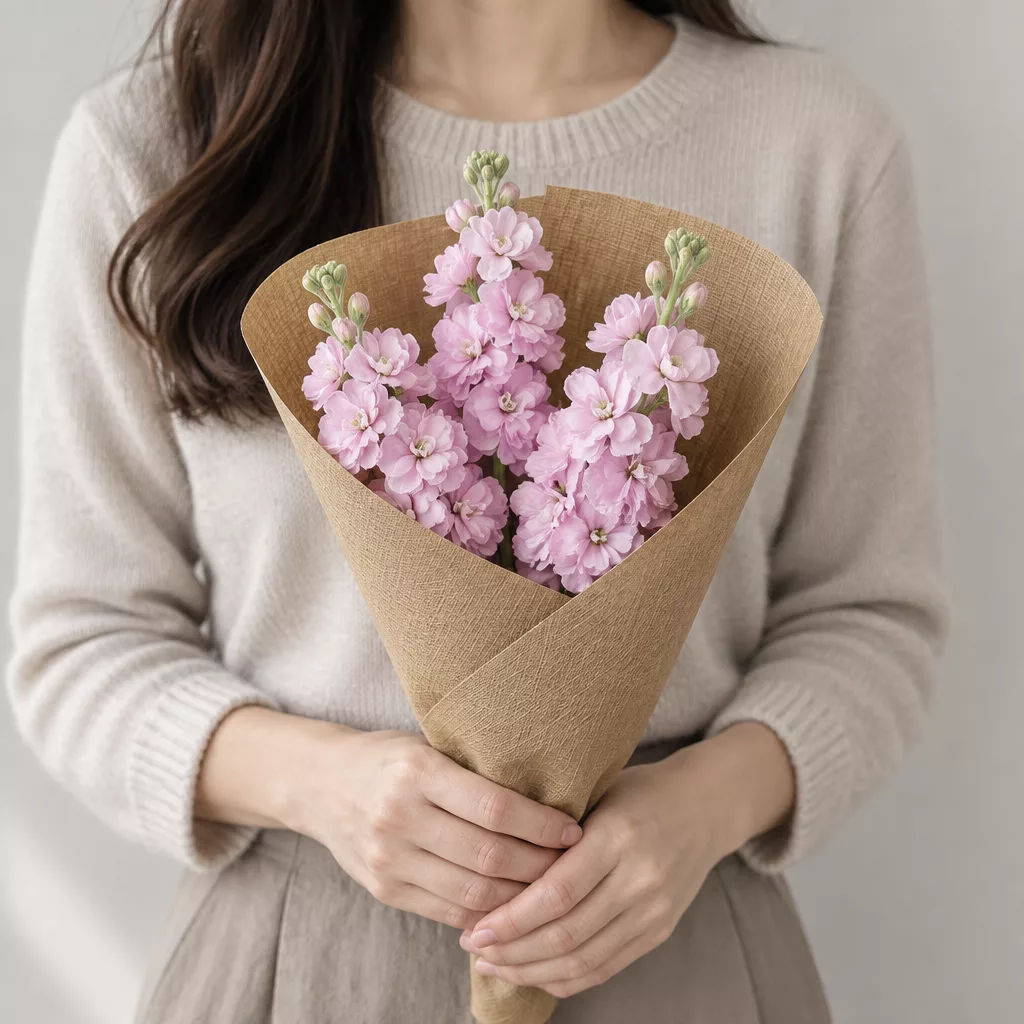
In Russia, receiving flowers at the door is a meaningful gesture, and Aleksandrov is no different. Most recipients will open the door to a courier holding a wrapped bouquet, often with a kraft paper or decorative wrapping that conceals the full arrangement — which creates a small moment of anticipation before they unwrap it. If you have added a card or note, it is attached to the outside of the wrapping so it is seen immediately.
The bouquet will arrive in a water-retaining sleeve or with damp wrapping around the stems, depending on the season and travel time. This is standard practice for long-distance delivery and keeps stems hydrated during transit. The recipient should unwrap carefully and move the flowers to a vase within the first thirty minutes of arrival.
One cultural note that is useful if you are sending from outside Russia: it is traditional to give flowers in odd numbers for celebratory occasions. Even numbers carry a different association in Russian custom. We follow this when assembling bouquets, so you do not need to specify — but if you are ordering a very large arrangement where counting individual stems is impractical, this convention becomes less rigid.
If the recipient is not home at the agreed time, our courier will call the number provided. We do not leave bouquets unattended at a door. If contact cannot be made, we will coordinate with you to reschedule, so the flowers are never wasted.
Seasonal Considerations: What Works in Each Part of the Year
Aleksandrov experiences proper Russian seasons — genuine winters with frost and snow, warm summers, and distinct spring and autumn periods. Each season affects both what flowers are at their best and how delivery logistics work in practice.
In winter, from November through February, roses and tulips are the most reliable choices. Tulips in particular are at their peak during the Russian winter months when Dutch imports are freshest and prices are reasonable. They travel well in cold conditions and open gradually in a warm room, giving the recipient several days of enjoyment. Avoid ordering tropical flowers like anthurium for winter delivery unless you are confident the recipient's entrance area is heated.
Spring brings the most exciting range — ranunculus, anemones, and hyacinths appear from February onward, and by April the selection is genuinely wide. This is also the season of Defender of the Fatherland Day in late February and International Women's Day on 8 March, which are the two biggest flower-giving occasions in Russia. If you are ordering around those dates, place your order several days in advance. Demand across the country spikes sharply and same-day availability narrows.
Summer offers garden roses, eustoma, and sunflowers — but heat is the main challenge. We pack summer bouquets with extra care and recommend morning delivery windows when temperatures are lower. Autumn is actually a beautiful season for flowers in Russia — dahlias, asters, and late-season roses are all excellent, and the cooler air helps them last longer after delivery.
Care Instructions to Pass On to the Recipient
A bouquet that arrives in good condition can still decline quickly if the recipient does not know the basics. This is not about being fussy — it is about the gesture lasting as long as possible, which is what you paid for and what they deserve.
The first step is the most important: cut the stems. At least two centimetres, at a diagonal angle, using a sharp knife rather than scissors. Scissors compress the stem tissue and reduce water uptake. This should be done under running water or while the stems are submerged, which prevents air bubbles from blocking the cut end. If the recipient does not have a knife handy, scissors will do — the point is to reopen the stem after transit.
The vase should be clean and filled with cool, fresh water. Warm water encourages bacterial growth and shortens vase life significantly. Remove any leaves that would sit below the waterline — they rot quickly and cloud the water. Change the water every two days and recut the stems each time.
Keep the bouquet away from direct sunlight, radiators, and fruit bowls. The ethylene gas that ripening fruit releases accelerates flower ageing noticeably — a rose next to a bowl of apples will open and drop its petals faster than one across the room.
With proper care, roses and chrysanthemums will last seven to ten days. Tulips and alstroemeria typically give five to seven days. Lisianthus, if kept cool and watered, can last up to two weeks. Passing these tips along — even in a message — turns a nice gift into a lasting one.
When to Order and How to Make the Moment Land Right
The timing of a flower delivery is part of the gift itself. A bouquet that arrives at 9 in the morning on a birthday feels different from one that appears just before an evening dinner. Thinking about the recipient's day — when they are likely to be home, what they are doing, whether they live alone or with family — shapes the delivery time you should choose.
For workplace deliveries in Aleksandrov, midday windows tend to work well. The recipient is present, colleagues witness the gesture, and there is enough of the working day left for the moment to feel celebratory rather than like an afterthought. For home deliveries, late morning or early afternoon usually catches people in — evenings can be unpredictable, especially if the recipient has plans.
If the occasion is a surprise, the element of timing matters even more. We recommend not telling the recipient to expect anything, but making sure someone at the address — a family member or flatmate — knows a delivery is coming. That way the bouquet does not sit outside a locked door.
For recurring occasions like anniversaries, it is worth saving the details from your first order. The recipient's address, preferred delivery window, and any notes about access or building codes can be reused, making the next order faster to place and the experience more consistent.
Ordering a day ahead is almost always the right choice for Aleksandrov. It gives us time to select the freshest stems, condition them properly, and dispatch without rushing — and it gives you peace of mind that the timing will work.
Sending flowers to Aleksandrov from Saint Petersburg is a longer journey than a local delivery, but it is one we plan for carefully at every step — from which stems we choose on the morning of dispatch to how the bouquet is wrapped for the road. The recipient opens the door to something assembled with the same attention as a same-city order, because the distance is our problem to solve, not theirs to notice. When the moment matters, the flowers should show it.
Frequently asked questions
Can I order flowers to Aleksandrov for same-day delivery?
Same-day delivery to Aleksandrov is possible when orders are placed before noon. Because the city is approximately 700 kilometres from Saint Petersburg, we need enough lead time to assemble the bouquet at peak freshness and dispatch it so it arrives the same evening. For more flexibility and a wider choice of delivery windows, next-day ordering is recommended.
What happens if the recipient is not home when the courier arrives?
Our courier will call the recipient using the phone number provided with the order. We do not leave bouquets unattended outside a door. If contact cannot be made, we coordinate with the sender to arrange a new delivery window so the flowers are not wasted. Providing an accurate phone number when ordering is the single most useful thing you can do.
Are there flowers I should avoid ordering for a long-distance delivery to Aleksandrov?
Fully open peonies, large open hydrangea heads, and temperature-sensitive tropical varieties are less suited to a long road journey. We recommend roses, chrysanthemums, lisianthus, alstroemeria, and tulips — all of which travel well and arrive in good condition. Our team selects stems at the right stage of opening specifically for the distance involved.
Do I need to explain Russian flower customs when ordering for someone who is not Russian?
No. We follow Russian customs as a matter of course — including the tradition of odd numbers of stems for celebratory bouquets. If your recipient is unfamiliar with this, it simply means they receive a beautifully composed arrangement without needing to understand the convention behind it. The gesture reads warmly in any cultural context.
How long will the flowers last after delivery to Aleksandrov?
With proper care — fresh water every two days, trimmed stems, a cool location away from sunlight and fruit — roses and chrysanthemums last seven to ten days, tulips and alstroemeria five to seven days, and lisianthus up to two weeks. We include care guidance with every order so the recipient knows exactly what to do from the moment the bouquet arrives.
Ready to send flowers?
Pick the city, choose the bouquet, and a local florist takes it from there.
Choose a city →