Sending Flowers to Borovichi? Here Is What to Expect
Borovichi sits about 180 kilometres southeast of Veliky Novgorod, and for anyone trying to send flowers there from Saint Petersburg or another Russian city, the distance raises real questions: Will they arrive fresh? How long will it take? What should I actually order? This article answers all of that plainly, so you can place your order with confidence and the person receiving it gets something genuinely beautiful.
Where in Borovichi We Deliver and How the Route Works
Borovichi is a compact city of roughly 50,000 people spread along the Msta River, and our delivery covers the entire urban area — from the central districts around Kommuny Square to the residential neighbourhoods on the left bank and the quieter streets near the railway station. If the address is within city limits, the bouquet reaches it. Outlying villages and rural addresses several kilometres beyond the city boundary may require a longer window, so it is worth mentioning any access details when you place the order.
The route from our Saint Petersburg workshop to Borovichi takes between two and a half and three and a half hours by road, depending on the season. Winter adds time: the M10 and connecting roads can be icy between November and March, and we build that into our scheduling rather than promise something we cannot keep. Summer and early autumn are the smoothest periods for delivery, and orders placed before noon on those days typically arrive in the afternoon.
We keep the flowers in a temperature-controlled environment during transit — this matters more than most people realise. Roses and tulips left in a warm car for three hours arrive wilted and short-lived. Our transport stays between four and eight degrees Celsius, which is the range professional cold chains use for cut flowers. That is why the bouquet you ordered looks the same at the door as it did when it left the workshop.
Bouquets we can deliver


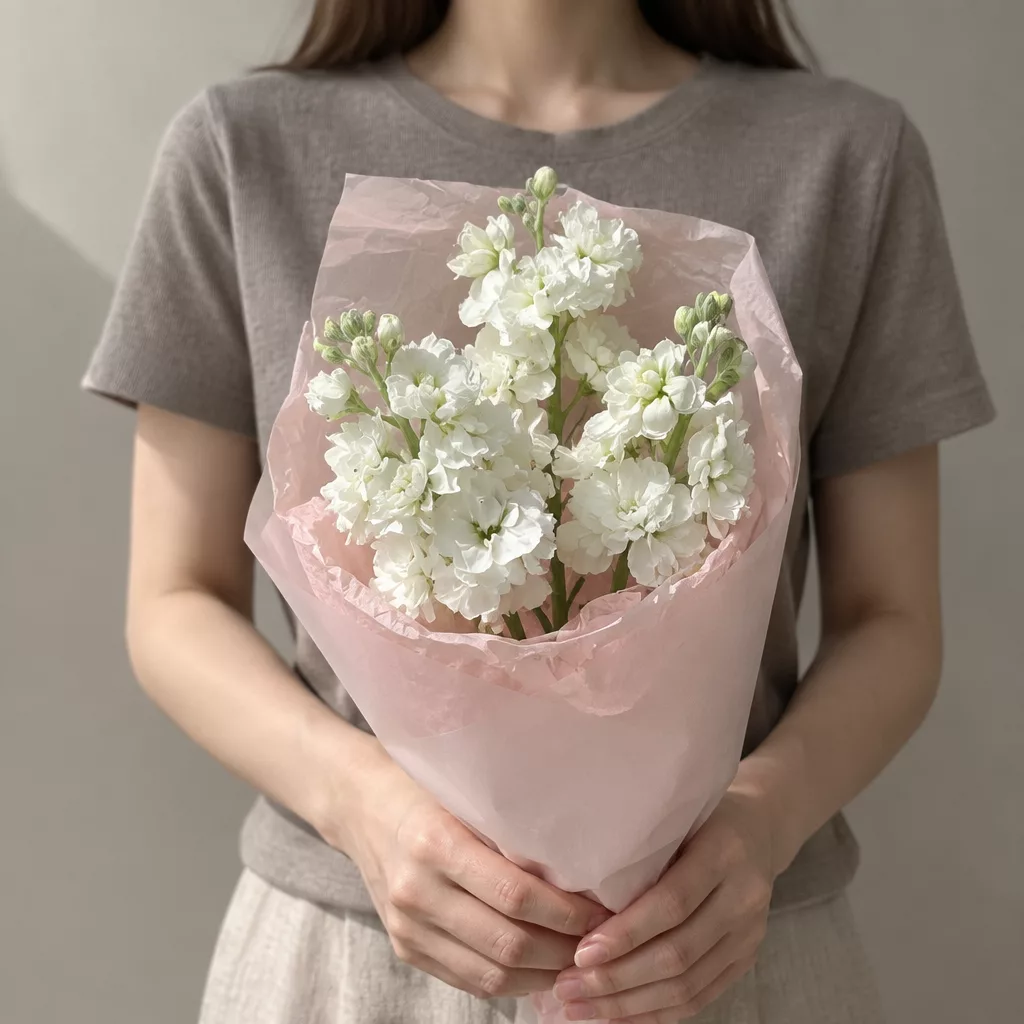
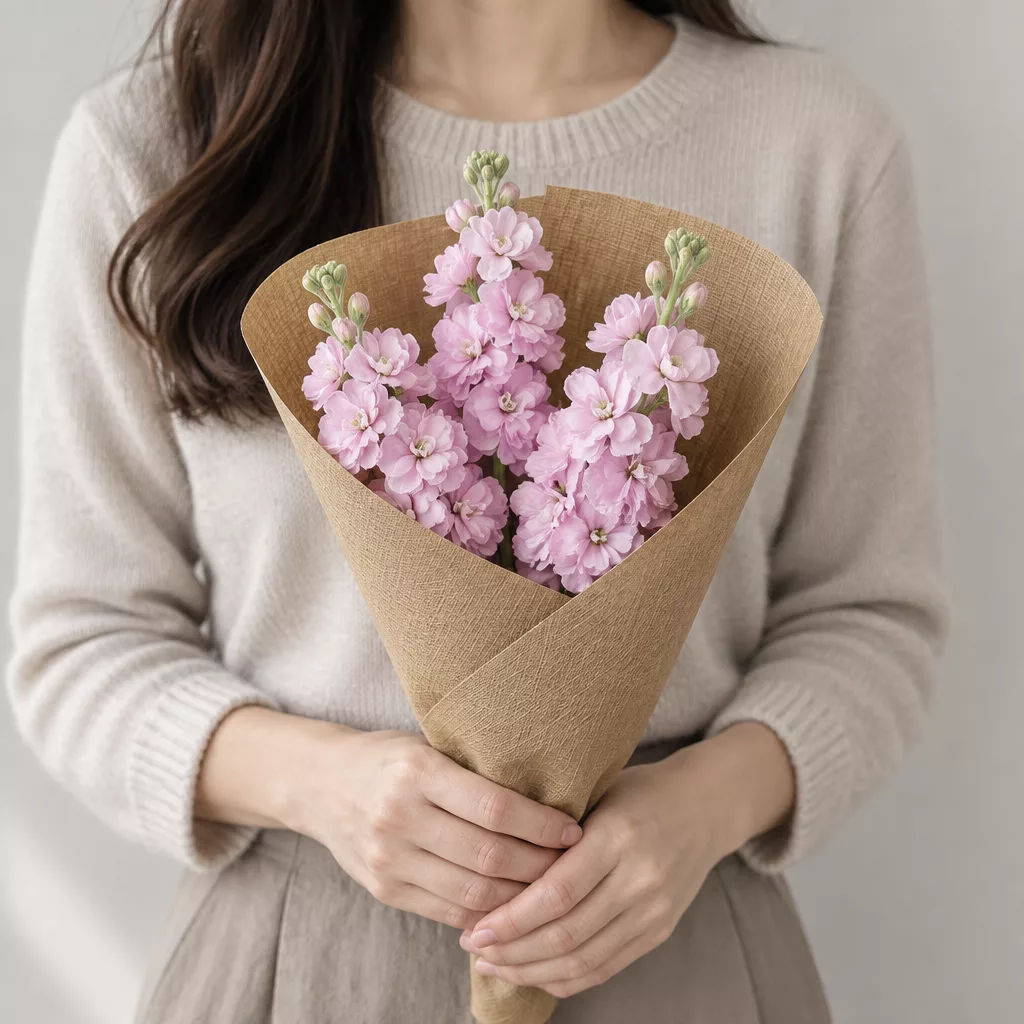
Timing Your Order So the Flowers Arrive at the Right Moment
The most common mistake people make is ordering on the day itself and expecting a morning delivery. For Borovichi, the realistic same-day window opens when the order is confirmed before 10 a.m. That gives us time to assemble the bouquet, complete quality checks and get it on the road so it arrives by late afternoon. Orders placed after noon are better scheduled for the following morning, and that is not a limitation — a bouquet arriving fresh at 10 a.m. the next day is far better than a tired one arriving at 8 p.m.
For birthdays, anniversaries and other fixed dates, ordering 24 to 48 hours in advance opens up more options. You can specify a two-hour delivery window, request a particular variety if it is in season, and add a handwritten card with a longer message. Last-minute orders work, but they are assembled from what is freshest on the day rather than what is specifically chosen.
Russian name-day celebrations, known as imeniny, and major dates like March 8 — International Women's Day — create very high demand. On Women's Day, which is the single biggest flower-giving occasion in Russia, we recommend ordering three to five days ahead. The same applies to Valentine's Day on February 14. These are not just busy days for florists; they are days when roads into smaller cities like Borovichi can see heavier traffic, adding unpredictability to journey times. Early orders get priority scheduling and the widest choice of flowers.
Choosing the Right Bouquet for the Person Receiving It
Start from the recipient, not from the flower. A woman in her sixties who tends a dacha garden will likely appreciate something that echoes what she grows herself — garden roses, lisianthus, or seasonal branches like flowering quince in spring. A younger woman in her twenties might love a loose, asymmetric arrangement with ranunculus, anemones and eucalyptus. A man receiving flowers for a professional achievement responds well to something architectural: anthuriums, tropical foliage and a restrained colour palette.
Colour carries meaning in Russian culture in a way that is worth knowing if you are sending from outside the country. Even numbers of flowers are traditionally associated with mourning, so bouquets are always assembled in odd numbers — three, five, seven, eleven. Yellow flowers were once considered a symbol of separation, though this is fading among younger generations; if you are unsure, mixing yellow with white or peach removes any ambiguity. Red roses remain the clearest expression of romantic love and are rarely misread.
For a child's birthday or a school performance, sunflowers and bright gerberas are reliably joyful. For a colleague or teacher — common occasions in Russian professional culture — white or cream flowers feel appropriately respectful without being cold. Chrysanthemums are widely grown in Russian gardens and are warmly received as a gift, particularly in autumn when they are at their seasonal best. Think about what the person's home looks like, what colours they wear, and what the occasion is asking for. The flower follows from that.
What Bouquets Work Best Across Different Budgets
A modest but genuinely lovely bouquet for Borovichi delivery typically centres on one strong flower type supported by greenery and a complementary accent. Five or seven spray roses with eucalyptus and waxflower is a classic example — it photographs beautifully, smells good, and holds its shape for seven to ten days with basic care. Alstroemeria is another reliable choice at this level: the flowers are long-lasting, come in rich colours and fill a vase generously.
At a mid-range level, you move into mixed compositions. A bouquet combining garden roses, lisianthus and seasonal greenery gives the recipient something that changes slightly as it opens over the first two days — the lisianthus unfurls slowly and the roses deepen in colour. Peonies, when in season from late May through June, are worth the step up in budget because nothing else quite replaces them. Their scent and fullness make an immediate impression that a recipient remembers.
For a significant occasion — a major birthday, a wedding anniversary, a thank-you for something important — a larger arrangement with premium roses such as David Austin varieties, combined with ranunculus, sweet peas in season, and trailing ivy or ruscus, creates something that feels genuinely considered. These compositions take longer to assemble and are best ordered a day or two ahead. Whatever the budget, presentation matters as much as the flowers themselves. Kraft paper wrapping with a satin ribbon reads as thoughtful; cellophane alone reads as rushed. We wrap everything as though the bouquet is the main event, because it is.
Seasonal Flowers That Thrive on the Borovichi Journey
Not every flower handles a three-hour road journey equally well. Delicate flowers with thin petals — sweet peas, garden cosmos, open poppies — are beautiful in the workshop but fragile in transit. We use them in orders where conditions allow and the timing is right, but for Borovichi deliveries we lean toward varieties that travel confidently.
Roses are the most reliable year-round choice. Closed buds shipped at four degrees Celsius arrive firm and open over the following 24 to 48 hours, which means the recipient gets to watch the bouquet come to life. Chrysanthemums are exceptionally hardy and last two weeks or more with proper water changes. Carnations, often underestimated, hold their colour and form for ten days and tolerate temperature variation better than most flowers.
In spring, tulips are excellent — they are naturally suited to cool transport and arrive upright. Ranunculus travels well when the buds are tight. In summer, lisianthus is our workhorse: it looks like a garden rose at a fraction of the fragility, and it lasts beautifully. Sunflowers make the journey fine as long as they are not fully open at departure.
Winter is worth addressing directly. From December through February, the ambient temperature outside the vehicle can drop to minus fifteen or lower in the Novgorod region. Flowers left unprotected for even five minutes in that cold suffer cell damage that shows up as translucent, water-soaked patches on the petals within hours. We wrap winter bouquets in insulating sleeves and hand them over quickly. If you are the one receiving the delivery, bring them inside immediately rather than leaving them in an entrance hall.
Caring for the Bouquet Once It Arrives in Borovichi
The first thirty minutes after arrival decide how long the bouquet lasts. The stems need a fresh diagonal cut — about two centimetres — made with a sharp knife rather than scissors, which crush the vascular tissue and reduce water uptake. Tap water works well in Borovichi; the local water supply does not have the high chlorine levels found in some larger cities, so there is no need to let it stand before using it.
The vase should be clean and filled with cool water, not warm. Warm water encourages bacteria to multiply faster, which is the main reason bouquets die early. Remove any leaves that sit below the waterline — they rot quickly and cloud the water. Change the water every two days and re-cut the stems each time. This is the single most effective thing a recipient can do to extend vase life.
Keep the bouquet away from direct sunlight, radiators and fruit bowls. Ripening fruit releases ethylene gas, which accelerates petal drop in roses and causes carnation petals to curl inward. A cool room — around 18 to 20 degrees Celsius — is ideal. Windowsills in winter are cold enough to cause damage overnight, so move the vase to a table if the window lets in frost.
Different flowers in a mixed bouquet have different lifespans. Chrysanthemums and carnations will outlast roses by several days. As the shorter-lived flowers fade, remove them and let the remaining ones continue. A bouquet that starts as seven flowers can still be three beautiful stems ten days later, and those three deserve the same fresh water and clean vase.
Adding a Personal Touch to a Delivery in Borovichi
Flowers arrive with more meaning when they come with words. A handwritten card — not a printed label — is something recipients often keep long after the petals have gone. When you place your order, take a moment to write something specific rather than generic. Not just 'Happy Birthday' but something that refers to the person: a shared memory, a quality you admire in them, a small joke only they will understand. That is what makes a delivery feel like a gift rather than a transaction.
In Russian culture, it is common to give flowers without a card when delivering in person, because the giver is there to speak. But for a remote delivery — especially one crossing several hundred kilometres — the card carries the entire emotional weight of the moment. Write more than you think you need to.
Beyond the card, you can add small accompanying items: a box of chocolates, a small plant in a pot, a candle. These work particularly well when the recipient lives alone or when you cannot be there yourself. A potted plant alongside a cut bouquet is a thoughtful combination — the bouquet is the immediate joy, the plant is the lasting reminder.
For deliveries to a workplace — common for birthdays and professional milestones in Russia — consider that the flowers will be seen by colleagues. A generous, well-presented bouquet in a workplace setting has a social dimension: it marks the recipient as someone valued and celebrated. That is worth keeping in mind when choosing the size and presentation. A bouquet that looks confident in a living room can look modest on a large office desk.
Sending flowers to Borovichi from anywhere in Russia is straightforward when you plan around the journey rather than against it. Order a day ahead when you can, choose varieties that travel well, and give the recipient the information they need to care for the bouquet properly. The distance between you and the person receiving the flowers does not have to show in the quality of what arrives at their door.
Frequently asked questions
Can I order flowers for same-day delivery to Borovichi?
Yes, same-day delivery to Borovichi is available when the order is confirmed before 10 a.m. Orders placed after midday are better scheduled for the following morning to ensure the bouquet arrives in good condition. We will always confirm your delivery window at the time of order so there are no surprises.
How do flowers stay fresh during the long drive to Borovichi?
Our delivery vehicle maintains a temperature between four and eight degrees Celsius throughout the journey, which is the standard professional range for cut flowers in transit. Bouquets are also wrapped to protect them from physical damage. This means the flowers arrive in the same condition they left our Saint Petersburg workshop.
What flowers are best to send in winter when temperatures are very low?
Roses, chrysanthemums and carnations handle winter transit best. We wrap winter bouquets in insulating sleeves to protect them from the cold during the handover moment. We recommend the recipient bring the bouquet indoors immediately rather than leaving it in an unheated entrance hall, even for a few minutes.
Is it true that yellow flowers are bad to give as a gift in Russia?
The association between yellow flowers and separation exists in Russian cultural memory, though it is fading among younger generations. If you are unsure, mixing yellow blooms with white or peach flowers removes any ambiguity. Sunflowers are generally an exception and are widely seen as cheerful and positive regardless of this tradition.
Can I send flowers to a Borovichi address I am not completely sure about?
Provide as much detail as you have — the street, building number, apartment number and a contact phone number for the recipient. Our courier will call ahead before arriving. If the address turns out to be outside city limits, we will contact you to arrange the best solution before the delivery departs.
Ready to send flowers?
Pick the city, choose the bouquet, and a local florist takes it from there.
Choose a city →