Sending Flowers to Donskoy? Here Is What to Expect
Donskoy sits far enough from central Saint Petersburg that most people assume flower delivery there means waiting a day or settling for whatever survives a long journey. That assumption is wrong. With the right preparation on our end — pre-cooled blooms, a direct route and a florist who knows which varieties travel well — a bouquet can arrive looking as though it was arranged ten minutes ago. This article walks you through timing, what to order for the season, how to think about budget, and the small details that make a delivery feel genuinely special rather than merely functional.
Getting Flowers to Donskoy: Timing and What Affects It
Donskoy is a town in Tula Oblast, roughly 250 kilometres south of Moscow and well over a thousand kilometres from Saint Petersburg. When you order from Turboflora, your bouquet is prepared in Saint Petersburg and dispatched through our own delivery network, reaching Donskoy within the one-to-two hour window we promise for the broader delivery zone. That window is calculated from the moment the bouquet leaves our studio, not from the moment you click confirm.
Traffic and road conditions along the M2 corridor affect timing more in summer and around public holidays, when the route sees heavier use. We factor this in when we schedule dispatch, which is why we ask for a preferred delivery window rather than an exact minute. Giving us a two-hour slot — say, between noon and two in the afternoon — allows us to absorb minor delays without the recipient standing at the door.
Temperature matters enormously on this route. In July and August, the car interior can reach levels that wilt roses within twenty minutes if there is no active cooling. Our vehicles keep blooms between four and eight degrees Celsius during transit. In January, the risk reverses: a bouquet moved too quickly from a cold car into a warm hallway can develop condensation that accelerates petal browning. We wrap accordingly and advise recipients to let the bouquet rest in a cool room for fifteen minutes before unwrapping. These are not small details — they are the difference between a bouquet that lasts five days and one that lasts ten.
Bouquets we can deliver


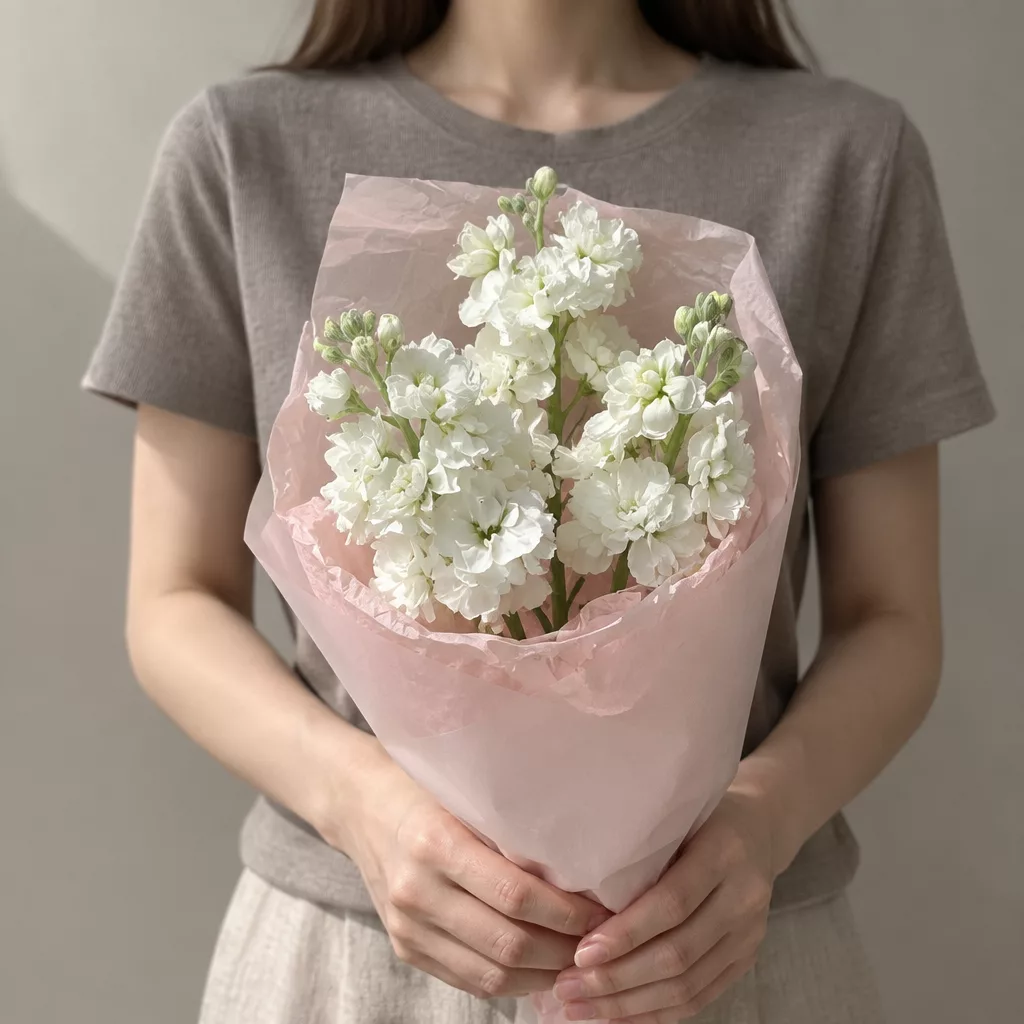
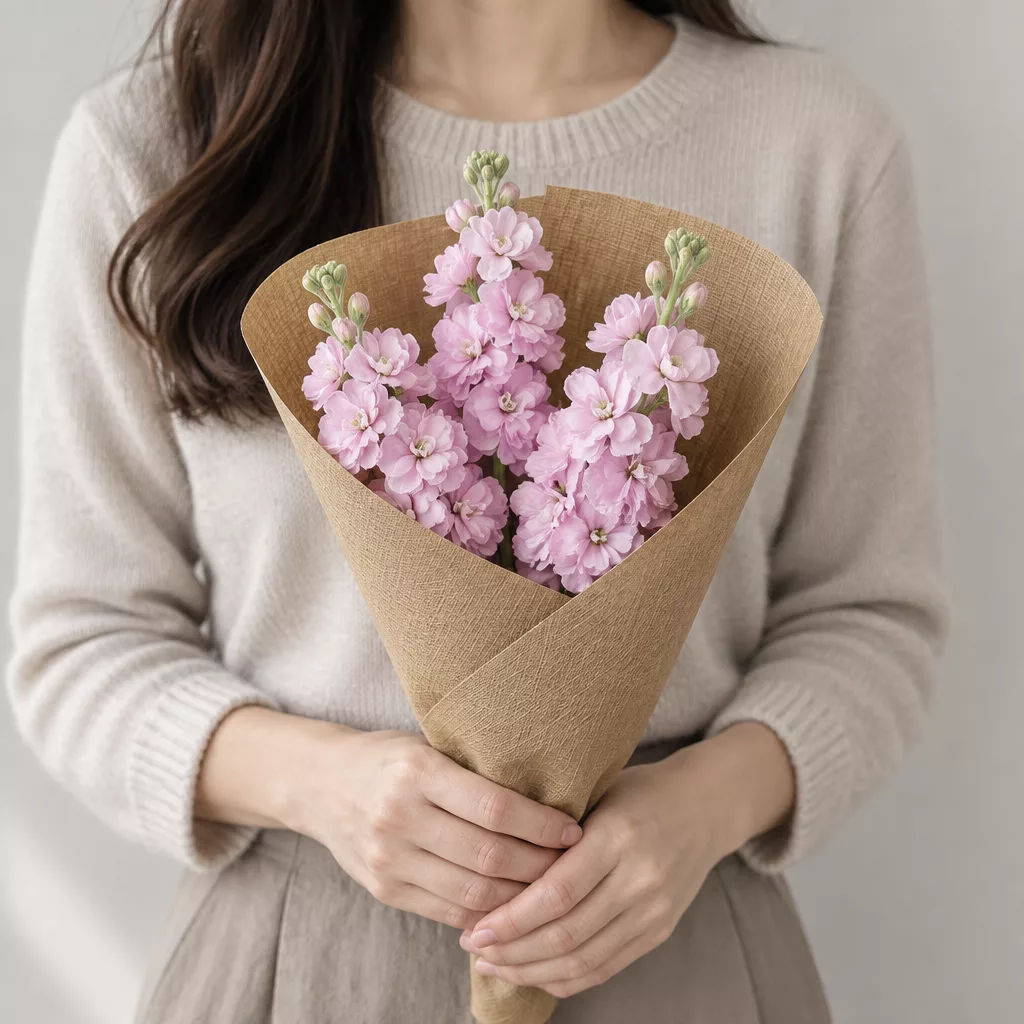
Choosing Flowers for the Person, Not Just the Occasion
Before you think about which flowers to order, think about who will receive them and where they will put the bouquet. A retired grandmother in a warm Donskoy apartment needs different flowers than a colleague who keeps her office at a brisk temperature. Heat-tolerant varieties — chrysanthemums, alstroemeria, lisianthus — hold up beautifully in warm interiors. Roses and peonies are more demanding and reward a recipient who will trim the stems and change the water every two days.
For a birthday, colour tells the story before the card is even read. Warm yellows and oranges — think sunflowers combined with orange spray roses and a few stems of solidago — read as celebratory and energetic. Soft lavender lisianthus mixed with white waxflower feels more intimate, better suited to a thank-you or a quiet anniversary. If you are not sure of the recipient's taste, a single-variety bouquet of garden roses or tulips (in season, October through April) is almost always welcome because it looks intentional rather than assembled by formula.
For a child's graduation or a teacher's gift — both common occasions in Russian culture — bright gerberas or a cheerful mix of ranunculus and snapdragons signal warmth without the formality of red roses. Russian recipients often read red roses as a romantic gesture specifically, so if the relationship is not romantic, mixing red with white or choosing a different colour altogether avoids any awkwardness. Explaining this to someone unfamiliar with Russian customs saves a genuinely embarrassing moment.
Seasonal Availability and What Travels Best Each Month
Not every flower that looks beautiful in a studio photograph travels well across several hundred kilometres in February or August. Knowing what is reliably good in each season helps you order with confidence rather than hope.
From November through March, tulips are at their peak and travel exceptionally well in cold conditions. They continue opening after delivery, which means a bouquet that arrives looking compact will be fully open and dramatic within twenty-four hours. Hyacinths are available in this window too and carry a fragrance that fills a room — a genuine pleasure in a season when windows stay closed. Roses are available year-round from our suppliers, but the Dutch and Ecuadorian varieties we use in winter have longer stems and sturdier petals than summer hothouse alternatives.
April and May bring ranunculus, anemones and the first peonies. These are the most requested flowers for May Day and Victory Day, which fall on the first and ninth of May respectively — both major occasions in Russian culture when florists across the country are at full capacity. Ordering two or three days ahead during this window is genuinely important, not a sales tactic.
Summer brings sunflowers, which are grown domestically and arrive fresher than many imported alternatives. Echinacea, statice and lemon-yellow craspedia add texture and hold their shape even in warm cars. Autumn is the season for dahlias, if you can find them, and for deep-toned chrysanthemums that suit the mood of the season without being sombre. We stock all of these and can advise on what arrived freshest that week when you call to order.
Thinking About Budget Without Compromising on Impression
A generous impression does not require the most expensive flowers on the list. It requires the right proportion of blooms to greenery, a coherent colour story and stems that are genuinely fresh. These things are within reach at almost any budget if you know where the value sits.
At a modest budget, single-variety bouquets almost always outperform mixed arrangements of the same price. A hand-tied bundle of twenty white alstroemeria stems, wrapped in kraft paper with a satin ribbon, looks deliberate and elegant. Alstroemeria is also one of the longest-lasting cut flowers available — up to two weeks with basic care — which means the recipient gets real value from the gift. Spray chrysanthemums in a single colour work the same way.
At a mid-range budget, you can add a focal flower — a garden rose, a peony, a large-headed dahlia in season — and let the surrounding stems support it rather than compete. Three or five stems of a focal flower surrounded by waxflower, eucalyptus and smaller roses creates a bouquet that photographs beautifully and feels genuinely luxurious without requiring premium pricing on every stem.
At a higher budget, the difference is usually stem count, stem length and the addition of varieties that are simply more expensive to source: garden roses with many-petalled heads, peonies in peak season, king protea for a dramatic structural statement. These are worth it when the occasion demands it — a significant birthday, a promotion, a long-delayed reunion. For everyday appreciation, the mid-range approach almost always lands better than people expect.
Packaging That Protects the Bouquet on a Long Route
Packaging for a delivery to Donskoy is not the same as packaging for a local drop across town. The bouquet needs to stay stable in a moving vehicle, maintain humidity around the stems without soaking the wrapping, and arrive looking as though it was just finished — not jostled into a new shape.
We use a layered approach. The stems sit in a small water-retaining sleeve — a sealed cellophane pocket with a damp paper insert — that keeps them hydrated for up to six hours without leaking. Around the blooms we use tissue paper that breathes rather than trapping heat, and the outer wrap is a kraft or linen paper that holds the shape of the bouquet without compressing the petals. For particularly delicate flowers like ranunculus or open peonies, we add a light internal structure of folded tissue that prevents the heads from pressing against each other.
The outer box or bag matters too. A flat-bottomed box allows the bouquet to travel upright, which is always better than diagonal. We avoid cellophane as an outer wrap on long routes in summer because it creates a greenhouse effect that accelerates wilting. Recipients sometimes assume that a bouquet arriving in simple kraft paper is less premium than one in elaborate cellophane — the opposite is usually true.
When the bouquet arrives, we include a small card with care instructions written in plain Russian. For recipients who may not know the basics — and many people genuinely do not — this single card can extend the life of the arrangement by several days.
Care After Delivery: Making the Bouquet Last
The florist's work ends at the door, but the bouquet's life continues for as long as the recipient knows how to support it. A few simple habits make a real difference, and passing this information along when you order is one of the kindest things you can do for the person receiving the gift.
The first step is always a fresh cut. Stems seal over during transit, even in just a few hours, and a sealed stem cannot draw water. Cutting one to two centimetres from the bottom at a forty-five degree angle — underwater if possible, to prevent an air bubble entering the stem — restores the flower's ability to hydrate. This single step adds at least two days to vase life across almost all varieties.
Water temperature matters more than most people realise. Lukewarm water encourages uptake in most flowers. The exception is tulips and other bulb flowers, which prefer cold water and actually close slightly in warm conditions — which is not damage, just their natural response. Changing the water every two days and rinsing the vase removes the bacteria that cloud the water and clog stems.
Keep the vase away from direct sunlight, radiators and fruit bowls. Ripening fruit releases ethylene gas, which accelerates petal drop in roses and carnations noticeably. A cool spot — a hallway, a north-facing windowsill — extends life significantly compared to a sunny kitchen counter. With these habits, alstroemeria lasts twelve to fourteen days, roses seven to ten, and tulips five to seven, depending on how open they were at delivery.
Ordering for Donskoy: Practical Steps and Common Mistakes
Ordering flowers for delivery to Donskoy is straightforward, but a few practical points save frustration and ensure the bouquet arrives exactly as intended.
First, confirm the recipient's address in full, including the apartment number and any entry code for the building. Donskoy has a mix of older Soviet-era apartment blocks and newer developments, and many buildings have locked entrance doors. A delivery that cannot get past the lobby is a wasted journey. If you are not certain of the entry code, ask the recipient in advance under any pretext — most people do not mind being asked, and it is far less awkward than a missed delivery.
Second, let us know if the recipient is likely to be out during the delivery window. We can arrange to leave the bouquet with a neighbour, a building concierge or in a safe cool spot, but only if you tell us this is an option. Flowers left in a warm hallway for two hours lose a day of vase life, sometimes more.
Third, the most common mistake when ordering for a distant city is choosing flowers based on what looks impressive in a photograph rather than what travels well. A fully open garden rose is beautiful on screen and fragile in a box. A rose at the half-open stage travels perfectly and opens fully within a day of delivery. Trust the florist's recommendation on stage of bloom — it is not a compromise, it is experience.
Finally, add a handwritten message. In Russian culture, the card that comes with flowers is read carefully and often kept. A few sincere words matter more than the price of the bouquet.
Sending flowers to Donskoy from Saint Petersburg is not a gamble when the logistics are handled properly. The distance is real, but so is the care that goes into keeping every stem hydrated, every petal protected and every delivery on time. Choose flowers that suit the person and the season, give us an accurate address and a reasonable delivery window, and the bouquet that arrives will feel as considered and fresh as anything you could hand over in person. The distance disappears when the flowers are right.
Frequently asked questions
Can you deliver flowers to Donskoy the same day I order?
Yes, same-day delivery to Donskoy is available when you order before our daily cut-off time. Because the route requires careful scheduling, placing your order in the morning gives us the best window to guarantee arrival within your preferred time slot. For evening deliveries, ordering by early afternoon is strongly recommended.
Which flowers hold up best on a long delivery to Donskoy?
Alstroemeria, spray chrysanthemums, lisianthus and carnations are the most resilient on longer routes. Roses travel well at the half-open stage. Tulips handle cold-season deliveries beautifully. We advise against fully open peonies or delicate anemones for very long routes in warm months, and will always suggest a suitable alternative if your first choice is a poor traveller.
What if no one is home when the bouquet arrives in Donskoy?
Tell us when you order. We can coordinate with a neighbour, a building concierge or arrange a second delivery attempt. Flowers left unattended in a warm entrance for more than an hour begin to suffer, so having a backup plan matters. A quick note in the order comments is all we need to handle this smoothly.
Is it appropriate to send red roses to a friend in Russia, or does it carry a romantic meaning?
Red roses in Russia are strongly associated with romantic love, so sending them to a colleague or a friend of the opposite sex can create unintended awkwardness. For friendship or professional appreciation, white, yellow or peach roses are a much safer and equally beautiful choice. Mixed arrangements that include red among other colours are generally read as celebratory rather than romantic.
How far in advance should I order for a May holiday delivery to Donskoy?
For May Day on the first and Victory Day on the ninth, we recommend ordering at least two to three days ahead. These are among the busiest days in the Russian floral calendar and demand across the country is extremely high. Early ordering also gives you access to the widest range of seasonal varieties before popular choices sell out for those dates.
Ready to send flowers?
Pick the city, choose the bouquet, and a local florist takes it from there.
Choose a city →