Sending Flowers to Emva: Timing, Choices and What Arrives at the Door
Emva is a small town in the Komi Republic, and when you want to send flowers there — for a birthday, an anniversary, a new baby, or simply because someone you love lives far away — the distance can feel like the hardest part. It does not have to be. With the right florist and a clear understanding of what delivery to this part of Russia actually involves, you can put a beautifully arranged bouquet into someone's hands the same day you decide they deserve one.
Where Emva Sits and Why Location Matters for Flowers
Emva is a town in the Ust-Vymsky District of the Komi Republic, sitting along the Vym River in the northwest of the region. It is not a major city, and that matters when you are thinking about fresh flowers — because flowers are perishable cargo that respond to travel time, temperature swings and handling. The Komi Republic experiences a continental subarctic climate, which means winters are long and cold and summers are short but genuinely warm. This climate shapes everything from how bouquets are packaged for transit to which flowers hold up best on arrival.
When you order delivery to Emva, the bouquet travels from a climate-controlled studio in Saint Petersburg, packed to survive the journey. In winter, packaging includes insulating layers to protect stems from frost damage during the final stretch of outdoor handling. In summer, the concern shifts to heat — roses and tulips in particular can open too quickly if left in a warm vehicle, so timing the delivery window carefully becomes important.
Understanding the geography also helps you set realistic expectations. Emva is accessible but not on the same logistics corridor as Syktyvkar, the regional capital. Deliveries reach the town, and they reach it reliably, but planning a day ahead when possible gives the best result. If the occasion is fixed — a birthday morning, an anniversary dinner — placing your order the evening before is the single most effective thing you can do.
Bouquets we can deliver



Realistic Timing: What One to Two Hours Actually Means Here
Turboflora delivers fresh flowers across Russia within one to two hours, and it is worth explaining exactly what that promise means for a destination like Emva. The one-to-two-hour window refers to the time between your confirmed order and the moment the bouquet is on its way — assembled, wrapped and dispatched. For cities like Moscow or Saint Petersburg, that can translate into arrival at the door within the same short window. For Emva, the logistics chain is longer, and being honest about that makes the whole experience smoother.
For Emva, same-day delivery is available and works well when orders arrive before midday. The bouquet is prepared in the studio as soon as your order is confirmed, packaged correctly for the season, and sent out through the delivery route serving the Komi Republic. Afternoon orders placed before around two or three in the afternoon typically still reach the recipient the same day, though the exact cut-off can shift depending on the day of the week and current order volume.
The practical advice here is simple: if the moment matters — a morning birthday surprise, flowers waiting when someone gets home from work — order early and include a specific delivery window in your notes. Most people do not do this, and it is the most common reason a delivery that could have been perfectly timed arrives slightly off. You can also ask for confirmation that the flowers have been received, which the recipient usually appreciates as much as the bouquet itself. A little coordination on your end makes the florist's job easier and the surprise more reliable.
Choosing Flowers for Someone in Emva: Start With the Person
Before you think about varieties or colours, think about who is receiving the flowers and what you want them to feel when they open the door. A colleague celebrating a promotion needs something that reads as confident and celebratory — sunflowers, orange lilies, or a structured arrangement of red spray roses with eucalyptus. A mother on her birthday wants to feel cherished, which often means something soft and full: garden roses in blush or cream, freesias for their scent, ranunculus for their layered petals.
In Russia, there are a few customs worth knowing if you are sending from outside the country. Odd numbers of flowers are traditional for celebratory occasions — bouquets of seven, nine or eleven stems are common and feel intentional. Even numbers are associated with mourning, so a bouquet of ten roses, however beautiful, can carry an unintended message. A good florist will always compose bouquets with this in mind, but if you are specifying a stem count, keep it odd.
Yellow flowers carry a different cultural weight in Russia than in many Western countries. They are sometimes associated with parting or bad luck in relationships, so a bouquet of pure yellow tulips for a romantic occasion might not land the way you intend. Mixed arrangements that include yellow alongside other colours are perfectly fine and very popular. If you are uncertain, pinks, whites, reds and purples are universally well received across any occasion. When in doubt, ask the florist to lead — a working florist who knows both the season and the recipient's situation will always make a better choice than a colour grid on a website.
What Flowers Travel Well to the Komi Republic
Not every flower is equally suited to a long delivery route, and knowing which varieties hold up gives you confidence that what you order is what arrives. Chrysanthemums are among the most reliable long-distance flowers — they have firm stems, hold water well and do not bruise easily. Alstroemeria is another excellent traveller, with multiple blooms per stem that open gradually over a week or more, meaning the recipient gets an extended display rather than a single peak day.
Roses travel well when they are cut correctly and conditioned before packing. Standard roses — the long-stemmed varieties most people picture — are robust, but spray roses with their cluster of smaller blooms are even more forgiving of temperature variation. Carnations, often underestimated, are extraordinarily durable and come in a wide range of colours; a well-composed bouquet of carnations with greens like ruscus or pittosporum looks genuinely elegant and will last ten to fourteen days in a vase.
Flowers that need more careful handling include open garden roses, which are beautiful but more vulnerable to petal bruising in transit. Peonies, when in season from late spring through early summer, travel acceptably if they are sent in bud rather than in full bloom — they open in the warmth of the recipient's home, which can feel like a gift in itself. Tulips are seasonal and travel well in cooler months but can go limp quickly in summer heat. If you are ordering in July or August, the florist may suggest alternatives that will arrive in better condition — trust that advice, because a florist recommending against a variety is always doing it for the flower's sake.
Presentation and Packaging: What the Bouquet Looks Like at the Door
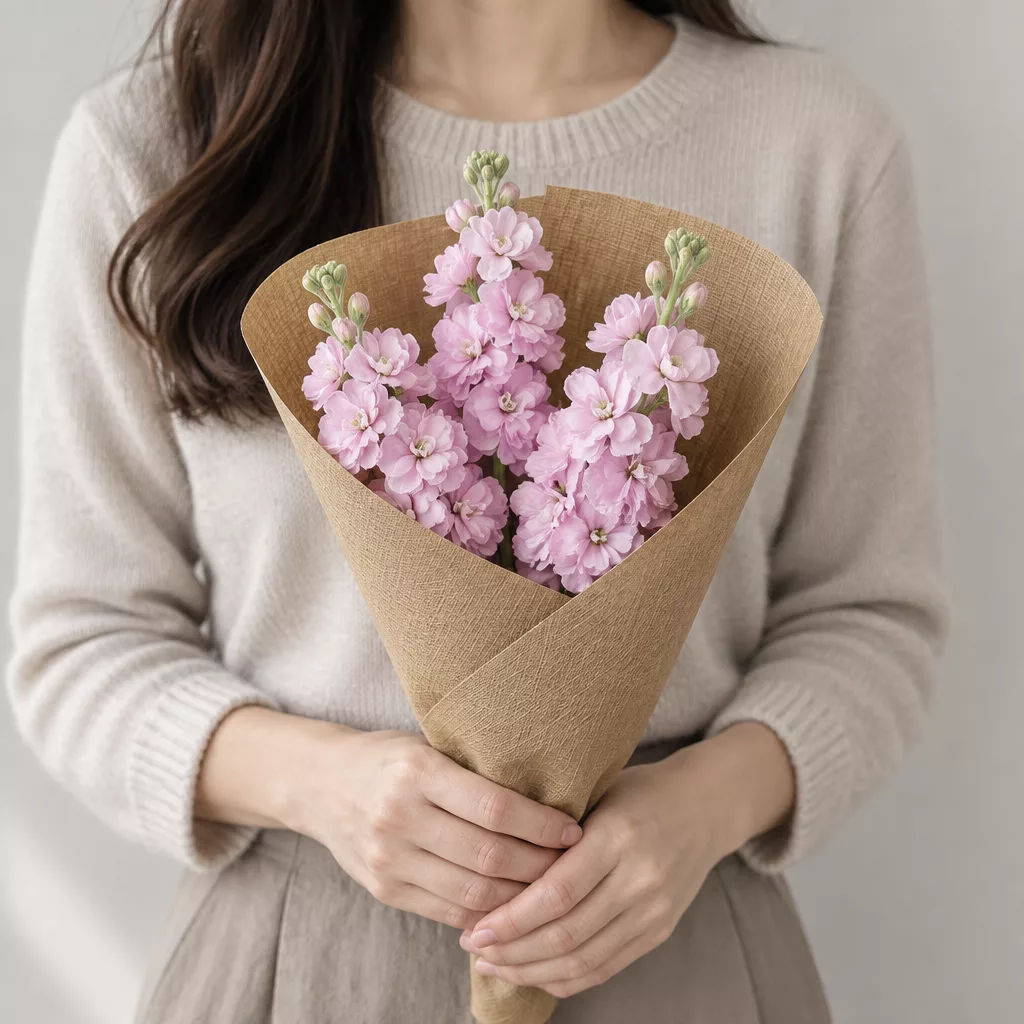
The moment someone opens their door to a delivery is the moment that matters most, and presentation is what makes that moment feel like an occasion. A bouquet arriving in a plain plastic sleeve is a different experience from one wrapped in kraft paper with a ribbon, or nestled in a box with a card tucked inside. These details are not decoration — they are part of what you are giving.
For delivery to Emva, bouquets are wrapped to survive transit without losing their shape or freshness. In winter, this typically means an outer layer of insulating material around the stems, with the floral arrangement itself protected inside. The wrapping is designed to come apart easily so the recipient can unwrap it without needing scissors or tools. In warmer months, breathable kraft paper allows the bouquet to stay fresh without trapping moisture against the stems.
If you want the presentation to feel more substantial — for a significant birthday, a wedding anniversary, or a new baby — a box arrangement is worth considering. Box arrangements sit in a structured container that holds the flowers upright and in position, so what the recipient sees when they lift the lid is exactly what the florist composed. They also travel more securely than a hand-tied bouquet, which makes them a good choice for longer routes.
A handwritten card is something many people forget to add and then wish they had. Even a short message — three or four lines — transforms a bouquet into something personal. The florist can include it with the delivery, and it costs nothing except the thought of what to write. Most recipients keep the card long after the flowers are gone.
Seasonal Availability and What to Expect Month by Month
Flowers are a seasonal product even in an era of global supply chains, and knowing what is genuinely at its best in a given month helps you order with confidence rather than hope. From January through March, the flower market is dominated by roses, chrysanthemums, carnations and alstroemeria — all of which are imported and available year-round. These months are also when tulips begin arriving in volume ahead of International Women's Day on the eighth of March, which is the single largest flower-giving occasion in Russia. If you are ordering for someone in late February or early March, plan well ahead — demand is extremely high and delivery slots fill up.
April and May bring the first domestic seasonal flowers, including tulips from Russian growers, irises and the early garden flowers. Late May and June are when peonies appear, and they are enormously popular in Russia — a bouquet of garden peonies in June is one of the most appreciated gifts you can send. Lisianthus, which resembles a rose but is more delicate and layered, is available through the summer and into autumn.
July and August are warm months even in the Komi Republic, and the heat affects how flowers travel. Hydrangeas, which are popular in summer arrangements, need to be kept well hydrated and are best ordered for morning delivery when temperatures are lower. September and October bring dahlias, which are stunning but do not have the longest vase life — they are worth ordering for an immediate occasion rather than a long-lasting display. By November, the range settles back into the reliable year-round varieties, which are no less beautiful for being consistent.
Caring for the Flowers Once They Arrive in Emva
A bouquet that arrives in perfect condition can last anywhere from five to fourteen days depending on the varieties and how it is cared for at home. Giving the recipient a little guidance — either in the card or through a message — makes a real difference, especially if they are not used to receiving fresh flowers regularly.
The first thing to do when a bouquet arrives is to cut the stems at an angle under running water or while submerged in a bowl. Cutting at an angle increases the surface area available for water uptake, and doing it underwater prevents air bubbles from blocking the stem. Even a centimetre of fresh cut makes a noticeable difference to how long the flowers last. Diagonal cuts with a sharp knife work better than scissors, which can crush the stem tissue.
The vase should be clean — bacteria in residue from a previous arrangement will shorten the life of fresh flowers significantly. Fill it with cool or room-temperature water rather than warm water, which encourages faster opening and a shorter overall lifespan. Change the water every two days and re-cut the stems each time. Remove any leaves that would sit below the waterline, as they decompose quickly and cloud the water.
Keep the vase away from direct sunlight, radiators and fruit bowls. Ripening fruit releases ethylene gas, which accelerates the ageing of flowers — particularly roses and carnations. A cool spot in the room, away from draughts and heat sources, is ideal. In Emva's winters, a windowsill can get cold enough overnight to damage petals, so move the vase to the centre of the room before bed. These small habits are the difference between a bouquet that lasts a week and one that lasts nearly two.
Sending flowers to Emva is entirely achievable, and when it is done with the right timing, the right varieties and a little thought about the person on the other end, it becomes one of the most direct ways to close the distance between you. The logistics are manageable, the flowers arrive fresh, and the moment at the door — someone unexpected receiving something beautiful — is exactly what it should be.
Frequently asked questions
Can I really get flowers delivered to Emva the same day I order?
Yes, same-day delivery to Emva is available for orders placed before midday. Afternoon orders placed before approximately two or three in the afternoon can also arrive the same day, depending on current demand. For time-sensitive occasions like a morning birthday, placing your order the evening before gives the most reliable result and allows you to specify a preferred delivery window.
What flowers should I avoid sending to Russia for a romantic occasion?
Pure yellow bouquets are sometimes associated with parting or bad luck in romantic relationships in Russian culture, so it is worth avoiding an all-yellow arrangement for anniversaries or Valentine's-type occasions. Even numbers of stems are traditionally linked with mourning, so always aim for an odd count — seven, nine or eleven. Mixed colours that include yellow alongside other shades are perfectly appropriate and widely loved.
How should the recipient store the bouquet in Emva's cold winters?
In winter, a windowsill can become cold enough overnight to damage flower petals, so the vase should be moved away from windows after dark. Keep it in a cool but frost-free spot, away from radiators. Change the water every two days and re-cut the stems each time. These steps are especially important in subarctic climates where indoor heating is high and temperature contrasts are sharp.
Which flowers last the longest in a vase after a long delivery?
Chrysanthemums, alstroemeria and carnations consistently have the longest vase life and travel the best over longer distances. Well-conditioned roses last seven to ten days with proper care. Spray roses outlast standard long-stemmed varieties. Peonies sent in bud open beautifully at home but have a shorter peak. If longevity matters most, ask the florist to prioritise hardy varieties in the composition.
Is March eighth a difficult time to order flowers for delivery to Emva?
International Women's Day on the eighth of March is the biggest flower-giving occasion in Russia, and demand is exceptionally high in the days surrounding it. Delivery slots fill up quickly, and popular varieties like tulips can sell out. Ordering at least two to three days in advance is strongly recommended for any delivery during the first week of March. The earlier you order, the more variety choices remain available.
Ready to send flowers?
Pick the city, choose the bouquet, and a local florist takes it from there.
Choose a city →