Sending Flowers to Feodosiya? Here Is What to Expect
Feodosiya sits on the eastern edge of Crimea where the steppe meets the Black Sea, and the person waiting for your flowers there deserves to receive them in perfect condition — not wilted from a long journey or wrapped in cellophane that has seen better days. Whether you are marking a birthday, celebrating a new home, or simply saying that you are thinking of someone, the right bouquet lands differently when it arrives on time and looks exactly as you imagined it. This guide walks you through everything that shapes a flower delivery in Feodosiya: the areas we reach, how timing works along the coast, which flowers travel well in the local climate, and how the recipient can keep them beautiful for as long as possible.
Which Parts of Feodosiya We Deliver To
Feodosiya is a compact city, but its geography is more varied than it first appears on a map. The historic centre around the embankment and the Genoese fortress is the most straightforward area to reach — streets are well marked and most addresses are easy to locate even without a detailed apartment number. The residential districts that stretch inland toward the train station and the Aivazovsky Art Gallery are equally accessible, and couriers cover them as part of the standard delivery window.
The resort settlements along the coastline require a little more planning. Areas such as Primorsky and the stretches toward Koktebel sit further from the city core, and delivery to these addresses may take slightly longer depending on road conditions and the season. Summer brings heavier traffic along the coastal road, so orders placed in the morning tend to arrive more reliably than last-minute afternoon requests during peak holiday months.
Private houses in the hillside neighbourhoods above the city are also within our reach. The key detail here is the full address: building number, entrance number if it is a multi-storey block, and a working phone number for the recipient. Feodosiya has a number of streets with similar names, and a precise address saves the courier from delays that would affect the freshness of the bouquet. If you are unsure of the exact address, a landmark near the destination — a school, a recognisable café, a named beach — helps enormously.
Bouquets we can deliver



How Long Delivery Actually Takes in This City
The honest answer is that timing in Feodosiya depends on three things: when you place the order, where in the city the recipient is, and what month it is. For addresses in the central districts, a same-day delivery placed before noon typically arrives within two to three hours. Orders placed in the afternoon on weekdays are generally fulfilled before evening, though we always recommend building in a buffer of at least an hour if the flowers are meant for a specific moment — a surprise at the door when someone arrives home, for example.
Summer changes the picture noticeably. Feodosiya draws a significant number of visitors between June and August, and the coastal roads become congested in ways that simply do not exist in April or October. If you are sending flowers to someone staying at a guesthouse or rented apartment near the beach during the holiday season, placing the order the evening before or early in the morning gives the bouquet the best chance of arriving at the right time and in good condition.
For important dates — a birthday, an anniversary, a graduation — we encourage you to schedule delivery in advance rather than ordering on the day itself. Choosing a morning arrival window means the recipient has the whole day ahead with fresh flowers on the table. It also means the bouquet travels in cooler temperatures, which matters more than most people realise when the air outside is thirty degrees and the car interior can climb higher still between stops.
Choosing the Right Flowers for the Occasion
The starting point is always the person, not the flower. Think about who they are and what this moment means to them before you think about colour or variety. Someone receiving flowers after a long journey home wants something immediately welcoming — full, open blooms like garden roses or lisianthus that fill a room without requiring any effort from the recipient. Someone celebrating a professional milestone often appreciates a more architectural arrangement: anthuriums, calla lilies, or a structured mix of spray roses and eucalyptus that reads as considered rather than impulsive.
For a birthday, the recipient's personality matters more than any rule. A person who loves informality and colour responds to sunflowers, gerberas, and bright ranunculus gathered loosely together. A person with a more restrained aesthetic appreciates a monochromatic bouquet — all white with varying textures, or deep burgundy roses alongside dusty miller — where the beauty is in the composition rather than the spectacle.
Romantic occasions call for a different kind of attention. Red roses remain the most direct statement, but they are not the only one. A mix of garden roses in blush and cream with a few stems of sweet peas reads as genuinely tender. Peonies, when they are in season between late spring and early summer, carry a softness that red roses do not. The combination of flowers matters as much as the individual stems: a single variety presented in abundance often says more than a mixed bouquet where nothing has room to breathe.
What the Feodosiya Climate Does to Cut Flowers
Feodosiya has a semi-arid continental climate tempered by the Black Sea, which means hot dry summers and mild but sometimes windy winters. For cut flowers, this creates two distinct challenges depending on the season. In summer, heat is the primary threat. Temperatures regularly exceed twenty-eight degrees from June through August, and a bouquet left in a warm car or sitting in direct sunlight on a doorstep for even twenty minutes will begin to wilt in ways that cannot be fully reversed.
This is why the packaging matters as much as the flowers themselves. Bouquets travelling in summer are wrapped to retain moisture and shielded from direct light. Even so, the recipient should move them into water as quickly as possible — ideally within the first fifteen minutes of receiving them. A cool room is better than an air-conditioned blast directly on the stems, which can shock flowers that have already been stressed by heat.
In winter and early spring, the challenge shifts to wind rather than temperature. Feodosiya's coastal position means strong gusts are common, and wind desiccates petals faster than most people expect. Tulips and anemones, which are popular in late winter because they are among the first seasonal varieties to arrive, are particularly sensitive to wind exposure. Keeping them away from draughts indoors — not on a windowsill, not near an exterior door — extends their vase life by several days. The reward for a little attention is flowers that look genuinely fresh for a week rather than three days.
Budget Ranges and What Each One Gets You
Thinking about budget before you order is not unromantic — it is practical, and it helps you choose a bouquet that actually matches the occasion rather than one that looks slightly underdone or, in the other direction, slightly excessive for the moment.
At a modest budget, the strongest choice is usually a single variety presented generously. A dozen spray roses, a bunch of alstroemeria in a single colour, or a cluster of bright chrysanthemums — these read as intentional rather than sparse when the stems are uniform and the wrapping is clean. The mistake at this budget level is trying to include too many varieties, which produces a bouquet that looks busy and small at the same time.
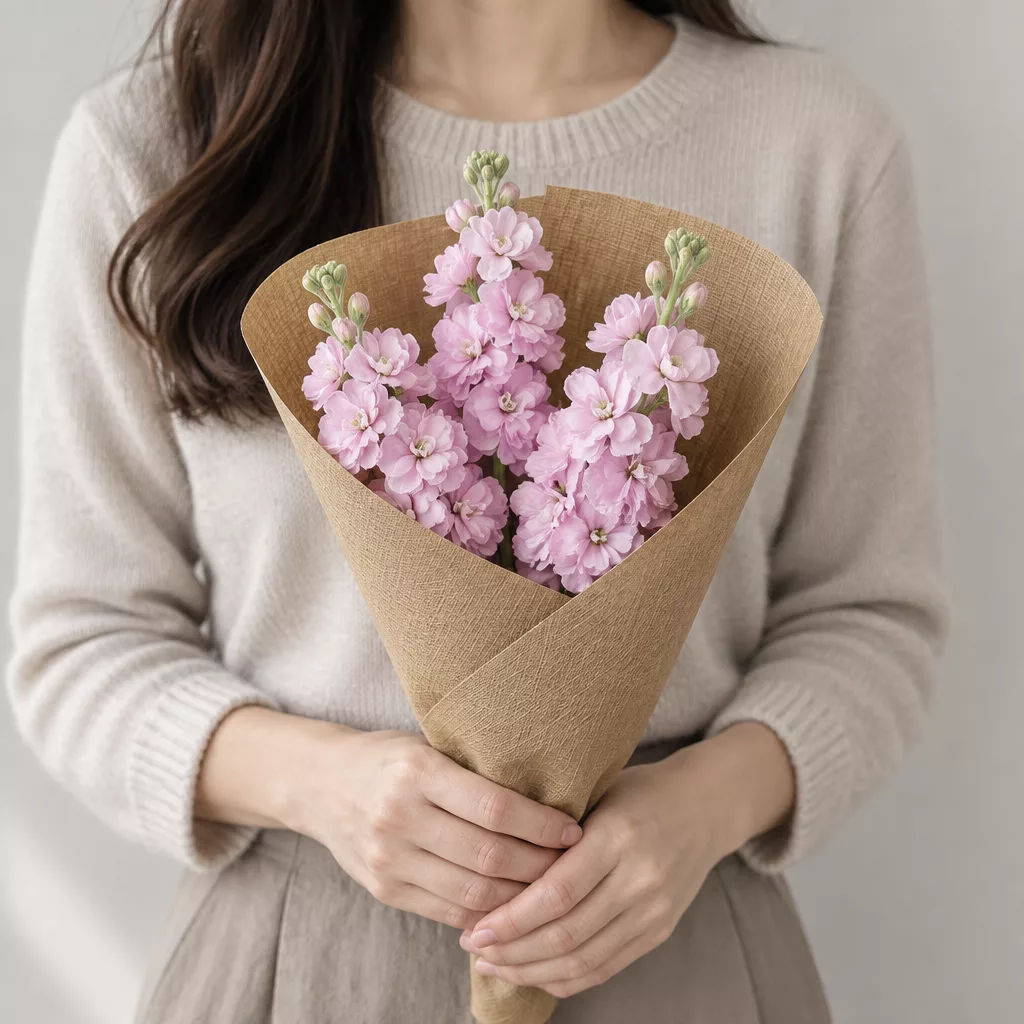
A mid-range budget opens up combinations. This is where you can pair garden roses with eucalyptus, or tulips with ranunculus and a few stems of waxflower for texture. The bouquet gains depth without losing coherence. This range also allows for a more considered presentation: kraft paper wrapping with a ribbon, a small card, or a glass vase included with the delivery if the recipient is unlikely to have one to hand.
At a higher budget, the focus shifts to premium varieties and volume. Peonies, David Austin roses, and orchid stems all sit in this range, as do large structured arrangements that work as a centrepiece rather than a vase on a shelf. For a significant birthday or a major celebration, this level of bouquet makes an immediate impression when the door opens — which is often exactly the point.
Russian Flower Customs Worth Knowing
If you are not familiar with Russian gifting traditions around flowers, a few details are worth understanding before you order. The most widely observed custom is the odd-number rule: bouquets given as gifts contain an odd number of stems — one, three, five, seven, and so on. Even numbers are associated with mourning and are not appropriate for celebratory occasions. This is not a rigid law, but it is deeply ingrained, and recipients will notice. When in doubt, choose an odd number.
Colour carries meaning too, though less rigidly than the number rule. Yellow flowers have historically been associated with separation or farewell in Russian culture, and while younger generations are less attached to this association, it is still worth being aware of if you are sending to an older recipient or someone you do not know well. White flowers are universally appropriate and read as elegant rather than neutral. Red is romantic. Pink covers a wide range of occasions from friendship to affection.
Presentation is taken seriously. A bouquet that arrives without wrapping, or with wrapping that looks damaged, reflects on the sender regardless of the quality of the flowers inside. In Russia, the unwrapping of a bouquet is part of the ritual of receiving it — the paper or fabric is part of the gift. A well-wrapped bouquet with a card that has a personal message, even a short one, is received very differently from a bare bunch of stems. The card matters: a handwritten message, or one that feels personal rather than generic, completes the gesture.
Keeping the Bouquet Fresh After It Arrives
The care the recipient gives the bouquet in the first hour determines how long it will last. Most flowers arrive already conditioned, but there are a few steps that make a measurable difference and are simple enough that anyone can follow them without any florist training.
The first step is cutting the stems. A diagonal cut of about two centimetres, made with a sharp knife rather than scissors, opens more surface area for water uptake. Scissors crush the stem slightly, which reduces absorption. If the recipient does not have a knife to hand, even scissors are better than not cutting at all — the key is removing the base of the stem that has been exposed to air during transport.
Strip any leaves that would sit below the waterline in the vase. Submerged leaves rot quickly and cloud the water, which introduces bacteria that shorten the life of every stem in the arrangement. Clean water changed every two days, combined with a clean vase, keeps the bouquet fresh significantly longer than leaving the original water in place.
Position matters more than most people realise. A spot away from direct sunlight, away from radiators, and away from fruit bowls — ethylene gas released by ripening fruit accelerates wilting in cut flowers — can add three or four days to the vase life of roses or lisianthus. A cool room overnight, even simply moving the vase away from a warm interior wall, makes a visible difference by morning. These are small habits, but they are the difference between flowers that last five days and flowers that last ten.
Sending flowers to Feodosiya is less complicated than the distance might suggest, but the details — the right address, the right timing for the season, the right varieties for the climate and the person — are what turn a delivery into something the recipient actually remembers. A bouquet that arrives on time, looks considered, and stays fresh for a week is not the result of luck. It is the result of choosing carefully and giving the flowers the attention they deserve at every stage, from the order to the vase.
Frequently asked questions
Do deliveries reach the resort settlements near Koktebel, or only central Feodosiya?
We deliver to Primorsky and the coastal stretches toward Koktebel, though these addresses take a little longer than the historic centre. Summer road traffic along the coastal route means a morning order is far more reliable than an afternoon one. Give us the full street address and a phone number for the recipient and we will plan the route accordingly.
What flowers travel well on the journey to Feodosiya given the heat and distance?
Chrysanthemums, alstroemerias and spray carnations handle warm transit better than large-headed roses or hydrangeas, which lose water quickly when temperatures rise. If you are ordering in July or August, a mixed bouquet built around one of these hardier stems will arrive looking far more generous than a single-variety arrangement that has struggled in the heat.
How precise does the address need to be for a building near the Genoese fortress or the embankment?
The embankment area is straightforward to navigate, but entrance numbers still matter for multi-storey buildings even in the centre. Feodosiya has several streets with similar names, so the building number, entrance, and a working phone for the recipient are all worth including. A complete address is the single most reliable thing you can do to protect the condition of the bouquet on arrival.
Can I send flowers to a private house in the hillside neighbourhoods above the city?
Yes, hillside addresses are within our delivery area. The practical detail is that these streets are less uniform than the central grid, so a landmark near the house and a phone number the courier can actually reach are genuinely helpful. If the recipient knows a delivery is coming, even a brief heads-up from you makes the handover smoother.
Is there a combination of flowers that works well for both a birthday and a housewarming if I am not sure which occasion fits better?
A bouquet built around seasonal foliage with a few strong focal flowers — sunflowers in summer, alstroemerias in cooler months — reads warmly for either occasion without leaning too hard into either. Avoid arrangements that feel very formal or very romantic; something generous and colourful covers both a birthday and a new home without needing a specific occasion to justify it.
Ready to send flowers?
Pick the city, choose the bouquet, and a local florist takes it from there.
Choose a city →