Flower Delivery in Gornozavodsk: Timing, Bouquets and What to Expect
Ordering flowers for someone in Gornozavodsk feels different when you are not standing in the same city. You want to know the bouquet will arrive looking the way it left — stems tight, petals open just enough, and the whole thing wrapped as if someone who cares put it together. That is exactly what this article is about: how delivery works here, what to order for each moment, and how to make sure the flowers last long after the courier leaves.
Why Gornozavodsk Is a Real Delivery Destination, Not an Afterthought
Gornozavodsk sits in the Perm region, and it is the kind of city where a bouquet arriving on time genuinely matters — because people notice when something arrives and when it does not. Turboflora covers the city as a full delivery zone, not a marginal one, which means the same standards that apply to central Saint Petersburg routes apply here too. The flowers leave fresh, packed for travel, and timed to arrive within the window you choose.
The distance means the logistics are planned carefully. Bouquets are assembled with travel in mind: sturdier stems like alstroemeria, spray roses, and chrysanthemums hold up well on longer routes, while more delicate blooms such as garden roses or ranunculus are packed with extra water tubes and protective wrapping to reduce movement. The goal is that when the recipient opens the door, the bouquet looks like it just came off the workbench.
One thing worth knowing: Gornozavodsk winters are cold, and that affects how flowers travel. Temperatures can drop well below freezing between November and March, so bouquets are wrapped in insulating kraft layers and placed in thermal bags for cold-weather deliveries. Tropical stems like anthurium or bird of paradise are especially sensitive to frost and may be substituted with hardier alternatives in deep winter — your florist will always flag this before confirming the order.
Bouquets we can deliver

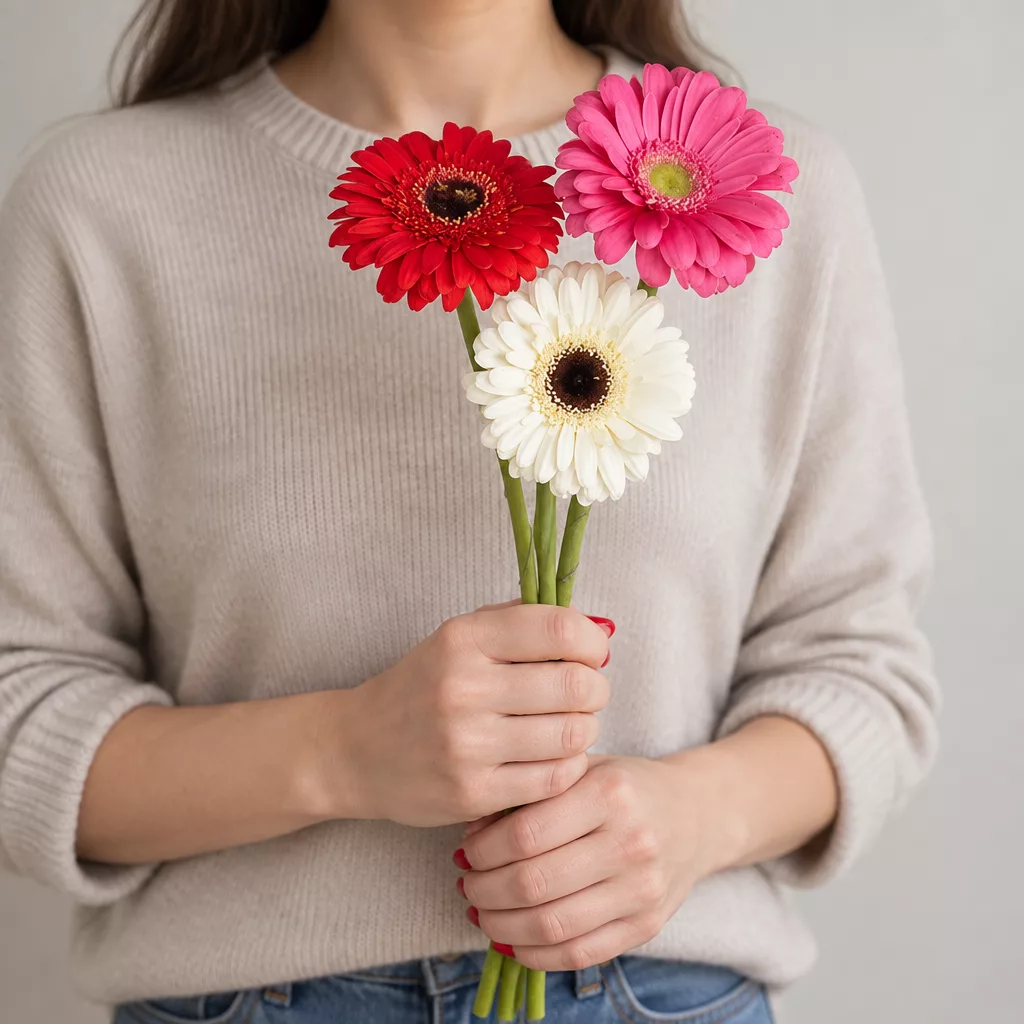
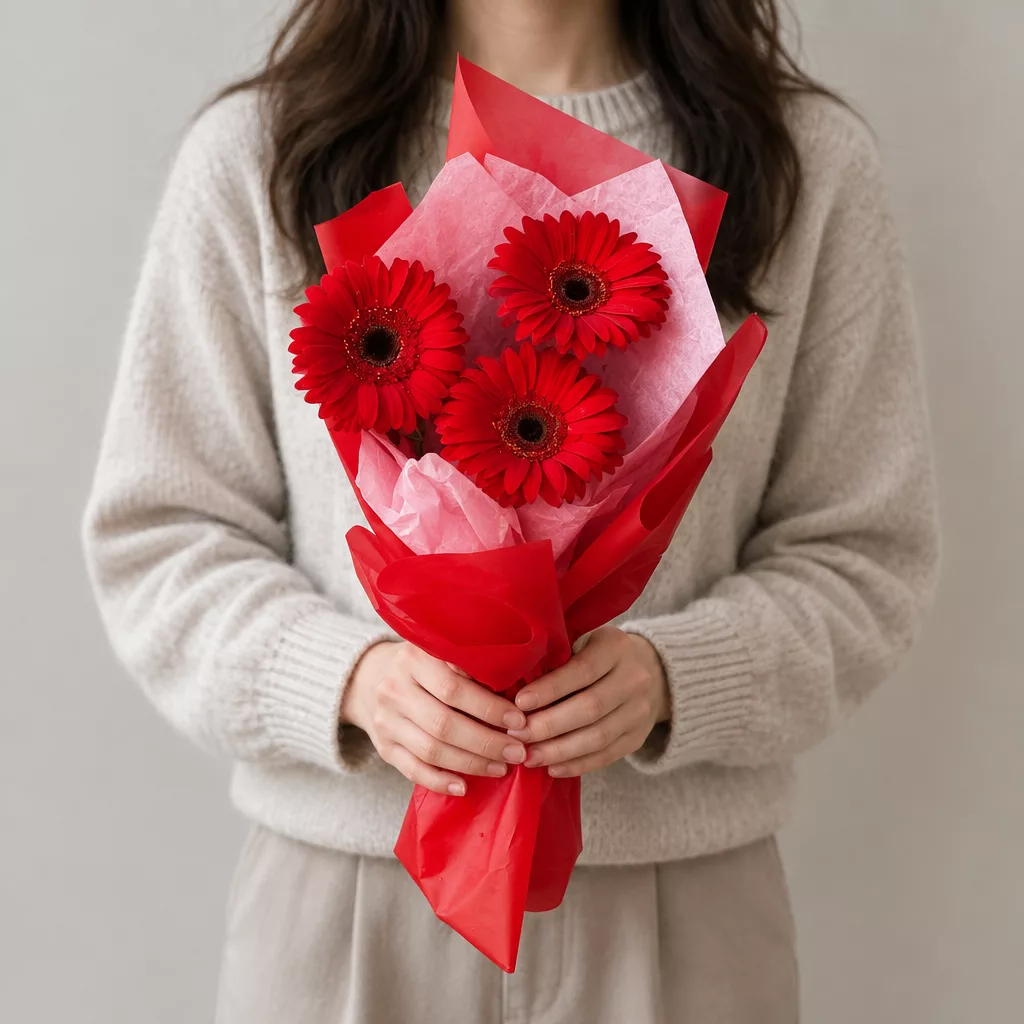
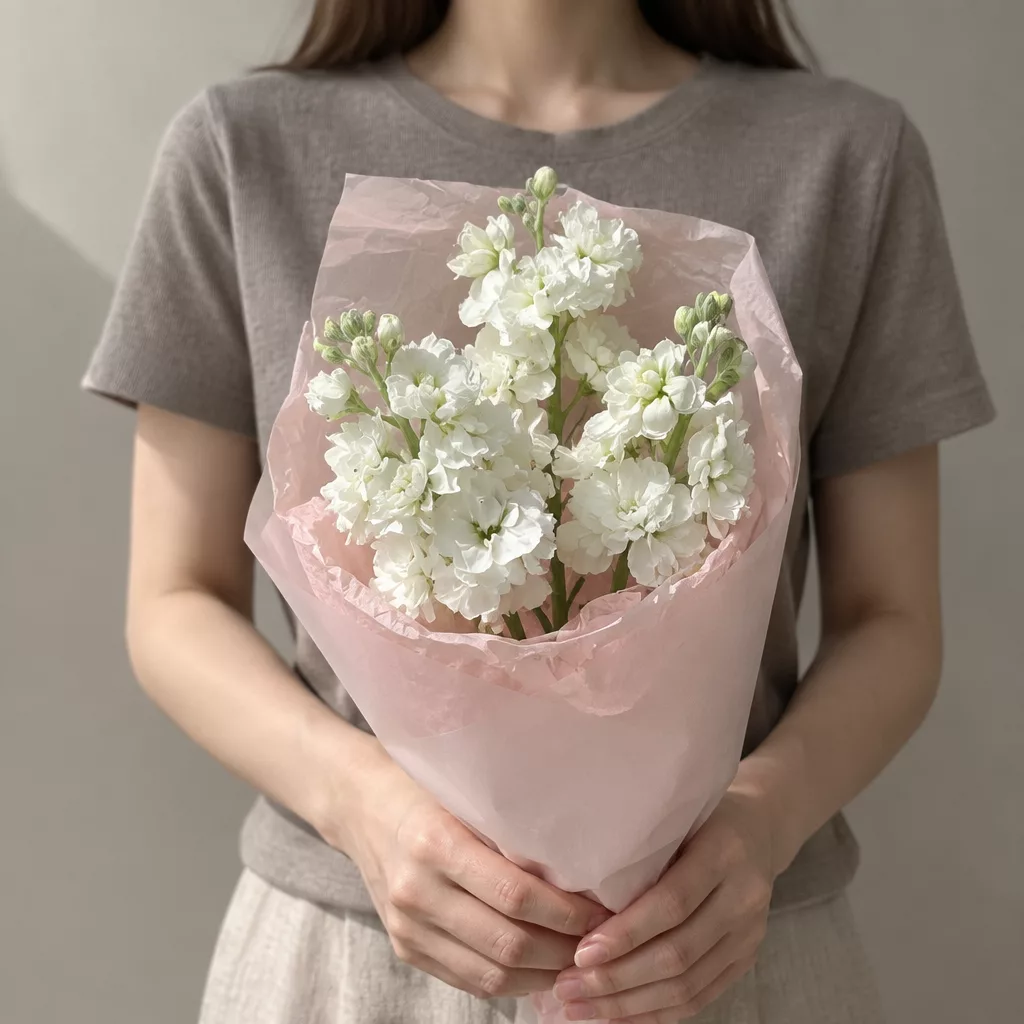
Choosing the Right Bouquet for the Person, Not Just the Occasion
The most common mistake people make when ordering remotely is choosing by occasion alone — birthday roses, anniversary lilies — without thinking about the person receiving them. A woman in her sixties who keeps a tidy home might love a structured hand-tied bouquet of white lisianthus and eucalyptus far more than a dramatic red arrangement. A young colleague who just got promoted might appreciate something bold and contemporary: orange gerbera with green button chrysanthemums and a clean minimal wrap.
Start with what you know about them. Do they have a home with space for a large vase, or a small apartment where a compact bouquet on the kitchen table would feel more at home? Do they tend toward classic and restrained, or do they enjoy colour and texture? These questions matter more than whether the day is a birthday or a name day.
In Russian culture, name days — the feast day of the saint after whom someone is named — are celebrated similarly to birthdays and are a perfectly good reason to send flowers. If you are not sure which day it is, a quick search will tell you. White and soft pink flowers read as elegant and personal for these moments, while bright mixed bouquets work well for birthdays where you want the energy to feel celebratory. For a new baby or a housewarming, pastel tones — blush spray roses, white freesia, soft green foliage — feel welcoming without being overwhelming.
Timing Your Delivery: Morning, Afternoon or Evening
Timing a delivery in Gornozavodsk is worth thinking through before you place the order. A morning delivery — arriving between nine and noon — works well for birthdays, when you want the flowers to be there before the day really begins. There is something genuinely lovely about a recipient opening their door before work and finding a bouquet waiting. It sets the tone for the whole day.
Afternoon deliveries, roughly between noon and five, suit situations where the person is likely to be home: a new mother, someone working from home, or a retired relative. Evening deliveries, between five and eight, are ideal for working professionals who would otherwise miss a daytime drop. If you are sending to a workplace address in Gornozavodsk, confirm the office hours first — many offices in smaller cities close by six, and an evening delivery to an empty building helps no one.
When you place your order, you choose a delivery window rather than an exact minute. This is standard across Russia because city traffic and building access vary. Couriers call ahead when they are close, so the recipient is not caught off guard. If the recipient will not be home during the window, you can leave a note in the order with a neighbour's name or a building code — this is common practice and the courier will follow it. Avoid scheduling deliveries to addresses where no one will be present without a clear handoff plan, because flowers left in a cold corridor for several hours will not look their best.
Bouquets by Budget: What Each Range Actually Gets You
Budget shapes a bouquet, but it does not have to limit it. At the entry level, a well-chosen mono-bouquet — a single variety, tightly arranged — can be more striking than a mixed bunch that tries to do too much. Five stems of deep burgundy alstroemeria with a wide satin ribbon, or seven white spray roses in a kraft wrap with dried grass, look intentional and generous even at a modest spend. The key is that the florist makes a choice rather than filling space.
In the mid range, combinations open up. This is where you can pair a focal flower — a garden rose, a large-headed peony in season, a bold gerbera — with complementary textures: waxflower, pittosporum, ruscus, or seasonal greenery. These layers give a bouquet depth and make it look abundant rather than thin. A mid-range bouquet for a birthday might be five David Austin-style roses surrounded by white waxflower and eucalyptus, tied with a linen ribbon.
At the upper range, you are working with premium focal flowers — peonies, ranunculus, tulips in season, large garden roses — combined with interesting foliage and presentation. A box arrangement or a hatbox filled with roses and herbs, for example, reads as a considered gift rather than a standard bouquet. These arrangements also tend to hold their shape better during transport because the container supports the stems. If you are marking a significant moment — a major birthday, a promotion, a long-distance thank you — this is the range where the presentation does real work.
Seasonal Flowers and What Is Actually Available in Each Month
Russia has four distinct seasons, and the flower calendar shifts meaningfully across them. Knowing what is genuinely in season helps you order something that looks alive and fresh rather than forcing a variety that has been in cold storage for three weeks.
Spring, from March through May, is the richest time for cut flowers in Russia. Tulips arrive in earnest from late February, followed by narcissus, hyacinths, and the first peonies by late May. These are the months when a mono-bouquet of tulips — say, fifteen stems of a fringed variety in cream or coral — is both affordable and spectacular. March 8th, International Women's Day, is the single busiest flower day in Russia, so ordering a day or two ahead is strongly recommended.
Summer brings garden roses, lisianthus, sunflowers, and dahlias from August onward. Autumn is the season for chrysanthemums, which have a long vase life and travel beautifully — a quality that matters for Gornozavodsk deliveries. Winter relies more on imported roses, carnations, and tropical foliage, all of which are selected for cold-weather durability. Amaryllis and paperwhite narcissus appear around December and January and make striking winter gifts.
If you have a specific flower in mind, mention it in the order notes. If it is not available or not suitable for the weather conditions that day, the florist will suggest the closest alternative and explain why — that transparency is part of how the service works.
How to Care for the Bouquet Once It Arrives
A fresh bouquet is not a finished product — it is a living one, and what the recipient does in the first hour determines how long it lasts. This is worth passing on to them, especially if they are not used to receiving cut flowers regularly.
The first step is a clean diagonal cut on each stem, about two centimetres from the bottom, made with a sharp knife rather than scissors. Scissors crush the vascular tissue and reduce water uptake. Then place the stems immediately in a clean vase filled with cool, fresh water. Cool water slows bacterial growth; warm water accelerates it. Remove any leaves that would sit below the waterline, because submerged foliage rots quickly and clouds the water.
Change the water every two days and re-cut the stems each time. Keep the bouquet away from direct sunlight, radiators, and fruit bowls — ethylene gas from ripening fruit shortens the life of cut flowers noticeably. A cool room is better than a warm one.
Different flowers have different lifespans. Alstroemeria and chrysanthemums can last ten to fourteen days with good care. Spray roses typically give seven to ten days. Tulips are shorter — five to seven days — but they continue to open and move after cutting, which is part of their charm. Peonies, when they arrive in tight bud, can last a week and unfurl dramatically over the first two days. Knowing this helps the recipient enjoy each stage rather than feeling disappointed when the first petals drop.
Adding a Message and Making the Delivery Feel Personal
A bouquet arriving without a card is a missed moment. In Russia, a handwritten note — even a short one — carries real weight. It transforms a delivery from a transaction into a gesture. When you place your order, you can include a message that the florist writes by hand on a card and tucks into the wrapping. Keep it direct and warm: a single sentence that says something true is better than a formal paragraph that sounds copied from a template.
If you are sending from abroad or from a different city and you are not sure how to phrase something in Russian, you can write in English and ask for it to be transcribed, or simply write in English — many recipients in Gornozavodsk, particularly younger ones, will appreciate it. You can also include a short transliteration note if pronunciation matters to you.
Beyond the card, small additions make a delivery feel considered. A box of chocolates paired with a bouquet is a classic combination in Russia and works for almost any occasion. A small candle or a decorative ribbon in the recipient's favourite colour adds personality without complicating the order. These additions are chosen at checkout and packed alongside the flowers.
One practical note: if the delivery is meant to be a surprise, make sure the recipient will actually be home or that someone trustworthy can receive it on their behalf. A surprise that is left outside or returned because no one answered the door is a frustrating outcome for everyone. A quick indirect confirmation — asking a family member to make sure the person is home without revealing why — is a common and effective approach.
Sending flowers to Gornozavodsk is not complicated when you know what to expect. Choose with the recipient in mind first, pick a delivery window that fits their day, and trust that the bouquet is packed to travel well. The flowers will arrive looking the way they should — fresh, considered, and worth opening the door for.
Frequently asked questions
Can I order flowers for same-day delivery to Gornozavodsk?
Yes, same-day delivery to Gornozavodsk is available when you place your order before the daily cutoff time shown at checkout. The bouquet is assembled fresh after your order is confirmed and dispatched within the window you select. For urgent orders, placing as early in the day as possible gives you the widest choice of delivery slots and flower availability.
What happens if the recipient is not home when the courier arrives?
The courier calls ahead before arriving, so the recipient has time to come to the door. If there is no answer, the courier will attempt contact again and wait briefly. You can leave instructions in the order notes — a neighbour's name, a building access code, or a preferred handoff point — and the courier will follow them. Flowers are not left unattended in cold weather without prior agreement.
Which flowers travel best in Gornozavodsk winters?
Chrysanthemums, alstroemeria, spray roses, and carnations handle cold transit reliably and are strong choices for winter orders. Tropical varieties like anthurium are sensitive to frost and may be substituted if temperatures are extreme. All winter deliveries are packed in insulating wrapping and thermal bags to protect the stems, and your florist will flag any substitutions before confirming.
Is March 8th delivery available, and should I order in advance?
March 8th, International Women's Day, is the busiest flower delivery day in Russia — demand is exceptionally high across all cities including Gornozavodsk. Delivery slots fill up quickly, so ordering at least two to three days ahead is strongly recommended. Early orders also give you better access to seasonal tulips, narcissus, and hyacinths, which are the most popular choices for this date.
Can I include a handwritten card in Russian if I do not speak the language?
Yes. When placing your order, write your message in English in the card field and add a note asking for it to be written in Russian. Alternatively, you can write the message in English and it will be placed on the card exactly as written — many recipients appreciate a personal note in the sender's own language. The card is handwritten and tucked into the bouquet wrapping before dispatch.
Ready to send flowers?
Pick the city, choose the bouquet, and a local florist takes it from there.
Choose a city →