Flower Delivery in Ishimbay: Timing, Choices and What to Expect
Ishimbay sits in the southern Urals, a city with its own rhythm and its own reasons to send flowers — birthdays that deserve more than a phone call, anniversaries that need something you can actually hold, moments when words feel thin and a bouquet says the rest. Getting fresh flowers there quickly is entirely possible, and knowing a few things in advance makes the difference between a bouquet that arrives glowing and one that has clearly had a long journey.
Which Parts of Ishimbay We Reach and How Quickly
Ishimbay is a compact city, which works in your favour. Deliveries cover the central districts along Sterlitamakskoe Highway, the residential neighbourhoods near Neftyanikov Street, and the quieter streets on the eastern edge of the city close to the Belaya River. Whether the recipient lives in a Soviet-era apartment block or a newer private house on the outskirts, the address matters less than you might think — the city is navigable and our couriers know it.
For most addresses within Ishimbay, you can expect delivery within one to two hours of placing your order. That window holds on standard weekdays and most weekends. On peak dates — the eighth of March, Valentine's Day, the first of September — we strongly recommend ordering the evening before or early in the morning. Those days see a sharp rise in volume across all of Russia, and Ishimbay is no exception.
If you are ordering from another city for someone in Ishimbay, the process is the same. You place the order online, choose the time slot that suits the recipient's schedule, and the bouquet goes out fresh. We do not reroute through intermediaries. The flowers leave our hands and arrive in theirs, which keeps the chain short and the quality consistent. A good rule: if you are unsure of the exact address, confirm it with the recipient before ordering rather than after — a small step that prevents the most common delivery hiccup.
Bouquets we can deliver



Reading the Occasion Before You Choose a Single Stem
The best bouquet for Ishimbay — or anywhere — starts not with a flower but with a person. Think about who will open the door. A colleague celebrating a work anniversary responds differently to a bouquet than a grandmother marking her seventieth birthday, and a young woman receiving flowers on a first date has entirely different expectations from a teacher being thanked at the end of a school year.
In Russian culture, bouquets are traditionally given in odd numbers — three, five, seven stems, and so on. Even numbers are associated with mourning and should be avoided for celebratory occasions. If you are not Russian yourself and are sending to someone who is, this is the single most important local detail to keep in mind. It is not superstition so much as a deeply ingrained social code, and getting it right shows care.
Beyond numbers, think about colour and weight. Soft pinks and whites read as gentle and romantic. Bright yellows and oranges feel energetic and warm — good for birthdays and congratulations. Deep reds carry intensity and are best for romantic occasions between people who know each other well. A mixed bouquet with a clear focal flower and supporting greenery always reads as more considered than a single-variety bunch, even if the single variety is technically more expensive. The florist's eye is in the layering, not just the bloom.
Seasonal Flowers That Travel Well to the Southern Urals
Ishimbay's climate is continental — warm summers and cold winters with real frost. That temperature range affects which flowers hold up best at different times of year, and it is worth knowing before you order.
In winter, from November through February, roses remain the most reliable choice. They are grown in controlled conditions and handle cold transport better than most. Chrysanthemums are equally sturdy and come in a wide range of colours. Avoid tropical flowers like anthuriums or bird of paradise in deep winter unless the recipient has a warm, humid interior — they dislike the shock of going from a heated van into minus fifteen outside and then back into a warm apartment.
Spring and early summer bring ranunculus, tulips, and peonies into their best season. Tulips from late February through April are a classic Russian spring flower and they are genuinely at their peak — vibrant, affordable, and long-lasting if kept in cool water. Peonies arrive in May and June and are enormously popular for their fullness and scent. They are also forgiving travellers.
In summer and early autumn, sunflowers, lisianthus, and alstroemeria all perform well. Lisianthus in particular is underused — it resembles a rose but lasts longer in a vase, sometimes ten to fourteen days with proper care. Alstroemeria holds its blooms even longer and comes in dozens of colour combinations, making it excellent for building mixed arrangements without overspending on a single centrepiece flower.
Matching the Bouquet to Your Budget Without Losing the Feeling
Budget shapes the bouquet, but it does not have to shrink the impression it makes. The key is understanding what carries visual weight and what does not. A modest arrangement of three garden roses with eucalyptus and a spray of waxflower can look more intentional and generous than a large bunch of a single cheap variety stuffed into cellophane.
At a lower budget, lean on flowers that offer volume naturally — chrysanthemums, alstroemeria, and carnations. Carnations in particular have an unfair reputation. Modern varieties, especially spray carnations in dusty pinks and burgundies, are elegant and last exceptionally well — often two weeks in a vase. Pair them with textured greenery like ruscus or pittosporum and the result is genuinely beautiful.
In the mid range, you can introduce a focal flower — a peony, a garden rose, or a few stems of lisianthus — and build around it with supporting flowers and foliage. This is where most bouquets that feel considered and personal live. The focal flower draws the eye; everything else frames it.
At a higher budget, think about scale and scent together. A large arrangement of garden roses with eucalyptus, ranunculus, and a few stems of freesia — which has one of the most pleasant scents of any cut flower — creates an experience that lasts in the room long after the recipient has stopped looking at it. For a significant occasion in Ishimbay, that kind of sensory generosity lands powerfully, especially when the recipient was not expecting anything at all.
How the Bouquet Is Packaged for the Journey
A flower that arrives wilted or bruised is not a gift — it is a disappointment that the sender has to apologise for. Packaging is not decoration; it is protection, and the choices made before the bouquet leaves the shop determine how it looks when the door opens in Ishimbay.
We wrap stems in wet cotton or damp paper at the base before packaging, keeping the flowers hydrated during transit. The outer wrap — kraft paper, fabric, or a box depending on the arrangement — protects petals from wind and cold without pressing against them. In winter, an insulating layer is added to buffer against temperature extremes. A bouquet that goes from plus twenty inside to minus twenty outside and back again in fifteen minutes needs that buffer or the petals bruise.
Boxes have become increasingly popular in Russia over the last several years, particularly for roses. A hat box or a flat arrangement box looks striking when opened and photographs well, which matters to many recipients who want to share the moment. The downside is that boxed flowers need to be transferred to water sooner than a hand-tied bouquet, so we include care instructions with every box delivery.
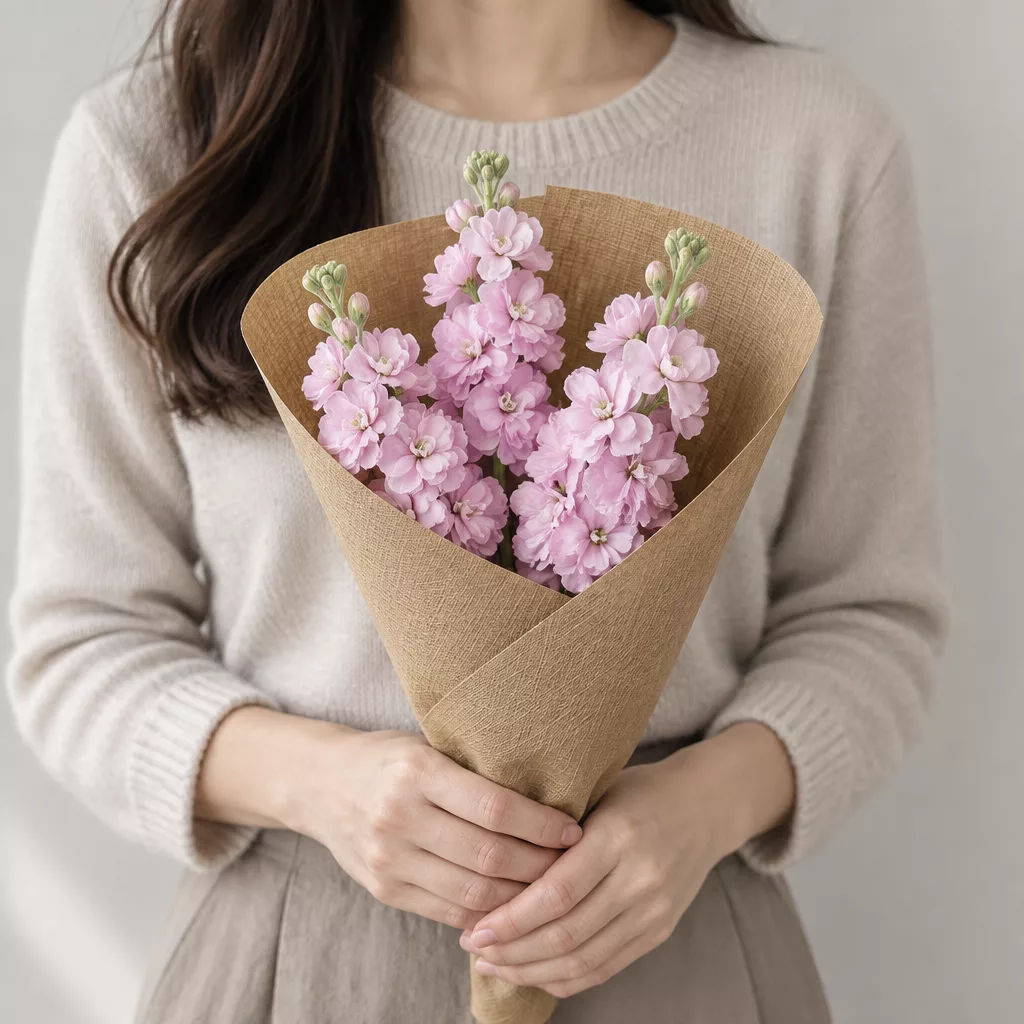
The packaging also signals the occasion. Kraft paper with twine reads as warm and natural — good for casual birthdays and thank-you gestures. White or blush wrapping with a ribbon reads as more formal and romantic. If you have a specific presentation in mind, mention it in the order notes and we will match the wrapping to the mood you are trying to create.
Vase Life and Care Once the Flowers Arrive
The bouquet arriving is the beginning, not the end. How the recipient handles the flowers in the first hour determines whether they last four days or twelve. This is worth knowing if you are sending to someone who does not often receive fresh flowers and may not realise there are simple steps involved.
The first thing to do is cut the stems — ideally at a forty-five degree angle with a sharp knife rather than scissors, which can crush the stem tissue. Cut them under running water or immediately submerge the ends in a jug of water to prevent air bubbles blocking the uptake. Remove any leaves that would sit below the waterline in the vase; submerged foliage rots quickly and clouds the water, which shortens the life of every stem in the arrangement.
Use cool, clean water and change it every two days. Keep the vase away from direct sunlight, radiators, and fruit bowls — ripening fruit releases ethylene gas, which accelerates wilting in cut flowers. This last point surprises most people, but it is real and measurable, particularly for roses and tulips.
Different flowers have different lifespans. Roses typically last seven to ten days with good care. Tulips four to seven. Alstroemeria and chrysanthemums can reach fourteen days. Peonies are shorter — five to seven days — but the experience of having them open fully in a warm room is worth it. Lisianthus, if kept cool, often outlasts everything else in a mixed arrangement, which makes it a quiet star of any bouquet it appears in.
Small Details That Make the Delivery Feel Personal
A bouquet without context is just flowers. A bouquet with a handwritten card, the right timing, and a moment of surprise becomes a memory. These small additions cost almost nothing but change how the gesture lands entirely.
A card message is the most important addition. In Russia, it is common to include a few warm words — not just a signature. If you are writing in Russian for a Russian recipient but are not a native speaker, keep it simple and sincere. A short, honest sentence outperforms an elaborate phrase that feels translated. If you are writing in English to a recipient who speaks it, that works too — it can feel intimate and personal rather than formal.
Timing the delivery to a moment when the recipient is actually home sounds obvious, but it is the most common logistical failure. Confirm their schedule before you place the order. A surprise delivery works best when the person is there to receive it — a bouquet left with a neighbour or at a doorstep loses most of its emotional impact and some of its freshness.
For significant occasions, consider adding something to the bouquet that connects to a shared memory or a known preference. If the recipient always mentions that they love the smell of freesia, include it. If they have a favourite colour, build the palette around it. These details are what separate a thoughtful gift from a generic one, and they are exactly the kind of thing you can specify in the order notes when placing your delivery to Ishimbay.
Sending flowers to Ishimbay is straightforward when you know what to expect — quick delivery across the city, flowers chosen for the season and the person, packaging that protects them on the journey, and a few minutes of care at the other end that turns a bouquet into something that lasts. The occasion matters, the recipient matters, and the small details — the card, the timing, the right flower for the right room — are what make the whole thing feel like it came from someone who was really paying attention.
Frequently asked questions
Which flowers hold up best during delivery in Ishimbay's colder months?
Chrysanthemums, alstroemerias and spray roses travel well in cold weather and arrive without wilting. Tulips and ranunculus are more delicate in frost and need careful wrapping. If you are ordering between November and March, mention the outdoor temperature when you place your order so the bouquet can be packaged with that in mind.
Does it matter which part of Ishimbay I am delivering to, or does the whole city get the same timing?
Most addresses fall within the same delivery window. The central districts near Sterlitamakskoe Highway and the residential streets around Neftyanikov are straightforward. The quieter edges closer to the Belaya River add a little time but not significantly. If the address is genuinely on the outskirts, confirm it when ordering so timing expectations are accurate from the start.
What bouquet works well for someone receiving flowers at home rather than at work?
At home, the recipient has more time to look at what they have been given, so combinations with texture and layering land better than a single-variety bunch. Peonies with eucalyptus, or roses mixed with waxflower and greenery, feel considered rather than functional. A wrapped bouquet also suits a home setting better than a box arrangement, which reads more formal.
How far ahead should I order if I want flowers delivered on the eighth of March in Ishimbay?
Order the evening before at the latest, earlier if you can. The eighth of March sees the highest flower volume of the year across Russia, and Ishimbay is no exception. Same-day orders on that date carry real risk of delay or reduced choice. Ordering the night before gives you full access to what is available and a confirmed delivery slot.
Can I choose a specific delivery time if the recipient is only home during certain hours?
Yes. When placing the order you select a time slot rather than just a date. This matters when someone works shifts, has a school run, or simply will not be home before evening. Getting that window right means the bouquet does not sit outside a door in cold air or get left with a neighbour who forgets to mention it.
Ready to send flowers?
Pick the city, choose the bouquet, and a local florist takes it from there.
Choose a city →