Sending Flowers to Kamensk-Shakhtinsky? Here Is What to Expect
Kamensk-Shakhtinsky sits in the Rostov region, a city with its own rhythm and its own way of marking occasions. Whether you are sending roses to a mother on her birthday, surprising a partner on an anniversary, or congratulating a colleague who just moved there, fresh flowers say something that a message cannot. This article walks you through how delivery works here, what you can realistically expect in terms of timing and condition, and how to choose an arrangement that lands well for the person and the moment.
Which Parts of Kamensk-Shakhtinsky We Reach and How Quickly
Kamensk-Shakhtinsky is a compact city, but it has distinct districts that sit at different distances from the central routes. The older residential areas near the city centre, the streets along the Seversky Donets river, and the newer residential blocks further out all fall within our delivery zone. We cover the full city, not just the convenient parts.
For most addresses in Kamensk-Shakhtinsky, delivery takes one to two hours from the moment the order is confirmed. Central streets tend to be on the shorter end of that window. Addresses on the outskirts or in areas with narrower access roads may use the full two hours, especially during morning rush periods or on major public holidays when traffic thickens.
The best approach is to order at least two to three hours before you need the flowers to arrive. This gives the florist time to assemble the arrangement fresh rather than pulling something pre-made from a shelf. Flowers cut and arranged within the hour of delivery arrive with petals that are still firm, stems that are fully hydrated, and a fragrance that fills the room the moment the recipient opens the door. That first impression matters enormously, and it depends on the gap between assembly and arrival being short.
If you are planning delivery for a specific time — say, right before a dinner or at the start of a work meeting — note that in the order comments. We coordinate the timing around that anchor point rather than around our own convenience.
Bouquets we can deliver


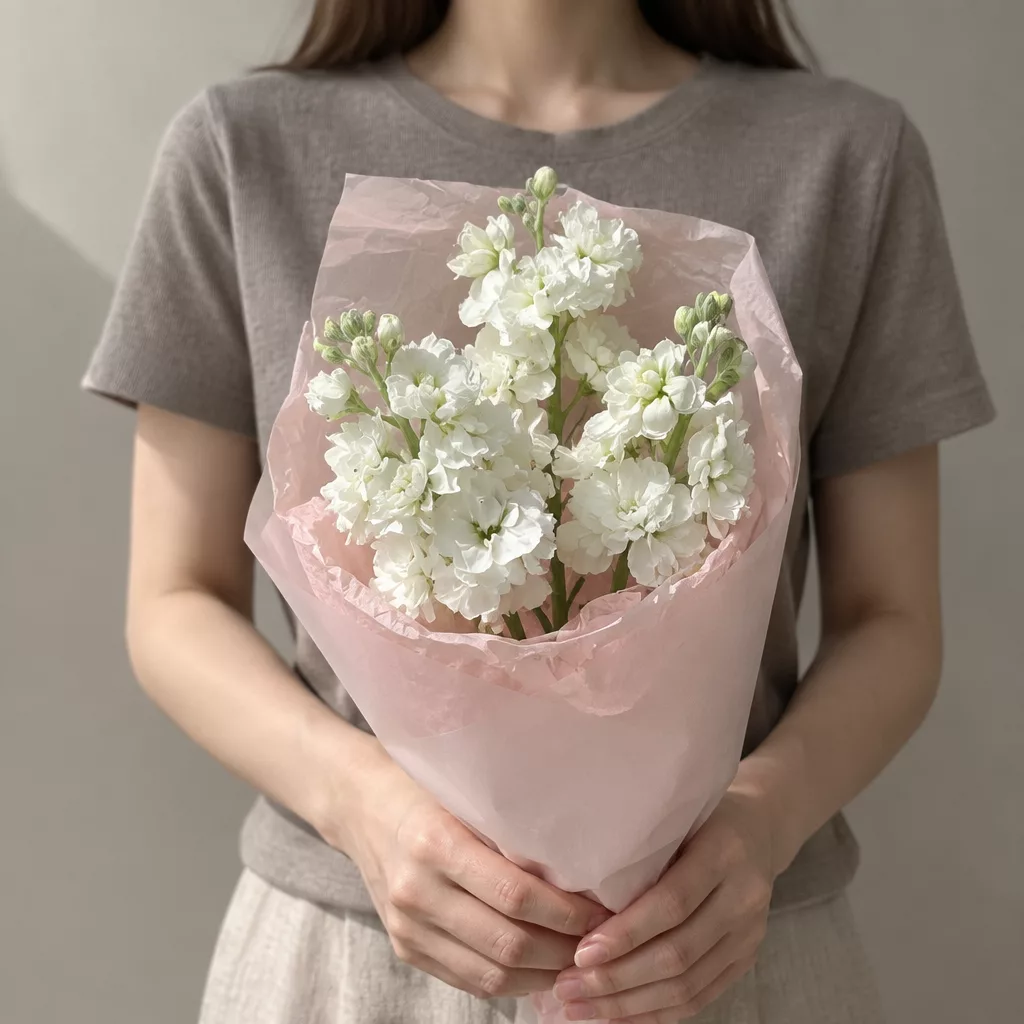
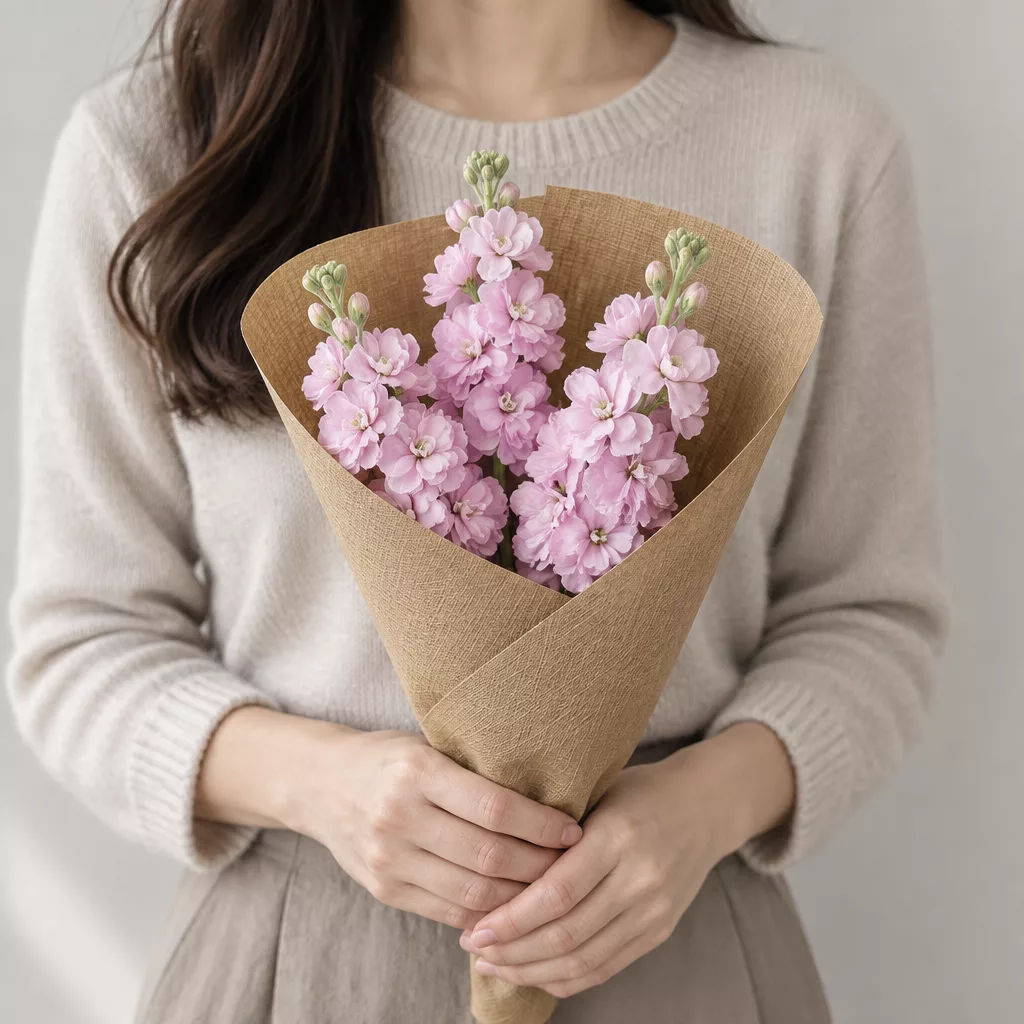
What the Climate Means for Your Flowers on Delivery Day
The Rostov region has genuine seasons, and Kamensk-Shakhtinsky feels all of them. Summers here reach thirty degrees Celsius and above, which is warm enough to stress flowers significantly during transit. Winters drop well below freezing, sometimes to minus fifteen or colder, which creates a different but equally serious problem for delicate petals.
In summer heat, roses and tulips are the most vulnerable. A rose bouquet left in a warm car for twenty minutes begins to droop at the petal edges. We use insulated packaging and plan routes to minimise time in direct sun. If you are ordering in July or August, consider flowers with stronger heat tolerance: alstroemeria, chrysanthemums, and spray roses hold their shape better in high temperatures than large-headed garden roses.
In winter, the risk is petal burn from cold air. Flowers exposed to temperatures below minus five for more than a few minutes develop translucent, soft patches that cannot be reversed. We wrap bouquets in protective paper and transport them in a way that limits cold exposure. Even so, it helps if the recipient is home to receive the order rather than leaving it on a doorstep.
Spring and autumn in the Rostov region are the most comfortable seasons for flower delivery. Temperatures between eight and eighteen degrees Celsius are close to ideal for most cut flowers. If you have flexibility about when to send, late April or early October will give you the widest choice of varieties in excellent condition. Peonies arrive in late spring and are spectacular at that moment.
Choosing Flowers for the Person, Not Just the Occasion
The occasion tells you the mood; the person tells you the flower. A birthday for a woman in her sixties who keeps a traditional home calls for something different than a birthday for a young colleague who just decorated her first apartment with clean, modern furniture. Both deserve thought.
For someone with a classic sensibility, long-stemmed red or deep-pink roses remain the most universally appreciated choice in Russia. A bouquet of nineteen or twenty-five stems — odd numbers are the Russian custom for living recipients — arranged tightly with eucalyptus or ruscus gives a sense of abundance without looking fussy. The number carries meaning here: even numbers of flowers are reserved for mourning, so always choose odd.
For someone younger or with a more contemporary taste, consider a mixed bouquet built around a focal flower and supported by texture. Ranunculus paired with white lisianthus and a few stems of waxflower creates a soft, layered look that photographs beautifully and feels personal rather than formulaic. Protea and anthurium read as bold and confident — good for someone who likes to stand out.
For men, which is more common in Russia than in some other cultures, single-variety arrangements work well: sunflowers, solidago, or a tight grouping of burgundy chrysanthemums. Avoid anything that reads as purely decorative. A structured, unfussy arrangement respects the recipient without making him feel awkward about receiving flowers, which some men still do until the bouquet is actually in their hands.
Budget Ranges and What They Actually Get You
Flower budgets in Russia tend to run higher than in Western Europe for comparable quality, partly because many premium varieties are imported and partly because Russian gifting culture places real weight on visible generosity. Understanding what different budget levels deliver helps you make a confident choice rather than guessing.
At the entry level, you are working with single-variety bouquets of seasonal flowers: tulips in spring, chrysanthemums in autumn and winter, sunflowers in summer. These are not lesser flowers — a well-assembled bunch of fifteen yellow tulips is genuinely beautiful. The limitation is that you have less control over size and drama.
At a mid-range budget, mixed bouquets become possible. This is where roses combine with greenery, or where a focal flower like a peony or a garden rose gets surrounded by complementary textures. The arrangement has depth and the recipient can see that real thought went into it. This is the most popular range for birthdays and anniversaries.
At a higher budget, you access flowers that are not available year-round or that require careful handling: garden roses with layered petals, peonies at the peak of their season, orchid stems, or large-format arrangements in a hatbox or a ceramic vessel. These feel like gifts in themselves, not just flowers. For a significant birthday, a work anniversary, or a thank-you that needs to say something substantial, this level lands differently.
Whatever you spend, presentation matters as much as the flowers themselves. A modest bouquet wrapped thoughtfully, tied with a wide satin ribbon, and accompanied by a handwritten card will be remembered longer than a large arrangement that arrives looking rushed.
How to Write a Message That Means Something
In Russia, the card that comes with flowers is read carefully. It is not a formality. Recipients often keep cards for years, tucked into books or pinned above desks. What you write matters more than the number of words.
The most common mistake is writing something so general it could have been sent to anyone: 'Happy Birthday, best wishes.' This lands flat, especially when the flowers themselves are beautiful. The card is the moment to be specific. What are you celebrating about this person? What do you hope for them? A single concrete sentence — 'I still think about the advice you gave me last winter' — does more than three lines of polite wishes.
If you are sending flowers from a distance and cannot be there in person, the card carries even more weight. Write as if you are speaking directly. Avoid formal language unless the relationship genuinely calls for it. Russians communicate warmly with people they care about; stiff language reads as emotional distance.
For professional occasions — a colleague's promotion, a business partner's anniversary — keep the message warm but measured. Acknowledge the achievement specifically, wish them continued success, and sign with your name and perhaps your company. This is enough. Anything longer risks feeling performative.
If Russian is not your first language and you are writing in Russian, keep the sentence structure simple. A short, clear message in correct Russian is far better than a long one with grammatical errors. Alternatively, write in English and note in the order that the card should be in English — this is entirely acceptable and sometimes adds a personal touch that the recipient appreciates.
Keeping the Flowers Fresh After They Arrive
Fresh flowers delivered to your door can last anywhere from five days to two weeks depending on the variety and how they are cared for once they are inside. Most people lose a third of that potential lifespan in the first hour through small, avoidable mistakes.
The first step is to recut the stems. Use a sharp knife or scissors and cut at an angle, removing about two centimetres. Do this under running water or with the stem end submerged — this prevents an air bubble forming at the cut, which blocks water uptake. A stem that cannot drink will wilt within twenty-four hours regardless of how fresh it was on arrival.
Water temperature matters. Roses and most tropical flowers prefer cool water, around fifteen degrees Celsius. Tulips and hyacinths are slightly more tolerant of room temperature. Change the water every two days, or sooner if it begins to look cloudy. Bacterial growth in the vase is the main cause of early wilting.
Placement in the room makes a significant difference. Keep the vase away from direct sunlight, heating radiators, and fruit bowls. Ripening fruit releases ethylene gas, which accelerates petal drop — particularly in roses and carnations. A cool corner of the room, away from drafts, is ideal.
Alstroemeria, chrysanthemums, and lisianthus are among the longest-lasting cut flowers and can easily reach ten to fourteen days with basic care. Roses typically give you seven to ten days. Peonies, which are spectacular, are shorter-lived — enjoy them fully open for four or five days and consider them a seasonal luxury rather than a long-term display.
Planning Ahead for Holidays and Peak Delivery Days
Certain dates in Russia see a surge in flower orders that is difficult to overstate. The eighth of March, International Women's Day, is the single largest flower day in the country. In the days leading up to it, demand across Kamensk-Shakhtinsky and every other Russian city rises sharply. The same applies to Valentine's Day on the fourteenth of February, though to a lesser degree, and to the first of September, when students and teachers receive flowers at the start of the school year.
Ordering in advance for these dates is not just advisable — it is the difference between your recipient getting the flowers you chose and getting whatever is left. We recommend placing orders at least forty-eight hours before major holidays. For the eighth of March specifically, ordering three to five days ahead gives you the most control over variety and arrangement style.
On peak days, delivery windows may extend slightly beyond the usual one to two hours. We are transparent about this: if your order is confirmed with a two-hour window, that is what we aim for. But on the morning of March eighth, every florist in Russia is at full capacity, and a buffer of thirty minutes either side is realistic.
For birthdays and anniversaries, same-day delivery is usually straightforward outside of peak periods. If you remember at noon that a birthday is tonight, that is a workable situation. If you remember at eight in the evening for a nine o'clock arrival, call rather than ordering online — we can tell you honestly whether it is possible and what is available.
Planning even one day ahead consistently produces better results: more variety choice, calmer assembly, and flowers that arrive looking exactly as intended.
Sending flowers to Kamensk-Shakhtinsky is straightforward when you understand the rhythm of it. Order with a little lead time, think about the person as much as the occasion, and trust that fresh flowers assembled and delivered within a short window will arrive in the kind of condition that makes the recipient stop and genuinely smile. The small details — an odd number of stems, a specific card message, a vase of cool water waiting at home — are what turn a delivery into a memory. We handle the distance; you bring the thought behind it.
Frequently asked questions
Can I order flowers for delivery in Kamensk-Shakhtinsky on the same day?
Yes, same-day delivery is available for most orders placed before early evening. Outside of major holidays like March 8th, a one-to-two-hour window is standard across the city. For late-evening orders, it is worth checking availability directly, as some arrangements require assembly time that affects the latest possible delivery slot.
Why do Russian bouquets always have an odd number of flowers?
In Russian tradition, even numbers of flowers are associated with mourning and are brought to funerals. For any living recipient — a birthday, anniversary, or celebration — odd numbers are the norm. This applies across the country and across age groups. If you order a specific number, we will always adjust to the nearest odd count for a celebratory occasion.
Which flowers hold up best in summer heat during delivery in Kamensk-Shakhtinsky?
Alstroemeria, spray roses, chrysanthemums, and solidago are significantly more heat-tolerant than large-headed roses or tulips. In July and August, when temperatures in the Rostov region regularly exceed thirty degrees, these varieties arrive in better condition. We use insulated packaging for all summer deliveries, but choosing a hardier variety adds an extra layer of assurance.
Can I write the card message in English for a delivery in Kamensk-Shakhtinsky?
Absolutely. Note your preferred language when placing the order and we will print or write the card exactly as you provide it. An English-language card is sometimes a thoughtful personal touch, particularly if the sender is abroad or if the recipient knows the message comes from someone international. Keep the text clear and the sentiment direct.
How far in advance should I order for March 8th delivery in Kamensk-Shakhtinsky?
Three to five days ahead is ideal for March 8th. This is the busiest flower day in Russia by a significant margin, and ordering early gives you the widest choice of varieties and arrangement styles. Orders placed the day before or on the morning of March 8th are still accepted, but variety availability narrows and delivery windows may be slightly longer than usual.
Ready to send flowers?
Pick the city, choose the bouquet, and a local florist takes it from there.
Choose a city →