Sending Flowers to Karasuk: Timing, Choices and What Arrives at the Door
Karasuk sits in the Novosibirsk region, a city with its own rhythm and its own reasons to celebrate. Whether you are ordering from across Russia for a birthday, an anniversary, or simply because someone there deserves something beautiful today, the question is always the same: will the flowers actually arrive fresh, on time, and looking the way they did in the photo? This article walks you through exactly what flower delivery to Karasuk involves, what to choose for the season and the person, and how to make sure the bouquet makes the impression you are hoping for.
What Delivery to Karasuk Actually Looks Like
Karasuk is a mid-sized city in the south of the Novosibirsk region, close to the Kazakh border. It is well connected by road, which means a dedicated courier run is entirely workable, and Turboflora organises delivery directly to the recipient's address without relying on drop-off points or collection counters. The flowers travel in temperature-controlled packaging to protect them during transit, which matters a great deal in a region where summer afternoons can reach thirty degrees and winter mornings can fall well below minus twenty.
Delivery timing to Karasuk is typically arranged for the same day or the following day depending on when you place the order. The clearest advice is to order before noon if you want the bouquet to arrive the same evening. For a morning surprise, placing the order the evening before gives the best result. The courier brings the flowers to the door, which means the recipient does not need to go anywhere or wait at a collection point, and you can add a handwritten card message at checkout.
One thing worth knowing: Karasuk is not a major metropolitan centre, so delivery windows here are scheduled rather than the one-to-two-hour sprint you would see in Saint Petersburg. Expect a confirmed time slot rather than an instant drop. That is not a limitation — it actually lets you plan the surprise more precisely, because you know when the doorbell will ring.
Bouquets we can deliver

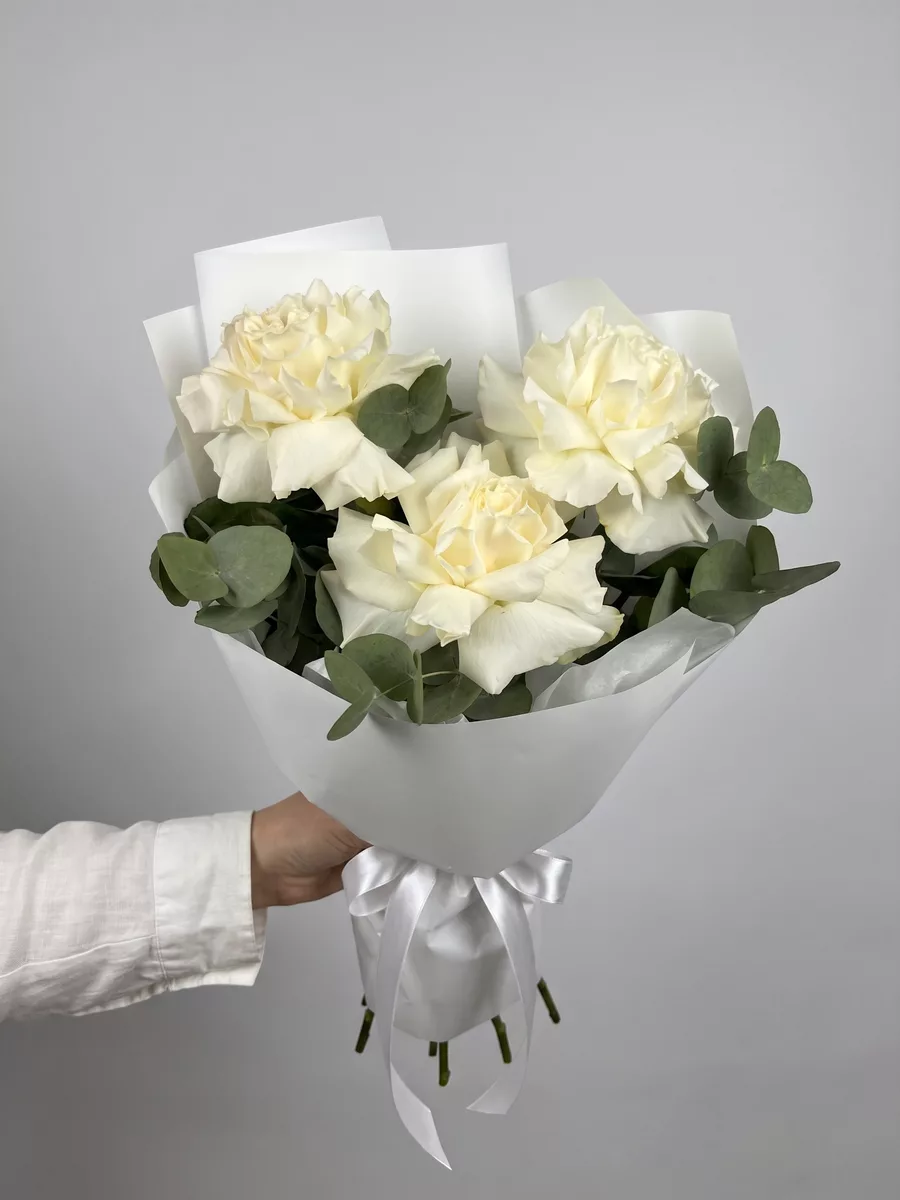
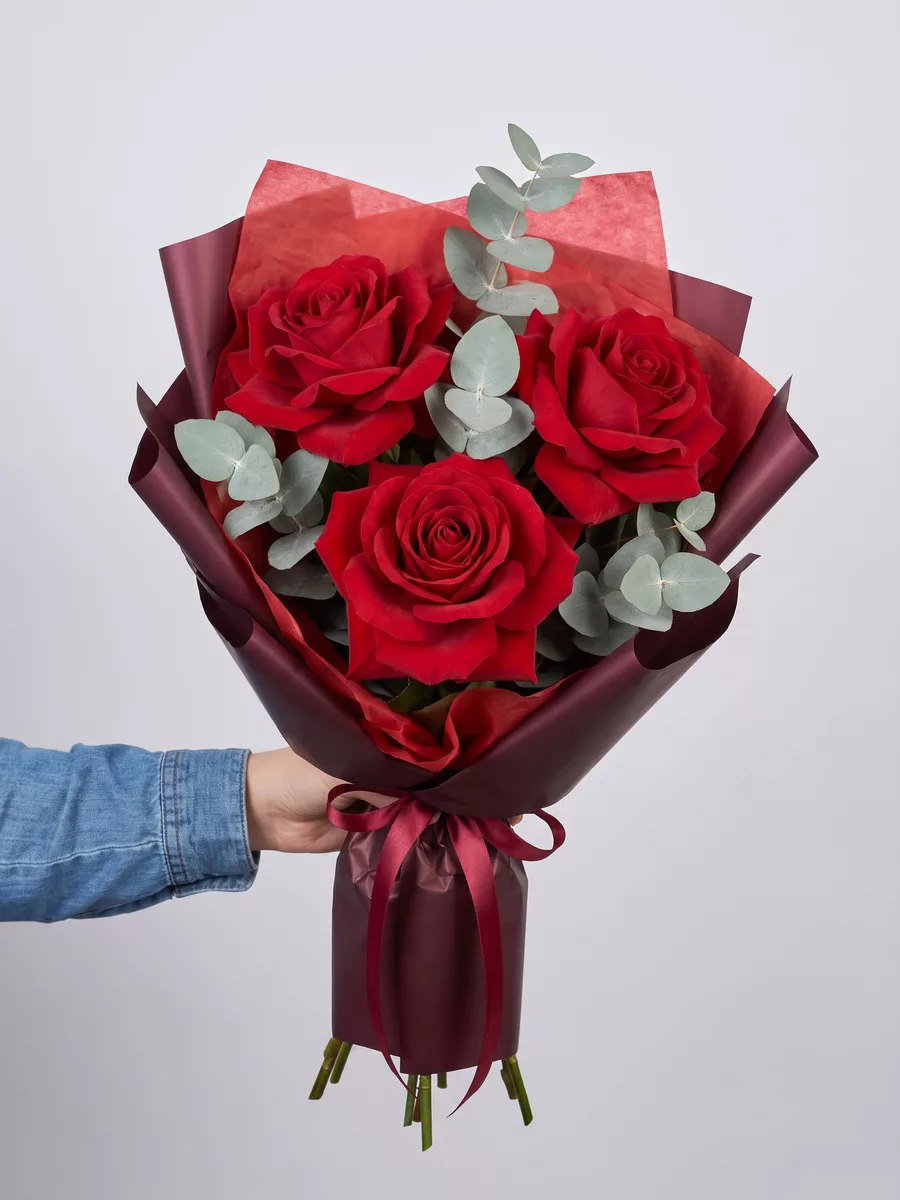
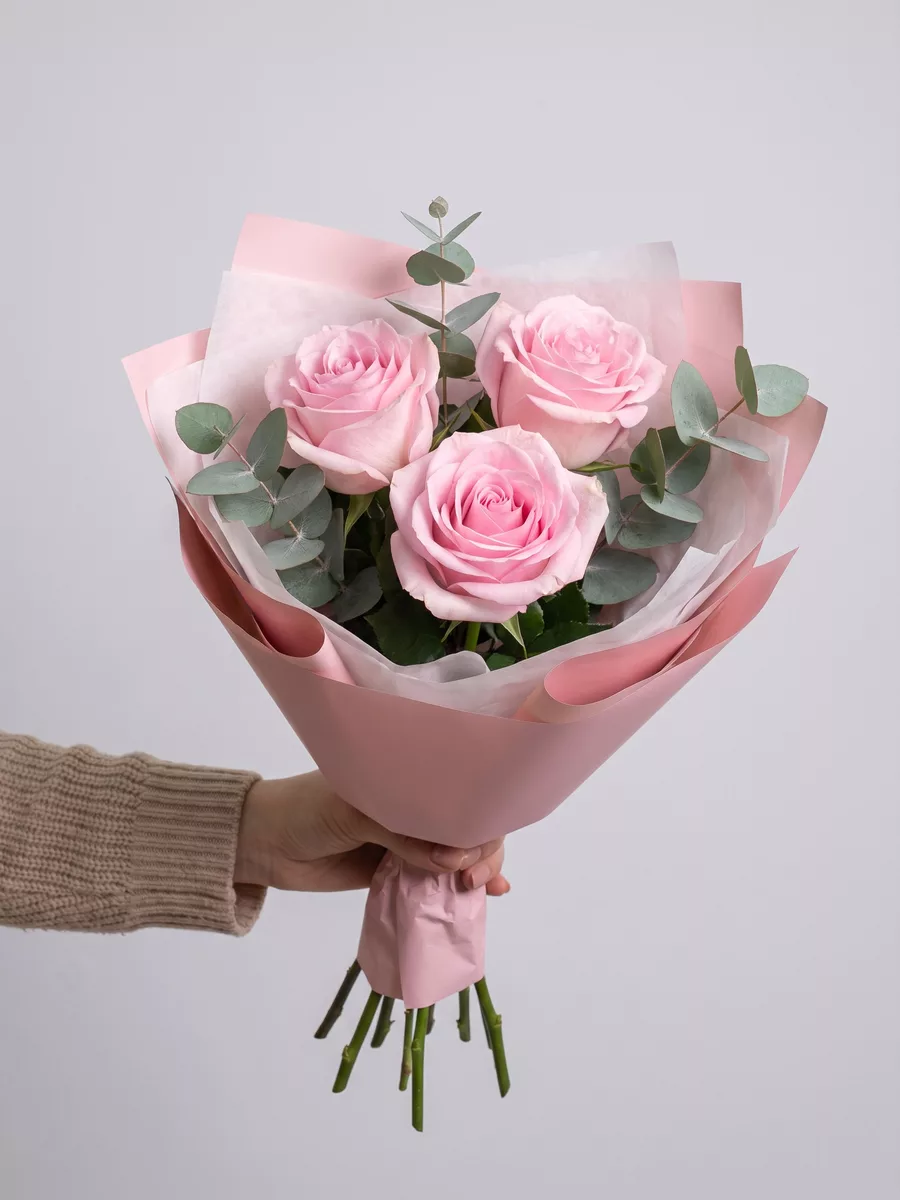
Choosing for the Person, Not Just the Occasion
The most common mistake people make when ordering flowers remotely is choosing what looks impressive in a thumbnail rather than what will feel right to the person receiving it. A large formal arrangement of red roses reads very differently to a loose, garden-style bouquet of ranunculus and eucalyptus, and the person receiving it will feel that difference immediately.
For a woman who loves colour and warmth, combinations built around spray roses, alstroemeria and seasonal fillers like waxflower or limonium tend to feel generous and alive. For someone with a more restrained aesthetic, a monochrome bouquet of white lisianthus with soft greenery or a single-variety bunch of tulips in a pale blush tone says something quieter and often more personal.
For men, which is a category many people feel uncertain about, consider plants rather than cut flowers if the recipient has a home or balcony. A potted succulent collection or a small olive tree in a ceramic pot is a genuinely welcome gift. If cut flowers are the right choice, a structured bunch of sunflowers, tropical bird-of-paradise stems or bold orange gerbera reads as confident and cheerful without feeling out of place.
Children's birthdays and school events call for bright, uncomplicated colour: gerbera in yellow and pink, cheerful chrysanthemums, or a small bouquet with a balloon attached. The flowers do not need to be rare or expensive — they need to feel celebratory, and that is entirely achievable at any budget.
Seasonal Sense: What Grows Well and What Travels Well
The Novosibirsk region has a sharply continental climate, and Karasuk reflects that. Winters are long and cold, summers are short and can be genuinely hot. This affects not only what is available locally but also how flowers behave during delivery, and it is worth understanding before you order.
In winter, roses, chrysanthemums and carnations are the most reliable travellers. They handle cold well when properly wrapped, and they open beautifully indoors once they warm up. Tulips are lovely in winter but need careful handling — they continue to grow after cutting and will lean toward any light source, so the recipient should rotate the vase daily. Avoid ordering delicate tropical varieties like anthurium in deep winter unless you are confident the packaging will keep them above ten degrees throughout the journey.
Spring brings tulips, ranunculus and the first peonies into season, and these are genuinely the best time to order them. They are at their freshest, their prices are natural rather than inflated, and they look exactly the way a spring bouquet should look. Peonies in particular are a May and June flower in Russia — ordering them in August is possible but the quality will not be the same.
Summer is the time for sunflowers, lisianthus, eustoma and garden-style mixed bouquets. The challenge in summer delivery is heat: flowers ordered for a hot afternoon should be packaged with a cooling element, and the recipient should be ready to put them in water quickly. Ordering for a morning delivery in summer is always the wiser choice.
Budget Ranges and What Each One Gets You
Thinking about flowers by budget is practical, and there is no reason to feel awkward about it. The goal is to get the best possible result for what you are spending, and that means understanding what drives the cost of a bouquet.
At the entry level, a single-variety bouquet of five to seven stems — tulips, spray roses or chrysanthemums — is a genuinely beautiful gift when the stems are fresh and the wrapping is considered. Do not underestimate a simple bunch of white freesia tied with ribbon: it smells extraordinary and costs very little. The florist's skill here is in choosing stems at exactly the right stage of opening so they last the full week.
In the middle range, you can start combining varieties meaningfully. A bouquet of garden roses with eucalyptus and a few stems of white lisianthus is a combination that photographs well, smells wonderful and feels substantial without being overwhelming. This is also the range where you can request a specific colour palette, and the florist has enough stems to work with.
At the higher end, you are buying rarity, volume and presentation. Long-stemmed Dutch roses, peonies in season, orchid stems, or a large structured arrangement in a box or a hat-box format. These bouquets make a strong visual statement and are appropriate for significant birthdays, anniversaries or professional congratulations. The care instructions become more important at this level — more stems means more water uptake and more attention needed from the recipient.
Russian Flower Customs Worth Knowing
If you are ordering from outside Russia or are unfamiliar with local customs, a few things are worth knowing so the gift lands exactly as intended.
The most important rule is the odd-number tradition. In Russia, even numbers of flowers are associated with funerals and mourning, so bouquets are always made with an odd number of stems: three, five, seven, eleven, fifteen, twenty-five. This is not a superstition most people consciously think about, but receiving an even-numbered bouquet can feel subtly wrong to a Russian recipient. Any reputable florist will follow this automatically, but it is worth being aware of if you are specifying stem counts yourself.
Colour carries meaning in a general way. Red roses are romantic and are understood as such — giving them to a colleague or a teacher would feel overly personal. Yellow flowers have a complicated reputation in older Russian culture, sometimes associated with separation or jealousy, though younger generations tend not to attach meaning to this. If you are unsure, white, pink and mixed-colour bouquets are universally safe and warmly received.
For Teacher's Day, which falls on the fifth of October, flowers are the standard gift across Russia. Schools in Karasuk, as everywhere in the country, see a wave of bouquets that morning. Ordering a day or two ahead for Teacher's Day delivery is strongly recommended. For International Women's Day on the eighth of March, the same applies — demand is extremely high and early ordering is essential.
Keeping the Bouquet Fresh: Practical Care for the Recipient
A beautifully made bouquet can last seven to twelve days with the right care, or wilt in two days without it. Since you are ordering remotely, it helps to pass along a few simple instructions so the person receiving the flowers gets the full life out of them.
The first step, always, is a fresh cut. The stems should be trimmed at an angle — about two centimetres from the base — using a sharp knife or scissors, ideally under running water or submerged in a bowl. This prevents an air bubble from forming at the cut end, which would block water uptake. This should be done immediately on arrival, before the flowers go into the vase.
The vase water should be cool and clean. Change it every two days, and re-cut the stems each time you do. Remove any leaves that would sit below the waterline, because submerged foliage rots quickly and clouds the water. If a sachet of flower food came with the bouquet, dissolve it in the first vase of water — it contains a mild antibacterial agent and a small amount of sugar that genuinely extends vase life.
Placement matters more than most people realise. Flowers should not sit in direct sunlight, near a radiator, or next to a fruit bowl. Ethylene gas from ripening fruit, particularly apples and bananas, accelerates the ageing of cut flowers noticeably. A cool room, away from draughts and direct heat, is ideal. In Karasuk winters, this is easy — a cool hallway or a north-facing room works perfectly.
Making the Delivery a Moment, Not Just a Transaction
The logistics of flower delivery are straightforward once you understand them, but the part that actually matters is what happens when the door opens. A bouquet is a physical expression of a feeling, and small details in the ordering process can make the difference between a gift that feels considered and one that feels generic.
The card message is the most underused feature of online flower ordering. A handwritten card — even a short one — changes the emotional weight of the bouquet entirely. Do not default to 'Happy Birthday' alone. Say something specific: a memory, a joke you share, a reason you are thinking of them today. The flowers will be in the vase for a week, but the card often gets kept much longer.
Presentation wrapping is worth paying attention to. A kraft paper wrap with a satin ribbon feels artisanal and warm. A box arrangement feels formal and special. A glass vase included with the delivery removes the scramble of finding a container, which is genuinely useful if the recipient lives alone or has just moved. Think about what their home is like and what will feel at home there.
Timing a delivery to coincide with a moment — arriving just before a family dinner, or at the office during a morning meeting — adds a layer of theatre that people remember. You can specify a delivery window at checkout, and using that feature thoughtfully is the difference between flowers that interrupt and flowers that arrive exactly when they should. In Karasuk, as anywhere, the gesture is in the detail.
Flower delivery to Karasuk is entirely straightforward when you know what to expect and plan a day ahead for the best results. Choose for the person rather than the occasion, think about the season and the temperature, pass along a few care tips, and write something real on the card. The flowers will do the rest.
Frequently asked questions
How far in advance should I order flowers for delivery to Karasuk?
For same-day delivery, place your order before noon. For a morning arrival, ordering the evening before is ideal. Around major dates like March 8th or Teacher's Day on October 5th, ordering two to three days ahead is strongly recommended, as demand is high and delivery slots fill quickly.
Will the flowers survive the journey in cold Siberian winter weather?
Yes, when properly packaged. Roses, carnations and chrysanthemums handle cold transport well when wrapped in insulating material. Tropical varieties like anthurium are more sensitive to cold and are better ordered in warmer months. The bouquet should be brought indoors immediately on arrival and allowed to acclimatise before being unwrapped.
Why do Russian bouquets always have an odd number of flowers?
In Russian tradition, even numbers of flowers are associated with mourning and are brought to funerals. Odd numbers are for the living and for celebration. This is a deeply ingrained cultural convention, and any bouquet ordered through Turboflora will automatically follow this rule. If you specify a stem count, choose an odd number.
Can I send flowers to a Karasuk address without knowing if the recipient will be home?
It is best to have a rough sense of the recipient's schedule. You can choose a delivery window at checkout and, if needed, the courier can call ahead. For a surprise, you might coordinate with another family member. Leaving flowers unattended outside a door in summer heat or winter cold is not ideal for the bouquet's condition.
What flowers last longest in a vase after delivery?
Chrysanthemums, alstroemeria and carnations are the longest-lasting cut flowers and can remain fresh for ten to fourteen days with proper care. Roses and lisianthus typically last seven to ten days. Tulips and ranunculus are shorter-lived at around five to seven days but are worth it for their beauty. Fresh cuts and clean water every two days make the biggest difference.
Ready to send flowers?
Pick the city, choose the bouquet, and a local florist takes it from there.
Choose a city →