Sending Flowers to Kasimov: Timing, Choices and What Arrives at the Door
Kasimov sits on a high bank of the Oka River, quiet and unhurried, and the people who live there appreciate a gesture that feels personal rather than rushed. When you are ordering flowers from a distance — from Moscow, Saint Petersburg or anywhere else in Russia — the questions are always the same: will they arrive fresh, will the timing work, and will the bouquet actually look the way it did on screen? This article answers all of that honestly, so you can order with confidence and the person on the other end opens the door to something genuinely beautiful.
What Delivery to Kasimov Actually Looks Like
Kasimov is a small historic town in Ryazan Oblast, and reaching it requires careful logistics rather than a simple city drop-off. Turboflora works with a temperature-controlled courier chain that keeps flowers between two and eight degrees Celsius during transit — the range that holds petals firm and prevents premature opening. That cold chain is not a detail; it is the difference between roses that stand upright for a week and roses that droop by the next morning.
When you place an order, the bouquet is assembled fresh at the point of dispatch and travels directly to the recipient's address in Kasimov. There is no staging in a warm warehouse and no second-day repackaging. The courier arrives at the door, hands over the arrangement and, if requested, can pass along a card with a personal message printed on it.
Delivery windows in Kasimov are typically confirmed at the point of order. You will see available slots for the current day and the following days, and you can choose the one that fits the occasion — a morning arrival before a birthday breakfast, or an afternoon delivery timed to catch someone at home after work. The system updates in real time, so the slot you book is genuinely available, not an estimate.
Bouquets we can deliver

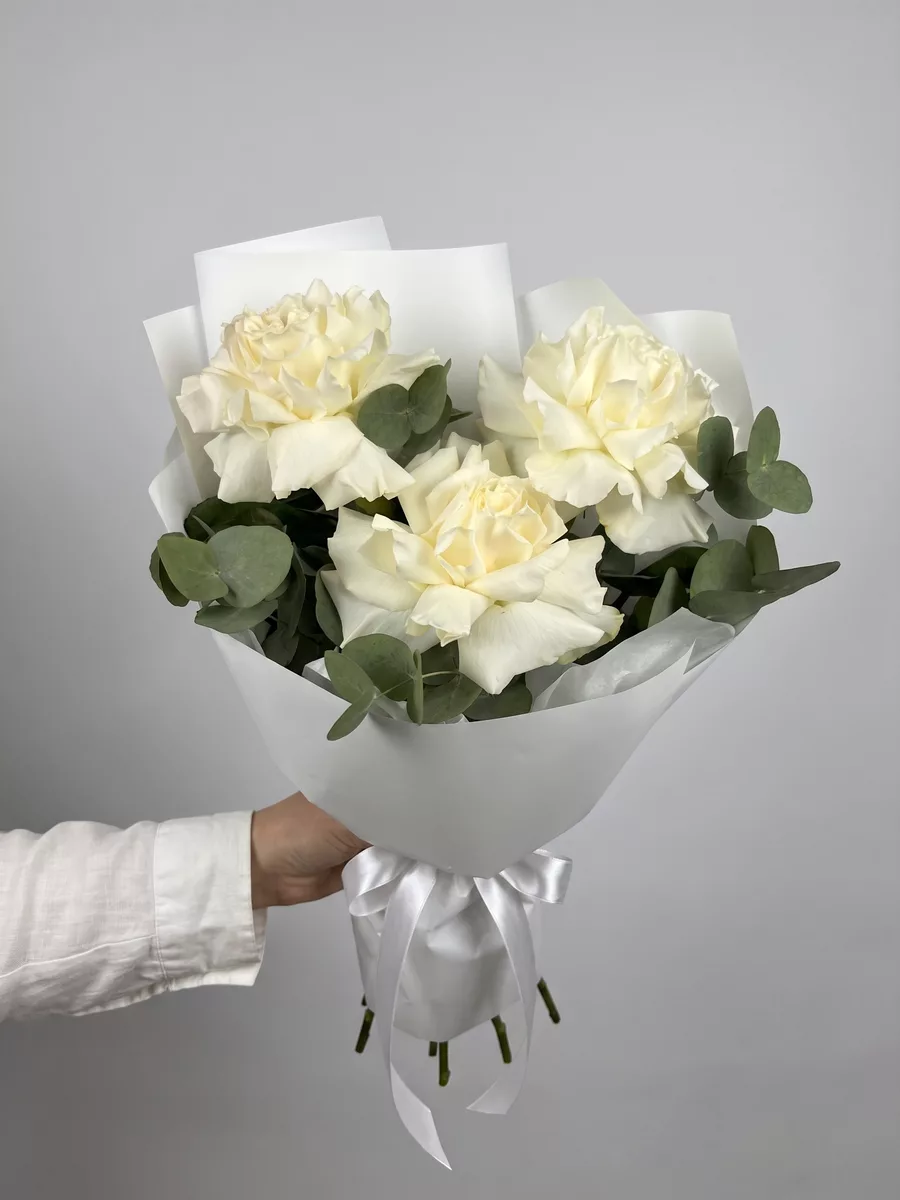
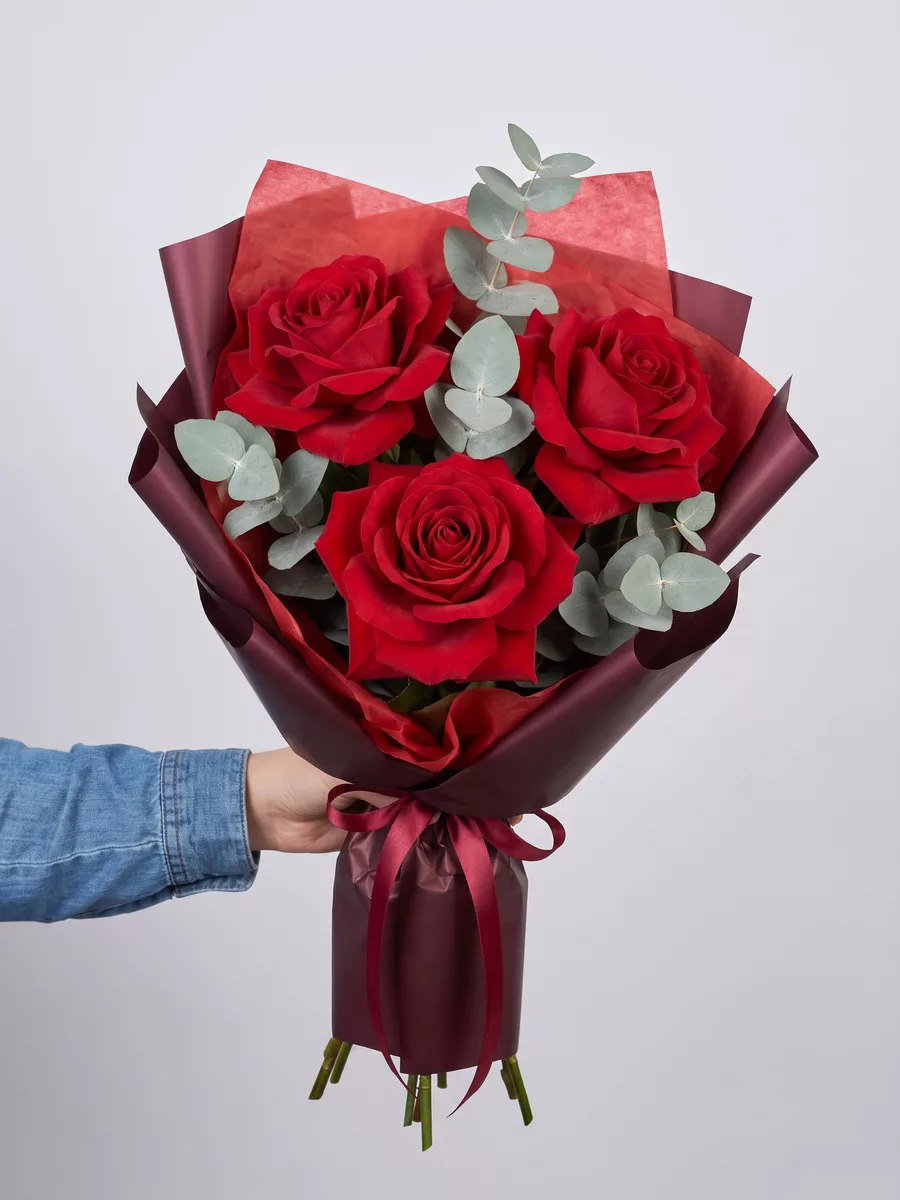
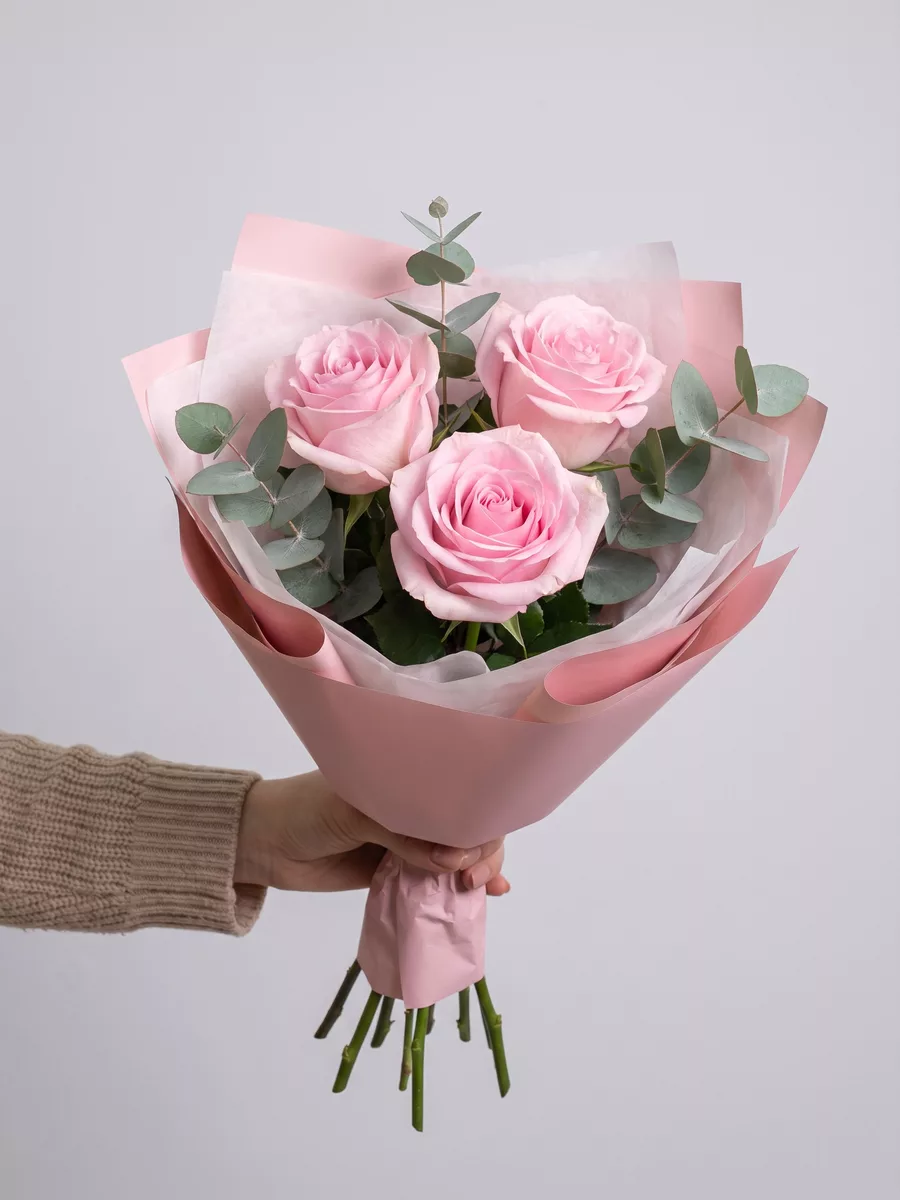
Choosing Flowers for Someone You Cannot Hand to Personally
There is something different about choosing flowers for a person you cannot hand the bouquet to directly. You are not just picking colours — you are trying to send a feeling across distance. Start from the recipient rather than the flower. Is she someone who keeps a tidy home with a single statement vase? A structured arrangement of white lisianthus and eucalyptus will suit her far better than an armful of mixed seasonal stems. Is he celebrating something bold and public, like a promotion? Then garden roses in deep coral or burgundy read as confident and warm.
For recipients who are unfamiliar with flowers, simplicity is kindness. A monobouquet — one variety in a single colour, gathered generously — is easier to display and always looks intentional. Tulips in spring, sunflowers in summer, chrysanthemums in autumn: each reads as a considered choice rather than a default.
Russian custom holds that bouquets should contain an odd number of stems, and recipients in Kasimov will notice if that detail is right. It is not superstition so much as a cultural signal that the sender paid attention. Even numbers are associated with mourning, so a bouquet of eleven roses or thirteen tulips carries a quietly respectful undertone that an even number does not. When in doubt, ask the florist to guide the count — it costs nothing and matters more than most people expect.
Occasions That Call for Flowers in Kasimov
Kasimov is a town where community life still moves around shared milestones — school graduations, name days, anniversaries, the first day of a new job. These moments matter, and flowers that arrive at the right time carry real weight. A bouquet delivered the morning of a birthday lands differently from one that arrives two days later with an apology attached.
For a child finishing school or starting university, white and pale pink flowers — spray roses, alstroemeria, delicate freesia — have a freshness that suits the occasion without feeling too formal. For a wedding anniversary, garden roses in blush or cream with ranunculus tucked between them feel romantic without being theatrical. For a colleague or a teacher, a neat arrangement of seasonal flowers in a neutral palette is generous without overstepping.
Mother's Day in Russia falls on the last Sunday of November, and International Women's Day on the eighth of March is one of the busiest flower days in the country. On that date, nearly every woman in Russia expects flowers from someone — family, colleagues, a partner. Ordering for Kasimov recipients on the seventh of March, a day ahead, gives the delivery the best chance of arriving before the morning of the eighth, when demand across all Russian cities peaks sharply. Planning one day early is not excessive caution; it is simply good timing.
Bouquet Options Across Different Budgets
A meaningful bouquet does not require the most expensive flowers on the page. What it requires is proportion — the right number of stems for the occasion, presented cleanly, with wrapping that protects rather than overwhelms. At a modest budget, a generous bunch of seasonal spray chrysanthemums or alstroemeria in a single colour, wrapped in kraft paper with a satin ribbon, looks considered and fresh. These varieties hold exceptionally well in transit and open slowly once the recipient puts them in water.
In the mid range, combinations open up. Roses paired with eucalyptus and waxflower give depth without complexity. Lisianthus mixed with soft-stemmed ranunculus creates a full, garden-gathered look that photographs beautifully and lasts ten days or more with proper care. These are the bouquets that feel like someone made a real decision, not just clicked the first option.
At a higher budget, the choice becomes about scale and drama. Peonies when in season, garden roses in full bloom, or a tall sculptural arrangement of protea and tropical greenery all make an impression that a recipient remembers. The key is still restraint in colour — two or three tones that work together rather than a full spectrum. A bouquet with a clear palette always looks more expensive than it is, and a chaotic one always looks cheaper. Trust the florist's eye for combination; it is what the work is built on.
What Happens to Flowers During Long-Distance Transit
Flowers are living things, and transit is a form of stress. The variables that matter most are temperature, humidity and vibration. A bouquet that travels in a warm car boot for four hours will arrive with petals that are already beginning to loosen and stems that have lost water pressure. That is why the cold chain matters so specifically — not as a marketing phrase but as the actual mechanism that keeps a rose looking like a rose when it arrives in Kasimov.
Roses are among the most transit-sensitive flowers: they respond quickly to warmth by opening, and once fully open they decline faster. Chrysanthemums and alstroemeria are more forgiving and hold their shape well over longer distances. Tulips are sensitive to temperature changes but travel well when cool and slightly closed — they will open beautifully in a warm room within hours of arrival. Knowing this, a florist building a bouquet for long-distance delivery will often choose stems that are slightly less open than they would be for a same-city arrangement.
The packaging also plays a role. Stems wrapped in damp tissue inside the bouquet retain moisture during transit. A rigid outer box prevents crushing. Flowers delivered in a soft sleeve alone, with no internal support, often arrive with bent stems or bruised petals — not from carelessness but from the physics of movement. When you order, the packaging method is already chosen to match the distance, so you do not need to specify it.
How to Help the Recipient Care for the Bouquet
Most flowers that die early do so because of avoidable mistakes in the first hour after arrival. The single most important step is a fresh diagonal cut on the stems — about two centimetres off the bottom, made with a sharp knife rather than scissors, which can crush the stem tissue and block water uptake. This should happen before the stems go into water, and it takes thirty seconds.
The vase water should be cool and clean, changed every two days. Flower food sachets, which often come with the bouquet, contain a mild acidifier and a sugar source that slow bacterial growth and feed the stems. If no sachet is included, a small amount of sugar and a drop of bleach in the water achieves a similar effect — though the sachet is more precisely balanced.
Keep the bouquet away from direct sunlight, radiators and fruit bowls. Fruit releases ethylene gas as it ripens, and ethylene accelerates petal drop in roses, carnations and lisianthus noticeably. A cool room away from the kitchen is the best spot. If the recipient lives in a warm apartment — common in Russian winters when central heating runs high — a nightly move to a cooler hallway or even a few hours in a cool room extends vase life significantly. Roses in good conditions last seven to ten days. Alstroemeria and chrysanthemums can reach twelve to fourteen. Tulips are shorter-lived but no less lovely for it — five to seven days of full colour is typical.
Timing Your Order for Kasimov: A Practical View
The most common mistake people make when ordering flowers for a distant city is leaving it too late. Same-day delivery to Kasimov is available, but the available slots fill earlier in the day than most people expect — particularly on weekends and on dates like the eighth of March or the first of September, when demand across Russia spikes simultaneously. Checking availability in the morning and ordering by midday gives you the widest choice of delivery windows.
For a birthday, the ideal order time is the evening before. The bouquet is assembled fresh on the morning of delivery and dispatched in the first available slot, which means it arrives while the day still feels new. For a surprise delivery — when the recipient does not know flowers are coming — it helps to have a secondary contact at the address, such as a neighbour or family member, who can receive the bouquet if the recipient is out. Leaving flowers on a doorstep in winter is not a good outcome for anyone.
If you are ordering across time zones or from outside Russia, the order form accepts international cards and the confirmation is sent by email in both Russian and English. Delivery time is shown in Moscow time, so factor in any difference when choosing your slot. A midday delivery in Kasimov corresponds to twelve o'clock Moscow time, since Kasimov is in the same time zone. No conversion is needed, which is one less thing to worry about when you are coordinating a surprise from far away.
Sending flowers to Kasimov is not complicated, but it rewards a little thought. Choose for the person first and the occasion second. Order a day ahead when you can. Trust that the cold chain and careful packaging will do their job. And remind the recipient — gently, in your card — to cut the stems and change the water. A bouquet that is cared for properly does not just sit in a vase; it keeps the feeling of the occasion alive for days after the delivery driver has long since left.
Frequently asked questions
Can I order flowers for Kasimov the same day?
Yes, same-day delivery to Kasimov is available on most days. The key is to order early — available slots fill quickly, especially on weekends and major dates like March 8th. Check the calendar on the order page in the morning and book your slot before midday for the best chance of a same-day window that suits you.
Which flowers travel best for long-distance delivery to Kasimov?
Chrysanthemums, alstroemeria and spray roses handle long-distance transit particularly well because they are less sensitive to minor temperature changes. Roses and lisianthus also travel reliably when kept cool. Peonies and open garden roses are more delicate and are best ordered when in season and sent with a shorter transit window.
How many stems should a bouquet have for a Russian recipient?
In Russian tradition, bouquets should contain an odd number of stems — five, seven, eleven, thirteen and so on. Even numbers are associated with mourning occasions and will be noticed by a Russian recipient. When you order from Turboflora, the bouquets are already composed with this in mind, so you do not need to count manually.
What if the recipient is not home when the flowers arrive in Kasimov?
The courier will contact the recipient before arrival to confirm the time. If no one is available, it helps to provide a secondary contact — a neighbour, family member or building concierge — who can accept the bouquet. Flowers left in a cold entrance hall in winter fare better than those left outdoors, but a live handover is always the preferred outcome.
How long will the bouquet last after delivery in Kasimov?
With basic care — a fresh diagonal stem cut, clean cool water changed every two days and a position away from heat and fruit — most bouquets last seven to ten days. Chrysanthemums and alstroemeria can reach twelve to fourteen days. Tulips are shorter at five to seven days but open fully and look beautiful throughout. Including a flower food sachet extends vase life noticeably.
Ready to send flowers?
Pick the city, choose the bouquet, and a local florist takes it from there.
Choose a city →