Sending Flowers to Kolchugino? Here Is What to Expect
Kolchugino is a quiet industrial town in Vladimir Oblast, and ordering flowers here feels different from sending a bouquet across a major city. Distances are real, roads vary with the seasons, and the person waiting on the other end deserves to open the door to something genuinely fresh and beautiful. This article walks you through every practical detail — timing, seasonal choices, how to present a bouquet that survives the journey, and what Russian floral customs mean for the person receiving it.
Which Parts of Kolchugino We Reach and How Long It Takes
Kolchugino sits roughly 130 kilometres northeast of Moscow and about 80 kilometres from Vladimir city. The town itself is compact, and most residential addresses — from the central streets near the cable plant to the quieter neighbourhoods along the Peksha river — fall within our standard delivery zone. We do not rely on local intermediaries: our courier leaves with your order and delivers it directly.
Delivery windows depend on where you are placing the order from and the time of day. Orders placed before midday typically arrive the same afternoon. Evening orders are usually scheduled for the following morning, which is often the better choice anyway — flowers handed over at a calm morning hour feel more considered than a rushed late delivery.
The drive itself takes between two and three hours depending on traffic on the A108 ring road and seasonal road conditions. In winter, icy stretches between Vladimir Oblast towns can add time, so we build a buffer into every winter estimate. You will receive a courier contact number so the recipient can be ready without waiting by the door for hours.
One thing worth knowing: Russian addresses sometimes include building numbers, entrance numbers and floor details all at once. When you fill in the delivery form, include every part of the address — korpus, pod'ezd, flat number — because a courier arriving at the right street but the wrong entrance in an unfamiliar town loses significant time. A complete address is the single most useful thing you can give us.
Bouquets we can deliver

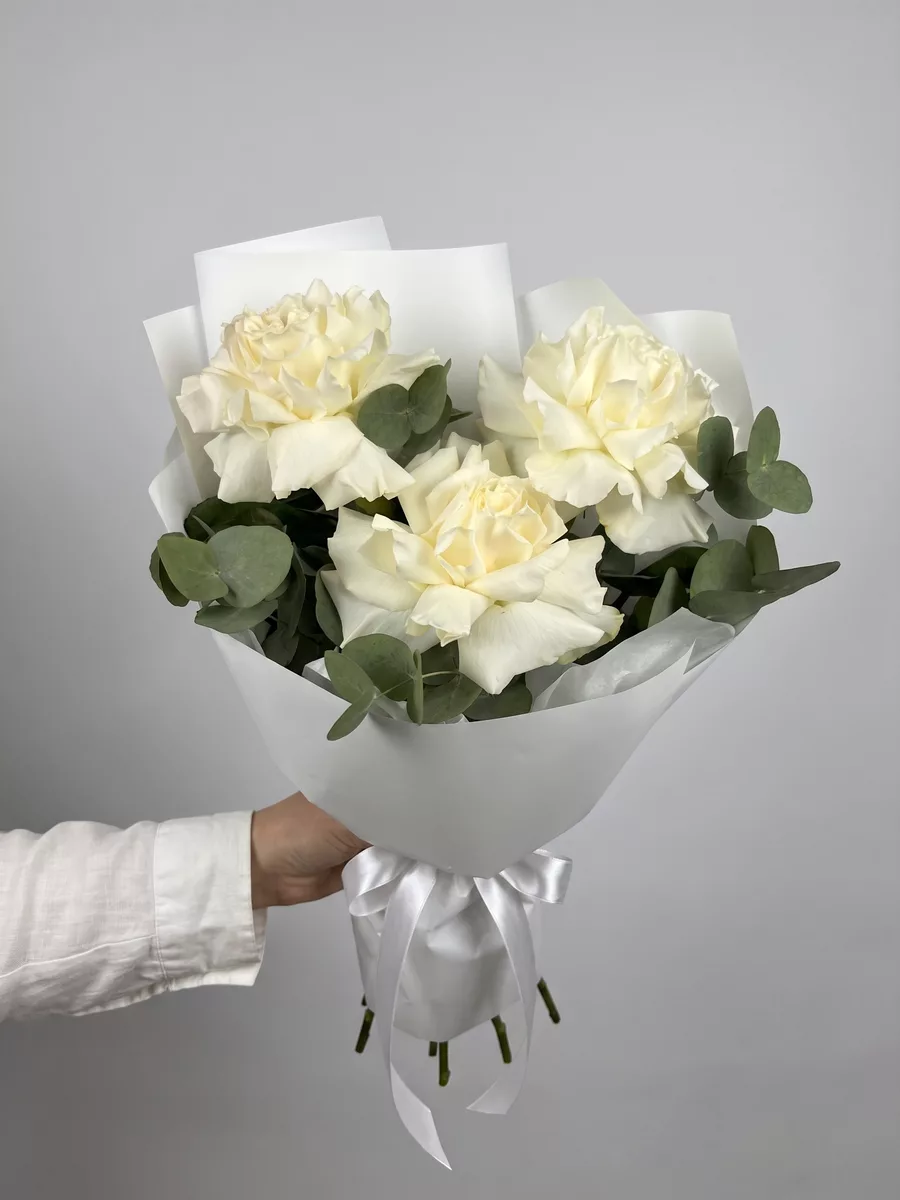
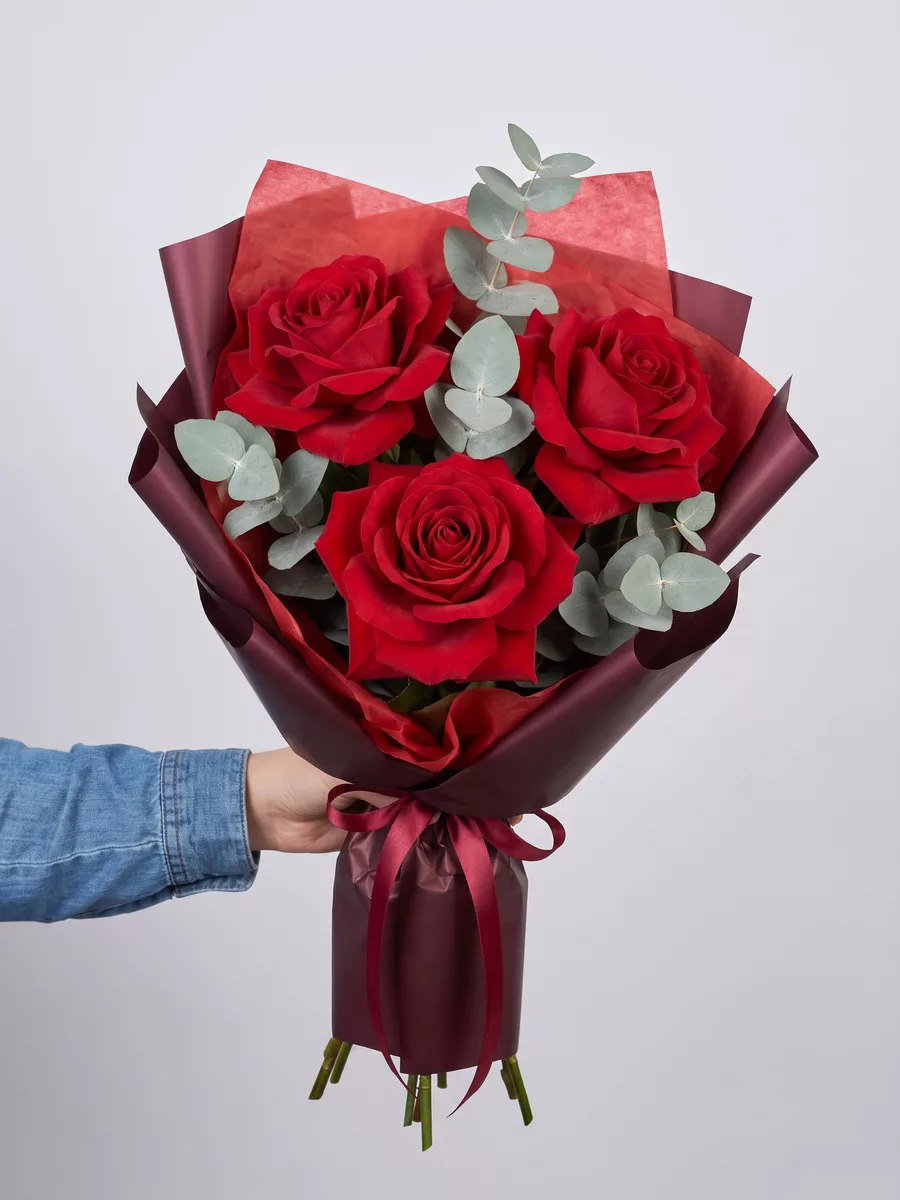
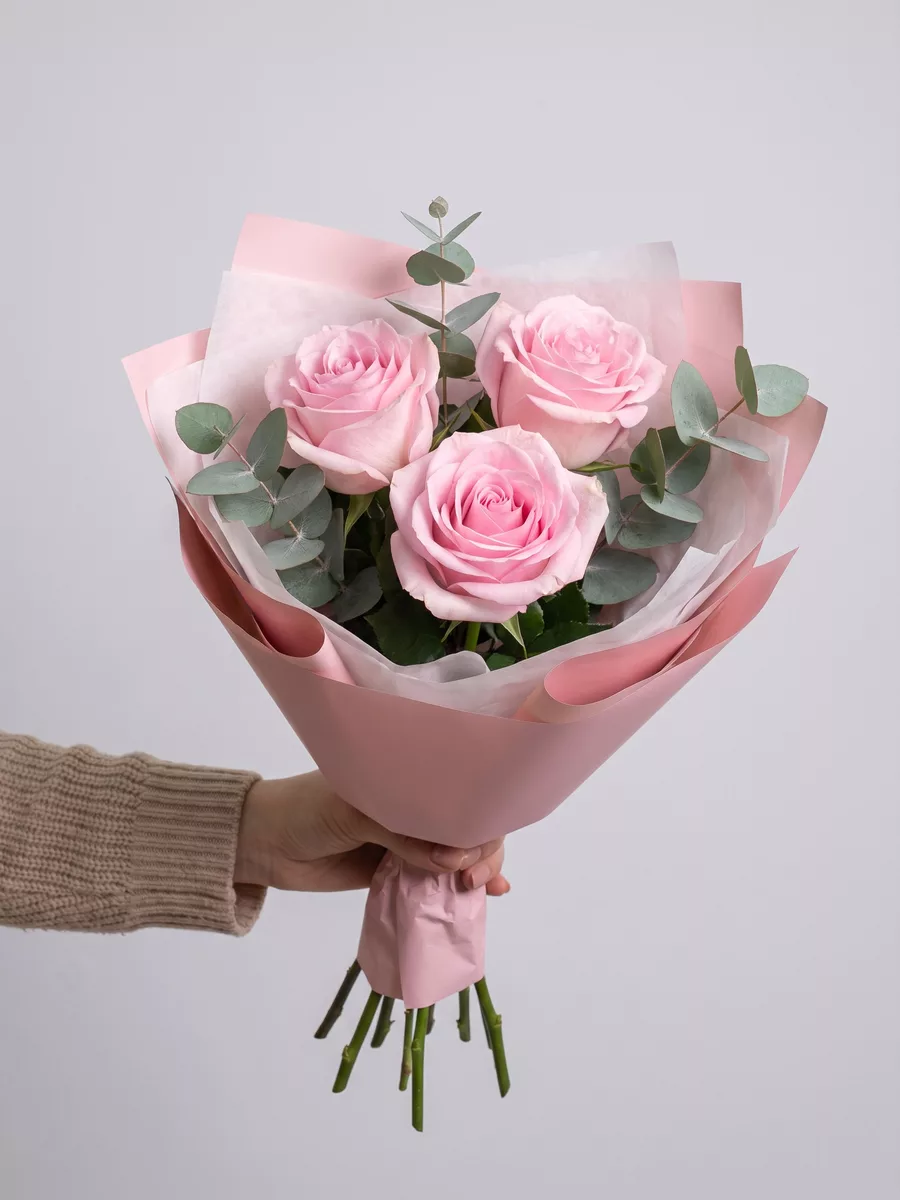
Choosing Flowers for the Person, Not Just the Occasion
Before you think about which blooms to order, think about who will receive them and what you want them to feel when they open the box. A colleague celebrating a promotion responds differently to a structured arrangement of white spray roses and eucalyptus than to a loose garden-style bouquet of ranunculus and lisianthus — and both are valid, but they say different things.
For romantic occasions, deep red or coral peonies in spring and early summer carry real weight in Russian floral culture. They are associated with abundance and warmth, and they photograph beautifully, which matters when the recipient will almost certainly share the moment. In autumn and winter, when peonies are out of season, garden roses in dusty pink or burgundy paired with burgundy calla lilies create a similarly rich impression.
For birthdays, a mix of textures works better than a single variety in quantity. Combine something soft like freesia or matthiola with a structural flower like a protea or an allium, and add a trailing element such as eucalyptus or ruscus. The contrast makes the bouquet look considered rather than assembled by weight.
For a friend going through a difficult period — illness, a hard week, a move — choose something gentle and long-lasting. White or cream chrysanthemums, alstroemeria, or pale yellow solidago hold up well in transit and feel nurturing rather than theatrical. Avoid anything too formal or too celebratory; the gesture should feel like a conversation, not a performance.
What Happens to Flowers During a Long-Distance Delivery
A two-to-three-hour drive is not a short journey for cut flowers. Temperature, humidity and physical movement all affect how a bouquet arrives. Understanding this helps you choose varieties that travel well and set realistic expectations for what the recipient will see when the box is opened.
We pack bouquets in water-retaining floral foam or with a hydration tube at the stem ends, depending on the arrangement type. The outer packaging is firm enough to prevent the heads from pressing against the sides during movement. In summer, when cabin temperatures can reach 25 to 30 degrees Celsius even with air conditioning, we add cooling inserts for heat-sensitive varieties like tulips and anemones.
Some flowers are simply better travellers than others. Roses, especially varieties with high petal counts such as David Austin-style garden roses, hold their shape well. Chrysanthemums and alstroemeria are remarkably resilient. Lisianthus survives transit beautifully and looks expensive without being fragile. Gypsophila, despite its delicate appearance, is one of the most durable flowers in a bouquet.
Flowers to handle with more care on long routes include open tulips, which can bruise if the head droops and presses against packaging, and fully open sunflowers, which are top-heavy and prone to neck damage. We often send tulips slightly closed so they open in the recipient's home — which is actually a lovely experience, watching them unfurl over twenty-four hours. Communicating this to the recipient in advance prevents the mistaken impression that the flowers arrived unfinished.
Timing Your Order Around Russian Occasions and Customs
If you are sending flowers to someone in Kolchugino and you are not familiar with Russian floral customs, a few details will help you time and present your order correctly. Flowers are deeply embedded in everyday Russian life — they are given at school graduations, name days, professional anniversaries, and on the first day back from a long trip. Understanding the rhythm of these occasions helps you choose the right moment.
The most important rule in Russian custom is the odd-number rule: bouquets given as gifts should contain an odd number of stems. Even numbers are traditionally reserved for mourning contexts. This is not a rigid rule that everyone enforces, but it is widely understood, and an even-numbered bouquet can create a moment of awkwardness. Our arrangements are composed with this in mind by default.
March 8th, International Women's Day, is the single busiest flower day in Russia — far exceeding Valentine's Day in scale. If you are sending a bouquet around that date, order at least two to three days in advance. The same applies to February 23rd, Defender of the Fatherland Day, when men receive gifts including flowers.
Name days, or imeniny, are celebrated by some families with the same importance as birthdays. If you know the recipient observes this tradition, a bouquet on their name day will be received with particular warmth. The Russian Orthodox calendar lists name days by saint, and a quick search will confirm the date for any given name. Arriving on the right day, even unexpectedly, is the kind of detail that makes a gesture memorable.
Bouquet Styles That Work Well for Kolchugino Recipients
Kolchugino is a working town with a strong sense of community. The people there tend to appreciate sincerity over extravagance, and a bouquet that feels genuine and well-made will land better than something that looks assembled purely for visual impact. That said, beauty matters, and there is no reason a sincere bouquet cannot also be stunning.
The wrapped bouquet — stems gathered and tied, wrapped in kraft paper or soft tissue — is the most universally understood format in Russia. It is what people picture when they imagine receiving flowers, and it photographs naturally. For a Kolchugino recipient, a well-wrapped bouquet of fifteen to twenty-one stems in a cohesive colour palette is a solid, reliable choice for almost any occasion.
Hat-box arrangements have grown popular over the past several years, particularly for birthdays and romantic occasions. A round box filled with roses arranged tightly in a dome shape is visually dramatic and travels exceptionally well, since the flowers support each other. The box itself becomes part of the presentation, and many recipients keep it as a decorative object after the flowers have finished.
For something more personal, a mixed seasonal arrangement in a kraft-wrapped bundle — combining, say, garden roses, eucalyptus, white veronica and spray chrysanthemums — feels handpicked rather than ordered. This style suits recipients who value individuality over formality. It also gives the florist room to work with what is freshest on the day, which usually means the blooms arrive at their best rather than being sourced specifically to match a rigid specification.
Caring for Flowers After Delivery in a Kolchugino Home
The bouquet arrives, the door opens, and now the flowers need to last. What happens in the first hour after delivery determines whether the arrangement stays beautiful for four days or twelve. Most flowers decline not because of poor quality but because of avoidable mistakes at home.
The first step is a fresh diagonal cut across each stem — about two centimetres from the bottom — using a sharp knife rather than scissors. Scissors compress the stem tissue and reduce water uptake. A diagonal cut increases the surface area in contact with water. Do this under running water or while the stems are submerged to prevent air entering the cut end immediately.
Vase choice matters more than most people realise. The vase should be tall enough to support at least two-thirds of the stem length. Fill it with cool, clean water — not cold, which shocks tropical varieties, and not warm, which accelerates bacterial growth. Remove any leaves that would sit below the waterline, as submerged foliage rots quickly and clouds the water.
In a Kolchugino home during winter, central heating creates very dry indoor air, which shortens vase life significantly. Keep flowers away from radiators and from windows that let in direct afternoon sun. Changing the water every two days and re-cutting the stems each time adds three to four days of vase life for most varieties. Roses, lisianthus and alstroemeria respond particularly well to this routine. Tulips are the exception — they continue to grow in the vase and will curve toward light, which some people find charming and others find untidy.
Making the Delivery Feel Like More Than Just Flowers
A bouquet is a physical object, but what it carries is a feeling. The difference between a delivery that the recipient mentions once and one they talk about for weeks often comes down to small decisions around presentation and message.
A handwritten card, even a short one, changes the experience entirely. In Russian culture, written words accompanying a gift are taken seriously — they are read carefully and often kept. If you are writing in English for a Russian-speaking recipient, consider keeping the message simple and warm. A few sincere sentences in plain language will mean more than an elaborate phrase they have to translate.
Packaging details matter at the door. A bouquet that arrives wrapped neatly, with no crushed petals visible and the bow or tie intact, communicates that care was taken throughout the journey. We inspect every arrangement before it leaves and re-wrap if anything has shifted in transit.
If you are sending flowers to mark a significant moment — a new job, a first home, a child's graduation — consider adding a complementary element. A small box of chocolates, a scented candle, or a jar of good honey pairs naturally with flowers and extends the gesture beyond the blooms themselves. These additions travel in the same delivery and arrive together, which means the recipient experiences the whole gift at once rather than in disconnected pieces.
Finally, let the recipient know the flowers are coming if the occasion allows it. A brief message saying something is on its way builds anticipation without spoiling the surprise of what exactly they will receive. Arriving at a door where someone is genuinely waiting, rather than catching them mid-task and unprepared, means the moment lands the way you intended it to.
Sending flowers to Kolchugino is entirely straightforward when you understand the journey the bouquet takes and the person waiting at the end of it. Choose varieties that travel well, time your order with the occasion in mind, and give the recipient a card with something real written on it. The distance between the florist and the door is just logistics — what matters is that when the flowers arrive, they feel like they came from you.
Frequently asked questions
How far in advance should I order flowers for delivery to Kolchugino?
For a standard delivery, placing your order the evening before or by midday on the day works well. For major dates like March 8th or a milestone birthday, two to three days in advance gives us time to source the best seasonal varieties and confirm the delivery window that suits the recipient's schedule.
Can flowers really survive a two-hour drive without wilting?
Yes, when packed correctly. We use hydration tubes or water-retaining foam at the stem ends and firm outer packaging to prevent movement damage. In summer we add cooling inserts for heat-sensitive varieties. Roses, lisianthus, alstroemeria and chrysanthemums are particularly reliable for longer journeys and arrive looking fresh.
Why does the number of flowers in a Russian bouquet matter?
In Russian tradition, odd numbers of stems are given as gifts while even numbers are associated with mourning. Most recipients are aware of this convention, and an even-numbered bouquet can create unintended awkwardness. Our bouquets are composed with an odd stem count by default, so you do not need to specify this separately.
What should the recipient do if the flowers arrive slightly closed or drooping?
Closed buds are normal and intentional for varieties like tulips and roses — they open beautifully within twelve to twenty-four hours at room temperature. For any slight drooping after transit, re-cut the stems diagonally, place in cool fresh water and leave in a shaded spot for an hour. Most flowers revive fully within that time.
Is it possible to include a gift alongside the flowers for a Kolchugino delivery?
Yes. We can add chocolates, a scented candle or similar items to the same delivery so everything arrives together. Mention what you would like when placing your order and we will confirm availability. A combined gift feels more complete and means the recipient opens everything at once rather than waiting for separate packages.
Ready to send flowers?
Pick the city, choose the bouquet, and a local florist takes it from there.
Choose a city →