Sending Flowers to Kumertau? Here Is What to Expect
Kumertau sits in the south of Bashkortostan, a city with a strong sense of occasion — birthdays here are celebrated properly, and arriving at someone's door with a beautiful bouquet still means something real. If you are organising a delivery from a distance, or simply want the flowers to arrive looking exactly as they should, a few details about timing, temperature and variety will make all the difference between a gift that delights and one that disappoints.
Which Parts of Kumertau We Reach and How Quickly
Kumertau is a compact city, which works in your favour when it comes to delivery. The central districts, the residential mikrorayons along Lenina and Oktyabrskaya streets, and the areas around the railway station are all well within our standard delivery window. We do not rely on third-party couriers or local intermediaries — our own logistics chain runs from the moment your order is placed through to the moment the bouquet is handed over.
For most addresses in Kumertau, you can expect delivery within one to two hours of confirming your order. That window holds for the majority of the day, including evenings, which matters when you are planning a surprise for after work. If you are sending to a more peripheral address on the outskirts of the city, it is worth adding a small buffer — communicate the delivery window as two hours rather than one, and the recipient will not be standing at the door checking their phone.
The key is placing your order with enough lead time. A bouquet ordered by noon can comfortably arrive by early afternoon. Orders placed in the evening for same-day delivery should ideally come in before 20:00 local time to allow the courier to reach the address without rushing. Rushed delivery is the most common reason a bouquet arrives with petals slightly displaced or wrapping loosened — a calm, timed approach always produces a better result.
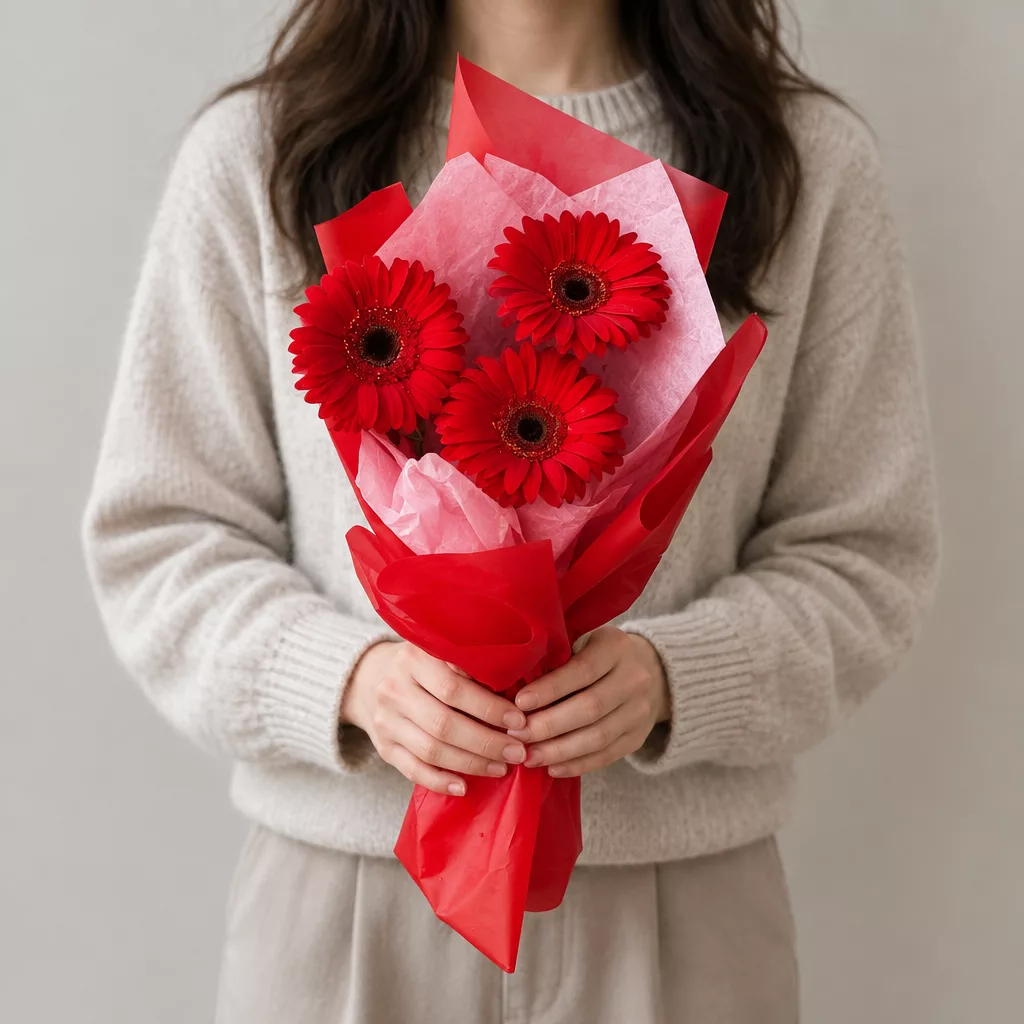
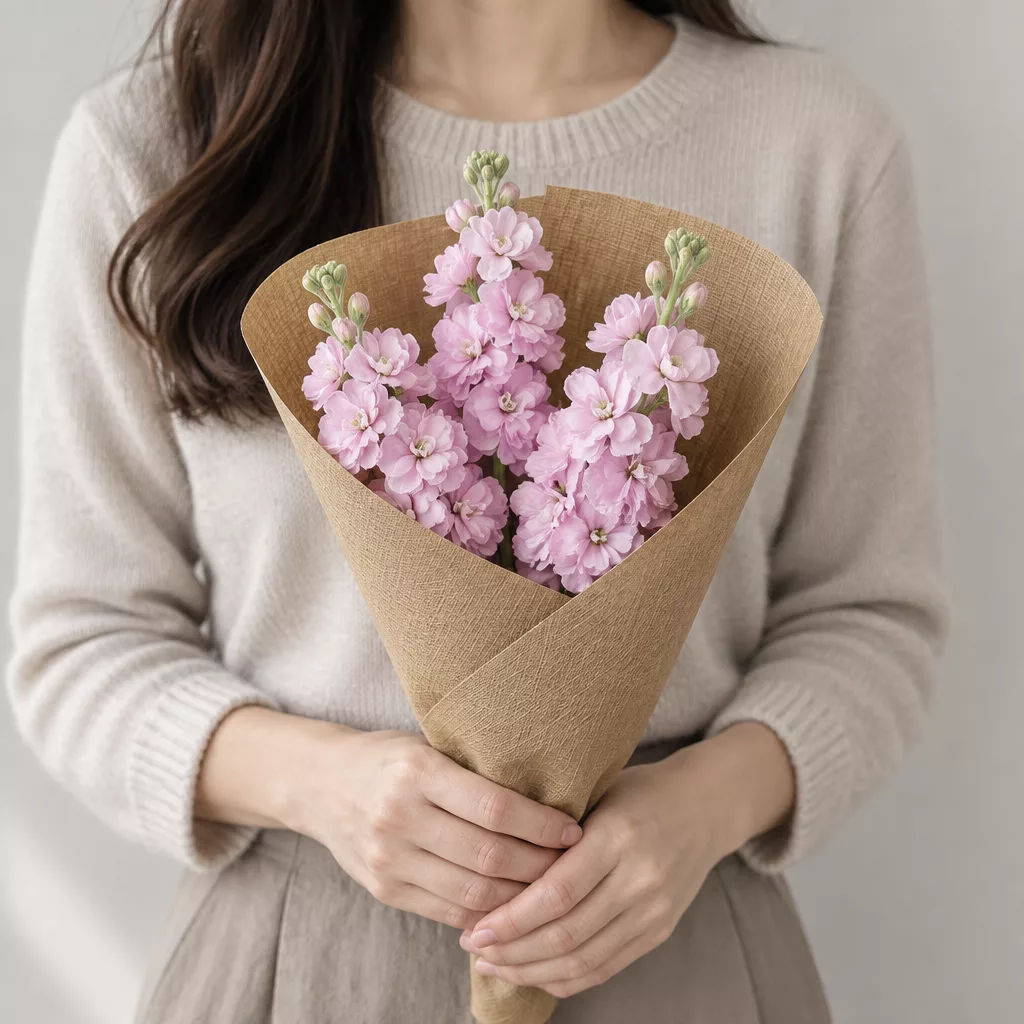
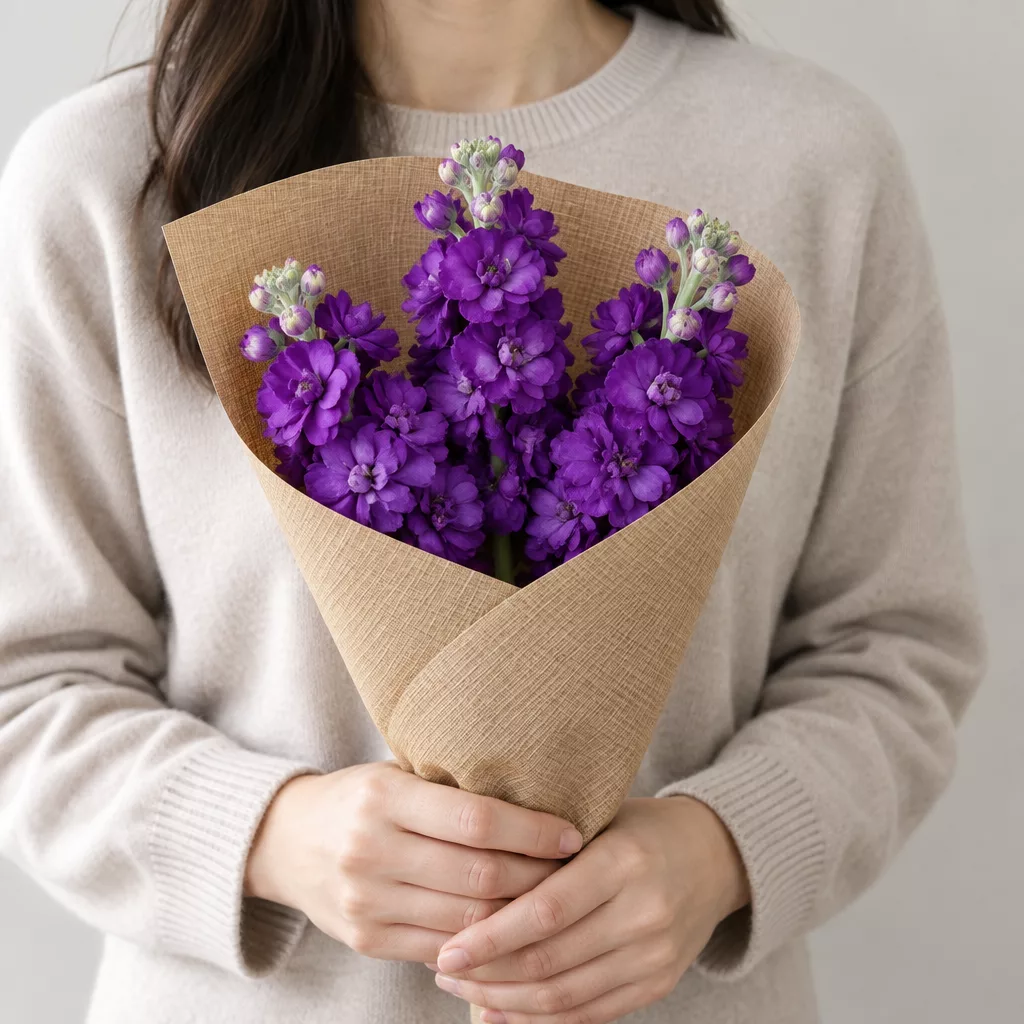
Bouquets we can deliver

What the Climate in Kumertau Means for Your Flowers
Kumertau has a continental climate with sharp seasonal swings. Winters drop well below minus twenty Celsius, summers push past thirty. Both extremes affect cut flowers more than most people realise, and knowing this helps you choose varieties that will actually survive the journey and look beautiful on arrival.
In January and February, the biggest risk is freeze damage during the final walk from the courier's vehicle to the recipient's door. Roses are particularly vulnerable at the stem ends — even two or three minutes in severe frost can cause the outer petals to bruise or the stems to blacken near the cut. We wrap cold-weather bouquets with additional insulating layers and use thermal packaging, but the recipient should bring the bouquet inside immediately and let it rest at room temperature for twenty minutes before unwrapping.
In July and August the opposite problem applies. Heat accelerates the opening of flowers like alstroemeria and spray carnations, meaning a bouquet that looked tight and fresh in the morning can be fully open by afternoon. This is not necessarily a flaw — an open alstroemeria is still beautiful — but if you want that just-cut look for a photo or a formal presentation, request morning delivery during summer months.
Spring and autumn in Kumertau are the most forgiving seasons for flower delivery. Temperatures between five and fifteen Celsius are close to ideal for cut flowers in transit. Tulips in March and chrysanthemums in October both travel exceptionally well, and these are the months when your recipient is most likely to get a bouquet that looks exactly as it did when it left our hands.
Choosing Flowers for the Person, Not Just the Occasion
The occasion gives you a starting point, but the person in front of you — or the person you are imagining as you place the order — is the real guide. A colleague who keeps a tidy desk and a neutral office might appreciate the clean lines of white eustoma and eucalyptus over a large mixed bouquet. A grandmother who grew up with a garden will often respond more warmly to garden-style arrangements with dahlias, lisianthus and soft greenery than to a formal dozen roses.
For birthdays, which are taken very seriously in Russian culture and typically involve the recipient receiving flowers from multiple people, think about what will stand out. A single-variety bouquet of fifty or a hundred tulips in one saturated colour — deep purple, coral, white — makes a stronger visual impression than a mixed arrangement of similar size. It photographs well, it fills a room, and it signals that the sender thought carefully rather than picking the default option.
For romantic occasions, roses remain the standard, and there is good reason for that — they carry meaning that both sender and recipient understand immediately. But consider the colour with care. Red roses communicate passion and are appropriate for established relationships. Cream or blush roses are softer and work well when the relationship is newer or when you want warmth without intensity. Mixing red roses with white spray roses and adding a few stems of gypsophila creates a classic combination that feels generous without being overwhelming.
For professional gifts — a thank-you to a doctor, a gesture to a teacher — chrysanthemums, alstroemeria and mixed seasonal compositions are all well-received and appropriate.
Bouquets at Different Budgets: What You Actually Get
Budget shapes the size of a bouquet more than its quality, provided you are ordering from a florist who sources properly. At a modest budget you are typically working with five to seven stems of a primary flower — roses, tulips, or spray carnations — supported by two or three types of greenery and perhaps one filler flower like gypsophila or waxflower. This produces a hand-tied bouquet that is compact but coherent, and it is entirely appropriate for a casual birthday or a thank-you gesture.
At a mid-range budget, the composition opens up. You can add a second focal flower — combining, for example, garden roses with lisianthus, or peonies with ranunculus when the season allows. The greenery becomes more considered: eucalyptus, ruscus, or soft pittosporum rather than a single type. The overall impression shifts from a simple gift to a genuine arrangement, and this is the level where most people feel comfortable sending to someone they care about.
At a higher budget, the conversation is about volume and variety. A large composition with twenty-five or thirty stems, multiple flower types, and a carefully chosen colour palette is the kind of bouquet that stays in the memory. Flowers like garden roses, peonies, and ornamental alliums command a higher price because of their short seasons and complex growing requirements, but they also create an impact that a larger quantity of simpler flowers cannot match.
The honest advice is to spend your budget on fewer, better flowers rather than more of a lesser variety. A tight bouquet of fifteen well-conditioned roses will outlast and outshine a loose arrangement of thirty stems that were cut too early or stored poorly.
How to Help Your Recipient Keep the Flowers Fresh
Cut flowers are living things, and the care they receive in the first hour after delivery determines much of their vase life. Including a short care note with a delivery — or sending the recipient a message with basic instructions — is one of the most thoughtful things a sender can do, and it costs nothing.
The first step is always a fresh cut. The recipient should trim two to three centimetres from each stem at a diagonal angle, ideally under running water or while the stem is submerged. This prevents an air bubble from forming at the cut end, which would block water uptake. A sharp knife is better than scissors, which can crush the stem tissue.
The vase should be clean — residue from a previous arrangement carries bacteria that shorten vase life significantly. Fill it with cool, fresh water. If a sachet of flower food came with the bouquet, dissolve it in the water according to the instructions; it contains a mild bactericide and a sugar source that genuinely extends longevity. Change the water every two days and re-trim the stems each time.
Placement matters more than most people expect. Keep the bouquet away from direct sunlight, heating radiators, and fruit bowls. Ripening fruit releases ethylene gas, which accelerates flower aging — this is particularly damaging to roses and tulips. A cool room with indirect light is ideal. Roses kept at room temperature typically last seven to ten days with proper care. Alstroemeria and chrysanthemums can reach two weeks. Tulips are shorter-lived at five to seven days but can be extended by keeping the water very cold and the room cool.
Timing a Surprise Delivery: Getting the Details Right
A surprise delivery requires a little more coordination than a standard order, but it is entirely manageable when you think through the logistics in advance. The first question is whether the recipient will actually be at the address at the time you have in mind. In Kumertau, as in most Russian cities, it is common for people to work standard hours and return home in the early evening. A delivery timed for 18:00 to 19:00 on a weekday catches most people at home without requiring them to take a call at work.
If you want the delivery to be a genuine surprise, avoid giving the recipient any advance notice. Instead, confirm the address carefully — apartment number, entrance code if there is one, and floor. Russian apartment buildings often have entry keypads, and a courier who cannot get past the front door will have to call the recipient, which ends the surprise immediately. Providing the entrance code in your order notes removes this problem entirely.
For workplace deliveries, which are popular for birthdays and are a well-established tradition in Russian professional culture, check that the recipient will be in the office on the day. A bouquet arriving at a desk when the person is working from home or traveling creates a logistical headache. If you are not certain of their schedule, a home delivery in the evening is a safer choice.
Finally, think about the message card. In Russia, the written message accompanying flowers carries real weight — it is read carefully and often kept. Keep the tone warm and specific rather than generic. A message that references something personal to the relationship between sender and recipient will always land better than a standard greeting.
Common Mistakes When Ordering Flowers to Kumertau
The most frequent mistake is leaving the order too late. People often assume that same-day delivery is always possible regardless of when they place the order, but a bouquet ordered at 21:00 for delivery at 21:30 puts the courier under pressure that affects quality. The flowers may be wrapped hastily, the route may not be optimal, and the recipient may feel the hurry in the presentation. Ordering with two to three hours of lead time produces a noticeably better result.
The second common mistake is choosing flowers based on appearance in a photograph rather than suitability for the season. Peonies are one of the most requested flowers year-round, but they are only naturally available from late May through June. Outside that window they are either unavailable or have been in cold storage for months, which affects both their appearance and their longevity. Asking your florist what is fresh and in season at the moment of ordering will almost always lead to a better bouquet than insisting on a specific variety that is out of season.
A third mistake is underestimating the importance of the packaging. In Russia, the presentation of a bouquet — the wrapping paper, the ribbon, the overall appearance before the flowers are even seen — is part of the gift. A bouquet handed over in plain cellophane reads as an afterthought. Requesting proper wrapping and a bow is not excessive; it is expected, and the recipient will notice.
Finally, some people forget to include a message card entirely, assuming the flowers speak for themselves. They do, but a handwritten note — even a short one — transforms the delivery from a transaction into a personal gesture. It is always worth adding.
Kumertau may not be the first city that comes to mind when people think about flower delivery logistics, but it is a city where flowers are given with genuine feeling and received with real appreciation. Getting the delivery right — the timing, the variety, the care instructions, the message — is simply a matter of thinking through each step the way a working florist does. When you do that, the bouquet arrives looking exactly as it should, the recipient feels that care, and the occasion is marked properly. That is what a good flower delivery is supposed to do.
Frequently asked questions
Which flowers survive the drive to a peripheral address on the outskirts of Kumertau without arriving crushed?
Compact, sturdy varieties travel best over longer urban distances. Spray roses, alstroemeria and chrysanthemums hold their shape when the bouquet shifts in transit. Avoid fully open garden roses or ranunculus for peripheral addresses unless you request firm, bud-stage blooms. A tighter arrangement with good internal structure also protects outer petals better than a loose, airy design.
If I am sending flowers to Kumertau in winter, should I choose a different bouquet than I would in summer?
Yes, noticeably so. In deep winter, cold air between the car and the door is enough to blacken delicate petals. Tulips and peonies are vulnerable. Roses, carnations and solidago move through cold air more reliably. A bouquet with denser, shorter petals and a well-insulated wrap is a practical choice from November through March in Kumertau.
What is the latest I can realistically order for a same-evening delivery in Kumertau?
Orders placed before 20:00 local time allow the courier to reach most central addresses without rushing. Rushed delivery is the most common reason wrapping loosens or petals displace in transit. If the occasion is an after-work surprise, ordering by early afternoon gives you the most comfortable window and the best-presented result at the door.
How should I describe the delivery address if the recipient lives in one of the mikrorayon blocks along Lenina or Oktyabrskaya?
Include the building number, entrance number and floor alongside the street name. Mikrorayon blocks in Kumertau often share similar facades, and a courier without the entrance detail will lose time. If there is an intercom code, add it in the order notes. A complete address is the single most effective thing you can do to protect delivery timing.
Can I ask for the bouquet to be presented in a way that suits a birthday rather than just handed over in standard wrapping?
Yes, and it is worth specifying. A birthday bouquet benefits from a fuller wrap, a ribbon finish and blooms arranged so the focal flowers face forward when the recipient opens the door. Mention the occasion in your order notes and our team will adjust the presentation accordingly rather than defaulting to a standard neutral wrap.
Ready to send flowers?
Pick the city, choose the bouquet, and a local florist takes it from there.
Choose a city →