Flower Delivery in Lesozavodsk: Timing, Choices and What Arrives at the Door
Lesozavodsk sits in the Primorsky Krai, a city with real seasons and real distances from the nearest major hub. When you want to send flowers here — for a birthday, an anniversary, a new baby, or simply to say you are thinking of someone — the question is not just which bouquet to pick. It is whether the flowers will arrive looking the way you imagined them, and whether the moment will feel as warm as you intended. This article walks you through everything you need to know before you place your order.
What Delivery to Lesozavodsk Actually Looks Like
Lesozavodsk is a compact city in the Primorsky region, and delivery here follows a direct route from our preparation point to the recipient's address. There are no relay handoffs or mystery intermediaries. The bouquet is assembled, conditioned and dispatched by our team, and the person who rings the doorbell is part of the same chain that cut and arranged the stems that morning.
Delivery windows in Lesozavodsk are typically confirmed at the time of order. Depending on the time of day you place your request and the complexity of the arrangement, you can expect arrival within a predictable slot rather than a vague all-day window. We will always contact you if anything shifts.
The city's road layout is straightforward, which helps. Most residential addresses, offices and public buildings are reachable without complications. If you are sending to a private house on the outskirts or to a gated compound, it is worth adding the gate code or a contact number for the recipient in your order notes — that small detail prevents the most common delivery delay we see in smaller cities.
One thing worth knowing: in Primorsky Krai, summer temperatures can climb significantly, and winter brings genuine cold. Both extremes affect how flowers travel. We account for this in how we wrap and insulate each order, but it is useful for you to understand that a bouquet arriving in July heat or January frost has been handled differently than one delivered on a mild spring afternoon.
Bouquets we can deliver

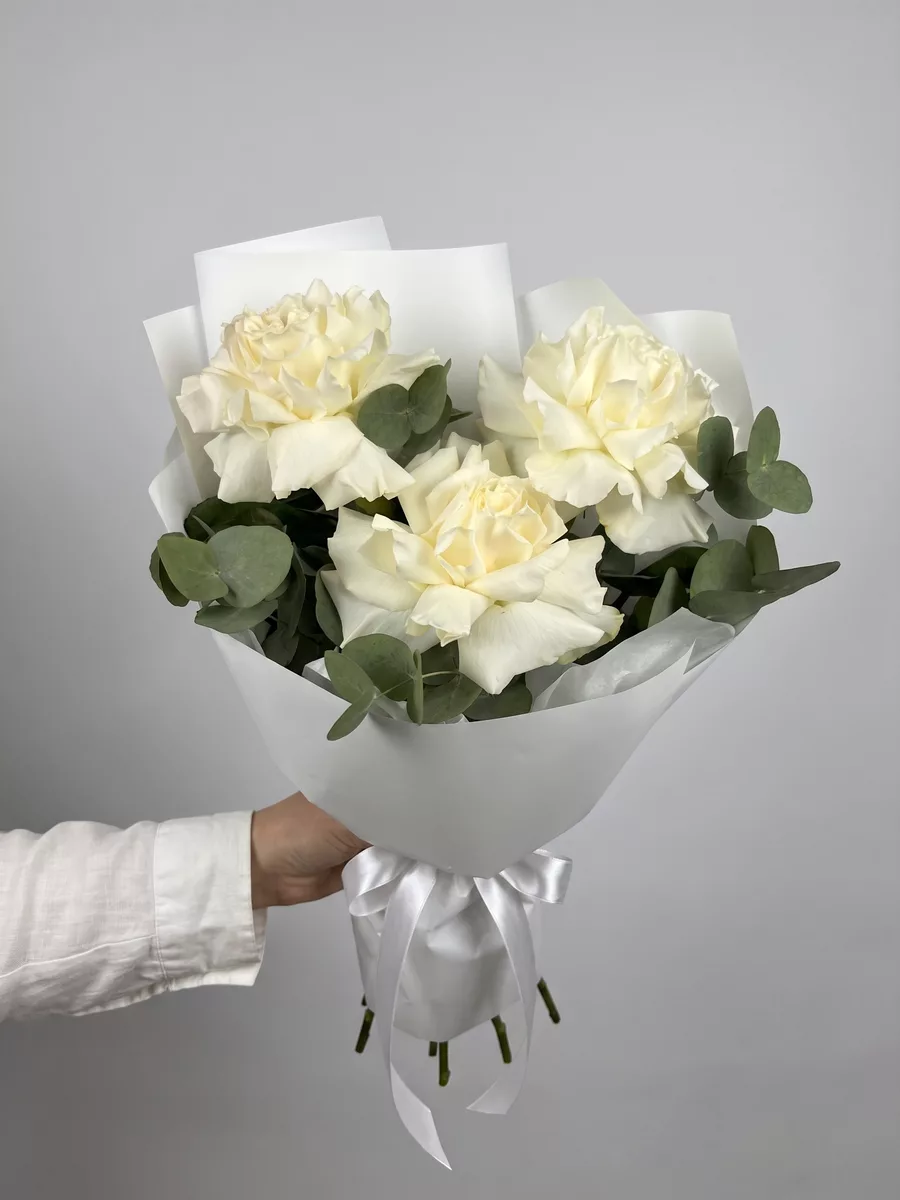
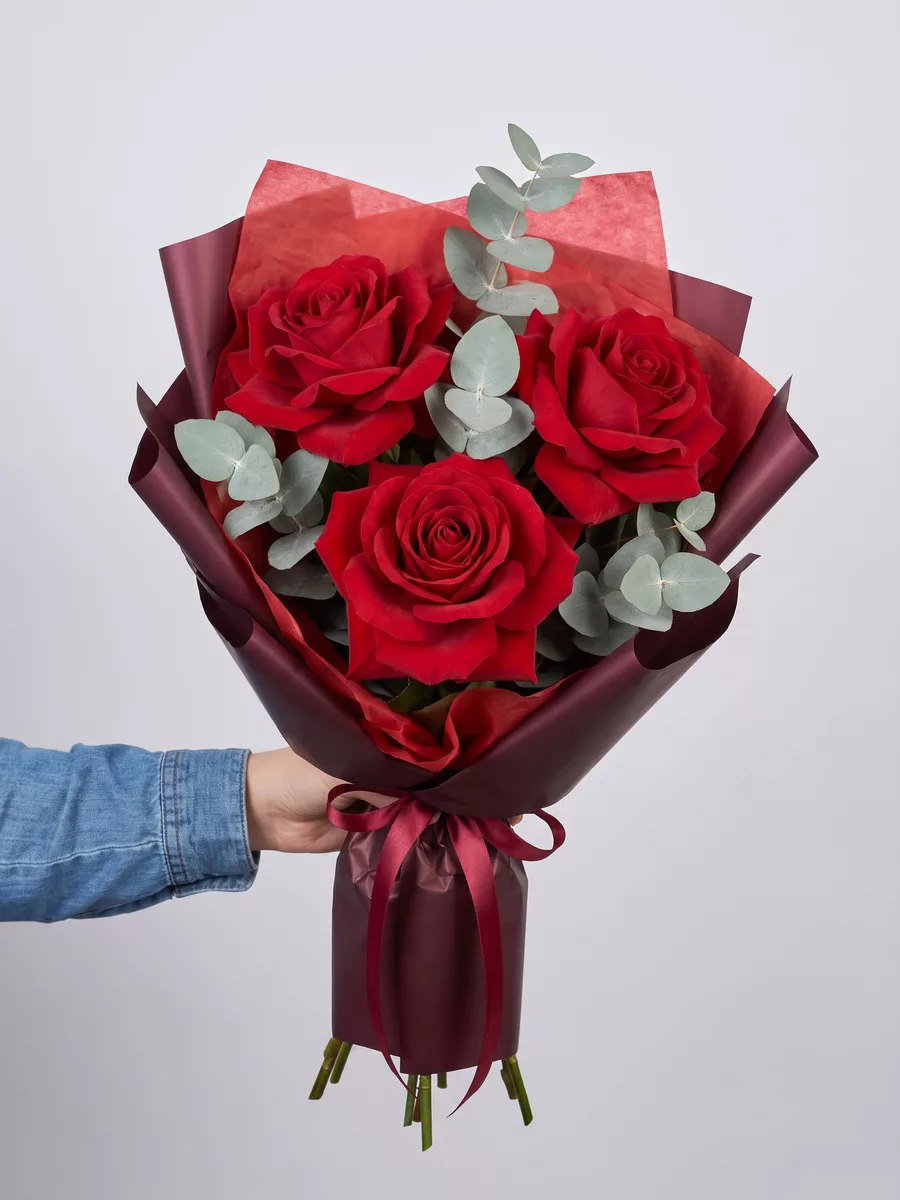
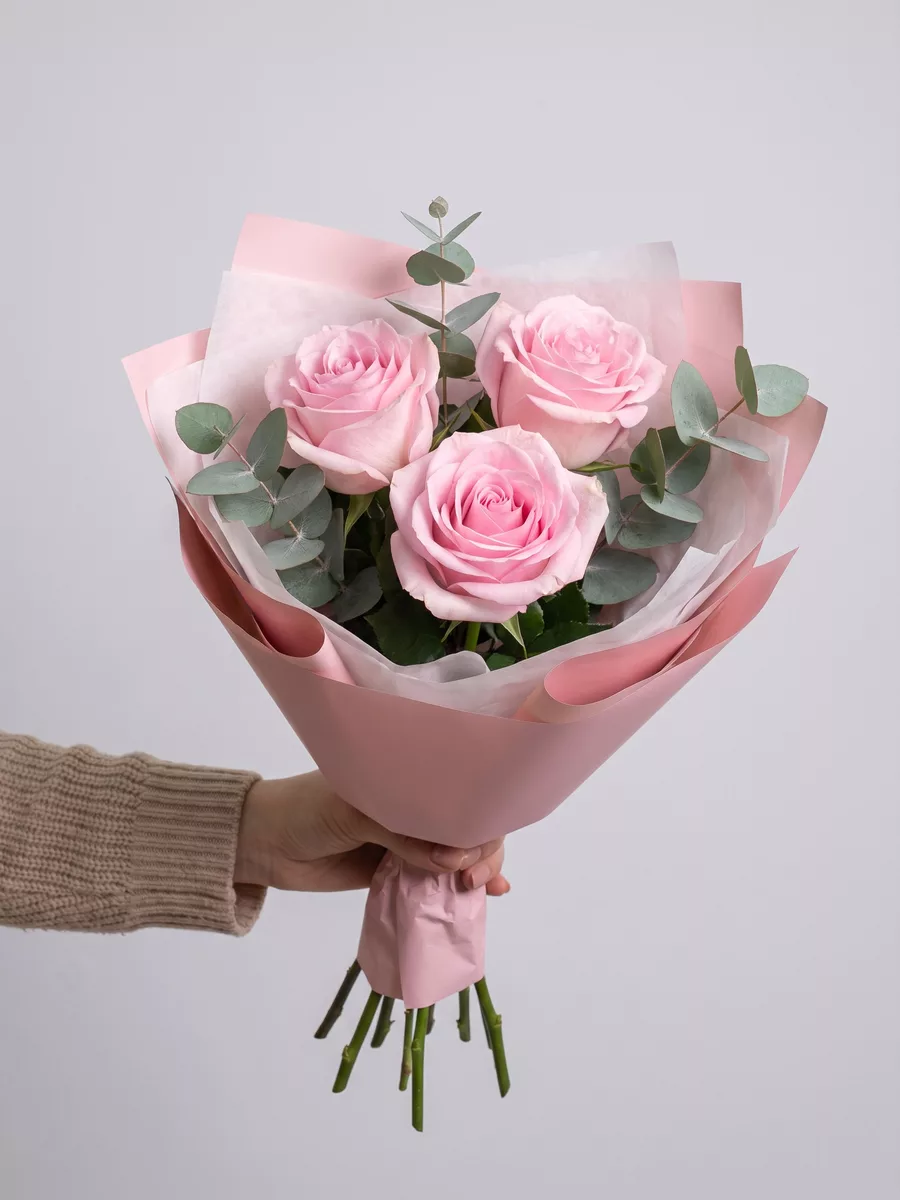
Choosing the Right Bouquet for the Person, Not Just the Occasion
The most common mistake people make when ordering remotely is choosing by what looks impressive in a photo rather than what suits the person receiving it. A towering arrangement of large tropical leaves and anthuriums might photograph beautifully, but if your recipient lives in a small apartment and keeps no large vases, it becomes an awkward problem rather than a gift.
Start from the person. Someone who grows their own garden will notice and appreciate seasonal flowers — tulips in March, peonies in June, dahlias in August — more than exotic imports. Someone who prefers minimalism will love three stems of ranunculus in a single colour over a dense mixed bunch. Someone receiving flowers at work needs something that travels well to a desk and does not drop petals onto a keyboard by afternoon.
For romantic occasions, roses remain the most understood gesture in Russia, and their meaning crosses cultural lines easily. Red is classic and direct; blush and cream read as tender rather than passionate. Spray roses add volume without formality and suit younger recipients or casual celebrations well.
For friendships and family milestones, mixed seasonal bouquets work better than single-variety arrangements. Combinations of alstroemeria, lisianthus and statice hold up exceptionally well in transit and last long in the vase — important when you cannot be there to replace them. If you are celebrating a new baby, soft whites, creams and pale greens feel appropriate without being predictable. Avoid strongly scented flowers like lilies for households with infants or pets.
Seasonal Flowers That Thrive in Primorsky Conditions
Primorsky Krai has a monsoon-influenced climate, which means warm, humid summers and cold, dry winters. This matters for flowers because humidity and temperature affect both how long a bouquet stays fresh in transit and how long it lasts once inside the home.
In winter, from November through March, the most reliable choices are roses, chrysanthemums, carnations and gerberas. These varieties are grown in controlled environments and handle cold transit well. Chrysanthemums in particular are underrated — they last ten to fourteen days in a clean vase and come in a range of colours from white and pale yellow to deep burgundy. They are also a genuinely appreciated flower in Russian gift culture, especially in autumn and winter.
Spring brings tulips, which are enormously popular for Women's Day on March 8th — the single biggest flower-giving date in Russia. If you are sending around that date, order at least two days in advance. Tulips continue to open after cutting, so a bouquet that looks tight on delivery will be fully open and beautiful by the next morning.
Summer is the best season for peonies, which are beloved across Russia and feel luxurious without being cold or formal. They are fragrant, full and visually generous. Pair them with eucalyptus or ruscus for structure. In late summer, sunflowers become widely available and bring an immediate warmth that almost no other flower matches — they suit birthday deliveries especially well.
Autumn is the season for dahlias and asters. Both handle the cooling temperatures well and bring rich colour at a time when the landscape is turning.
Bouquet Options Across Different Budgets
Flowers do not need to be expensive to be meaningful, and a well-chosen small bouquet will always outperform a large, careless one. The key is understanding what each budget level can realistically deliver in terms of variety, volume and longevity.
At a modest budget, single-variety bouquets work best. Five to seven stems of alstroemeria, a small bunch of spray roses, or a simple trio of gerberas in complementary colours all make a clean, considered impression. Alstroemeria is particularly good value because each stem carries multiple blooms and the flowers last well over a week with basic care.
At a mid-range budget, you can begin combining varieties and adding foliage. A bouquet of garden roses paired with eucalyptus and a few stems of lisianthus reads as thoughtful and curated. Lisianthus, sometimes called eustoma, resembles a rose but with a softer, more layered petal structure — it is an elegant filler that adds depth without competing with the focal flower.
At a higher budget, the options open up considerably: large-headed garden roses, peonies in season, orchid stems, or structured arrangements in boxes rather than hand-tied bouquets. Box arrangements travel particularly well in extreme temperatures because the blooms are supported and do not press against each other. They also make an immediate visual impact when the box is opened, which suits milestone occasions — a significant birthday, a work anniversary, a congratulation on a major achievement.
Whatever the budget, always specify a colour preference or a mood. Warm tones feel celebratory. Cool tones feel elegant. Mixing both works for most occasions and most recipients.
How to Prepare the Recipient Without Spoiling the Surprise
One of the quieter skills in remote gifting is managing the logistics without giving away the surprise. In Lesozavodsk, as in any city, a delivery that arrives when no one is home creates a problem — flowers cannot wait on a doorstep in summer heat or winter cold for more than a short time without suffering.
The simplest solution is to let the recipient know that something is coming without revealing what. A message saying 'stay home this afternoon, something is arriving for you' is enough. Most people enjoy the anticipation, and it removes the risk of a missed delivery.
If the delivery is to a workplace, confirm the office hours and whether there is a reception desk that can accept the order. Most offices in Russia have a reception or security point at the entrance, and flowers can be left there with a note. Ask us to include a handwritten card with your message — it makes the moment personal even when you are not present.
For apartment buildings, it is worth including the intercom code or the recipient's phone number so the courier can reach them directly. Russian apartment buildings often have entry codes that change, and an outdated code is one of the most common reasons a delivery is delayed by even fifteen or twenty minutes.
If the occasion is a complete surprise and you genuinely cannot warn the recipient, choose a time when you know they are likely to be home — weekend mornings, lunchtime, or early evening on weekdays. Avoid late-night deliveries unless you have specifically confirmed they are welcome.
Flower Care After Delivery: Making the Bouquet Last
A bouquet that arrives in perfect condition can still disappoint if it is not cared for in the first hour. Most people in Russia know the basics of flower care, but if you are sending to someone who rarely receives flowers, a short note with care instructions is a genuinely useful addition to your order.
The first step is always a fresh diagonal cut on the stems, made with a sharp knife rather than scissors. Scissors crush the stem tissue and reduce water uptake. Cut about two centimetres from the base and place the stems immediately into clean, room-temperature water. Cold water slows the opening of buds, which can be useful if you want the flowers to last longer; room temperature water encourages blooms to open faster.
Remove any leaves that would sit below the waterline. Leaves submerged in water decompose quickly and produce bacteria that block the stems and shorten vase life dramatically. This single step makes a noticeable difference.
Change the water every two days and recut the stems each time. Keep the bouquet away from direct sunlight, radiators and fruit bowls — ripening fruit releases ethylene gas, which accelerates flower ageing. This is especially relevant in Russian apartments in winter, where radiators run warm and windows are kept closed.
Different varieties have different lifespans. Roses and lisianthus typically last seven to ten days with good care. Alstroemeria and chrysanthemums can reach twelve to fourteen days. Tulips last five to seven days but open beautifully throughout. Peonies are shorter-lived at five to seven days, but their peak is spectacular. Knowing this helps the recipient enjoy each stage rather than feeling disappointed when some blooms fade before others.
Small Details That Make a Remote Gift Feel Personal
Sending flowers from a distance carries a particular emotional weight. You are not there to hand over the bouquet, to see the expression, to share the moment. The small details you add to the order are what close that gap.
A handwritten card is the most important of these. Not a printed message, but one written by hand. In Russian gift culture, the physical note matters — it is kept, sometimes for years, in a way that a text message is not. Write something specific rather than generic. 'Happy birthday' is kind; 'I remember the year we spent in Vladivostok and I am so glad we are still close' is a gift in itself.
The wrapping and presentation of the bouquet also communicate care. A bouquet wrapped in kraft paper with a satin ribbon reads differently from one in clear cellophane. If you have a preference, specify it. If you know the recipient's favourite colour, mention it — our florists will incorporate it where possible into the ribbon, the wrapping or the choice of accent flowers.
You can also request that the bouquet be delivered at a specific time rather than within a window. If the birthday dinner starts at seven in the evening, flowers arriving at six-thirty are part of the occasion. Flowers arriving at noon are lovely but separate from it.
Finally, consider adding something alongside the bouquet — a small box of chocolates, a candle, or a card with a longer letter. These additions are not about spending more; they are about showing that you thought about the whole moment, not just the gesture. In a city like Lesozavodsk, where you may be sending from thousands of kilometres away, that thoughtfulness is what the recipient will remember.
Sending flowers to Lesozavodsk is a straightforward process when you understand what shapes it: the city's geography, the season's temperatures, the recipient's home and habits, and the small personal details that turn a delivery into a memory. Choose for the person first, plan for the logistics second, and trust that a well-prepared bouquet, dispatched with care and accompanied by a genuine note, will do exactly what you hope it will do — make someone feel remembered.
Frequently asked questions
Can I send flowers to a specific address in Lesozavodsk the same day?
Yes, same-day delivery is available for orders placed within our confirmed cut-off times. When you place your order, you will be given a delivery window. For time-sensitive occasions like birthdays or anniversaries, placing your order in the morning gives you the widest choice of delivery slots and allows us to source the freshest stems available that day.
What happens if the recipient is not home when the flowers arrive?
Our courier will contact the recipient directly using the phone number provided at checkout. If there is no answer, we will reach out to you as the sender to decide the next step — whether to wait briefly, leave the bouquet with a neighbour, or reschedule. We never leave flowers unattended in conditions that could damage them, particularly in summer heat or winter cold.
Which flowers are best to send in winter in Lesozavodsk?
Roses, chrysanthemums, carnations and gerberas all travel well in cold conditions and remain fresh on arrival. Chrysanthemums are particularly reliable — they last up to two weeks in a clean vase. We wrap winter bouquets with additional insulation to protect them during transit in low temperatures, so the blooms arrive in the same condition they left our preparation point.
Is it possible to include a handwritten card with my order?
Yes, and we strongly recommend it. During checkout you can add your message, which our florists will write by hand on a card and attach to the bouquet. A personal note in your own words makes a significant difference to how the gift is received, especially when you are sending from another city and cannot be there in person to mark the occasion.
How far in advance should I order for Women's Day on March 8th?
At least two to three days in advance. March 8th is the largest flower-giving occasion in Russia, and demand across all cities — including Lesozavodsk — increases sharply in the days leading up to it. Early orders also give you the best selection of varieties and allow us to guarantee your preferred delivery time rather than fitting you into whatever slots remain.
Ready to send flowers?
Pick the city, choose the bouquet, and a local florist takes it from there.
Choose a city →