Sending Flowers to Liski? Here Is What to Expect
Liski sits on the Don River in Voronezh Oblast, and whether you are ordering from across Russia or from the next street over, getting a bouquet there in perfect condition takes a little planning. This guide walks you through timing, what varieties travel well in this climate, how to present flowers for different occasions, and the small details that turn a delivery into a real moment for the person who opens the door.
Understanding the Delivery Area and What It Means for Your Bouquet
Liski is a mid-sized city with a compact central district and several residential neighbourhoods spreading outward toward the river and the railway junction. Most addresses in the city centre and the main residential areas are reachable within one to two hours of placing your order. Addresses on the outer edges of the city, particularly near industrial zones or the newer housing developments along the Voronezh road, may sit at the far end of that window, so it is worth ordering a little earlier than you think you need to.
The city has a continental climate, which matters more than people realise when choosing flowers. Summers in Liski can push above thirty degrees Celsius, and winters regularly drop below minus fifteen. Both extremes stress cut flowers in transit. In July and August, roses and tulips can wilt within minutes if left in a warm car, while in January a bouquet of tropical anthuriums or orchids can show cold damage — darkened petals, softened stems — if exposed to the outside air even briefly.
When you place an order, think about what the recipient will do in the first ten minutes after receiving the flowers. If they are at work and cannot put the bouquet in water immediately, hardier varieties like chrysanthemums, alstroemerias or carnations are a more reliable choice than, say, garden roses or sweet peas. A bouquet that still looks beautiful two hours after delivery is always more impressive than one that peaked at the door.
Bouquets we can deliver


Choosing Flowers for the Person, Not Just the Occasion
Russian flower-giving has a few customs that are worth knowing if you are not familiar with them. The number of stems in a bouquet traditionally matters: an odd number is given to the living, while an even number is associated with mourning. So if you are ordering a bunch of fifteen roses or eleven tulips, that is entirely intentional and culturally appropriate. Most florists building bouquets in Russia follow this automatically, but it is good to be aware of it when specifying quantities.
Beyond numbers, think about the recipient's personality before you think about the occasion. A woman who keeps a minimalist apartment will likely appreciate a structured bouquet of white lisianthus and eucalyptus branches over a large, mixed arrangement in many colours. A person who loves their garden will respond to something that feels grown rather than arranged — think loose stems of alstroemeria, ranunculus and seasonal greenery rather than a tight spiral of uniform roses.
For men, flowers are increasingly common as a gift in Russia, and the approach is usually bolder: single-variety bouquets of sunflowers, large-headed chrysanthemums, or proteas work well. Avoid anything overly delicate or pastel. For children, bright gerberas in yellow, orange and red are cheerful and robust — they are also one of the longest-lasting cut flowers, which is practical when a child is unlikely to change the water regularly. Matching the bouquet to the person shows thought, and that is what the recipient actually remembers.
Timing Your Order: Morning, Afternoon and Same-Day Delivery
The most common mistake people make with flower delivery is ordering too close to the moment they need it. A one-to-two-hour delivery window is realistic under normal conditions, but add a birthday party that starts at noon, a surprise at the office before lunch, or a weekend when demand is higher, and that window can shift. Ordering at least three to four hours before the intended delivery time gives you a comfortable buffer and allows the florist to source the freshest stems available that day.
Morning deliveries, roughly between nine and noon, tend to work particularly well for workplace surprises. The recipient is settled at their desk, colleagues are around to witness the moment, and the flowers have the rest of the working day in a cool office rather than sitting in a warm car. If you are sending to a home address, mid-afternoon is often better — most people are home by four or five, and you avoid the risk of leaving a bouquet outside in summer heat or winter cold.
Same-day delivery is available for most addresses in Liski when ordered before a reasonable cut-off in the afternoon. Evening deliveries are possible and can feel especially romantic or surprising, but confirm the recipient will actually be home. There is nothing more deflating than a beautiful bouquet sitting on a cold doorstep for an hour. If there is any doubt, a morning delivery the following day is often a better choice than a missed same-day attempt. A little coordination by message or phone call never ruins a surprise as much as a wilted bouquet does.
Seasonal Flowers That Work Well in Liski's Climate
Spring in Liski, from late March through May, is the most generous season for cut flowers. Tulips, ranunculus, hyacinths and peonies all arrive in abundance and at their freshest. Tulips in particular are a Russian spring staple — they travel exceptionally well, last five to seven days in a vase, and come in hundreds of varieties. Parrot tulips with their fringed petals feel more luxurious than standard varieties and are worth requesting by name if you want something a step above the ordinary.
Summer brings heat that shortens vase life, so the emphasis shifts toward robust varieties. Sunflowers are the obvious choice — they are culturally beloved in this part of Russia, genuinely cheerful, and surprisingly tough. Statice, which looks like a cloud of tiny purple or white flowers, holds its shape even when dry and adds texture to any summer arrangement. Echinacea and zinnia also travel well in warm months and have an informal, garden-gathered quality that suits the season.
Autumn is the season of chrysanthemums, and rightly so. A large-headed chrysanthemum in burgundy, bronze or deep yellow captures the tone of October in central Russia better than almost any other flower. They last ten days or more in a vase with minimal care, making them an excellent choice when you are not sure how attentive the recipient will be. Winter orders lean toward imported roses, which are available year-round, and tropical varieties like anthuriums that bring colour into dark months. Just ensure they are protected from the cold during the final steps of delivery.
Budget Ranges and What You Get at Each Level
Thinking about budget before you order helps you have a realistic conversation with the florist and avoids disappointment. At the entry level, a well-made bouquet of five to seven stems — tulips, alstroemerias or spray carnations with some greenery — is a genuinely lovely gift. Do not underestimate it. A single variety, beautifully wrapped, often looks more intentional than a crowded mixed bouquet at the same price point.
In the mid range, you start to have access to more interesting combinations. This is where you can mix textures: a base of garden roses with brunia berries and eucalyptus, or a cluster of lisianthus with wax flower and Italian ruscus. The bouquet becomes something the recipient will want to photograph, and it fills a vase in a satisfying way. This is also the range where you can request specific colours or varieties and expect the florist to work with them.
At the higher end, the shift is less about the number of stems and more about the quality and rarity of individual varieties. Peonies in season, David Austin roses, or a sculptural arrangement built around proteas and tropical foliage — these are flowers with a presence in a room. They make a statement even before the recipient has read the card. If the occasion is significant — a major birthday, a professional milestone, a long-overdue thank you — spending more here is rarely regretted. The recipient will keep the vase in the same spot for a week and think of you every time they walk past it.
Keeping Flowers Fresh After Delivery: What the Recipient Should Know
Most flowers arrive with a small sachet of flower food, which is a mixture of sugar, acidifier and a mild bactericide. It works. Dissolving it in the vase water genuinely extends vase life by two to three days compared to plain tap water, and yet a surprising number of people ignore it or lose it in the wrapping. If you are sending flowers to someone who is not particularly experienced with cut flowers, a short note with the bouquet explaining what to do makes a real difference.
The basics are simple. Trim the stems at an angle — about two centimetres — with a sharp knife or scissors before placing them in water. Diagonal cuts increase the surface area that absorbs water. Remove any leaves that would sit below the waterline, because submerged foliage rots quickly and clouds the water with bacteria. Change the water every two days, or at minimum top it up when it drops.
Placement matters more than people think. A vase on a sunny windowsill looks beautiful but shortens the life of almost every cut flower. A spot away from direct sun, away from radiators, and away from a fruit bowl — ethylene gas from ripening fruit accelerates petal drop — will add days to the bouquet. In summer, a cool room or even a brief overnight stay in the refrigerator can refresh flowers noticeably. Roses and tulips respond especially well to cool temperatures. Passing these tips on to the recipient is one of the kindest things you can do alongside the flowers themselves.
Making the Delivery Feel Like More Than Just Flowers
The bouquet is the centrepiece, but the surrounding details shape how the moment actually feels. A handwritten card, even a short one, carries more weight than a typed message. In Russia, it is common to write the recipient's name at the top of the card — it makes the gift feel personal and considered rather than generic. If you are ordering from a distance and cannot write the card yourself, dictating the exact wording to the florist ensures it reads the way you intended.
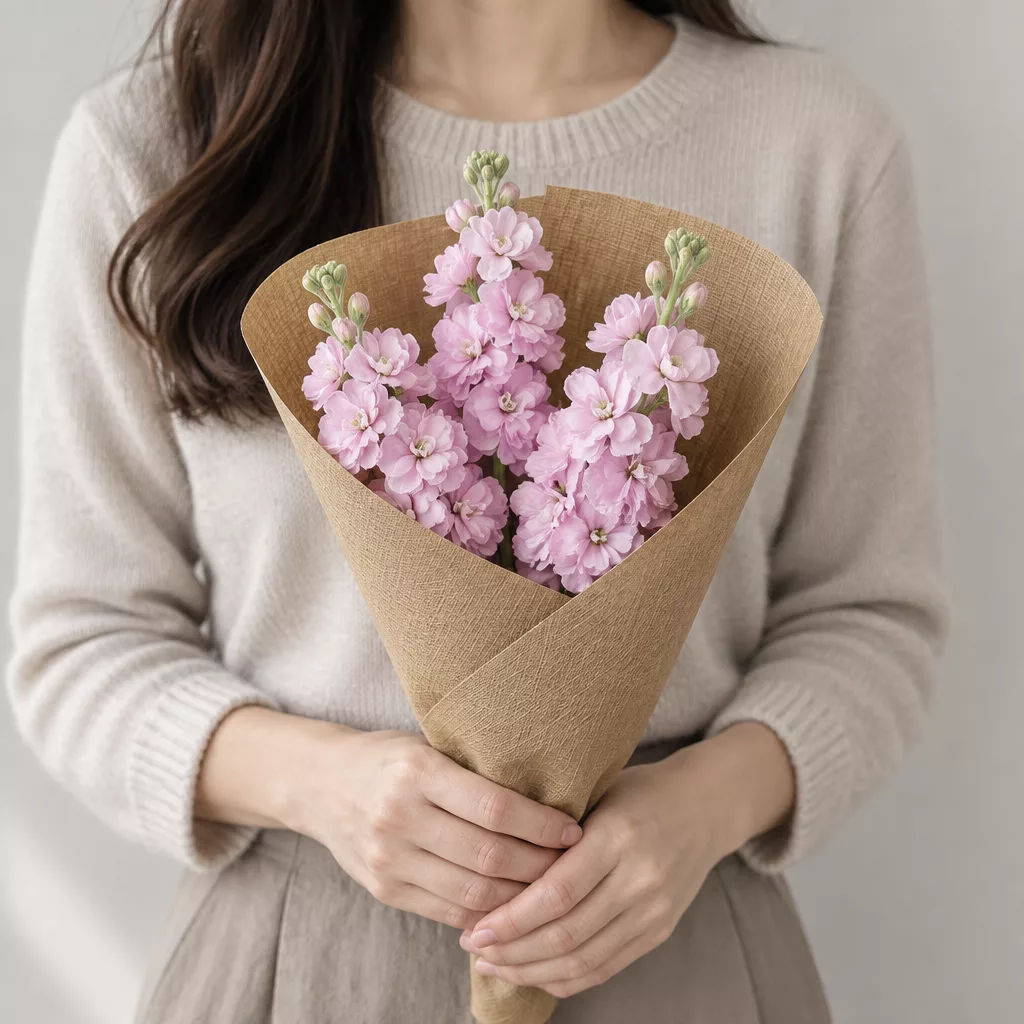
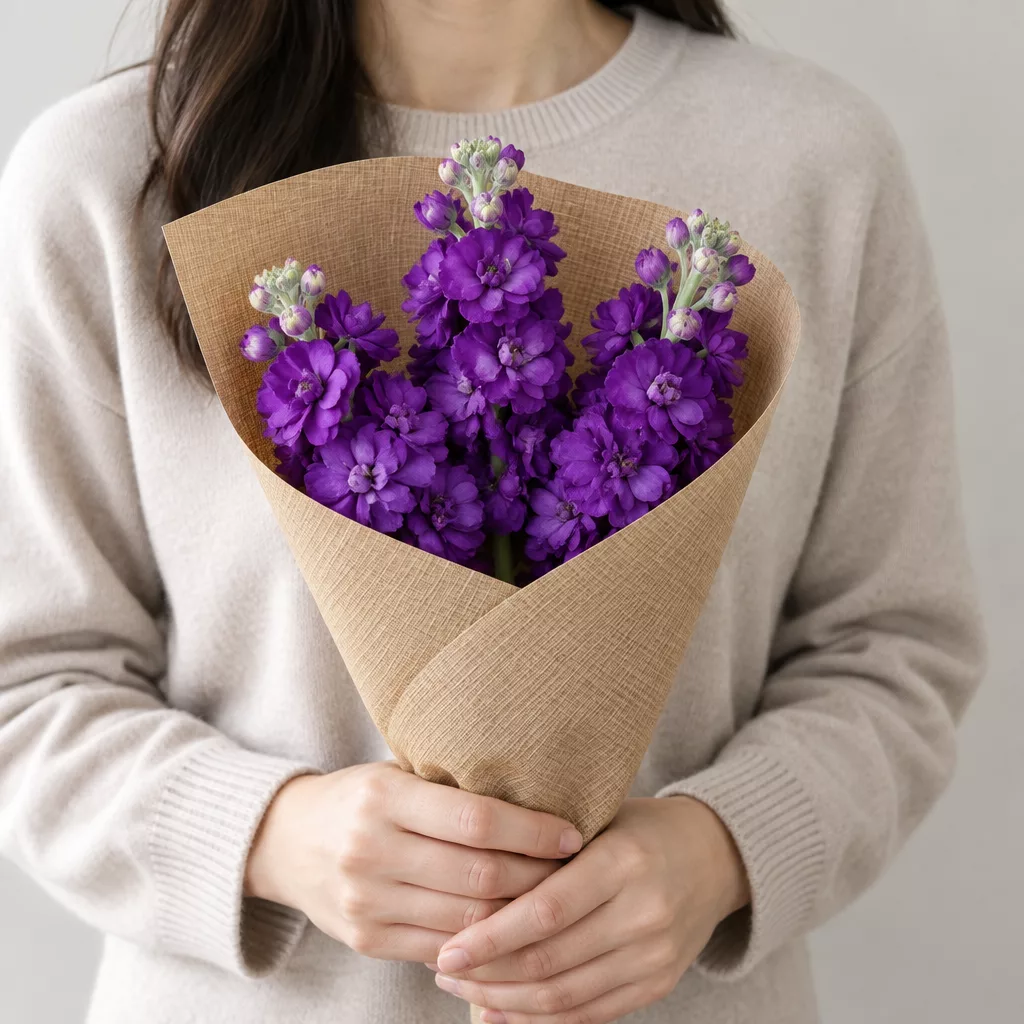
Wrapping and presentation have evolved significantly in Russian floristry over the past decade. The classic cellophane cone is still common, but kraft paper wrapping, fabric ribbon and structured box arrangements are now widely available and feel more contemporary. A bouquet in a hat box, for instance, does not need a vase immediately and travels particularly well — the recipient can place it on a table and it becomes a centrepiece in its own right for the first day or two.
If the delivery is a surprise, coordinate with someone at the location — a colleague, a family member, a neighbour — to ensure the recipient is actually there. A surprise that requires a second delivery attempt loses most of its magic. You can also time the delivery to coincide with a specific moment: just before a meeting ends, as someone arrives home from a journey, at the start of a celebration rather than mid-way through it. These small logistical choices are what separate a delivery that is remembered for years from one that was simply nice. The flowers do the emotional work, but the timing and presentation set the stage.
Ordering flowers to Liski is straightforward when you know what to ask for and when to ask for it. Choose varieties that suit the season and the recipient's personality, give yourself enough lead time to avoid rushing, and pass on a few simple care instructions so the bouquet lasts as long as it deserves to. Whether you are sending from Saint Petersburg, from across Russia, or from the next neighbourhood over, the goal is the same: a moment at the door that the person on the other side will not forget.
Frequently asked questions
Which flowers survive the heat when I send a bouquet to Liski in summer?
In July and August, chrysanthemums, alstroemerias and carnations handle the journey far better than roses or sweet peas. These varieties close more slowly in warm cars and stay presentable if the recipient cannot get them into water straight away. If you want roses, choose spray or garden varieties over large-headed hybrids, and ask for the order to go out in the cooler part of the morning.
What should I order if the person receiving the bouquet is at work and cannot put it in water for a couple of hours?
Stick to hardy stems that hold without water: alstroemerias, carnations and chrysanthemums are the most forgiving. Avoid anything with thin petals or soft stems, such as anemones, ranunculus or sweet peas. A well-chosen combination of these varieties will still look fresh when the recipient gets home, which matters more than picking something beautiful that arrives wilted.
How far in advance should I place my order if the address is on the edge of Liski near the new housing developments?
Outer addresses, particularly near the newer developments or the industrial zones, can take longer to reach than the central district. Placing your order at least a few hours ahead gives the courier enough time without rushing. For same-day delivery to these areas, earlier in the day is always safer than leaving it to the afternoon.
Does the continental climate in Liski affect which flowers I should choose in winter as well as summer?
Yes, cold is as much a problem as heat. Below minus fifteen, tropical flowers like anthuriums and orchids can show cold damage within minutes of leaving a warm vehicle. In winter, roses, chrysanthemums and alstroemerias travel more reliably. The florist can also wrap the bouquet with extra insulating paper, which helps protect delicate petals during the short time between the car and the recipient's door.
What combination of flowers works well for a bouquet going to someone in Liski who I do not know very well?
A mixed bouquet built around alstroemerias or spray chrysanthemums with some seasonal greenery is a safe and generous choice when you are unsure of the person's taste. These combinations look considered without being too personal, hold up well in transit, and suit most occasions from a thank-you to a birthday. Keeping the palette to two or three colours usually looks more intentional than a wide mix.
Ready to send flowers?
Pick the city, choose the bouquet, and a local florist takes it from there.
Choose a city →