Sending Flowers to Lobnya? Here Is What to Expect
Lobnya sits close enough to Moscow that people often assume flower delivery there is instant and effortless — and with the right shop, it genuinely can be. Whether you are surprising a colleague after a long work week, sending roses to a mother on her birthday, or just telling someone you are thinking of them, the flowers need to arrive looking as though they were cut an hour ago. This article walks you through exactly how delivery to Lobnya works, what affects timing, which flowers travel best, and how to make sure the person opening the door actually gasps.
Why Lobnya Is a Realistic Destination for Same-Day Delivery
Lobnya is a city in the Moscow Oblast, sitting roughly thirty kilometres north of central Moscow along the Leningradskoe Highway. Its position on a major federal road means logistics are far more straightforward than for towns tucked behind smaller regional routes. A courier leaving a well-stocked flower warehouse in the morning can reach most Lobnya addresses within the promised window without fighting the kind of traffic that plagues inner-ring Moscow deliveries.
The city itself is compact but has distinct residential districts — Klyazma, the area around Lobnya railway station, and newer developments further north. Knowing which district matters because distances inside Lobnya still add up. A delivery to the far northern edge of the city takes meaningfully longer than one to the centre, so it is worth being precise about the address when you place the order.
Turboflora works on a one-to-two-hour delivery promise across Russia, and Lobnya fits comfortably within that commitment for most time slots during the day. Evening slots, particularly after seven in the evening, may run slightly closer to the two-hour end of the range simply because of reduced courier availability rather than road conditions. If the occasion is time-sensitive — a birthday dinner at eight, for example — ordering by mid-afternoon gives you the safest buffer. The city's infrastructure is reliable enough that weather is rarely a reason for delay, though heavy snowfall in January and February deserves an extra thirty-minute cushion in your planning.
Bouquets we can deliver


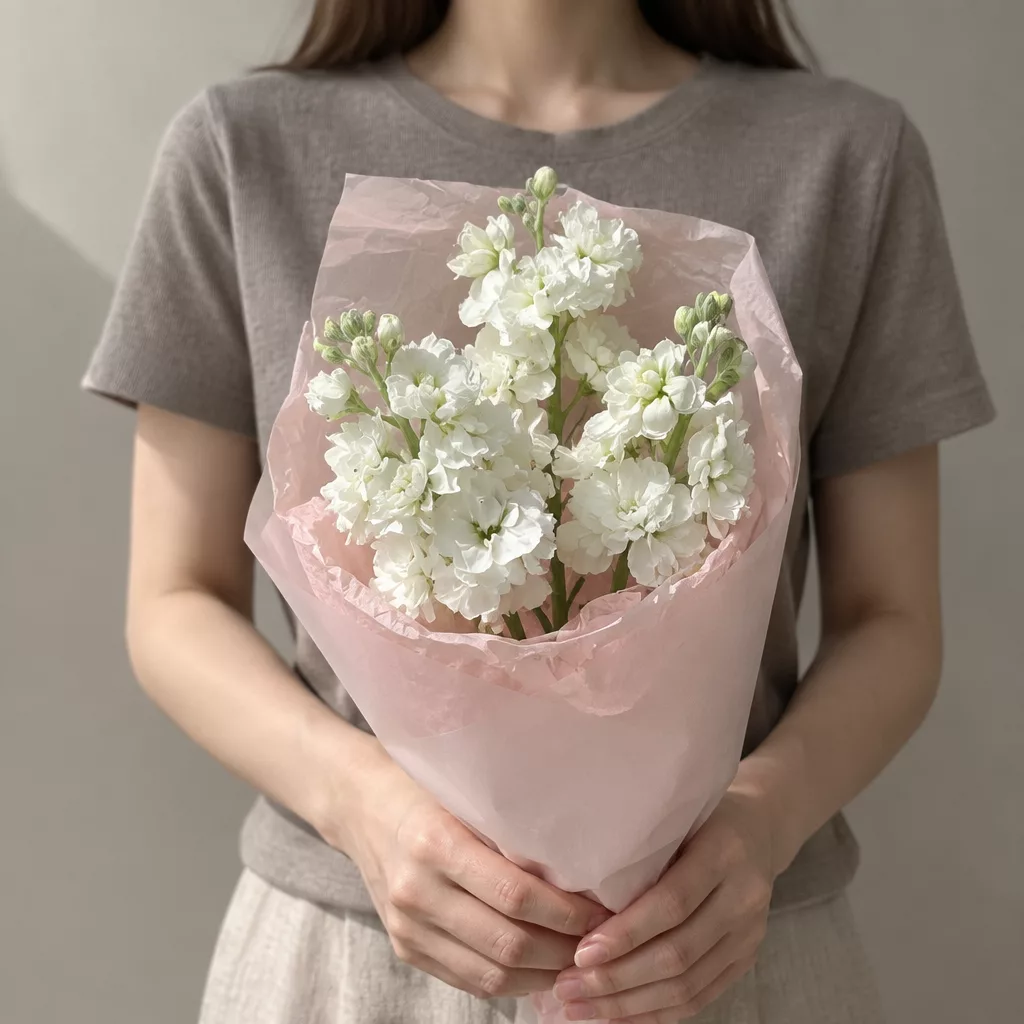
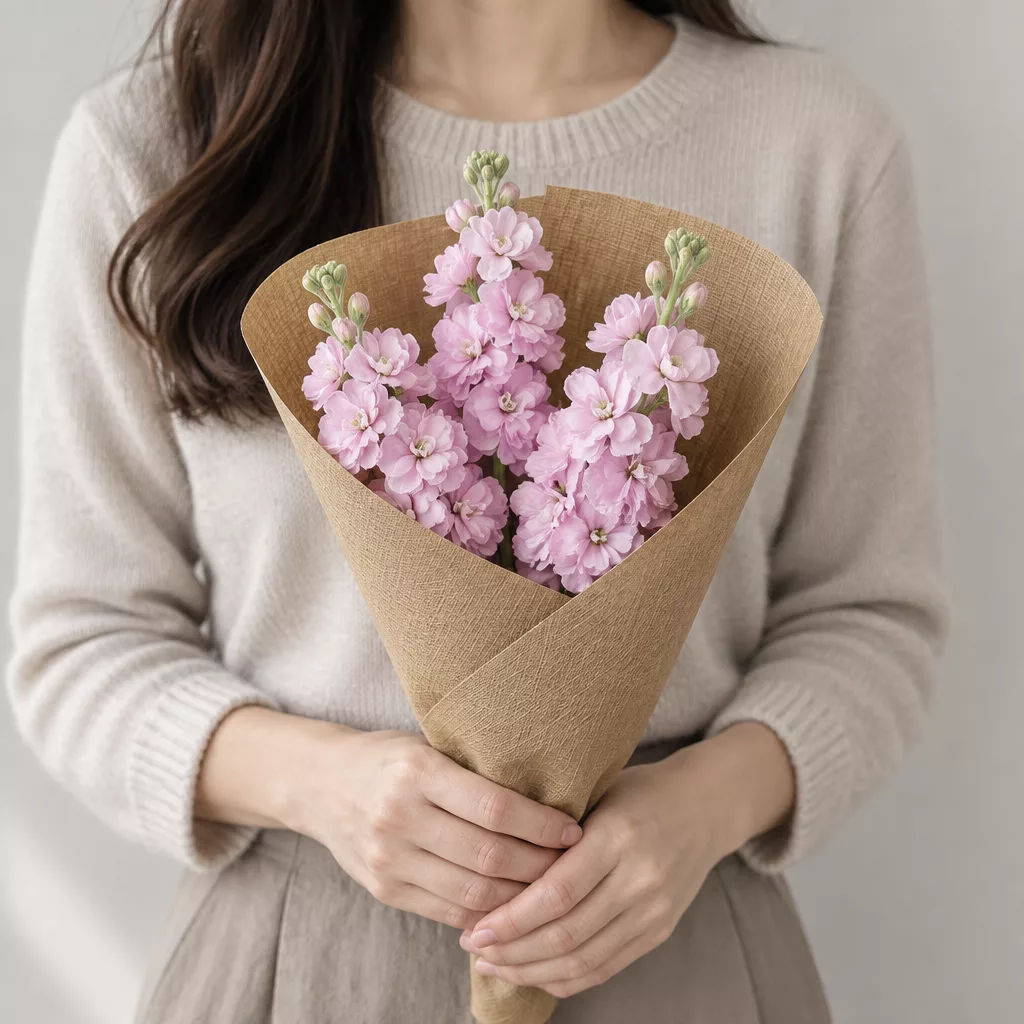
Choosing Flowers That Will Survive the Journey Looking Perfect
Not every flower handles a courier bag equally well. The journey from a refrigerated storage space to a doorstep in Lobnya involves temperature changes, movement, and sometimes a wait at a security desk in a residential building. Choosing varieties that are naturally robust is not settling for second best — it is the mark of someone who actually wants the flowers to impress on arrival.
Roses are the obvious starting point. Standard garden roses and spray roses both travel well, especially when cut at the bud stage and kept in a water-filled transport sleeve. Alstroemeria is an underrated choice for longer journeys: its stems are sturdy, its petals rarely bruise, and a single bunch gives an impression of generosity because of how many blooms open from each stem. Chrysanthemums, particularly the large-headed santini varieties, are almost indestructible in transit and hold their colour beautifully.
Flowers that need more care in transit include open peonies in full bloom — they are spectacular but the petals catch on everything — and large-headed hydrangeas, which wilt faster than they look like they should once they are out of water. If you love hydrangeas, ordering them in a box arrangement where the stems sit in floral foam keeps them stable and fresh. Tulips are wonderful in spring but they continue growing after cutting, which means a bunch ordered in the morning may look quite different by the time it arrives if the stems are already long. A good florist cuts tulips short for transport and lets them open in the vase.
How Temperature and Season Affect What You Should Order
Lobnya experiences a full continental climate — winters that drop to minus fifteen or colder and summers that push above thirty degrees Celsius. Both extremes affect flowers in transit, and understanding this helps you choose wisely rather than just picking whatever looks prettiest in a photograph.
In winter, the main risk is cold shock. Flowers moving from a warm courier vehicle into minus-ten air even for the thirty seconds it takes to reach a building entrance can suffer cell damage that shows up as translucent, water-soaked patches on petals. Roses and gerberas are particularly vulnerable. Reputable couriers wrap bouquets in thick craft paper and carry them inside insulated bags, which solves most of this. If you are ordering in January or February, ask for extra wrapping and specify that the bouquet should not be left outside a door if no one answers — a note to call the recipient first is worth adding.
In summer, heat is the enemy. Above twenty-five degrees, cut flowers lose water faster than their stems can draw it up, and the journey time becomes critical. Sunflowers, which are popular in July and August, are actually quite heat-tolerant because of their thick stems. Lisianthus and eustoma also handle warmth well. Delicate flowers like sweet peas or ranunculus are best ordered in spring — April through early June — when temperatures are mild and they are also at their seasonal peak in terms of availability and quality. Asking your florist what is freshest that week is never a silly question; it usually results in a better bouquet than rigidly insisting on a specific variety.
Timing Your Order: Morning, Afternoon, and Evening Deliveries
The time of day you place your order shapes the entire experience, both for you and for the person receiving the flowers. Russian gift culture tends to favour surprise, which means many people want the bouquet to arrive without any warning — and that requires a bit of coordination on your end.
Morning deliveries, between nine and noon, are the smoothest. Roads are clear of the worst traffic, florists have just received fresh stock, and recipients are often at home or just arriving at an office. If the occasion is a birthday and you want the person to start their day with flowers on the table, a nine or ten o'clock delivery is ideal. Place the order the evening before or first thing in the morning.
Afternoon deliveries, from noon to six, are the most popular window and work well for most occasions. The key is to order at least ninety minutes before your target arrival time to give the florist time to assemble the bouquet correctly rather than rushing. A rushed bouquet is one where stems are uneven and the wrapping is functional rather than beautiful — small things that the recipient will notice even if they say nothing.
Evening deliveries, after six, are perfect for romantic occasions or for reaching someone who works long hours. In Lobnya, most residential buildings have a concierge or an entry code system, so include clear instructions about how to enter. If the recipient lives in a newer residential complex, the building management sometimes requires the courier to call ahead rather than buzz up — noting this in your order comments saves everyone time and keeps the surprise intact.
Presentation and Packaging: What Arrives at the Door
The moment the door opens is the moment that matters most. Everything before that — the order, the assembly, the drive — exists to make that single moment land well. Presentation is not decoration on top of the flowers; it is part of what the flowers communicate.
In Russia, flowers are traditionally given in odd numbers. This is a genuine cultural custom, not a superstition that can be safely ignored. Even numbers of flowers are associated with mourning, so a bouquet of ten roses would feel wrong to most Russian recipients in a way that would be hard to explain to someone unfamiliar with the tradition. Turboflora assembles all bouquets following this convention automatically, so you do not need to count — but it is useful to know if you are ever specifying exact quantities.
Wrapping styles vary by occasion. A romantic bouquet typically comes in soft kraft paper with a satin ribbon, sometimes with dried elements like eucalyptus or cotton stems tucked in for texture. A more celebratory arrangement for a birthday might use structured box packaging, which photographs beautifully and keeps the flowers upright during transport. Hat boxes with a grid of roses across the top have been popular in Russia for several years now and remain a strong choice when you want something that looks immediately impressive.
A handwritten card is still the most personal touch you can add. A printed sticker with a name is fine, but a short message in your own words — even just two sentences — changes the emotional weight of the delivery. Couriers carry blank cards and can transcribe a message you provide at checkout, which means even a last-minute order can feel considered and warm.
What to Do When the Recipient Is Not Home
This is the scenario that causes the most anxiety for people ordering flowers as a surprise, and it is worth thinking through before you place the order rather than after the courier is already standing at a closed door.
The simplest solution is to call the recipient just before the delivery arrives — not to reveal the surprise entirely, but to ensure they are home. A message saying 'are you around this afternoon?' is usually enough without giving anything away. If you genuinely want a complete surprise and cannot risk even a hint, then a workplace delivery is almost always more reliable than a home delivery, because offices have reception staff who can accept the bouquet and keep it safe.
If the recipient lives alone and you cannot reach them, the courier will typically wait a short time and then contact you directly. In Lobnya, as in most Russian cities, leaving flowers outside an apartment door is not a good option — hallways in residential buildings can be warm and stuffy, which accelerates wilting significantly within an hour. Flowers left in a cold entrance lobby in winter face the opposite problem.
The best practical instruction to add to any surprise delivery is: call the recipient five minutes before arriving. This gives them enough time to come to the door without enough time to wonder what is coming. It also means the courier is not standing in a stairwell for twenty minutes. If the recipient is genuinely unavailable, rescheduling to a two-hour later slot is almost always possible and far better than a wilted bouquet left in an uncertain location.
Keeping the Flowers Fresh After Delivery: Simple Care for Lobnya Homes
A well-assembled bouquet delivered in good condition should last seven to twelve days with basic care — and basic really does mean basic. The most common mistakes people make after receiving flowers have nothing to do with expertise; they are small habits that are easy to change once you know about them.
The first step is always a fresh cut. Even if the stems were cut at the shop that morning, cutting another centimetre off at an angle before placing them in water makes an immediate difference. An angled cut increases the surface area drawing water up the stem. Use a sharp knife rather than scissors, which can crush the vascular tissue inside the stem. Do this under running water or while the stems are submerged if possible.
Tap water in Lobnya is treated and safe for flowers, but it is quite hard, meaning it contains minerals that can accelerate bacterial growth in the vase. Changing the water every two days and rinsing the vase each time keeps the water clean and the stems healthy. The small sachet of flower food that comes with most bouquets is worth using — it contains a mild acidifier, a sugar source, and a bactericide, all of which extend vase life measurably.
Keep flowers away from radiators, which are running at full strength in Lobnya homes from October through April. Central heating in Russian apartments is often intense and the air near radiators is very dry. A cool room, away from direct sun and heat sources, is where flowers last longest. A windowsill in winter is actually ideal — cool air, indirect light, and good humidity from condensation nearby.
Sending flowers to Lobnya is not complicated when you understand the few things that genuinely matter: a precise address, a realistic delivery window, varieties chosen for the season and the journey, and a moment's thought about whether the recipient will actually be home. Get those details right and the rest takes care of itself. The flowers arrive looking as though they were just assembled — because with the right preparation, they essentially were.
Frequently asked questions
How long does flower delivery to Lobnya actually take?
Most deliveries to Lobnya are completed within one to two hours of order confirmation. Morning and afternoon slots tend to run closer to the one-hour end. Evening deliveries, particularly after seven, may take the full two hours depending on courier availability. Adding a precise address and building entry instructions helps the courier move quickly without delays at the door.
Can I send flowers to a specific district or street in Lobnya?
Yes. Lobnya has several distinct residential areas, and the more specific your address the better. Include the street, building number, apartment number, entry code if there is one, and a note about whether the building has a concierge. If the recipient lives in one of the newer northern developments, mention that too — it helps the courier plan the most direct route.
Which flowers are best for a winter delivery to Lobnya?
In winter, choose varieties with sturdy petals and thick stems: roses, alstroemeria, santini chrysanthemums, and carnations all travel well in cold weather. Ask for extra insulating wrap on your order. Avoid fully open peonies or large hydrangeas in January and February — they are more sensitive to cold shock and look their best in late spring when temperatures are milder.
Is it true that flowers in Russia should come in odd numbers?
Yes, this is a genuine and widely observed Russian custom. Even numbers of flowers are traditionally associated with mourning, so gifting an even-numbered bouquet can feel jarring to a Russian recipient even if they say nothing. Turboflora follows this convention automatically when assembling bouquets, so you do not need to count or specify — it is already built into how every arrangement is made.
What happens if the recipient is not home when the courier arrives?
The courier will wait briefly and then contact you directly. Flowers cannot safely be left in a building hallway — it is either too warm or, in winter, too cold. The best options are rescheduling to a later slot, redirecting to a workplace address, or asking the recipient to confirm they will be home without revealing the surprise. Adding a note to call ahead five minutes before arrival prevents most missed-delivery situations.
Ready to send flowers?
Pick the city, choose the bouquet, and a local florist takes it from there.
Choose a city →