Sending Flowers to Lukoyanov: Timing, Choices and What Arrives
You are in Saint Petersburg, the person you want to surprise is in Lukoyanov, and you want them to open the door to something genuinely beautiful — not wilted stems in tired wrapping. Ordering flowers across that distance feels uncertain until you understand exactly how the process works, what arrives, and how to choose so the bouquet matches the moment.
Where Lukoyanov Sits and Why Distance Is Not the Problem You Think
Lukoyanov is a small town in Nizhny Novgorod Oblast, sitting roughly 130 kilometres south of Nizhny Novgorod city. It is a quiet, close-knit place where a flower delivery is still a notable event — neighbours notice, colleagues talk, and the recipient genuinely feels singled out. That social weight makes your choice matter more, not less.
The distance from Saint Petersburg is real, but it is managed through a refrigerated logistics chain rather than a single courier hop. Flowers leave our Saint Petersburg workroom already conditioned — stems cut at an angle, ends sealed, hydration sachets placed inside the wrapping. They travel in controlled temperature, typically between four and eight degrees Celsius, which is the range that keeps roses turgid, tulip petals closed and alstroemeria buds intact on arrival.
Lukoyanov itself is reachable by road from Nizhny Novgorod, and that last leg is the one that determines the final delivery window. Understanding this geography helps you set realistic expectations and choose the right dispatch time. If you are sending for a birthday dinner at seven in the evening, ordering the morning of that day is the sensible move — not the night before, which risks early arrival with no one home, and not the afternoon, which compresses the window uncomfortably. Knowing the town's geography removes the guesswork and lets you focus on what the flowers will actually say.
Bouquets we can deliver


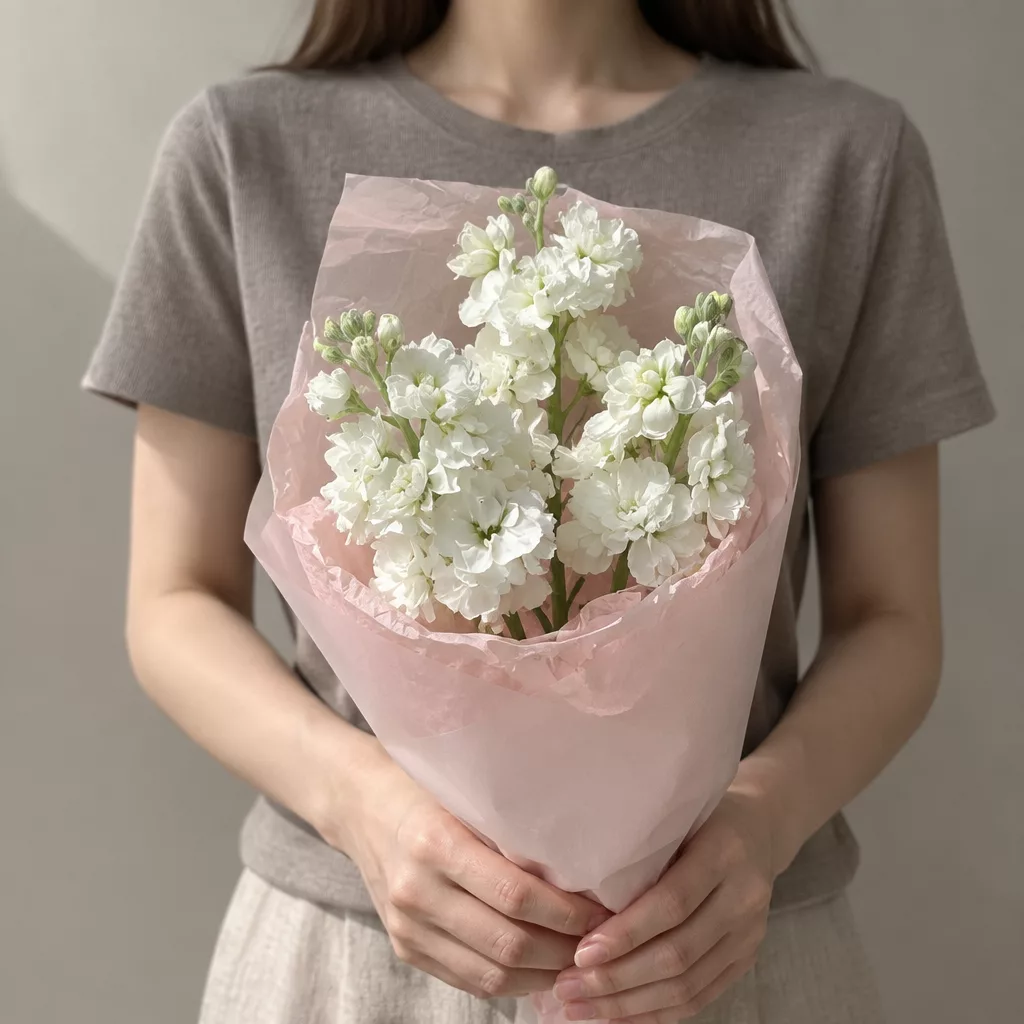
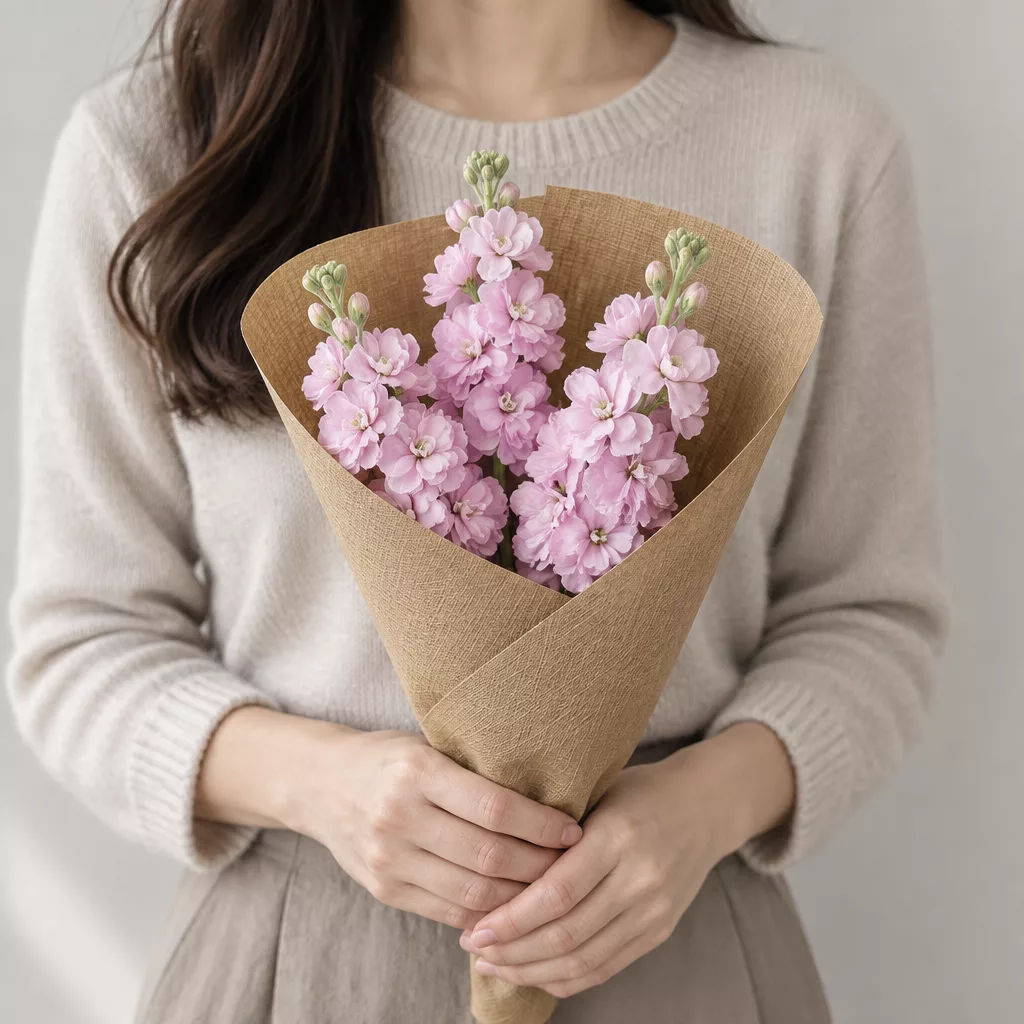
Realistic Timing: What the Delivery Window Looks Like Here
Turboflora advertises one-to-two-hour delivery across Russia, and that figure refers to the time between order confirmation and dispatch from our preparation point, combined with the courier leg to the recipient's address. For Lukoyanov, the honest picture is that same-day delivery is available when you order before the daily cut-off, and next-day delivery gives you the widest choice of flowers and the calmest logistics.
Morning orders placed before noon local time have the strongest chance of same-day arrival in the afternoon or early evening. This matters in practical terms: if the occasion is a birthday lunch, order the evening before. If it is a surprise after work, order by ten in the morning. These are not arbitrary rules — they reflect how long conditioning, packing and transit actually take when the destination is outside a major city.
Weather also affects timing in ways that are easy to overlook. January in Nizhny Novgorod Oblast brings temperatures that can drop below minus twenty Celsius. Flowers cannot sit in an unheated vehicle or on a cold doorstep without damage. Our packaging accounts for this with insulated wrapping, but it cannot substitute for a recipient who is actually home. When ordering in winter, confirm the recipient will be available or arrange a neighbour to receive the delivery. Summer heat above thirty degrees is the opposite problem — direct sunlight through a car window can raise the interior temperature enough to wilt roses within twenty minutes, so summer deliveries are scheduled to avoid midday peak heat wherever possible.
Choosing for the Person, Not Just the Occasion
The most common mistake people make when ordering remotely is choosing by colour alone. A bright red rose arrangement is striking, but if the recipient is someone who finds bold gestures embarrassing, it will make them uncomfortable rather than happy. Think about the person first: are they someone who keeps a tidy home with a single statement vase, or do they fill windowsills with plants and love abundance?
For a woman who appreciates subtlety, a mixed arrangement of white spray roses, soft lilac lisianthus and eucalyptus branches reads as thoughtful and refined. Lisianthus, sometimes called eustoma in Russian flower shops, has ruffled petals that resemble peonies but last significantly longer — up to two weeks in a cool room. It travels well and opens gradually, so the recipient gets a bouquet that keeps changing over several days.
For someone who loves warmth and generosity, sunflowers combined with orange gerberas and yellow solidago create an immediately joyful impression. These are sturdy flowers that handle transit confidently and need no special care beyond fresh water every two days. For a man — and flowers for men are entirely normal in Russian culture, particularly for professional milestones or significant birthdays — a structured arrangement of deep burgundy carnations, green hypericum berries and dark foliage looks intentional and unfussy rather than decorative in a way that might feel awkward.
The occasion sets the register, but the person sets the style. Take thirty seconds to think about their home, their personality and what would make them smile rather than what looks most impressive in a photograph.
Budget Tiers and What Each One Actually Gets You
Flower budgets in Russia are understood differently than in Western Europe. A modest arrangement here is not a small gesture — it is a complete bouquet, properly assembled, with greenery and wrapping. What changes as the budget rises is the flower variety, the stem count and the presence of premium blooms that are harder to source or more labour-intensive to handle.
At the entry level, you are typically working with seasonal flowers: chrysanthemums, carnations, alstroemeria and whatever local greenery is at its best. These are not second-rate choices. Alstroemeria, for instance, lasts ten to fourteen days in a vase when the water is changed regularly and the stems are re-cut every few days. A well-assembled bouquet of alstroemeria with ruscus foliage and a ribbon looks genuinely beautiful and will outlast a more expensive rose arrangement that was not cared for properly.
The middle tier opens up roses — both garden-style varieties with soft, many-petalled heads and classic long-stemmed types — along with lisianthus, freesia and peonies when they are in season from May through July. Freesia is particularly worth mentioning for Lukoyanov recipients because it carries a real fragrance, which makes the arrival of the bouquet an immediate sensory experience rather than just a visual one.
At the higher end, you access Dutch tulips in winter, garden roses from Ecuador, ornamental branches like cherry blossom in early spring, and large-format arrangements that fill a room. The key is matching the tier to the relationship and the occasion rather than automatically reaching for the most expensive option. A thoughtfully chosen mid-range bouquet outperforms an expensive one chosen without attention to the recipient.
Russian Flower Customs Worth Knowing Before You Order
If you are not familiar with Russian gifting customs, a few things are worth knowing so your order lands exactly right. The most widely observed rule is that bouquets should contain an odd number of stems. Even numbers of flowers are associated with mourning and are placed at graves, so a bouquet of twelve roses would strike many recipients as jarring even if they cannot immediately explain why. Our arrangements are always built to an odd count, but if you are specifying stem numbers in a custom order, keep this in mind.
Colour carries meaning too, though less rigidly than the odd-number rule. Yellow flowers have historically been associated with separation or jealousy in Russian popular belief, though this is fading among younger recipients in cities. If you are unsure, mixing yellow with other colours — sunflowers with white chrysanthemums, for example — neutralises any awkward association while keeping the warmth of the yellow tones. White flowers are celebratory and fresh rather than solemn, so white roses or white tulips are entirely appropriate for birthdays and congratulations.
Presentation matters enormously. Russians expect a bouquet to arrive wrapped, often in kraft paper or a fabric sleeve, with the wrapping forming part of the visual experience. Unwrapping a flower delivery is its own small ritual. Our bouquets are prepared with this in mind — the wrapping is not just protective packaging but part of what the recipient receives. A handwritten note, added at the order stage, is considered more personal than a printed card and is always appreciated. In a town the size of Lukoyanov, where personal gestures carry real weight, that small detail makes a noticeable difference.
Keeping the Bouquet Fresh After It Arrives
The care instructions that come with the bouquet are not filler — they are the difference between flowers that last four days and flowers that last twelve. The first thing the recipient should do is re-cut the stems under running water or while the stems are submerged in a bowl. Cutting on an angle increases the surface area through which the stem draws water. This sounds like florist jargon, but it has a real visible effect within a few hours: stems that were slightly drooping from transit will straighten as they rehydrate.
The vase should be clean — residual bacteria from a previously used vase will shorten the life of fresh flowers significantly. Fill it with cool water, not warm, and place it away from direct sunlight, radiators and fruit bowls. Fruit releases ethylene gas as it ripens, and ethylene accelerates the ageing of flowers, particularly roses and carnations. This is a genuinely common mistake in Russian homes where fruit is kept on the kitchen table.
Change the water every two days and re-cut the stems each time. Remove any leaves that fall below the waterline, as submerged foliage rots quickly and clouds the water. Lisianthus and alstroemeria are particularly rewarding to care for because they continue opening over several days, so the bouquet looks different — and often fuller — on day five than it did on day one. Roses benefit from being placed in a cool room overnight, which slows their opening and extends the period during which they look their best. In Lukoyanov's cold winters, a cool hallway or an unheated room overnight works perfectly for this.
Making the Order Feel Personal from a Distance
Ordering flowers remotely carries one specific risk: the recipient knows you did not choose them in person, and a generic arrangement can feel like a transaction rather than a thought. The way to close that gap is through specificity — both in what you order and in what you write.
If you know the recipient's favourite colour, use it. If you know they have a large kitchen table and love abundance, say so in the order notes and we will build accordingly. If they live alone and a very large arrangement would feel overwhelming rather than joyful, a compact but dense bouquet of spray roses and waxflower is more appropriate than a dramatic floor-standing arrangement. These details cost you nothing to share and change the outcome completely.
The note is where personal distance collapses. A card that says Happy Birthday feels like a postcard. A card that references a shared memory, an inside joke, or a specific reason you are thinking of them today feels like a presence. In Russian culture, written words in a card are read carefully and often kept. Recipients in smaller towns like Lukoyanov frequently save cards for years. What you write matters as much as what you send.
You can also choose the wrapping style and ribbon colour in your order. Matching the wrapping to the recipient's aesthetic — soft linen for someone understated, bright kraft paper with a bold ribbon for someone who loves colour — shows that the distance between you did not prevent you from paying attention. That attention is what transforms a flower delivery into a genuine gift.
Sending flowers to Lukoyanov from Saint Petersburg is entirely straightforward when you understand the timing, choose for the person rather than the occasion alone, and give the order the thirty seconds of thought it deserves. The distance is managed by refrigerated logistics and careful preparation; the rest is about knowing who will open the door and what you want them to feel in that moment. Get those two things right and the flowers will do the rest.
Frequently asked questions
Can I order flowers for same-day delivery to Lukoyanov?
Same-day delivery to Lukoyanov is available when you place your order before noon. Orders placed in the afternoon may arrive the same evening depending on the courier schedule, but next-day ordering gives you a more comfortable window and a wider selection of flowers to choose from.
What flowers travel best to a town like Lukoyanov in winter?
Chrysanthemums, carnations and alstroemeria are the most resilient in cold transit. Roses travel well when properly conditioned and wrapped in insulated packaging. Avoid ordering open tropical blooms like anthuriums in deep winter, as temperature fluctuations during the final delivery leg can bruise the petals.
Why should a bouquet have an odd number of flowers?
In Russian tradition, even numbers of flowers are associated with mourning and are placed at graves. Odd-numbered bouquets are for celebrations and everyday gifting. This custom is widely observed across generations, so all Turboflora arrangements are built to an odd stem count as a standard practice.
What if the recipient is not home when the flowers arrive?
It is best to confirm the recipient will be available, especially in winter when flowers cannot wait outside in freezing temperatures. You can arrange for a neighbour or building manager to receive the delivery, or specify a delivery window in your order notes so we can time the arrival to suit the recipient's schedule.
How long will the bouquet last once it arrives in Lukoyanov?
With proper care — re-cutting stems, changing water every two days and keeping the bouquet away from heat sources and fruit — most arrangements last seven to twelve days. Lisianthus and alstroemeria frequently reach fourteen days. Roses last longest when kept in a cool room overnight and away from direct sunlight during the day.
Ready to send flowers?
Pick the city, choose the bouquet, and a local florist takes it from there.
Choose a city →