Flower Delivery in Myski: Timing, Choices and What Arrives at the Door
Myski sits in the Kemerovo region of Western Siberia, a city shaped by coal mining and the wide Mras-Su river, where winters are long and the gesture of sending flowers carries real weight. Whether you are ordering for someone's birthday across several time zones or surprising a colleague on a professional holiday, getting flowers to Myski is entirely possible — and the result, when done right, is a bouquet that looks as if it was arranged an hour ago, because it was.
Who Receives Flowers in Myski and Why It Matters
Before thinking about roses or chrysanthemums, think about the person opening the door. Myski is a working city, and the people who live there tend to value sincerity over spectacle. A bouquet that feels considered — chosen for the recipient rather than assembled by default — lands very differently from a generic dozen red roses in cellophane.
For a mother or grandmother, warmth and softness matter most. Think blush spray roses, alstroemeria in peach or cream, and a few stems of lisianthus to add a ruffled, garden-picked feel. For a younger recipient, something with contrast and texture works better: deep burgundy ranunculus alongside white freesia, or a compact arrangement of gerbera daisies in a single bold colour.
For professional occasions — a colleague's promotion, a teacher on Knowledge Day, a doctor on their nameday — restraint is actually respectful. A neat, structured bouquet in white and green, perhaps eustoma with eucalyptus, reads as thoughtful rather than showy. Russian professional culture appreciates flowers as a mark of recognition, not extravagance, so the composition does not need to be large to feel generous.
Knowing the occasion also shapes how the florist wraps the stems. A romantic bouquet gets soft kraft paper and ribbon. A celebration calls for something more structured. These are small choices that the recipient notices without quite knowing why, and they are the difference between a bouquet that is admired and one that is remembered.
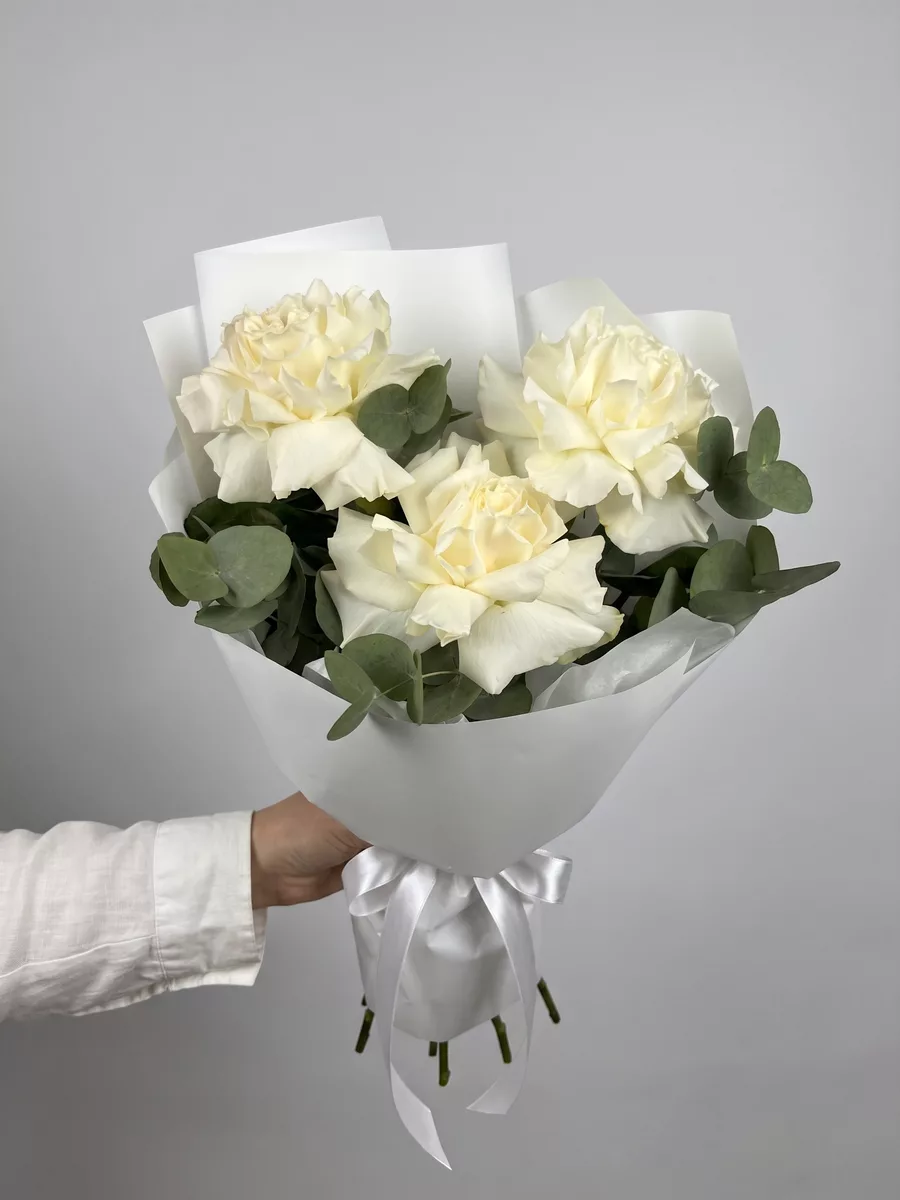
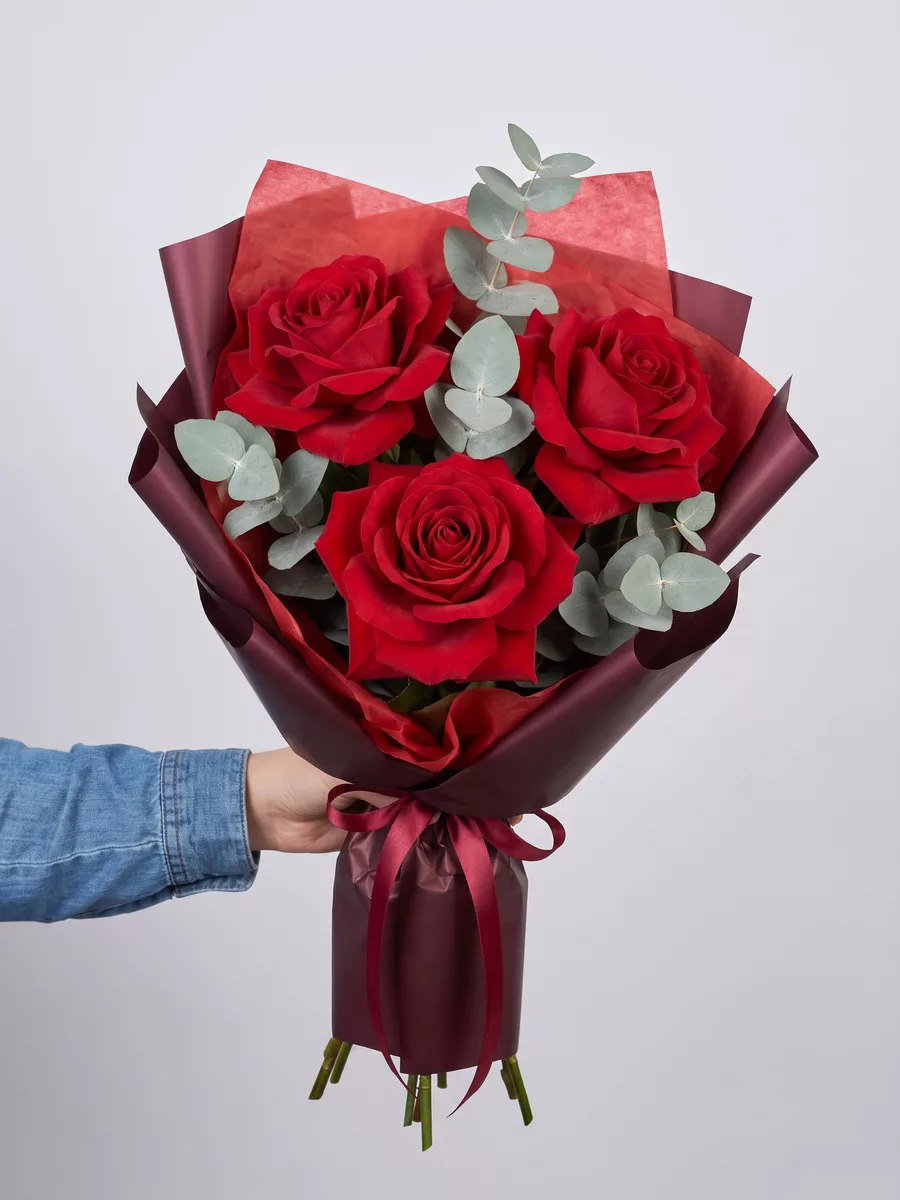
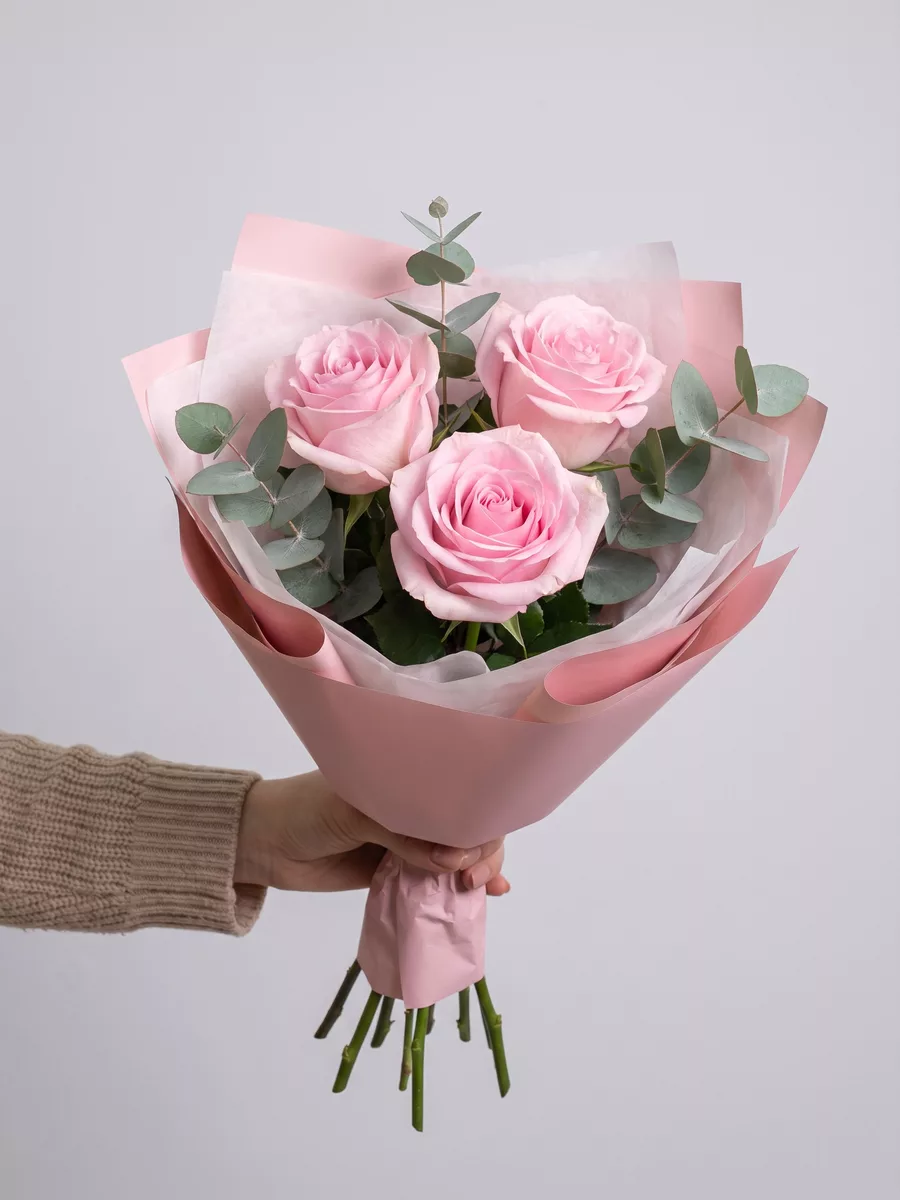
Bouquets we can deliver

The Delivery Area and How Myski Fits Into It
Turboflora delivers across Russia, and Myski is included in that reach. The city is located in the south of Kemerovo Oblast, roughly 250 kilometres from Kemerovo itself, which means logistics require genuine planning. Orders are not passed to a random local seller — the process is managed to ensure the bouquet arrives with the freshness and presentation quality that was promised when you placed the order.
Myski has distinct neighbourhoods and districts, and delivery addresses can range from the central streets near the city administration to residential areas further out toward the industrial zones. When you enter the address at checkout, include as much detail as possible: building number, entrance number if it is an apartment block, and a contact phone number for the recipient. In Siberian cities, apartment buildings often have coded entrance doors, and a driver who cannot reach the recipient by phone may be unable to complete delivery.
If you are ordering from outside Russia — from Europe, from the United States, or from anywhere where you simply do not know the local address format — the address field accepts Russian text or a transliterated version. The support team can help clarify if anything is unclear. What matters most is that the street name and building number are correct, because those are what the courier uses to navigate.
Delivery to Myski is available on specific time windows, and selecting the right slot when you order is more reliable than requesting a change afterwards. The earlier in the day you place the order, the more flexibility you have in choosing when the flowers arrive.
Timing Your Order for a Siberian City
Turboflora's headline promise is delivery within one to two hours in Saint Petersburg. For a city like Myski, the model works differently, and understanding that difference helps you plan without disappointment. Orders for Myski should ideally be placed at least several hours before the intended delivery time, and for same-day delivery, placing the order in the morning gives the best results.
Myski operates on Kemerovo time, which is UTC plus seven hours. If you are ordering from Moscow, that is a four-hour difference. If you are ordering from Western Europe, the gap is even larger. It is easy to miscalculate and place an order at what feels like midday your time, only to discover that it is already evening in Myski. The website displays local delivery times, but keeping the time zone in mind when you plan is your responsibility as the sender.
For milestone occasions — a significant birthday, an anniversary, a graduation — ordering the day before is the most reliable approach. This gives time to confirm the address, ensure the flowers are at their freshest, and arrange delivery for a specific morning window when the recipient is most likely to be home.
Russian holidays follow a specific calendar that differs from Western Europe or North America. International Women's Day on the eighth of March is the single busiest flower day of the year across all of Russia, including Myski. If you are ordering around that date, place your order at least two to three days in advance. The same applies to Valentine's Day, which has grown significantly in popularity in Russian cities over the past decade.
Choosing Flowers for Myski's Climate
Myski experiences a continental Siberian climate: winters regularly drop below minus twenty degrees Celsius, and even spring and autumn carry sharp cold snaps. This has a direct effect on which flowers travel well and which ones do not.
Delicate open blooms — fully opened garden roses, open peonies, or hydrangea heads that have already spread — are vulnerable to frost damage during the final steps of delivery, even if the journey itself is temperature-controlled. The outer petals can bruise or turn translucent at the edges when exposed to extreme cold for even a few minutes. A good florist accounts for this by choosing flowers at a slightly earlier stage of opening, so they reach full bloom in the warmth of the recipient's home.
Robust choices for cold-weather delivery include spray roses, which have multiple smaller heads that protect each other; chrysanthemums, which are genuinely cold-tolerant and hold their shape well; alstroemeria, which travels exceptionally well and lasts up to two weeks in a vase; and carnations, which are unfairly underestimated and can look elegant in a modern, tightly arranged composition.
Freesia is a good choice for winter bouquets because it arrives in bud and opens gradually over several days, filling the room with scent as it does. This staged opening is actually a feature in cold climates — the recipient gets a bouquet that changes and improves over the first week rather than one that peaks on arrival and fades quickly. For summer orders, ranunculus, lisianthus, and gerbera daisies are all reliable and visually striking options.
Selecting by Budget Without Sacrificing Presentation
The size of a bouquet is not what makes it feel generous — the composition and the care in presentation do. A small, tightly arranged bouquet of five stems wrapped with intention can feel more considered than twenty stems bundled loosely in plastic. When you are choosing by budget, think about what the arrangement communicates rather than counting stems.
At a modest budget, single-variety bouquets work beautifully. A bunch of white alstroemeria, a cluster of yellow spray roses, or a group of vivid gerbera daisies in a single colour all read as deliberate choices rather than compromises. Adding one contrasting element — a few stems of eucalyptus, some waxflower, or a handful of ruscus leaves — gives the bouquet structure without significantly increasing the cost.
A mid-range budget opens up mixed compositions. Roses paired with lisianthus, or tulips with muscari in early spring, create arrangements with visual depth. The florist can vary stem heights and use filler flowers to make the bouquet feel abundant without requiring a large number of expensive focal flowers.
At a higher budget, the difference shows in the focal flowers: garden roses with their layered petals, peonies in season, or large-headed ranunculus all have an immediate visual impact. Presentation also scales — a box arrangement, a hatbox design, or a bouquet with a premium ribbon and wrapping paper elevates the unboxing moment, which matters when the sender is not there in person to see the recipient's face.
Whatever the budget, avoid requesting too many varieties in a small bouquet. Three or four varieties, well chosen, look more professional than seven varieties crowded together.
What Happens After You Place the Order
Once your order is confirmed, the preparation process begins. The flowers are selected based on the bouquet you have chosen, checked for freshness and stem integrity, trimmed, and arranged. Wrapping is done at the end, not at the beginning, because a bouquet that sits wrapped for too long loses the crispness of its presentation.
You will receive confirmation of your order by message or email. If there is any issue with the address — a missing apartment number, an unclear street name — the team will contact you before dispatch rather than sending the driver to guess. This is worth knowing if you are ordering from abroad: keep your own phone accessible after placing the order, at least for the first hour.
On the recipient's end, the courier will call ahead before arriving. In Russian cities, it is standard practice for delivery drivers to call the recipient rather than simply buzz the intercom. If the recipient is not home, the driver will attempt to reach them and, if necessary, reach you as the sender. For surprise deliveries, you can leave a note in the order comments asking the driver to call you rather than the recipient — this is a common request and the team accommodates it.
The bouquet arrives wrapped and with a care card if you have included a message. The message is printed or handwritten depending on the order, and it is placed inside the wrapping rather than on the outside. In Russian gift culture, the message is considered personal and is not meant to be visible during the handover — the recipient reads it privately, which is a small but meaningful detail worth knowing.
Keeping the Bouquet Fresh After Delivery
A well-made bouquet delivered in good condition can last anywhere from five to twelve days depending on the varieties, the care it receives, and the temperature of the room it lives in. Giving the recipient a few simple instructions — either in your message or in a separate note — makes a real difference to how long the flowers look their best.
The first step is to re-cut the stems as soon as the bouquet arrives. The cut should be made at an angle, about two centimetres from the bottom, using a clean knife rather than scissors. Scissors can crush the stem tissue and reduce the flower's ability to draw water. The bouquet should then go into a clean vase with fresh, cool water. Warm rooms and direct sunlight shorten vase life significantly — a cool spot away from radiators is ideal, which in a Siberian winter means keeping the flowers away from the heating pipes that run along many apartment walls.
Water should be changed every two days. Each time you change it, re-cut the stems slightly. Remove any leaves that fall below the waterline, because submerged foliage decays quickly and introduces bacteria that cloud the water and damage the stems.
Alstroemeria and chrysanthemums are the longest-lasting cut flowers and need only basic care. Roses and lisianthus reward a little more attention — keeping them in a slightly cooler room overnight extends their life noticeably. Tulips continue to grow after cutting and will lean toward light, which can actually look beautiful if you let them arch naturally rather than forcing them upright. Freesia opens from the bottom of the stem upward, so as lower blooms fade, the upper buds are still opening, giving the bouquet a second and third day of freshness.
Sending flowers to Myski from anywhere in Russia — or from anywhere in the world — is a straightforward act with a real effect on the person who receives them. The distance, the climate, and the time zone differences are all things that can be planned around with a little thought. Choose flowers that suit the person and the season, place your order with enough lead time, include a clear address, and the rest takes care of itself. The bouquet that arrives at a door in Myski carries exactly the same care and intention as one delivered across town — that is the point of doing this properly.
Frequently asked questions
Can I order flower delivery to Myski from outside Russia?
Yes. You can place an order on turboflora.com from any country. Enter the recipient's address in Russian or transliterated form, provide a local contact number for the recipient, and keep your own phone accessible after ordering in case the team needs to clarify any address details. Payment is processed online and the order confirmation comes by email.
How far in advance should I order for a specific delivery time in Myski?
For same-day delivery, place your order in the morning Myski time, which is UTC plus seven. For a guaranteed specific time slot — such as a morning birthday delivery — ordering the day before is more reliable. Around major Russian flower holidays like International Women's Day on March eighth, order two to three days ahead to secure your preferred delivery window.
What flowers hold up best in Myski's cold winters?
Spray roses, chrysanthemums, alstroemeria, and carnations are the most cold-tolerant cut flowers and travel well even in sharp Siberian temperatures. Freesia arrives in bud and opens gradually indoors, which suits winter delivery well. Fully open large roses or peonies are more vulnerable to frost damage at the very last stage of delivery and are better ordered in warmer months.
What happens if the recipient is not home when the bouquet arrives?
The courier calls ahead before arriving, which is standard practice in Russian cities. If the recipient cannot be reached, the driver will contact you as the sender. You can also leave a note at checkout asking the driver to call you rather than the recipient — useful for surprise deliveries. The team works to complete every delivery rather than leaving without attempting contact.
Is it appropriate to send flowers for professional occasions in Russia?
Absolutely. Flowers for teachers, doctors, colleagues, and managers are very common in Russian culture and are considered a respectful, warm gesture rather than an overly personal one. For professional occasions, choose structured, restrained compositions in white, cream, or soft green tones. Avoid overly romantic arrangements such as red roses, which carry a specific romantic meaning and may feel out of place in a workplace context.
Ready to send flowers?
Pick the city, choose the bouquet, and a local florist takes it from there.
Choose a city →