Sending Flowers to Naro-Fominsk? Here Is Everything You Need to Know
Naro-Fominsk sits about 70 kilometres southwest of Moscow, close enough to feel connected to the capital yet far enough to have its own quiet rhythm. When you want to send flowers there — for a birthday, an anniversary, a new baby, or simply because someone deserves a beautiful thing on a Tuesday — you want to know the bouquet will arrive fresh, on time, and looking exactly as it did when it left the studio. This article walks you through how delivery works, what to order for the season, how to think about budget and combinations, and how the recipient can keep the flowers alive and vibrant for as long as possible.
Reaching Naro-Fominsk: The Delivery Area Explained
Naro-Fominsk is a mid-sized town in Moscow Oblast, and Turboflora covers it as part of its wider delivery network across Russia. Orders placed to central Naro-Fominsk, including the main residential districts along Moskovskaya and Lenin streets, as well as the neighbourhoods closer to the Nara River, are all within the standard delivery zone. Surrounding villages and settlements — such as Naro-Fominsk-10 and areas toward Aprelevka — may be reached as well, though it is worth confirming the exact address at the time of ordering so the route can be planned correctly.
The town has a mix of Soviet-era apartment blocks, newer residential complexes, and private houses with gardens. This matters practically: deliveries to high-rise buildings require a flat number and entry code, while deliveries to private houses benefit from a clear landmark or gate description in the comments field. Leaving a note about the building entrance or the best way to reach the door saves time and keeps the flowers from sitting in the cold or heat longer than necessary.
Naro-Fominsk also has several business addresses — offices, clinics, schools — where flowers are sometimes sent as professional gifts. For these, it helps to include the recipient's department or floor, since reception desks in larger buildings do not always know every colleague by name. A small detail in the delivery note makes the handover smooth and keeps the surprise intact.
Bouquets we can deliver



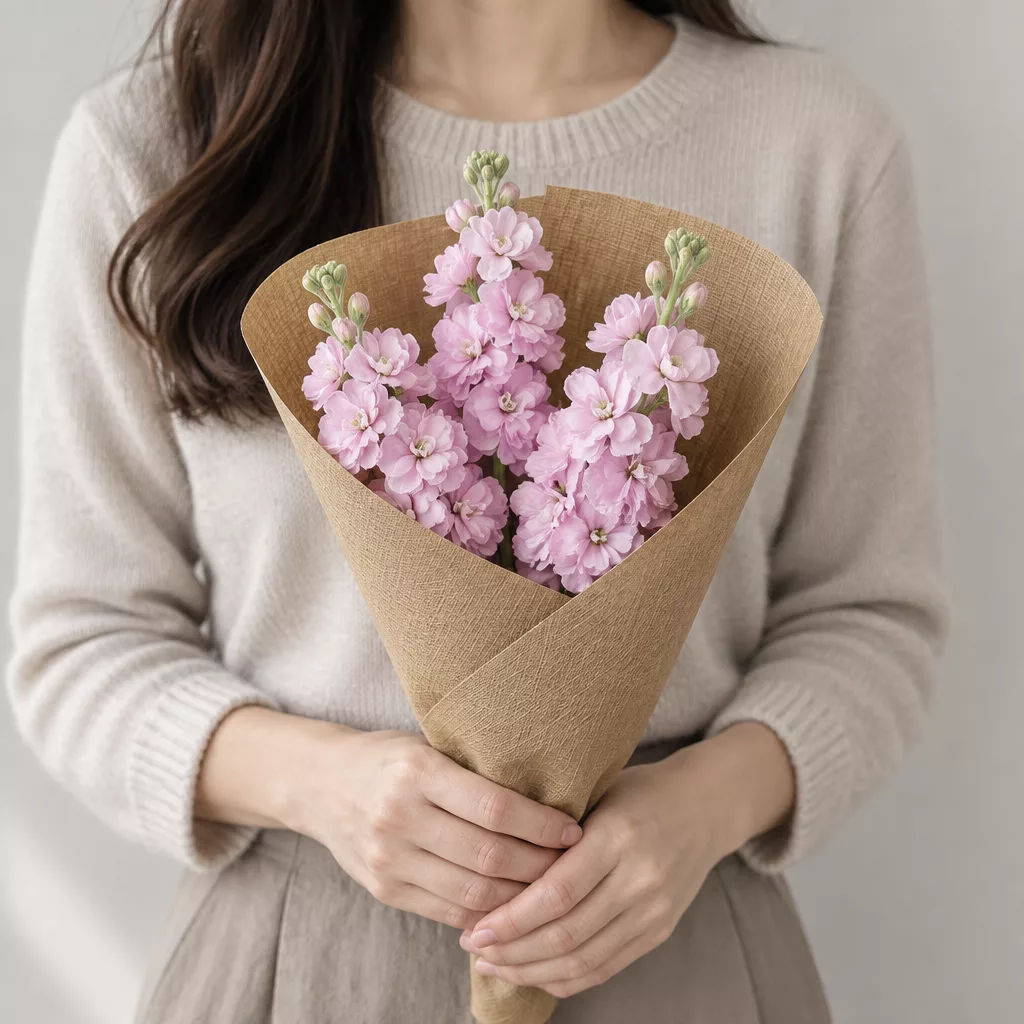
Timing Your Order: When Flowers Arrive at Their Best
The standard delivery window for Naro-Fominsk is one to two hours from the moment the order is confirmed. That window accounts for the distance from the Moscow studio and the variable traffic on the M3 highway, which connects the capital to this part of Moscow Oblast. Morning orders placed before noon tend to move most predictably. Afternoon and early evening slots are also reliable, though it is always sensible to order at least two hours before you need the bouquet in someone's hands.
Temperature plays a larger role than most people realise. In January and February, outdoor temperatures in this region regularly drop to minus ten or minus fifteen degrees Celsius. Flowers like ranunculus, garden roses, and hydrangeas are sensitive to freezing: even ten minutes in a cold car boot without proper insulation can blacken the petals. Turboflora wraps cold-weather orders in thermal packaging, but the recipient should bring the bouquet indoors immediately and let it acclimatise at room temperature for fifteen minutes before unwrapping.
In summer, the challenge reverses. July heat above thirty degrees can cause tulip stems to go limp and chrysanthemum heads to droop within an hour if left in a warm car. Orders during summer heatwaves are best scheduled for morning delivery, before the day reaches peak temperature. If you are ordering for a midday celebration, mention it when placing the order so the arrangement can be packed with a cool gel pack. Planning around the weather is not overcaution — it is simply how fresh flowers stay fresh.
Choosing the Right Bouquet for the Occasion
The best starting point is not the flower itself but the person receiving it and what you want them to feel when the door opens. A bouquet for a young woman celebrating her thirtieth birthday calls for something bold and textural — think garden roses in coral or dusty pink layered with eucalyptus and a few stems of lisianthus for softness. The combination reads as generous and considered without being formal. For a couple marking an anniversary, deep red or burgundy tones in roses or peonies (in season from May through July) carry a warmth that single-colour red bouquets sometimes lack.
For a colleague or teacher — a common occasion in Russian culture, especially around professional holidays and the end of the school year — the tone should be cheerful and slightly restrained. Gerberas in yellow and orange, or a mixed bouquet with alstroemeria and solidago, strikes the right note: celebratory without being overly romantic. In Russia, it is completely normal to send flowers to male colleagues and bosses, particularly on February 23rd (Defender of the Fatherland Day), though the arrangement tends toward structured, less frilly designs.
For a new mother, soft and pale works beautifully: white or blush spray roses, white freesia with its gentle scent, and a few stems of waxflower for texture. Avoid heavily scented flowers like lilies or tuberose in this context, as strong fragrance can be overwhelming in a hospital room or a home with a newborn. Thinking about where the flowers will live helps you choose what will actually delight.
Bouquets by Budget: What Each Level Gets You
Flower budgets in Russia tend to fall into three broad tiers, and understanding what each tier realistically delivers helps you order with confidence rather than guesswork. At the entry level, you can expect a clean, single-variety bouquet — perhaps seven to nine stems of spray roses or alstroemeria with simple foliage. These are not lesser flowers; alstroemeria lasts ten to fourteen days in a vase and comes in a wide range of colours. The presentation is neat and the gesture is genuine. This tier suits everyday appreciation: a thank-you, a get-well wish, a small birthday surprise.
The mid range opens up combinations. A bouquet at this level might pair garden roses with lisianthus and a textural element like ruscus or pittosporum. The stem count rises, the colour palette becomes more intentional, and the overall impression moves from simple to composed. This is the tier most people choose for birthdays and anniversaries, and it photographs well, which matters when the recipient will likely share it.
At the higher end, you are buying volume, variety, and premium stems. Peonies, David Austin roses, and ranunculus all sit in this category — not because they are rare, but because their growing cycle and transport cost more. A large arrangement with a mix of these alongside complementary foliage and perhaps a few stems of sweet pea or scabiosa in season creates something that feels genuinely luxurious. It fills a room visually and signals that the occasion mattered. Whatever the budget, the combination and proportion matter as much as the price tag — a well-built modest bouquet always outperforms a carelessly assembled expensive one.
Russian Flower Customs Worth Knowing
If you are sending flowers to someone in Naro-Fominsk and you did not grow up in Russia, a few customs are worth knowing so your gesture lands exactly as intended. The most widely observed rule is that bouquets should contain an odd number of stems. Even numbers — particularly even numbers of roses — are traditionally associated with mourning and funerals, so florists in Russia almost always design bouquets in odd counts: five, seven, nine, eleven, and so on. Turboflora follows this convention automatically, but it is useful to understand why.
Colour symbolism is less rigid than the odd-number rule but still present. Yellow flowers carry a reputation in older Russian tradition for signifying separation or bad luck in a relationship, though this belief is far less common among younger generations in cities. If you are sending to someone older or more traditional, it is safer to blend yellow with white or orange rather than sending a purely yellow bouquet. White flowers are widely positive — associated with purity and celebration — and work for almost any occasion.
Gift wrapping style also carries meaning. A beautifully wrapped bouquet, with the paper extending well above the flowers and tied with ribbon, signals care and ceremony. Unwrapped or loosely bound flowers feel more casual — fine for some situations, but not for a formal occasion. When ordering, you can note the tone of the event so the presentation matches. Russians often keep the wrapping in place in the vase for the first few hours, enjoying the full visual effect before trimming and arranging the stems properly.
Keeping Flowers Fresh: Practical Care After Delivery
The bouquet arrives, the door closes, and now the flowers are yours to look after. What happens in the first thirty minutes determines how long they will last. The single most important step is a clean diagonal cut on every stem — about two centimetres from the bottom — made with a sharp knife rather than scissors. Scissors crush the vascular tissue that draws water; a knife preserves it. Cut the stems under running water or immediately submerge them, because even a few seconds of air exposure allows an air bubble to form that blocks hydration.
The vase water should be cool and clean. Lukewarm or warm water accelerates bacterial growth, which shortens vase life significantly. Change the water every two days and re-cut the stems each time. Remove any leaves that sit below the waterline — submerged foliage rots quickly and clouds the water with bacteria. A small sachet of flower food, often included with the delivery, contains a mild biocide and a sugar source that genuinely extends life by three to five days when used correctly.
Placement matters as much as water. Keep the bouquet away from direct sunlight, heating radiators, and fruit bowls — ripening fruit releases ethylene gas, which accelerates ageing in flowers. Roses and tulips are particularly sensitive to ethylene. A cool room, ideally between sixteen and twenty degrees Celsius, is ideal. At night, moving the vase to a cooler spot — an unheated hallway or a cool kitchen — can add another day or two of life. Lisianthus, chrysanthemums, and alstroemeria are the most forgiving varieties; garden roses and ranunculus need the most attention but reward it beautifully.
Making the Order: What to Include for a Smooth Delivery
A smooth delivery to Naro-Fominsk starts with a complete and accurate order. The recipient's full name matters more than it might seem — in Russian culture, receiving a delivery addressed simply to a flat number feels impersonal, and if there is any question at the door, a name confirms the right person. Include the street, building number, flat number, entry code if there is one, and floor. For private houses, a brief description of the gate or a nearby landmark is genuinely helpful.
The delivery time slot is the second critical field. If the recipient has a fixed schedule — a work meeting that ends at noon, a birthday dinner starting at seven — note it clearly. A one-to-two-hour window is the standard, so ordering with that buffer in mind prevents the awkward situation of flowers arriving while the recipient is out. If the delivery is a surprise, you can request that the courier call the sender rather than the recipient before arriving, so the moment is not accidentally spoiled.
The message card is often underused. A short, genuine note — even two sentences — transforms a bouquet into a complete gesture. In Russian tradition, the card is read privately and kept, sometimes for years. You do not need to write in Russian; English is fine, and the sentiment carries regardless of language. Finally, if there are any access restrictions — a gated community, a building with a security desk, a workplace with a sign-in process — mention them in the comments. These small details are not bureaucratic; they are what allow the bouquet to arrive looking its best, without delays that cost the flowers their freshness.
Sending flowers to Naro-Fominsk is a straightforward and genuinely rewarding thing to do. The distance from Moscow is manageable, the delivery window is short, and the range of flowers available covers every occasion and every season. What makes the difference between a good bouquet and a memorable one is the thought behind the choice — the right combination for the right person, wrapped with care, and arriving at exactly the right moment. Whether you are marking something significant or simply reminding someone that you are thinking of them, a well-chosen bouquet does that work quietly and beautifully.
Frequently asked questions
Can I order flowers to Naro-Fominsk on the same day?
Yes. Same-day delivery to Naro-Fominsk is available for orders placed with sufficient lead time. The standard window is one to two hours from order confirmation. Morning orders tend to be the most straightforward, but afternoon and early evening deliveries are also available. Confirm the recipient's address in full when ordering to avoid any delays.
What flowers are available in winter for delivery to Naro-Fominsk?
Roses, chrysanthemums, alstroemeria, gerberas, and lisianthus are available year-round regardless of season. In winter, locally grown flowers are limited, but these reliable varieties are sourced from professional growers and arrive in excellent condition. Cold-weather packaging protects sensitive blooms during transport in temperatures below zero.
Why do Russian bouquets always have an odd number of flowers?
Even numbers of flowers are traditionally associated with mourning in Russian culture and are placed at graves. Odd-numbered bouquets — five, seven, nine stems and so on — are the standard for celebrations and gifts. This convention is observed across all ages and regions. Turboflora designs all celebratory bouquets in odd counts as a matter of course.
How long will a delivered bouquet last in a vase?
Most bouquets last seven to twelve days with proper care. Alstroemeria and chrysanthemums often reach fourteen days. Roses and ranunculus average five to eight days but reward attentive care. The key steps are a clean diagonal stem cut on arrival, fresh cool water changed every two days, and placement away from heat sources, direct sunlight, and ripening fruit.
Can I include a message card in Russian or English?
Yes, message cards can be written in either language. You enter the text when placing your order and it is printed or handwritten and included with the bouquet. English messages are perfectly understood and appreciated. Keep the note personal — even a short, sincere sentence carries far more weight than a generic phrase, and recipients in Russia often keep cards for a long time.
Ready to send flowers?
Pick the city, choose the bouquet, and a local florist takes it from there.
Choose a city →