Sending Flowers to Nikolskoe? Here Is What to Expect
Nikolskoe sits close enough to Saint Petersburg that a morning order can reach someone's door before lunch, yet far enough that a few things are worth knowing before you click confirm. Whether you are sending roses to a partner, a birthday bouquet to a parent, or a thank-you arrangement to a colleague, the flowers need to arrive looking the way you imagined them — stems fresh, petals open just enough, the whole thing wrapped so it survives the road. This guide walks you through timing, what grows well in transit, how to read the season, and what to say to the person receiving the gift.
Which Parts of Nikolskoe We Reach and How Long It Takes
Nikolskoe is a small town in the Tosnensky district of the Leningrad region, and Turboflora delivers there directly from Saint Petersburg. The drive along the M10 highway takes roughly 40 to 60 minutes depending on traffic, which means a bouquet ordered in the morning typically arrives within one to two hours of your chosen delivery window. We cover the central streets, the residential microdistricts along Sovetskaya and Oktyabrskaya, and the areas closer to the Tosna river — if you are unsure whether your specific address falls within the delivery zone, it is always worth confirming when you place the order.
The most reliable delivery slots are mid-morning and early afternoon, when traffic on the Moskovsky highway is lightest. Evening deliveries are possible but add a small buffer — plan for the outer edge of the two-hour window rather than the inner one. If the occasion is time-sensitive, say a birthday dinner that starts at seven, ordering by three in the afternoon gives the driver comfortable margin.
Distance also matters for the flowers themselves. A 50-minute ride in a temperature-controlled vehicle is perfectly manageable for roses, chrysanthemums, and alstroemerias. Delicate open peonies or large tropical blooms like bird-of-paradise need a bit more care in packaging, and our florists account for that before the bouquet leaves the shop. You do not need to request it separately — it is part of how we prepare anything leaving the city.
Bouquets we can deliver
Choosing Flowers for the Person, Not Just the Occasion
The occasion gives you a starting point, but the person gives you the actual answer. A birthday calls for something celebratory, yes — but a woman who keeps her apartment full of greenery will love a bouquet built around eucalyptus, ruscus, and spray roses far more than a stiff formal arrangement of red roses on long stems. A man receiving flowers for the first time might feel more comfortable with something architectural: anthuriums, ornamental cabbage in autumn, or a clean bundle of white lisianthus tied with kraft paper rather than a large round bouquet.
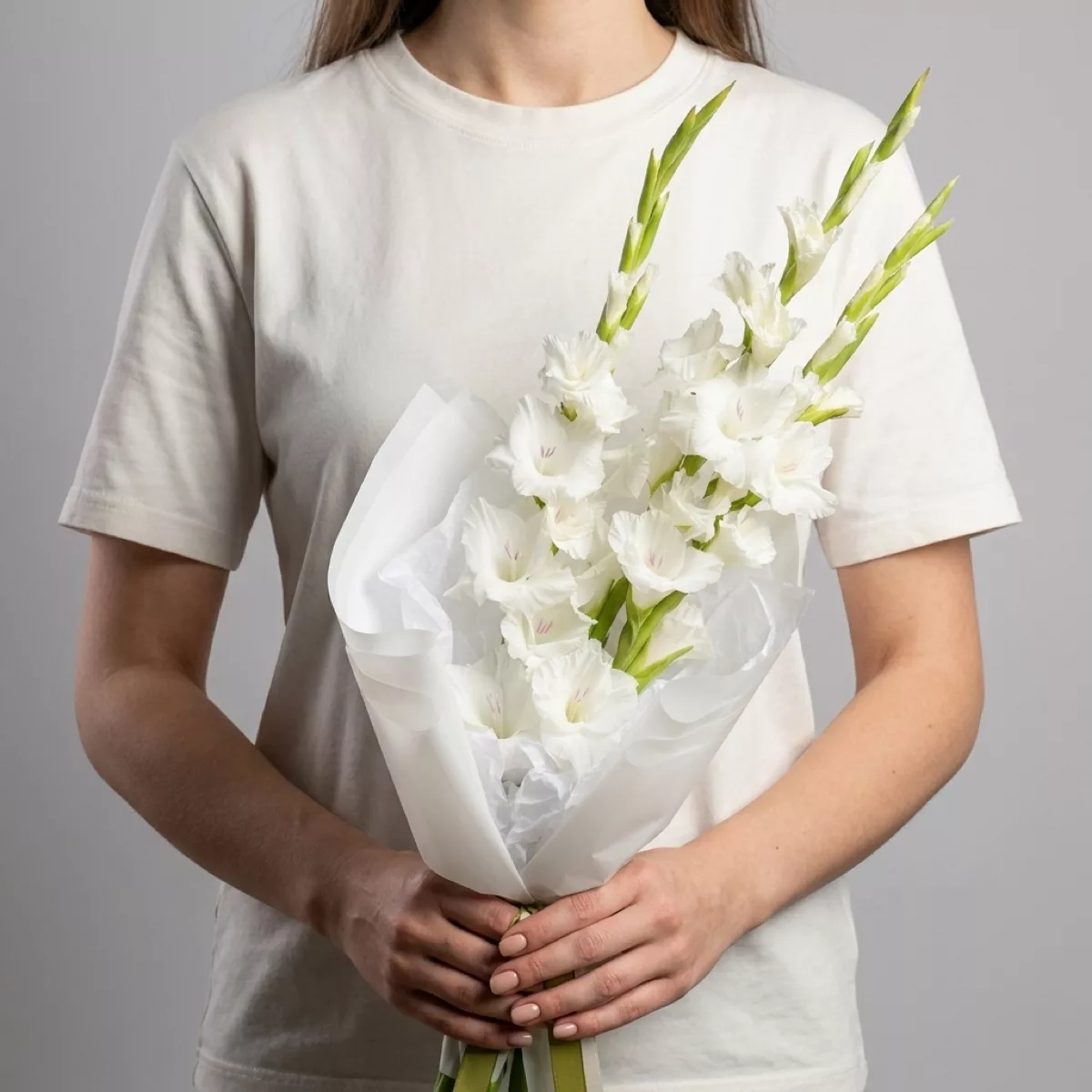
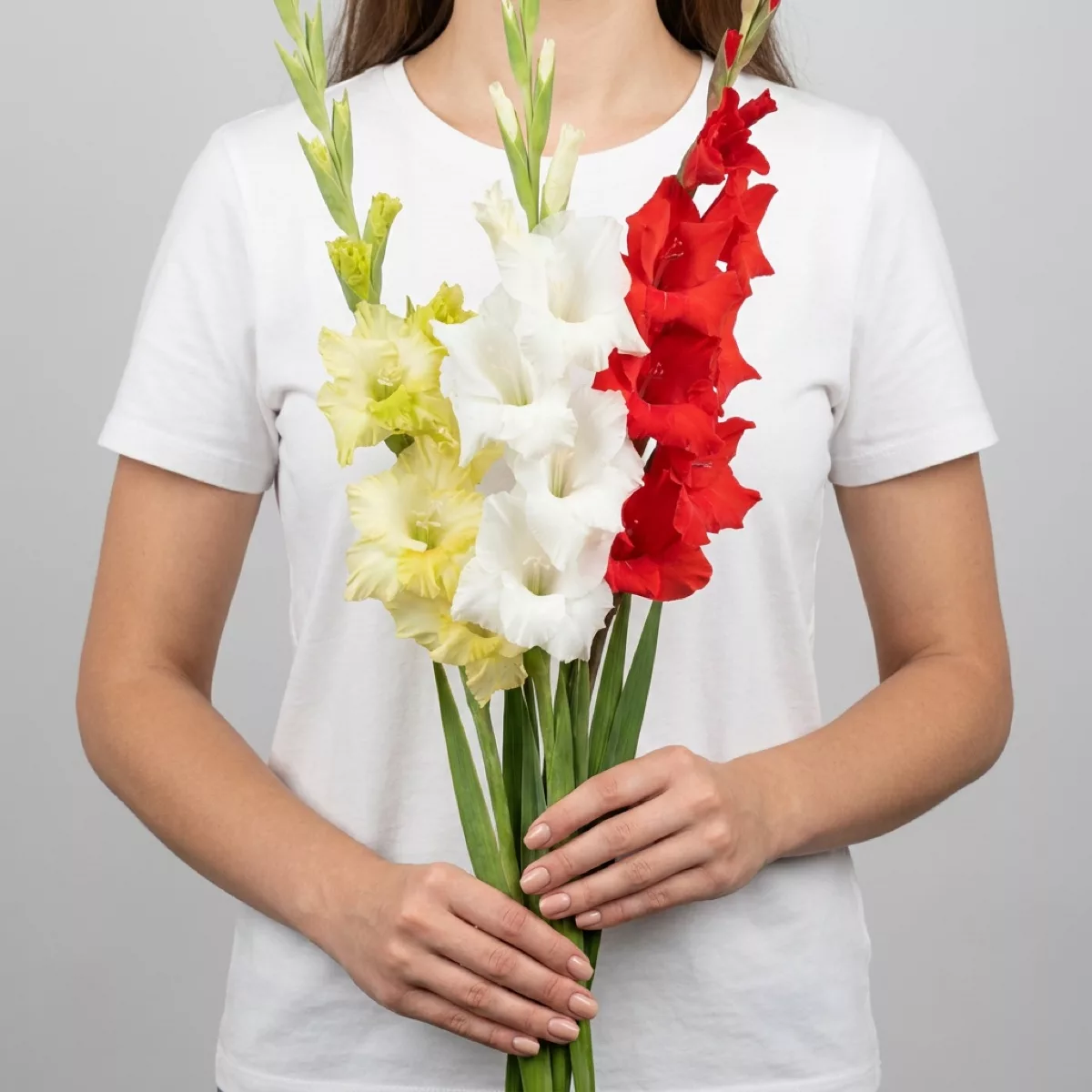
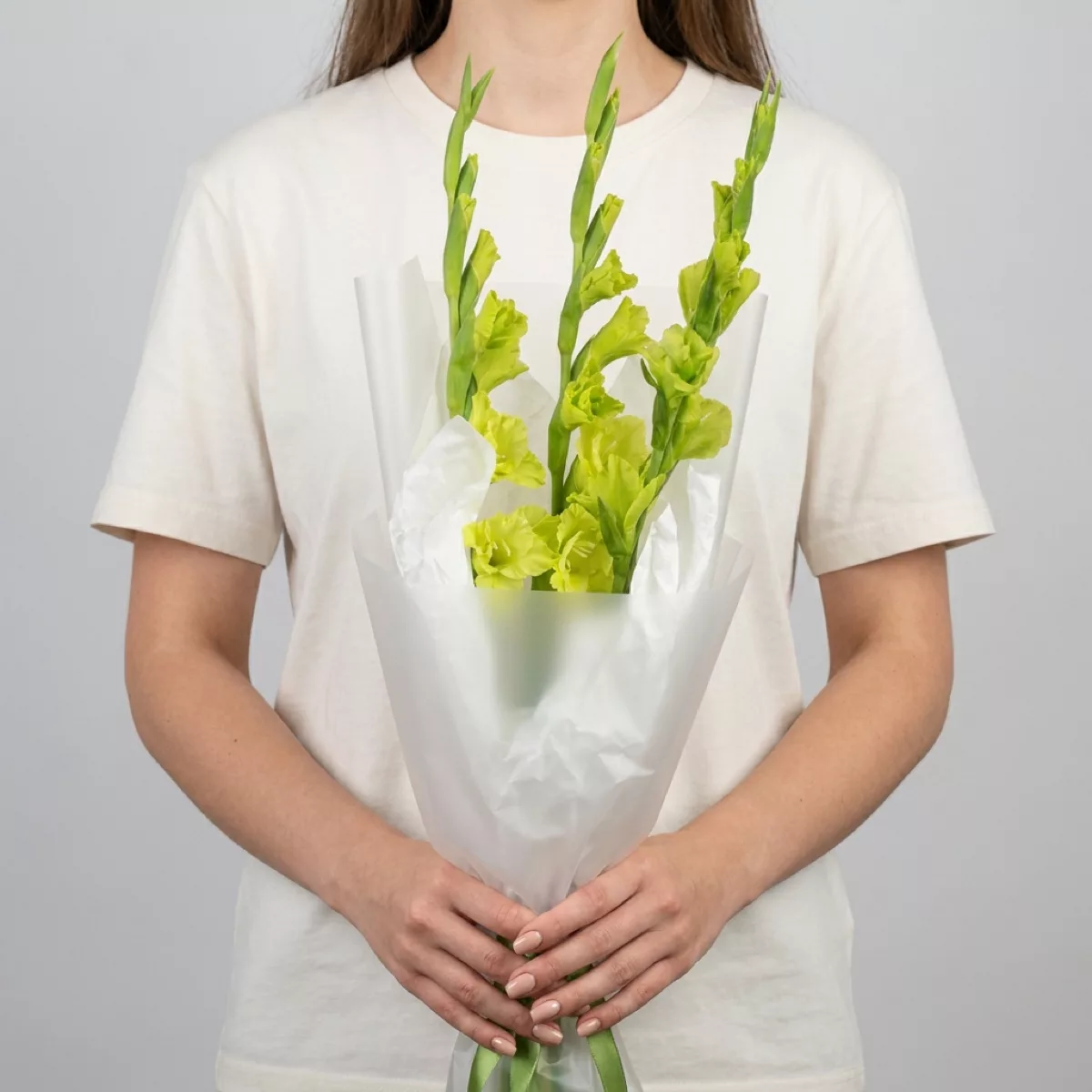
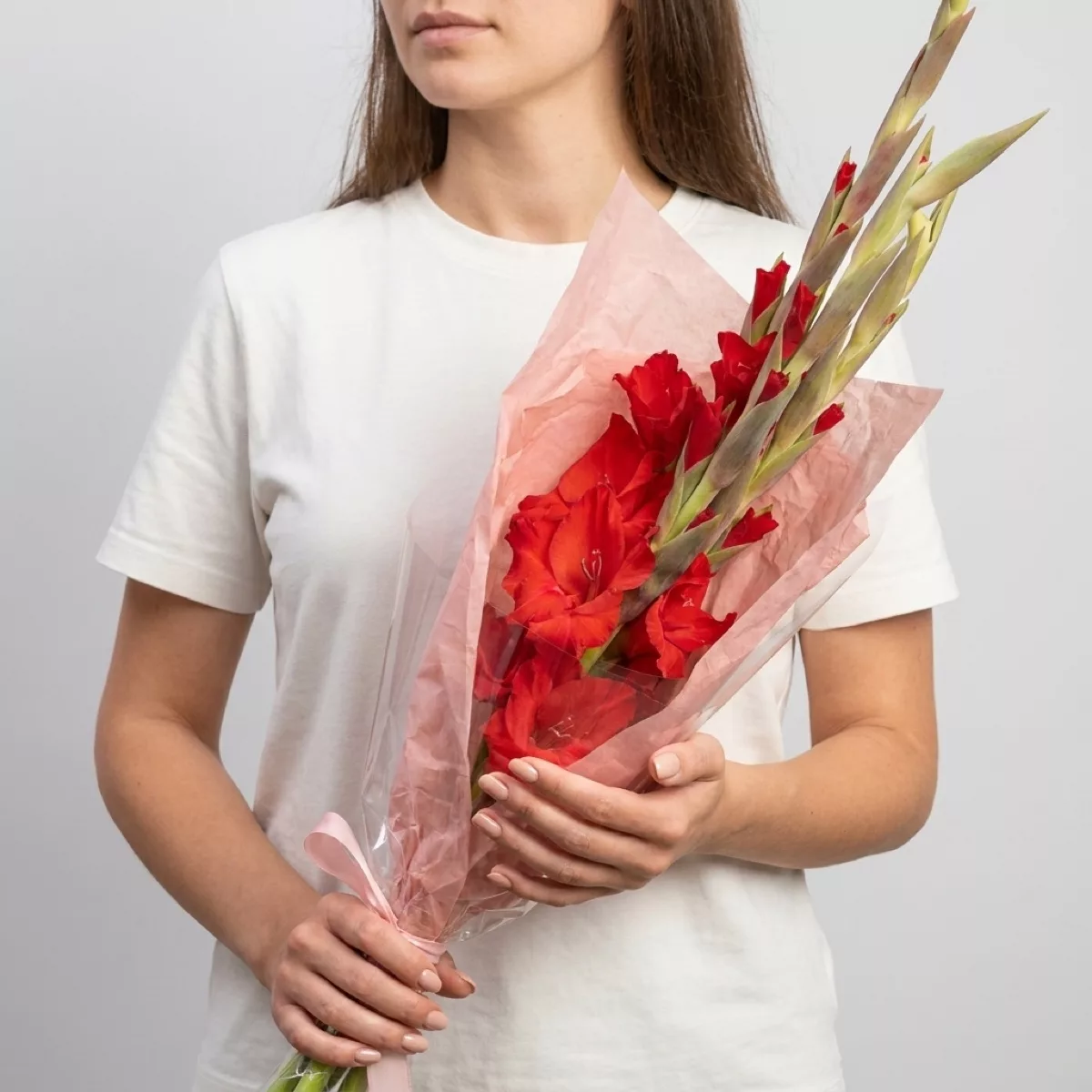
Think about where the flowers will go. In a Nikolskoe apartment, the kitchen table or a windowsill in the living room is the most common spot. A compact bouquet of 30 to 40 centimetres fits those spaces naturally and does not overwhelm a small room. If the recipient has a large hallway or a dining table they use for hosting, a taller arrangement with gladioli or delphiniums makes a real statement.
Colour is the easiest shortcut to emotion. Warm tones — peach, coral, amber, cream — read as affectionate and gentle. Cool tones — violet, deep burgundy, icy white — feel more considered and formal. For a first gift or a gesture of reconciliation, soft pinks and whites carry the least risk of being misread. For a long relationship where you know the person's taste, lean into what they actually love rather than what seems appropriate for the occasion. That confidence in the choice is itself a kind of message.
What the Season Actually Means for Your Bouquet
Russia's seasons affect flowers more than most people expect, and the Leningrad region has its own rhythm. From November through March, daylight is short and temperatures outside drop well below zero. During this period, tropical and subtropical flowers — roses, gerberas, orchids — all arrive from the Netherlands or Ecuador and are perfectly fresh, but they need careful handling between the shop and the door. Our drivers keep the vehicle warm, and the bouquets are wrapped in insulating paper before leaving. Still, if you are meeting the courier outside, do not leave the flowers in the cold for more than a few minutes.
From May through August, the local growing season brings a different palette. Peonies from Russian growers appear in late May and last through June — they are looser, more fragrant, and faster to open than imported ones. Lisianthus, snapdragons, and cornflowers are abundant and at their best. If you are ordering in summer, these are the flowers that will look the most alive and last the longest in a vase.
September and October are the underrated months. Dahlias come into full season, chrysanthemums are at peak quality, and the colour palette shifts to amber, rust, and deep wine — which happens to suit the mood of early autumn perfectly. If you are sending a bouquet in this period and have not considered dahlias before, ask about them. A mixed bouquet of café au lait dahlias with white spray chrysanthemums and dried pampas grass is one of the most striking combinations of the year and holds well in a vase for seven to ten days.
Budget and What It Gets You at Each Level
Thinking about budget before you order saves you from disappointment in both directions — spending more than you needed to, or receiving something that felt thin compared to the occasion. At a modest budget, a single-variety bouquet works best: fifteen stems of alstroemeria, a bunch of spray roses, or a clean armful of lisianthus. These look intentional rather than sparse because the repetition creates its own rhythm. Add a few stems of greenery — pittosporum or leather leaf — and it reads as a considered choice rather than a budget compromise.
In the mid range, combinations open up. Roses paired with eustoma, ranunculus with eucalyptus, or garden roses with veronica and waxflower all give the florist enough material to create contrast in texture and height. This is the level where the bouquet starts to tell a small story rather than simply delivering flowers. For most occasions — birthdays, anniversaries, thank-you gifts — this range is the sweet spot between impact and cost.
At a higher budget, the options include flowers that are genuinely harder to source: garden roses with large cupped heads, peonies in season, tulips from Dutch growers in January when they are most expensive, or preserved and dried elements mixed with fresh ones for a bouquet that partly lasts indefinitely. Presentation also changes — a linen ribbon, a ceramic vase included with the bouquet, or a handwritten card on thick paper. These details matter to the recipient even if they cannot name exactly why the gift felt more considered than others they have received.
How to Write a Card That Does the Work the Flowers Cannot
In Russia, giving flowers without a card is common — the gesture is understood on its own. But a card, even a short one, transforms a bouquet from a gift into a conversation. If the recipient lives alone in Nikolskoe and you are sending from another city, that card is the only voice in the room when the flowers arrive. It deserves more than 'Happy Birthday.'
The most effective cards are specific. Instead of 'thinking of you,' try 'I remembered you always put flowers on the kitchen table — I hope these fit.' Instead of 'congratulations,' try 'you worked for this for three years and you did it.' Specificity is what makes someone read the card twice and keep it after the flowers are gone.
For Russian recipients who are not accustomed to very expressive written messages — and many are not — a short, warm sentence is better than a long emotional paragraph. Two or three lines that feel natural to say out loud are the right length. If you are writing in English to a recipient who reads Russian, we can include both — just let us know when you order.
One practical note: if the delivery is a surprise and you do not want the sender's name on the outer packaging, specify that. In Russian gift culture, anonymous flowers are a recognised romantic gesture and carry their own meaning. The card inside can still be signed — the mystery is about the arrival, not the content.
Keeping the Bouquet Fresh After It Arrives
A well-chosen bouquet deserves a week in the vase, not two days. The difference usually comes down to the first thirty minutes after the flowers arrive. The recipient needs to cut the stems — at an angle, about two centimetres from the bottom — before placing them in water. Cutting at an angle increases the surface area drawing water up the stem. This sounds minor but it extends vase life by two to three days for most varieties.
Water temperature matters more than most people realise. Roses, lisianthus, and alstroemeria prefer cool water — around 15 to 18 degrees Celsius. Tropical flowers like anthuriums and heliconias prefer room temperature. If you are sending a mixed bouquet, cool water is the safer default. Change the water every two days and re-cut the stems each time.
Keep the vase away from direct sunlight and away from fruit bowls. Ripening fruit releases ethylene gas, which accelerates petal drop in roses and carnations — a proximity of even 50 centimetres makes a noticeable difference. A spot on a table away from the window and away from radiators is ideal, especially in winter when central heating dries the air considerably.
Strip any leaves that fall below the waterline before putting the flowers in the vase. Submerged leaves rot quickly and cloud the water, which shortens the life of the whole bouquet. A clean vase, fresh water, and trimmed stems are the three things that matter most — everything else is secondary.
Timing a Surprise Delivery to Land at the Right Moment
A surprise delivery works best when you know roughly where the recipient will be. Sending to a home address in Nikolskoe on a weekday afternoon is straightforward if the person works from home or is retired. If they have a regular job with fixed hours, a delivery between 12 and 2 during a lunch break, or after 6 in the evening, is more likely to find them in. We will call ahead to confirm someone is available — this is standard practice and does not spoil the surprise, because the caller identifies as a courier with a parcel rather than specifying flowers.
For a birthday morning surprise, ordering the evening before and scheduling delivery between 9 and 11 is the most popular choice. The recipient wakes up to flowers, which sets the tone for the whole day in a way that an afternoon delivery cannot quite replicate. If the birthday person lives with family, a family member can coordinate the door quietly.
Workplace deliveries to Nikolskoe are less common than home deliveries but work well when the recipient is in an office or a school. The flowers arrive during the working day, which means colleagues see them — and for many people, that public moment of being celebrated is part of what makes it special. Just confirm the workplace address carefully, including the building entrance and any access codes, since industrial and administrative buildings in smaller towns can be harder to navigate than a standard residential address.
If the occasion is a reconciliation or an apology, a daytime home delivery is almost always better than an evening one. It gives the recipient time to process the gesture before you speak again.
Nikolskoe is close enough to Saint Petersburg that fresh flowers arrive in genuine shop condition — not road-worn, not wilted at the edges, but the way we would hand them across a counter. The distance is short, the route is direct, and the care that goes into wrapping and temperature control means the recipient opens the door to something that looks exactly as intended. Whether you are marking a birthday, a homecoming, an anniversary, or simply a Tuesday that deserves to feel better than it started, the right bouquet chosen for the right person lands differently from a generic gesture — and that difference is what we build every arrangement around.
Frequently asked questions
Can you deliver to Nikolskoe on the same day I order?
Yes, same-day delivery to Nikolskoe is available for orders placed before early afternoon. The drive from Saint Petersburg takes roughly 40 to 60 minutes, so we build delivery windows around that transit time. For time-sensitive occasions like a birthday dinner, ordering by early afternoon gives the best margin for a comfortable on-time arrival.
Will the flowers survive the journey in cold winter weather?
Our vehicles are temperature-controlled and bouquets are wrapped in insulating paper before leaving the shop. Roses, chrysanthemums, and alstroemeria handle the journey well even in January. The one thing to avoid is leaving the flowers outdoors after delivery — bring them inside within a few minutes and they will be perfectly fine.
What flowers last longest in a vase for someone in Nikolskoe?
Alstroemeria, chrysanthemums, and lisianthus regularly last ten to fourteen days with basic care. Carnations and spray roses also hold well. Peonies and open garden roses are shorter-lived but far more dramatic. If the recipient is not particularly attentive to flower care, a chrysanthemum-based bouquet is the most forgiving and longest-lasting choice.
Can I include a gift alongside the bouquet?
Yes, you can add items such as a box of chocolates, a small plant, or a greeting card to your order. Specify what you would like when placing the order and we will package everything together so it arrives as one cohesive gift rather than separate parcels. Let us know if the gift is a surprise so the packaging reflects that.
What if the recipient is not home when the courier arrives?
Our courier calls ahead before arriving, so in most cases the recipient has time to be ready. If they are unexpectedly unavailable, the courier will contact you directly to arrange a second attempt or an alternative plan. We do not leave flowers unattended outside a door, especially in cold weather, as it would damage the bouquet.
Ready to send flowers?
Pick the city, choose the bouquet, and a local florist takes it from there.
Choose a city →