Sending Flowers to Novocherkassk? Here Is What to Expect
Novocherkassk sits in the Don steppe, a city of wide boulevards and warm southern light — the kind of place where a bouquet arriving at the door feels like a genuine event. Whether you are sending flowers from another city or ordering for someone just across town, the questions are usually the same: will they arrive fresh, will the timing hold, and what should you actually choose? This article answers all of that plainly, starting from the person who will receive the flowers and working outward from there.
Which Parts of Novocherkassk We Reach and How Quickly
Novocherkassk is a compact city by Russian standards, built on a plateau above the Tuzlov and Aksay rivers. The centre, including Platovskiy Prospekt and the area around the Ascension Cathedral, is straightforward to reach. Residential districts such as Oktiabrsky, Khimzavodskoy and the neighbourhoods near the Novocherkassk State Technical University are all within the delivery zone. Industrial outskirts and settlements on the far edges of the municipal boundary may add time, so if you are unsure about a specific address, it is worth checking at the point of order.
For most addresses within the city, delivery takes one to two hours from the moment you place your order. That window is realistic, not a best-case promise. It accounts for bouquet preparation, quality check and travel. If you need flowers for a specific moment — a birthday dinner at seven in the evening, for example — ordering by five gives comfortable margin. Same-day delivery is available throughout the day, and you can schedule a delivery window if you want the bouquet to arrive closer to a particular time rather than as soon as possible.
Novocherkassk summers are genuinely hot, often above thirty degrees Celsius in July and August. That matters for flowers in transit. Roses and tulips in particular suffer in direct heat, so our couriers carry bouquets in temperature-managed conditions. In winter the opposite challenge applies: a bouquet moving from a warm vehicle into minus-ten air needs a moment to adjust before it goes into a warm room, just as you would let a cold bottle come to room temperature before opening it.
Bouquets we can deliver

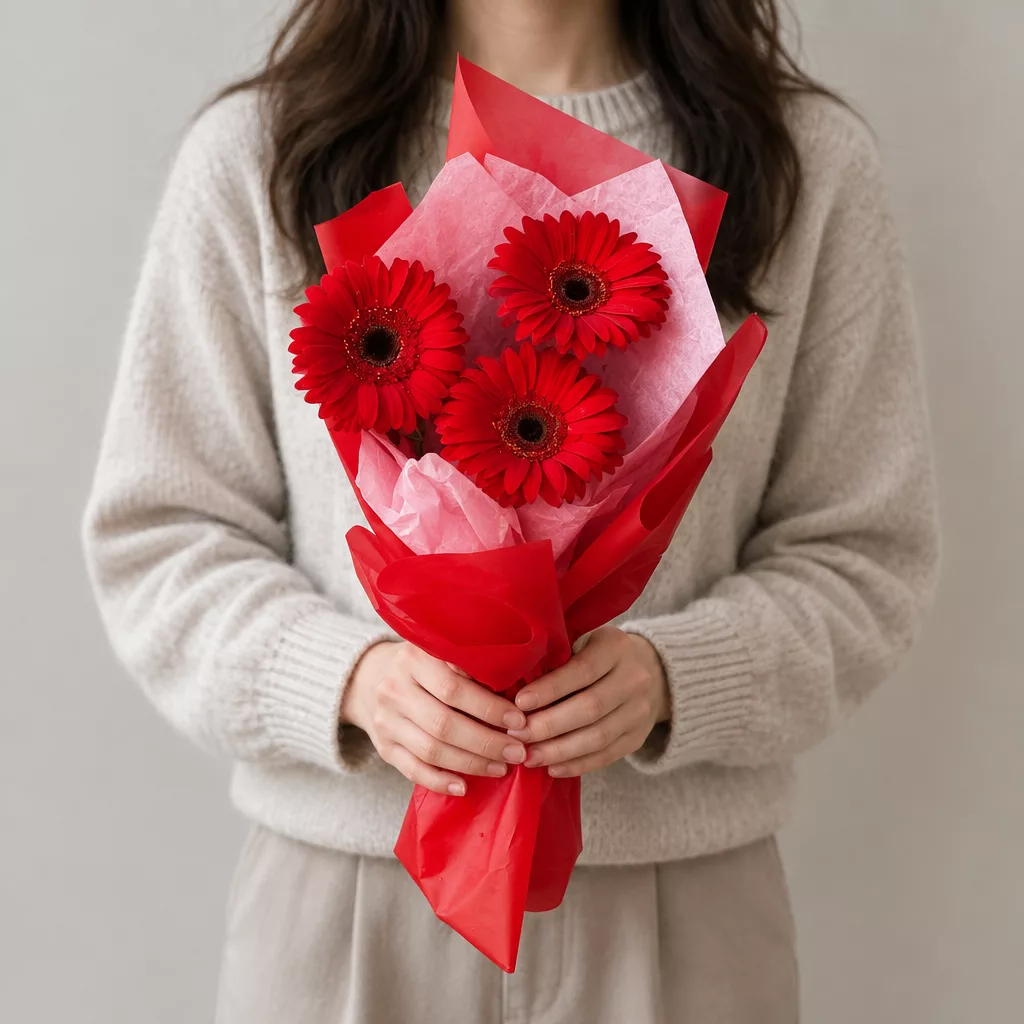
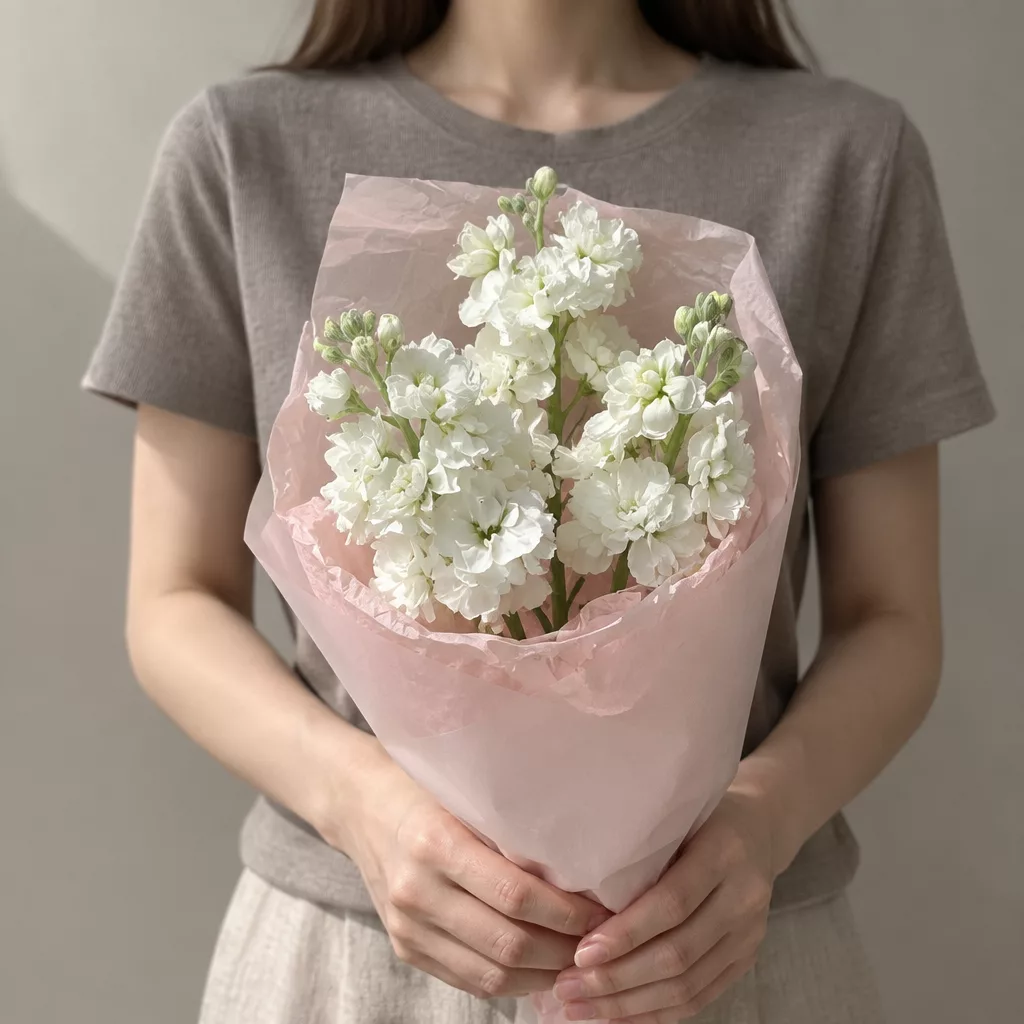
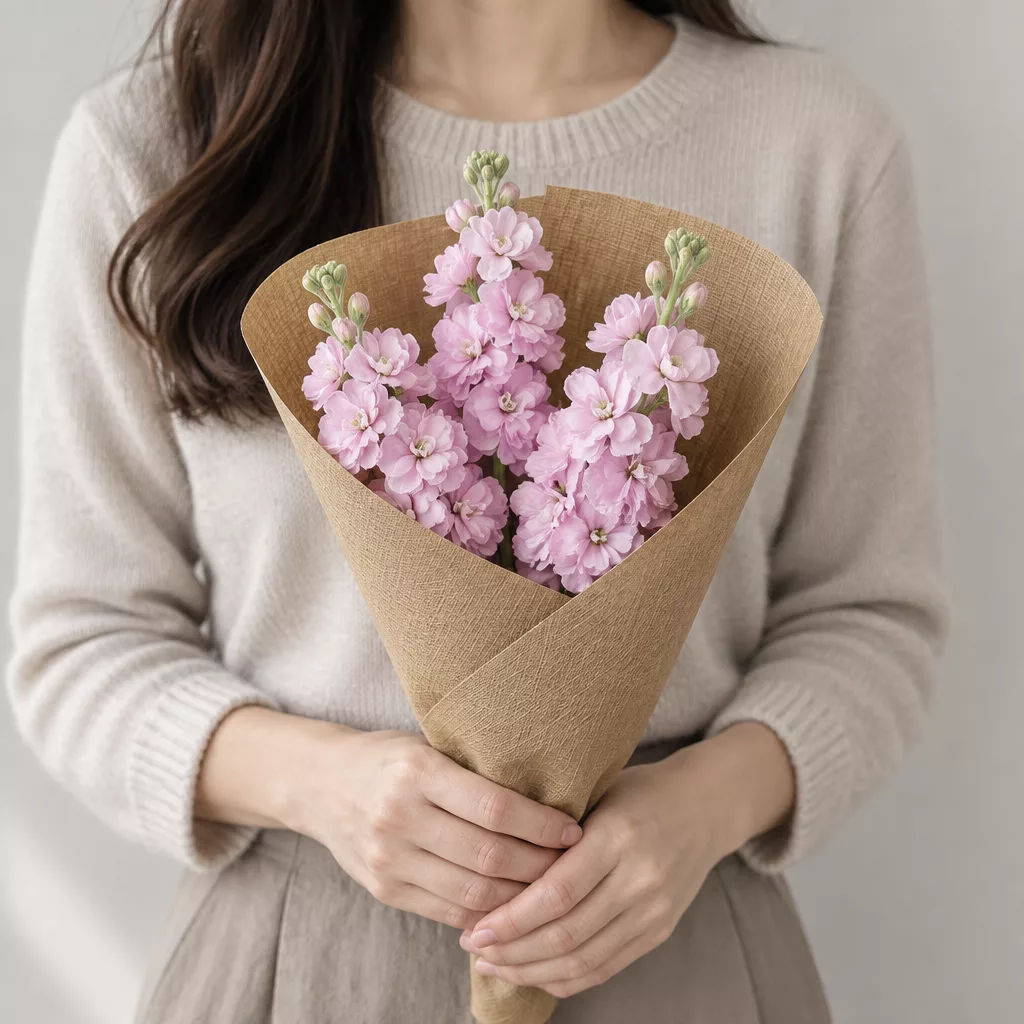
Reading the Occasion Before You Choose the Flowers
In Russia, flowers are given far more often than in many Western countries. A woman visiting a friend brings a small bouquet. A student hands flowers to a teacher on the first day of September. A colleague marks a promotion with a arrangement for the desk. Understanding this helps you calibrate: not every bouquet needs to be large or elaborate. What matters more is that the choice feels considered rather than generic.
For a birthday, think about the personality of the recipient before the variety. Someone who keeps a tidy, minimalist home will appreciate a monochrome bouquet — all-white eustoma, or a single-variety arrangement of garden roses — more than a mixed abundance of colour. Someone warm and expressive will love the opposite: sunflowers paired with orange gerberas and a few stems of hypericum berry for texture. The flowers should feel like they came from someone who knows the person, not from a catalogue.
For a romantic occasion, red roses remain the most understood symbol in Russian culture, but they are far from the only option. Deep burgundy peonies in season, or a soft arrangement of blush spray roses with eucalyptus, can feel more personal and just as meaningful. For a congratulation — a new job, a new home, a new baby — lighter colours and longer-lasting varieties like chrysanthemums or alstroemeria make practical sense, because the recipient will be busy and the flowers should still look good four days later without much attention.
Choosing by Budget Without Losing the Feeling
A smaller budget does not mean a lesser gift. It means being more precise. Three stems of well-chosen flowers, properly arranged and wrapped, make a stronger impression than ten stems chosen without thought. The mistake most people make is trying to fill space rather than create a composition. A florist thinks about height, texture, and one focal flower — the rest supports it.
At a modest budget, single-variety bouquets work beautifully. A hand-tied bunch of alstroemeria in a warm coral shade, or a cluster of white spray chrysanthemums with seasonal greenery, is complete as it is. These varieties also travel well and last reliably, which matters when you are sending flowers to someone who may not be home immediately to put them in water.
In the mid range, you gain the ability to combine. Roses paired with waxflower, or tulips layered with muscari in spring — these combinations have depth without looking overdone. The packaging matters here too. A kraft paper wrap with a linen ribbon reads as thoughtful. Cellophane alone reads as quick.
For a larger occasion or a significant relationship, peonies in May and June, garden roses in summer, or a structured arrangement with anthuriums and tropical greenery in winter are all strong choices. These arrangements photograph well, which in Russian culture matters — the recipient will almost certainly share the moment. Presentation, proportion and a handwritten card together create the full experience that a larger bouquet promises.
What Happens Between the Order and the Door
When you place an order, the bouquet does not come from a shelf. It is assembled fresh from that morning's stock. Flowers arrive at our facility cut and conditioned — stems trimmed at an angle, lower leaves removed, set in clean water with a conditioning solution. This preparation period is what makes the difference between a bouquet that opens beautifully over five days and one that droops by the second.
Once the arrangement is complete, it goes through a brief quality check: stem lengths are even, no damaged petals face outward, the wrap is secure and the proportions hold from every angle. A handwritten card is added if you have included a message. The bouquet is then packaged for transit in a way that protects the heads — the most vulnerable part — from pressure and movement.
The courier carries the bouquet upright. This is not a small detail. Flowers held on their side for more than a few minutes can bruise at the stem, and the water supply to the head is interrupted. On arrival, the recipient will find the bouquet in the same condition it left the workroom.
If the recipient is not home, we contact them and the sender to agree on next steps. We do not leave a bouquet in a hallway or with a neighbour without explicit permission from the person who ordered. This matters in apartment buildings, which are common throughout Novocherkassk, where a bouquet left unattended can sit in a warm corridor for hours and arrive at the door already stressed.
Seasonal Flowers and What Grows Well in the South
The Rostov region, where Novocherkassk sits, has a genuinely warm climate compared to most of Russia. Summers are long and dry, springs arrive early, and the growing season stretches from April well into October. This means that locally grown flowers — sunflowers, zinnias, marigolds and field chamomile — are available and fresh for a longer window than in cities further north.
In spring, tulips arrive first, followed by ranunculus and then peonies, which peak in late May and early June in this climate. These are the most requested flowers of the spring season, and for good reason: they are full, fragrant and unmistakably generous. A peony bouquet in Novocherkassk in late May is as good as it gets anywhere in Russia.
Summer brings roses into their best outdoor form, alongside lisianthus, which is sometimes called eustoma — a bell-shaped flower that resembles a poppy crossed with a rose and lasts exceptionally well in heat. Sunflowers are a southern staple and feel entirely at home in this region. They pair naturally with rudbeckia and ornamental grasses for a relaxed, seasonal look.
In autumn, dahlias, asters and chrysanthemums carry the season. These are not compromise flowers — a well-chosen dahlia in deep rust or plum is one of the most striking things you can send. Winter relies more on imported varieties: roses, carnations, orchids and tropical stems, all of which we source to arrive at their freshest and hold well indoors during the heating season, when Russian apartments tend to run warm and dry.
Keeping the Bouquet Fresh After It Arrives
The recipient's first ten minutes with the bouquet determine a great deal of what happens over the next week. Most people unwrap flowers, admire them and put them directly into a vase of water. That is a good instinct, but a few small adjustments make a significant difference.
The first is to trim the stems before placing them in water. Cut at least two centimetres from the base, at a diagonal angle, using a sharp knife or scissors. A clean diagonal cut maximises the surface area through which the stem draws water. If the stems were cut earlier in the day, they may have already begun to seal slightly, and a fresh cut opens them again.
The second is water temperature. For most flowers — roses, carnations, gerberas, lisianthus — cool water at roughly fifteen to eighteen degrees Celsius is ideal. Tulips and hyacinths prefer cold water and a cool room. Tropical flowers like anthuriums and birds of paradise prefer room-temperature water and will suffer if placed near a cold window in winter.
Remove any leaves that fall below the waterline. Submerged leaves decompose quickly and introduce bacteria that shorten vase life. Change the water every two days, and re-trim the stems each time you do. Keep the bouquet away from direct sunlight, heating radiators and fruit bowls — ripening fruit releases ethylene gas, which accelerates petal drop in roses and carnations especially. With these steps, most bouquets will hold for five to seven days, and hardier varieties like chrysanthemums and alstroemeria will last ten days or more.
Small Details That Make the Delivery Feel Personal
A bouquet is a message before it is a product. The flowers carry meaning, but so does the packaging, the card and the timing. In Russian culture, the card is taken seriously — a handwritten note, even a short one, is read and often kept. If you are sending flowers from a distance and cannot be there in person, the words on the card are doing real work. Write something specific to the person rather than a general greeting, and the bouquet will feel like it came from someone present, not from a website.
Timing a delivery to arrive at a meaningful moment — just before a birthday dinner, or at the start of the working day — adds intention to the gift. An early morning delivery to a teacher or colleague, for example, means the flowers are on the desk when the day begins and visible to everyone who comes in. That visibility is part of the gift in a social culture where flowers are noticed and commented on.
Packaging choice matters more than most people expect. A monochrome wrap in a single colour reads as elegant and deliberate. A mixed wrap with ribbon and greenery reads as celebratory and warm. Both are valid, but they say different things. If you are unsure, describe the recipient briefly when ordering — a florist who knows whether someone is formal or expressive, minimal or abundant, can make that choice well.
Finally, the size of the bouquet should match the occasion, not the budget. A small, perfectly composed arrangement for a quiet congratulation is more appropriate than an oversized display. Proportion is a form of respect, and a florist who understands that will always ask what the moment is before asking what the budget is.
Novocherkassk is a city where a well-timed bouquet is still a meaningful gesture, and where the southern climate gives flowers a particular vibrancy for much of the year. Getting it right is less about spending more and more about choosing with the recipient in mind — their home, their personality, the moment you want to mark. Fresh flowers, prepared carefully and delivered on time, do the rest on their own.
Frequently asked questions
Can I order flowers for delivery to Novocherkassk from another city?
Yes, entirely. You can place an order from anywhere in Russia or abroad through turboflora.com. Provide the recipient's address in Novocherkassk, choose a delivery window, add a card message and we handle everything from there. The recipient does not need to know the order is coming if you prefer it to be a surprise.
What is the best flower to send in summer when it is very hot?
In Novocherkassk's summer heat, lisianthus, chrysanthemums and sunflowers hold up better than most. Roses are still excellent if they are conditioned properly and delivered quickly. Avoid delicate varieties like sweet peas or anemones in peak summer — they are beautiful but fragile in high temperatures and will not travel as well.
Is it acceptable to send an even number of flowers in Russia?
In Russian tradition, an even number of flowers is associated with mourning and is generally avoided for celebratory or romantic occasions. Bouquets for birthdays, anniversaries and congratulations are composed with an odd number of stems. When you order from us, this is handled automatically — you do not need to count or specify.
How do I make sure the bouquet arrives at a specific time?
When placing your order, select a preferred delivery window rather than the earliest available slot. We will confirm the window and contact you if anything changes. For time-sensitive moments like a birthday dinner or a work anniversary, ordering two to three hours ahead of the target time gives comfortable margin and allows for any unexpected delay.
What if the recipient is not home when the flowers arrive?
We call the recipient and the sender before leaving the bouquet anywhere. We never leave flowers unattended in a corridor or with a neighbour without explicit agreement from the person who placed the order. If no arrangement can be made, we will reschedule the delivery for a time that works — the bouquet is kept properly until then.
Ready to send flowers?
Pick the city, choose the bouquet, and a local florist takes it from there.
Choose a city →