Sending Flowers to Petergof? Here Is What to Expect
Petergof sits about thirty kilometres west of central Saint Petersburg, and that distance shapes everything about how a bouquet gets there — the timing, the flower choices, the packaging. Whether you are surprising someone near the palace parks or sending a birthday arrangement to a residential street in Novy Petergof, the experience is smoother than most people expect. This article walks you through the real details: delivery windows, which flowers travel well, how the season affects your order, and the small decisions that make the difference between a bouquet that wows and one that wilts before the door opens.
Which Parts of Petergof We Reach and How Long It Takes
Petergof is not a single neighbourhood — it stretches from the waterfront near the Lower Park all the way through Stary Petergof, Novy Petergof, and the residential blocks along Razvodnaya and Sanktpeterburgsky Prospekt. Each of these areas is reachable, but the travel time from our Saint Petersburg base varies. Central and northern addresses close to the railway station typically fall within a ninety-minute window. Streets further south or near the Ropsha road can add fifteen to twenty minutes depending on traffic on Peterhofskoe Shosse, which is the main artery and the one most likely to slow things down during morning and evening rush hours.
When you place an order, our team checks the specific address rather than just the district name. Petergof has a postal code of 198510, but buildings within that code can be spread across quite different road distances. Giving us the full street name and building number at checkout lets us give you an honest delivery window rather than a rough estimate.
For time-sensitive occasions — a birthday breakfast, a morning anniversary — we recommend ordering the evening before or placing the order before nine in the morning. That gives us the full routing window to reach you without rushing. Same-day delivery to Petergof is available, and we manage it regularly, but earlier is always better when the address is outside the city ring.
Bouquets we can deliver


Choosing Flowers That Survive the Journey in Good Shape
A thirty-kilometre drive is not long, but it is long enough to matter if the flowers are fragile or the packaging is careless. The varieties that handle road travel best are those with firm, structured stems and petals that do not bruise easily. Roses — particularly spray roses and garden-style varieties like David Austin types — travel reliably when conditioned properly the night before. Chrysanthemums, alstroemerias, and lisianthus are similarly robust and hold their shape even if the van encounters a rough patch of road.
Delicate options like anemones, sweet peas, and ranunculus are beautiful but need more care. We pack them with extra tissue support and keep them upright in water-retaining foam, but on a very hot summer day or a hard frost in February, even good packaging has limits. If you are ordering for Petergof in July when temperatures can reach twenty-eight or thirty degrees, we will often suggest moving your delivery window to the morning when the van interior stays cooler.
Tulips deserve a specific note. They are popular, seasonal, and stunning in a vase, but they continue to grow after cutting — sometimes two to three centimetres — and they lean toward light. A bouquet of tulips delivered to a south-facing entrance hall can look quite different an hour after arrival than it did in the photograph. That is not a flaw; it is the nature of the flower. We always mention this when tulips are part of the order, especially for recipients who have not received them before.
Seasonal Timing and What It Means for Your Order
Saint Petersburg's climate is genuinely extreme by the standards of most European cities, and Petergof, being slightly further from the urban heat island, can feel that difference. In January and February, outdoor temperatures regularly fall to minus ten or minus fifteen degrees Celsius. Flowers left in an unheated entrance hall or a cold stairwell for even twenty minutes can show frost damage — darkened petal edges, soft stems, and a shortened vase life. We use insulated packaging during cold months, but we also ask recipients to bring flowers inside promptly and to cut the stems and place them in room-temperature water within an hour of arrival.
Spring is the easiest delivery season. From late March through May, temperatures are mild, roads are clear, and the flower market is full of peonies, irises, and tulips arriving from Dutch and domestic growers. This is the season when a bouquet looks its absolute best after a journey.
Summer brings heat management as the main challenge. We time deliveries to avoid the midday peak when possible, and we avoid placing certain flowers — hydrangeas, for example — in orders destined for long daytime drives unless the recipient will be home immediately. Autumn is steady and forgiving, with dahlias, sunflowers, and chrysanthemums all travelling well in the cooler air. Knowing the season before you order helps us suggest the right composition rather than just the prettiest one on the website.
Bouquet Choices by Occasion in Petergof
The occasion shapes the bouquet before the budget does. A birthday calls for something generous and warm — a mixed arrangement with roses, lisianthus, and eucalyptus reads as celebratory without being over-formal. For a housewarming, which is a meaningful gesture in Russian culture when someone moves into a new flat, we lean toward longer-lasting compositions: potted plants like orchids or spathiphyllum travel well and stay beautiful for weeks, making them a practical and thoughtful choice.
Romantic deliveries to Petergof are common, particularly around February and March. Red roses remain the classic, but a monochromatic arrangement of blush and cream tones — garden roses, white lisianthus, and pale pink alstroemeria — often lands with more sophistication and surprise. If the recipient is someone who appreciates flowers regularly, an unexpected colour palette says more than the expected one.
For congratulations on a new job, a graduation, or a professional milestone, structure matters. A tall, upright arrangement with gladioli or snapdragons alongside spray roses and greenery feels confident and celebratory rather than soft and romantic. These are distinct emotional registers, and a working florist thinks about them before reaching for the first variety that comes to mind.
If you are not sure what fits the person, tell us about them rather than describing the bouquet. Their favourite colour, whether they keep flowers at home regularly, whether the space is a flat or a house — these details help us more than a vague brief like 'something nice and not too expensive.'
Packaging and Presentation for a Petergof Delivery
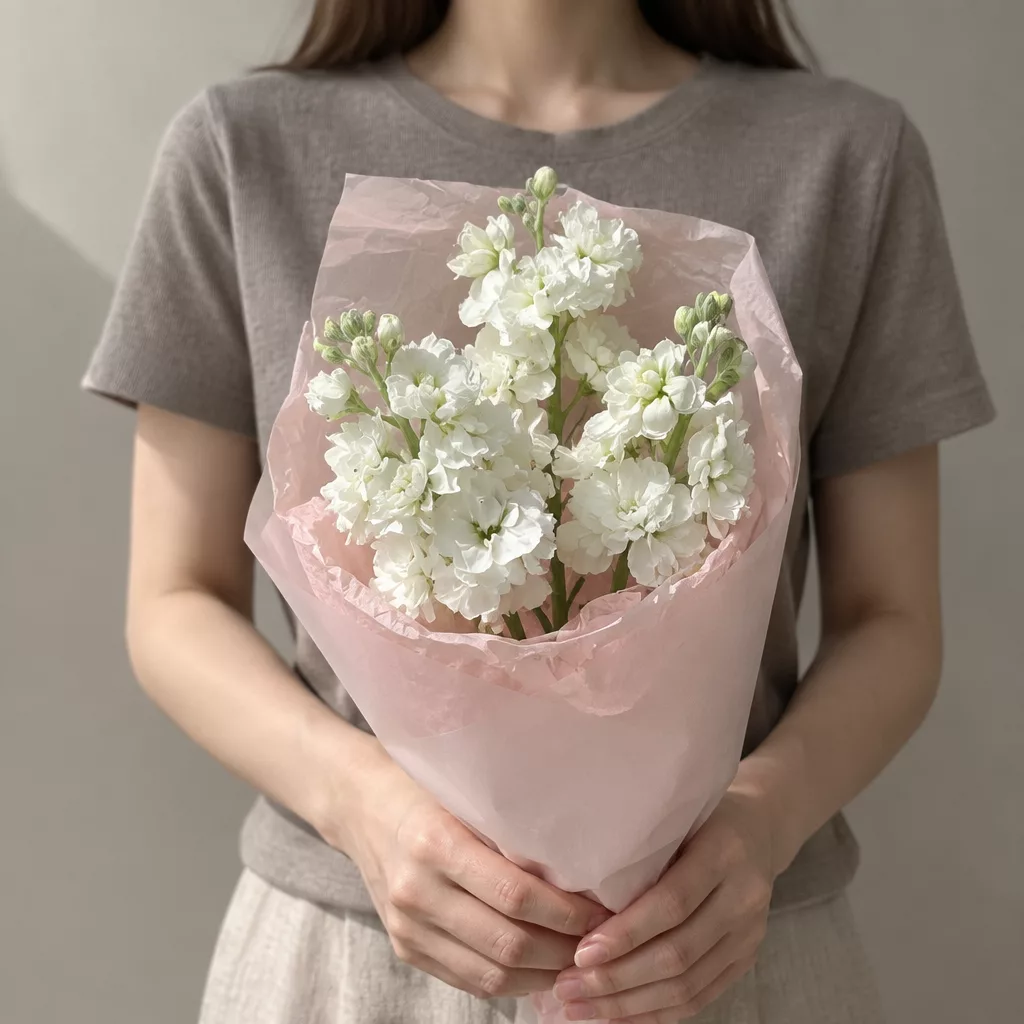
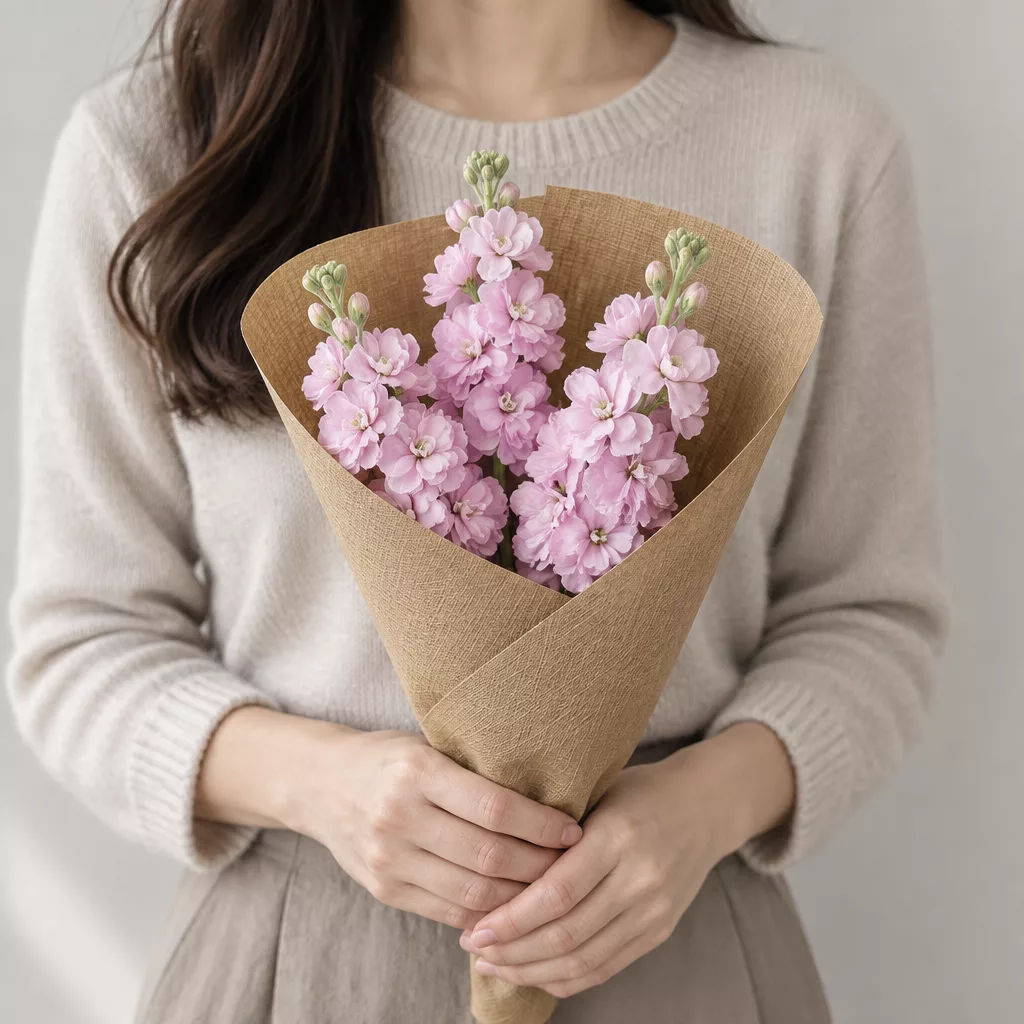
Presentation is not decoration — it is protection. A bouquet wrapped in a single layer of craft paper looks beautiful in a studio photograph but arrives in Petergof with bent outer stems and crushed foliage if the van hits traffic on Peterhofskoe Shosse. We use a double-wrap method: an inner layer of moisture-retaining material around the stem ends, and an outer layer of kraft or linen paper that keeps the shape of the arrangement intact during transit.
For box arrangements, which have become popular for their clean, gift-like appearance, we use rigid hat boxes or kraft boxes with a foam base that holds each stem individually. These travel extremely well because nothing moves. The trade-off is that they are harder to re-arrange in a vase — the recipient often keeps them as a centrepiece in the box itself, which is perfectly fine for a week or more if the foam stays moist.
We always include a care card with the delivery. This is not a formality — it is a practical note explaining when to cut the stems, what water temperature to use, and which flowers in the arrangement have the shortest vase life and should be watched first. In Russia it is common to receive flowers without any care instructions, so recipients sometimes do not know that rehydrating stems in cool water for two hours after arrival can extend vase life by several days. That card is part of the service, not an afterthought.
Gift messages are handwritten on a small card and placed inside the outer wrap. If you want the message to stay private from anyone who might accept the delivery, let us know and we will seal it.
What Happens If No One Is Home
Petergof has a mix of apartment buildings with entry codes, private houses with gates, and newer residential complexes with concierge desks. Each of these creates a slightly different scenario when the recipient is not immediately reachable. Our courier will call on arrival — this is standard practice. If there is no answer within ten minutes, we will call the number provided at checkout a second time and, if you left an alternative contact, try that as well.
For apartment buildings, we can leave the bouquet with a neighbour if you request this in the order notes and provide a flat number. We will not leave flowers unattended in a communal hallway or outside a door in cold weather — a bouquet left in a minus-ten entrance for forty minutes is not a gift anymore. In summer, direct sunlight in a south-facing entrance can be equally damaging.
If delivery is not possible on the first attempt, we contact you to arrange a new window. Rescheduling for the same day is usually possible if the courier has not yet returned to Saint Petersburg. For time-sensitive bouquets — those ordered for a specific birthday hour or a surprise — we strongly recommend confirming the recipient will be available, or choosing a delivery window with some buffer built in.
Many customers sending flowers to Petergof use a surprise delivery as part of the gesture. This works beautifully when the recipient is home, but coordinating it with someone who can quietly confirm the person's location — a family member or a friend — prevents the most common disappointment in flower delivery: a beautiful bouquet and nobody there to receive it.
Caring for Flowers After They Arrive in Petergof
Vase life begins the moment the flowers come through the door, and the first hour matters most. The stems should be cut at an angle — about two centimetres from the bottom — using a sharp knife rather than scissors. Scissors crush the vascular tissue inside the stem, reducing water uptake. A diagonal cut increases the surface area in contact with water, which is what the flower is trying to absorb as quickly as possible after the stress of transit.
Water temperature is a detail most people overlook. Room-temperature water — around eighteen to twenty degrees Celsius — is ideal for most cut flowers. Very cold water slows uptake; very warm water accelerates bacterial growth. Change the water every two days and rinse the vase each time. A clean vase is more important than any flower food sachet.
Keep the arrangement away from direct sun, heating radiators, and fruit bowls. Ripening fruit releases ethylene gas, which accelerates the ageing of cut flowers — roses and carnations are particularly sensitive to it. In Petergof flats with older central heating systems that run hot in autumn and winter, a windowsill away from the radiator is a better spot than the warm shelf above it.
Different flowers in a mixed bouquet will fade at different rates. Alstroemerias typically last ten to fourteen days; roses seven to ten; tulips five to seven. Remove individual stems as they fade rather than waiting for the whole bouquet to decline together. What remains will look better, and the living flowers will last longer without the decaying neighbours releasing ethylene into the water.
Petergof is one of the more rewarding destinations we deliver to — the addresses are specific, the roads are manageable when you know them, and the people receiving flowers there tend to appreciate the effort that a cross-city delivery represents. Getting it right is a matter of honest timing, the right flower choices for the season, and packaging that respects the journey. When those things align, a bouquet arrives looking as though it was assembled at the door.
Frequently asked questions
Can you deliver to Petergof on the same day I order?
Yes, same-day delivery to Petergof is available. Orders placed before midday have the most flexibility for timing. Later orders are possible but the delivery window may shift to late afternoon or early evening depending on the address location and current courier availability. Providing the full street address at checkout helps us confirm the window accurately.
How do you keep flowers fresh during a thirty-kilometre drive in summer heat?
We use insulated packaging around the stem ends and schedule summer deliveries to Petergof in the cooler parts of the day when possible — morning runs before eleven and evening runs after six. For particularly heat-sensitive flowers like hydrangeas, we may suggest a hardier alternative or adjust your delivery window to avoid the midday peak.
What should the recipient do with the bouquet immediately after it arrives?
Cut the stems at a diagonal angle, place them in room-temperature water, and keep the arrangement away from radiators and direct sunlight. We include a printed care card with every delivery explaining these steps. The first two hours after arrival are the most important for extending vase life, especially after a transit of thirty or more kilometres.
Can I send flowers to a Petergof address without telling the recipient in advance?
Yes, surprise deliveries work well when the recipient is confirmed to be home. We call on arrival and will try an alternative contact if there is no answer. For apartment buildings, you can authorise us in the order notes to leave the bouquet with a named neighbour. We do not leave flowers unattended outdoors in cold or direct summer heat.
Which flowers last longest if the recipient is not able to care for them immediately?
Chrysanthemums, alstroemerias, and lisianthus are the most forgiving — they hold well even if they sit in water for a few hours without attention. Roses and tulips need prompt stem-cutting to perform at their best. If the recipient travels frequently or has a busy schedule, a potted orchid or spathiphyllum is worth considering as a longer-lasting alternative to a cut bouquet.
Ready to send flowers?
Pick the city, choose the bouquet, and a local florist takes it from there.
Choose a city →