Sending Flowers to Polyarnye Zori? Here Is What to Expect
Polyarnye Zori sits above the Arctic Circle, a compact city of engineers and families built around the Kola Nuclear Power Plant. It is not a place most flower guides think about — but the people who live there celebrate birthdays, anniversaries, and new arrivals just as warmly as anyone in Moscow or Saint Petersburg. If you are arranging a delivery here, there are a few things worth knowing before you order: the climate changes everything from variety choice to packaging, and timing in a northern city works a little differently than in a major hub.
Where Exactly Deliveries Reach in the Polyarnye Zori Area
Polyarnye Zori is a closed-type city in the Murmansk Oblast, meaning it has a specific administrative boundary and a registered population of around twenty thousand people. Deliveries cover the main residential districts clustered near the city centre, the areas around Ulitsa Lenina and the central square, and the newer residential blocks to the north of the power station zone. The recipient does not need to live in the historic core — most addresses within the city limits are reachable.
The surrounding settlements, including the village of Zasheyok and the adjacent technical zones, require advance coordination and a longer delivery window. If you are sending to an address you are not entirely sure about, it is worth confirming the postal index before placing the order. Russian postal codes in this region begin with 184230, which covers the main city area.
One practical note: because Polyarnye Zori is a smaller city, street-level navigation can be less precise than in larger centres. Providing the apartment number, entrance number, and floor alongside the street address genuinely speeds up the last leg of the delivery. A recipient who is at home and reachable by phone is the single biggest factor in a smooth handover, especially in winter when standing outside to wait is not comfortable for anyone.
Bouquets we can deliver



Delivery Timing and What the Arctic Schedule Looks Like
Turboflora delivers fresh flowers across Russia within one to two hours as a standard, and Polyarnye Zori is included in that commitment. In practice, the exact window depends on the time of day you place the order and the current road conditions between the fulfilment point and the city. The main route into Polyarnye Zori runs along the R-21 Kola highway, which is well-maintained but subject to weather delays in the deep winter months of November through February.
For same-day delivery, placing your order before midday gives the most reliable result. Evening orders — anything placed after seven in the evening — are typically scheduled for early the following morning, which is still fast enough for a birthday surprise if you plan the night before. If the occasion is time-sensitive, like a graduation ceremony or a work anniversary at a specific hour, mention the preferred delivery window in the order notes.
Polar night, which runs roughly from late November to mid-January in this latitude, does not stop deliveries — but it does mean the driver is working in full darkness during afternoon and evening runs. Recipients who are home and have a well-lit entrance make a meaningful difference. If you know the person works shifts, as many residents of Polyarnye Zori do given the nature of employment at the plant, confirm their schedule before choosing the delivery slot so the bouquet does not wait in a cold hallway.
Choosing Flowers for Someone in a Northern City
The first thing a working florist thinks about when assembling a bouquet for a far-northern destination is cold tolerance. That sounds counterintuitive — surely cold keeps flowers fresh? — but the issue is the transition between environments. A bouquet moving from a warm vehicle into minus-twenty air and then back into a heated apartment goes through three temperature zones in under ten minutes. Delicate petals, especially on garden roses with many-petalled heads, can bruise or blacken at the edges during that transition.
Varieties that handle this well include spray chrysanthemums, which are remarkably robust and come in cream, pale yellow, and rich burgundy; alstroemeria, which travels exceptionally well and lasts up to two weeks in a vase; and sturdy single-headed roses in classic red or white, which hold their structure better than the large-headed David Austin style blooms. Lisianthus is another strong choice — it looks delicate but is actually quite resilient, and its ruffled purple and white forms read as luxurious without being fragile.
For winter occasions, a combination of white spray chrysanthemums, deep red alstroemeria, and a few stems of waxflower creates something that feels seasonal and warm without relying on tropical varieties that struggle in the cold. For spring and summer birthdays, when polar day brings almost constant light, sunflowers and bright gerberas become genuinely appropriate — the light outside matches the mood of the bouquet, and the recipient will feel that connection even if they cannot quite explain why.
Budgeting for a Bouquet: What Different Price Points Look Like
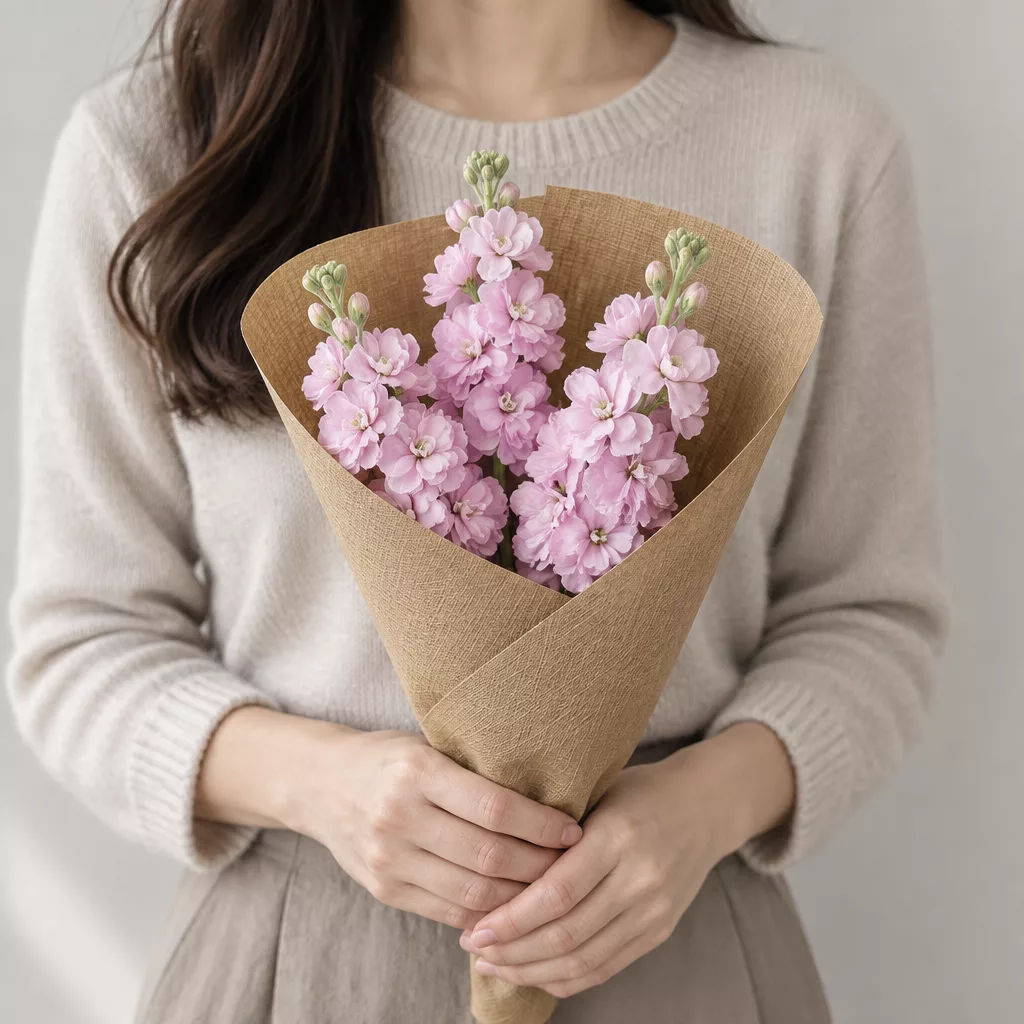
A modest but genuinely beautiful arrangement — think five alstroemeria stems in two complementary colours, wrapped in kraft paper with a ribbon — communicates care without requiring a large spend. It is the kind of thing that sits well on a kitchen table and brightens a weekday morning. This is a good choice when you want to send something warm but the occasion is not a landmark birthday or anniversary.
A mid-range bouquet opens up the combination options considerably. You can move into mixed arrangements that include roses alongside supporting flowers like waxflower, eucalyptus, or small-headed spray roses. Eucalyptus is worth mentioning specifically: it adds a silvery-green texture that photographs beautifully and carries a gentle scent, and it lasts as long as the flowers themselves. A bouquet built around five or seven roses with eucalyptus and a few stems of white lisianthus feels considered and generous.
For significant occasions — a fortieth birthday, a wedding anniversary, a new baby — a larger arrangement with premium roses, garden-style greenery, and perhaps some dried elements like pampas grass or preserved lunaria creates a gift that stays in the room for weeks rather than days. Dried and preserved elements do not need water and hold their shape indefinitely, which is a practical advantage in a busy household. The combination of fresh and preserved in one arrangement is a florist technique that has become genuinely popular over the last few years, and it works especially well for recipients who travel or work long shifts and cannot always tend to a vase daily.
Packaging That Protects Flowers Through Arctic Temperatures
Packaging for a northern delivery is not the same as packaging for a city with mild winters. At Turboflora, bouquets destined for Murmansk Oblast addresses are wrapped with an additional insulating layer — typically a thermal sleeve or a double layer of craft paper with a sealed base — that slows the temperature shock during the transfer between the vehicle and the building entrance. This is not decorative; it is functional, and it makes a real difference to petal condition on arrival.
The recipient should unwrap the bouquet as soon as they bring it indoors, not leave it in the wrapping to warm up gradually. The instinct to let it acclimatise slowly is understandable but counterproductive — trapped moisture inside the packaging can cause stems to sweat and petals to wilt faster than open air would. Unwrap, trim the stems at a diagonal cut, and place in a vase with fresh cool water immediately.
One detail that often surprises people: do not place the vase near a radiator, and in Polyarnye Zori in winter, radiators run warm. The heated apartments in northern cities are genuinely hot by the standards of central Russia — residents are accustomed to it, but flowers are not. A windowsill that faces north or east, away from direct heat, extends vase life by several days. If the recipient has a cool hallway or an unheated utility room, even leaving the bouquet there overnight on the first night helps the flowers settle and open at a better pace.
Russian Flower Customs Worth Knowing Before You Order
If you are sending flowers to someone in Russia for the first time, a few customs are worth understanding so your gift lands the way you intend. The most widely known is the odd-number rule: bouquets given as gifts are traditionally assembled with an odd number of stems — three, five, seven, eleven, and so on. Even numbers are associated with funeral arrangements, so a bouquet of ten roses, however well-intentioned, can feel jarring to a Russian recipient. This is not a strict rule in younger urban circles, but it is still observed widely enough that florists follow it by default.
Colour carries meaning in a more relaxed way. Red roses signal romance and are understood as such — sending them to a colleague or a new acquaintance may communicate more than you intend. Yellow flowers were historically associated with separation or jealousy, though this association has faded considerably among younger generations and in larger cities. If you are unsure, white and pink combinations are universally warm and appropriate for almost any recipient and occasion.
Wrapping style matters too. A beautifully wrapped bouquet — with a visible front, coordinated ribbon, and a handwritten card — is read as more intentional than a loose bunch in cellophane. Russian gift culture places genuine value on presentation, and the wrapping is considered part of the gift rather than just protection for it. When you write the card message, a personal sentence or two is always more appreciated than a generic greeting, even if your Russian is limited — writing in English with a warm tone is perfectly understood and often charming.
Vase Life and Care in the Days After Delivery
A well-chosen bouquet delivered in good condition should last between seven and fourteen days in a Polyarnye Zori apartment, depending on the varieties and how the recipient cares for it. Alstroemeria and spray chrysanthemums consistently hit the upper end of that range. Single-headed roses typically last seven to ten days. Tulips, if they arrive in the order, are shorter-lived — four to six days — but they are so cheerful that the trade-off is usually worth it for spring occasions.
The single most effective care step is changing the water every two days and re-trimming the stems each time. Stems seal over in water, reducing uptake, and a fresh diagonal cut opens the vascular tissue again. Use a clean knife rather than scissors, which can crush the stem rather than cut it cleanly. Keep the vase clean — bacteria in the water is the main reason bouquets die early, and a vase that smells off is a sign that the water needs changing urgently.
Remove any leaves that sit below the waterline from the first day. Submerged leaves decompose quickly and accelerate bacterial growth in the water. This is a small step that most people skip, but it genuinely extends the life of the arrangement. As individual flowers fade — which happens at different rates across a mixed bouquet — remove them and consolidate the remaining stems into a smaller vase. A tight cluster of five healthy stems always looks better than a loose arrangement of ten where half are past their best. The bouquet evolves over its life, and that is part of what makes fresh flowers different from any other gift.
Polyarnye Zori is a city that takes care of its own, and the people who live there deserve flowers that arrive in the same condition they left the studio. The Arctic climate, the shift-work schedules, the long dark winters — none of these are obstacles when you plan the delivery with them in mind. Choose cold-tolerant varieties, give a precise address with apartment and entrance details, pick a delivery window that matches the recipient's day, and write something personal on the card. The rest takes care of itself.
Frequently asked questions
Can flowers really be delivered to Polyarnye Zori in one to two hours?
Yes, Turboflora's standard delivery window applies to Polyarnye Zori. Orders placed before midday on the same day are the most reliably fast. Evening orders are typically fulfilled the following morning. If you have a specific time requirement — a party starting at a certain hour, for example — add it to the order notes and we will work to that window.
Which flowers survive the cold transit best in winter?
Spray chrysanthemums, alstroemeria, and single-headed roses are the most cold-tolerant options for a northern delivery. Lisianthus and waxflower also travel well. Avoid large-headed garden roses and tropical varieties like anthuriums or bird of paradise in the coldest months, as petal edges can bruise during the transition between outdoor cold and a heated apartment.
Is it true that flowers in Russia should always come in odd numbers?
Yes, this is a genuine and widely observed custom. Odd numbers — three, five, seven, eleven — are for celebratory gifts, while even numbers are traditionally associated with mourning. Turboflora follows this by default for all Russian deliveries. If you are ordering a very large arrangement where counting individual stems is less obvious, this matters less, but for standard bouquets it is worth knowing.
What happens if the recipient is not home when the flowers arrive?
The driver will call the recipient before arriving. If there is no answer, we will contact the person who placed the order to arrange a new delivery window. We do not leave bouquets unattended in a hallway or outside a door, especially in winter, as even a short wait in freezing temperatures affects the flowers. Having a reachable phone number for the recipient is genuinely important.
How long will a bouquet last in a Polyarnye Zori apartment?
Most mixed bouquets last seven to fourteen days with basic care: fresh water every two days, a diagonal stem trim each time, and a position away from radiators. Apartments in northern cities run warm, so keeping the vase away from heat sources matters more than it would in a milder climate. Alstroemeria and chrysanthemums consistently reach the upper end of that range.
Ready to send flowers?
Pick the city, choose the bouquet, and a local florist takes it from there.
Choose a city →