Flower Delivery in Pyt-Yakh: Timing, Choices and What to Expect
Pyt-Yakh sits deep in the Khanty-Mansiysk Autonomous Okrug, where winters are long, distances are real, and a bouquet of fresh roses landing at someone's door feels like a genuine event. Whether you are marking a birthday, celebrating a new job, or simply telling someone you are thinking of them, getting flowers there is entirely possible — and when it is done right, the result is worth every kilometre.
Where in Pyt-Yakh We Deliver and How the City Is Laid Out
Pyt-Yakh is a compact oil-industry city of roughly 40,000 people built around a central district and several residential microrayons — the local word for planned residential zones that ring the city core. Streets are organised logically, which actually helps delivery move quickly once a courier is on the road. We cover the central district, the northern and southern residential quarters, and the areas close to the railway station and the main hospital complex.
Because the city is not large, a courier who knows the address can reach most points within the urban boundary in under thirty minutes once the bouquet is ready. The challenge in Pyt-Yakh is not navigation — it is the climate and the condition of roads in shoulder seasons, when spring thaw or early autumn frost can slow things down. We plan for that in our dispatch timing.
If you are sending to a workplace, note that many oil-sector offices and industrial facilities have controlled entry. It helps enormously to give us a contact phone number for the recipient or a colleague at the front desk so the courier is not held at a gate. For residential buildings, most entrances use intercom codes — include that detail in your order notes and the delivery will go smoothly without any delay at the door.
Bouquets we can deliver

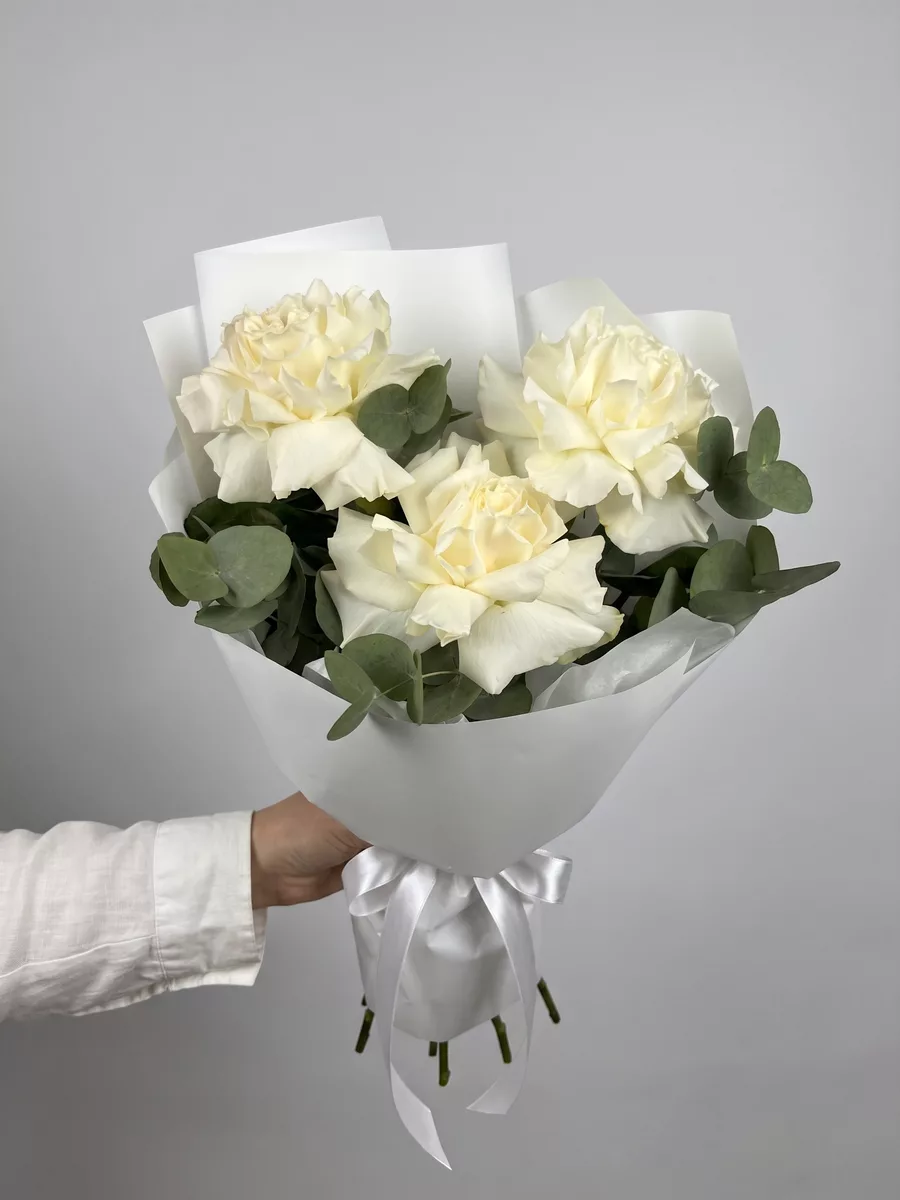
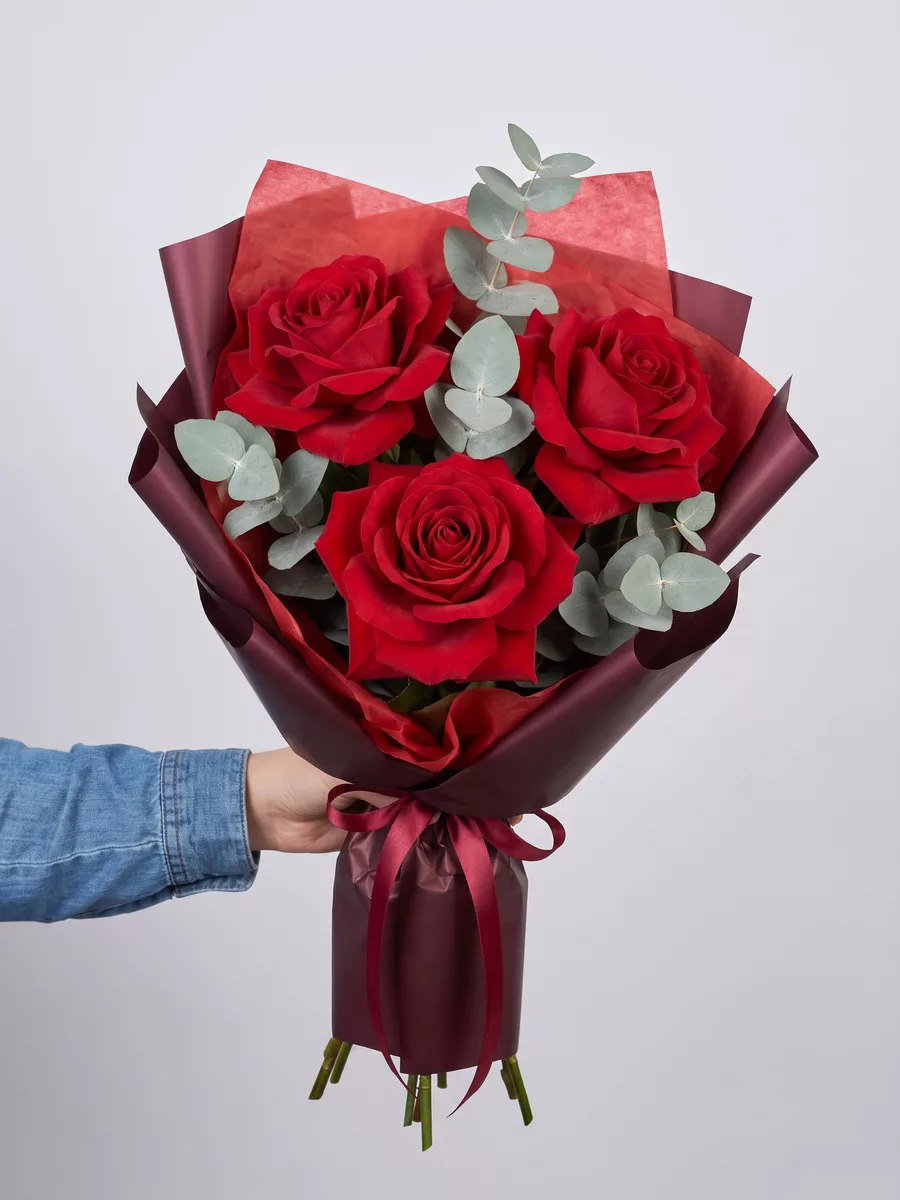
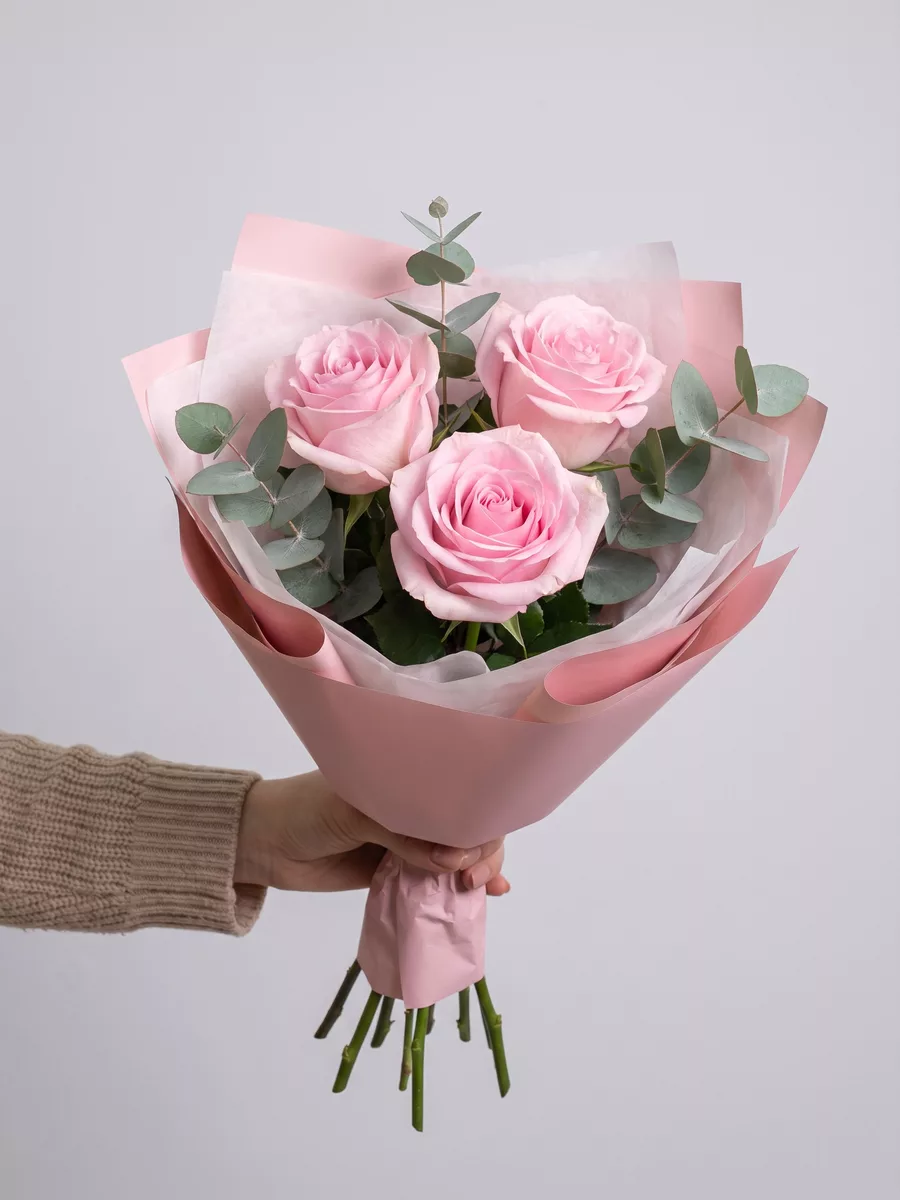
Realistic Timing: What One to Two Hours Actually Means Here
The one-to-two-hour window we promise is measured from the moment your order is confirmed and the bouquet is assembled — not from the second you click the button. In practice, during regular weekday hours, most Pyt-Yakh deliveries arrive closer to the one-hour end of that range. During peak periods — 8 March, Valentine's Day, the days around New Year — we recommend ordering at least a day ahead so you choose the arrival time rather than accepting whatever slot remains.
Siberian weather is a real factor. At minus twenty-five Celsius, which is a normal January day in Pyt-Yakh, flowers need to travel in insulated packaging. Roses and tulips are particularly sensitive to freezing: cell walls rupture if petals are exposed to sharp cold even for a few minutes, and no amount of care at home will revive a frozen bloom. We wrap bouquets in thermal kraft sleeves and, for large arrangements, use insulated boxes during the coldest months.
If you are ordering for a specific moment — a surprise at a restaurant, flowers waiting when someone walks in from the airport — give us a thirty-minute buffer and tell us the hard deadline in the order comments. We would rather arrive early and coordinate with you than rush and deliver something that looks hurried. Precision matters more than speed when the occasion is important.
Choosing the Right Flowers for the Person, Not Just the Occasion
Before you think about colour or price, think about the person receiving the bouquet. Someone who lives alone in a small apartment will appreciate a compact, long-lasting arrangement more than an enormous statement piece that overwhelms the space. A colleague celebrating a promotion will feel differently about receiving red roses than about a bright, mixed bouquet of spray chrysanthemums, lisianthus and eucalyptus — the latter reads as festive without being romantic.
For birthdays, seasonal combinations work beautifully and feel considered rather than generic. In autumn and winter, deep burgundy alstroemeria paired with cream freesia and a few stems of waxflower creates warmth without being heavy. In spring, ranunculus and tulips in soft peach or coral shades feel genuinely fresh and alive. These combinations last well, which matters when the recipient is far from a florist and cannot easily replace wilting stems.
If you are sending to someone who follows Russian traditions, a note on numbers: in Russia, even numbers of flowers are associated with mourning, so bouquets are always assembled in odd numbers — three, five, seven, eleven and so on. This is not superstition so much as a deeply embedded social norm, and receiving an even-numbered bouquet can feel jarring to someone who grew up with this custom. We follow this rule automatically, but it is worth knowing if you are composing your own request.
Budget Ranges and What Each One Gets You in Pyt-Yakh
Thinking in ranges rather than exact figures helps set expectations honestly. At the entry level, you are looking at a focused single-variety bouquet — five or seven stems of good-quality roses or a generous bunch of alstroemeria, which branches naturally and looks fuller than its stem count suggests. Alstroemeria is also one of the longest-lasting cut flowers available, often holding well for ten to fourteen days with basic care, which makes it a genuinely thoughtful choice at a modest budget.
In the mid range, combinations become possible. A florist can layer textures — adding gypsophila for airiness, a few stems of eucalyptus for scent and structure, or wax flower for delicate detail. This is where presentation really lifts the gift. A bouquet at this level, wrapped in kraft paper with a satin ribbon and a handwritten card, looks and feels complete rather than minimal.
At the upper end, you move into statement arrangements: garden roses with their full, layered petals, peonies when in season, or an orchid plant that will bloom for weeks after the cut flowers have finished. For Pyt-Yakh recipients who do not have easy access to florists locally, a longer-lasting gift has genuine practical value on top of its emotional one. Premium arrangements also give the florist room to build something architectural — height, movement, contrast — rather than simply adding more of the same flower.
Vase Life and Care: Helping Flowers Last in a Siberian Home
Homes in Pyt-Yakh are heated intensively through the long winter, and that dry indoor heat is one of the biggest enemies of cut flowers. Central heating systems in Russian apartment buildings run hot from October through April, and interior humidity can drop very low. Roses and tulips in particular lose moisture quickly in these conditions, wilting days earlier than they would in a temperate climate.
The simplest interventions make the biggest difference. Change the water every two days — do not wait until it clouds. Re-cut the stems at an angle each time, removing about a centimetre, so the cut surface stays fresh and water uptake continues. Keep the bouquet away from radiators and windowsills: a radiator dries the air directly around the flowers, and a cold windowsill in January can shock tropical varieties like gerbera or anthurium.
Tulips are a special case worth mentioning. They continue to grow after cutting — sometimes by several centimetres — and will lean toward any light source in the room. If your arrangement starts looking lopsided, rotate the vase a quarter turn each morning. Tulips also prefer cold water and a cool room overnight; if you have a cool hallway or an unheated room above freezing, moving them there at night genuinely extends their life by two or three days. These are small habits that the recipient will appreciate knowing, so include them in a note if you are sending flowers as a gift.
What to Write: Cards, Messages and Russian Gifting Customs
A handwritten card transforms a bouquet into a memory. In Russian gifting culture, the card is taken seriously — people keep them, re-read them, and sometimes display them alongside the flowers for the whole time the bouquet lasts. A message that is specific to the person and the moment lands far better than a generic phrase, even if it is shorter. Three sincere sentences beat a paragraph of pleasantries.
If you are writing in English for a Russian-speaking recipient, that is perfectly fine — many people find it charming and personal. If you want the message translated or written in Russian, note that in your order and we will handle it. Avoid overly formal language if the relationship is warm; Russian communication between friends and family tends to be direct and affectionate rather than ceremonially polished.
For milestone occasions — a significant birthday, a graduation, a new baby — Russians often appreciate a message that acknowledges the specific achievement rather than just congratulating generally. Saying what you admire about the person, or naming the exact thing you are celebrating, feels more meaningful than a standard formula. If you are sending anonymously and want the recipient to guess who sent the flowers, a small inside reference in the card will make the moment far more enjoyable for them than a completely unsigned note, which can feel unsettling rather than romantic.
Planning Ahead: Holidays, Seasonal Availability and Smart Ordering
Pyt-Yakh follows the Russian holiday calendar, and several dates create sharp spikes in flower demand across the country simultaneously. The 8th of March — International Women's Day — is by far the busiest single day of the year for florists in Russia. It is not a quiet gesture holiday; it is a major national celebration where almost every woman receives flowers from someone. Ordering three to five days ahead for this date is not overcautious — it is necessary if you want a specific variety or colour.
Other busy periods include the 14th of February, the 1st of September (when children bring flowers to teachers on the first day of school — this is a genuine and widespread tradition), and the period around New Year from late December through early January. Corporate gifting also spikes around professional holidays like Defender of the Fatherland Day on the 23rd of February and various industry-specific dates.
Seasonal availability affects what looks best at any given time. Peonies are available for a relatively short window in late spring and early summer; forcing them in other seasons is possible but the quality rarely matches. Tulips peak in late winter and spring. Sunflowers are at their best in summer. Working with what is naturally in season always produces a more beautiful result than insisting on an out-of-season flower that has travelled a long way and shows it. When you place your order, our team can suggest the best available options for that week — trust that conversation, because it comes from knowing what arrived fresh that morning.
Sending flowers to Pyt-Yakh is a real and reliable option, and when it is done with some thought — the right varieties for the season, a card that says something true, and a delivery time that fits the occasion — it becomes a moment the recipient genuinely remembers. Distance does not have to make a gift feel impersonal. A well-chosen bouquet arriving on time, wrapped carefully against the cold, tells someone in Western Siberia that you paid attention to them from wherever you are sitting right now.
Frequently asked questions
Can you deliver flowers to a residential apartment building in Pyt-Yakh?
Yes, we deliver to apartment buildings across the city. To avoid any delay at the entrance, include the intercom code or entry instructions in your order notes. If the building has a concierge, we can coordinate with them. A recipient phone number is always helpful so the courier can call ahead and ensure someone is home to receive the bouquet.
How do flowers survive the cold during winter delivery in Pyt-Yakh?
We use insulated thermal packaging — kraft sleeves for standard bouquets and insulated boxes for larger arrangements — during cold months. Flowers are never left exposed to freezing air. The transition from warm shop to cold street to warm home is managed quickly and carefully. Roses, tulips and tropical varieties like gerbera are most cold-sensitive and receive the most protective wrapping.
Is it possible to send flowers to a workplace or oil-sector facility in Pyt-Yakh?
Yes, but industrial and corporate facilities often have controlled access. Please provide a contact name, the recipient's phone number, and any access instructions in your order. For sites with security gates, it helps to let the recipient or a colleague know to expect a delivery so they can facilitate entry. Our courier will always call ahead when approaching a secured location.
Why do Russian bouquets always have an odd number of flowers?
Even numbers of flowers are traditionally associated with mourning in Russian culture and are used at funerals. Giving an even-numbered bouquet as a celebration gift feels culturally wrong to most Russian recipients, even if they cannot immediately explain why. All our bouquets are assembled in odd numbers automatically, so you do not need to count or specify this — it is simply how we work.
What flowers last longest if the recipient cannot easily replace them?
Alstroemeria regularly lasts ten to fourteen days with basic care and is one of the most reliable choices for distant recipients. Chrysanthemums and lisianthus also have excellent vase life. Orchid plants last weeks beyond any cut flower. If longevity matters — because the person lives far from shops or has a busy schedule — mention it when ordering and we will build the bouquet around durable varieties.
Ready to send flowers?
Pick the city, choose the bouquet, and a local florist takes it from there.
Choose a city →