Flower Delivery in Shadrinsk: Timing, Choices and What Actually Arrives
Shadrinsk sits in the Kurgan region, a city with its own rhythm and its own sense of occasion. Whether you are sending roses to a colleague on a work anniversary or surprising a grandmother on her birthday, the flowers need to arrive looking as though they were just cut — stems firm, petals closed enough to open slowly over the next few days. That is exactly what this delivery is designed to do, and this article walks you through every step so you know what to expect before you place the order.
Which Parts of Shadrinsk We Deliver To and Why It Matters
Shadrinsk is a compact city, but its districts have different street layouts, and some residential blocks on the outskirts require extra navigation time. Delivery covers the central area around Karl Marx Street and the market district, the residential neighbourhoods to the north and south, and the industrial-adjacent areas where many office buildings are located. If you are sending to a private address in the newer housing estates near the ring roads, add a note with any entry code or gate instructions — couriers appreciate it and it keeps the flowers in good condition rather than sitting in a cold hallway.
The city is not enormous, which is genuinely good news for flowers. Short travel distances mean bouquets spend less time in transit and arrive with petals intact. In summer, when Shadrinsk temperatures can climb above thirty degrees Celsius, shorter routes matter enormously because heat accelerates wilting in thin-petalled flowers like anemones and sweet peas. In January and February, when temperatures drop well below minus twenty, the courier uses insulated packaging so that tulip stems do not freeze and crack before the recipient even unwraps them.
If you are unsure whether a specific address falls within the delivery zone, the safest approach is to enter the full address at checkout. The system confirms coverage instantly. For addresses outside the main city boundary, contact the shop directly — edge cases are handled individually rather than refused outright, and it is always worth asking.
Bouquets we can deliver



How Long Delivery Actually Takes and When to Order
The standard delivery window in Shadrinsk is one to two hours from the moment the order is confirmed. That window covers the time the florist needs to assemble the bouquet fresh — not pull it from a shelf — and the transit time to the address. For most central locations, the actual arrival is closer to the one-hour mark. For addresses on the outer edges of the delivery zone, expect the full two hours, especially during evening peaks when more orders are placed simultaneously.
Morning orders placed before noon tend to arrive with the most flexibility. If you want the flowers on a desk before a meeting starts at ten in the morning, place the order the evening before and schedule it for a specific time slot. Shadrinsk has a one-hour time difference from Moscow, so if you are ordering from another city, factor that in — it is a simple adjustment but easy to overlook when you are in a hurry.
Same-day delivery is available throughout the working day. Late-evening delivery, typically after eight in the evening, depends on current availability and is worth confirming at the time of ordering. For important occasions like birthdays or anniversaries where timing is part of the gift — imagine flowers arriving exactly at the moment a celebration begins — booking a specific hour in advance is always the better choice. Florists can hold a bouquet at peak freshness for a short window, but the tighter the timing, the more notice helps everyone involved.
Choosing Flowers for the Person, Not Just the Occasion
Russian flower-giving culture has a few customs that are worth knowing if you are unfamiliar with them. Bouquets are almost always given in odd numbers — three roses, five tulips, seven stems of lisianthus. Even numbers are associated with mourning, so a bouquet of ten stems, however beautiful, sends an unintended message. The florists assembling your order follow this automatically, but if you are specifying a custom quantity, keep it odd.
Beyond numbers, think about the recipient before the flower variety. A young woman who works in a creative field often appreciates something less conventional — ranunculus in coral and cream, or a mix of garden roses with eucalyptus — over a formal dozen red roses. An older woman who grew up in the Soviet era may genuinely love a classic arrangement of chrysanthemums, which carry warm associations in Russian culture quite different from their meaning in some Western countries. A man receiving flowers — and men do receive flowers in Russia, particularly on professional occasions — responds well to strong structural stems like irises, protea, or sunflowers rather than delicate blooms.
For children, bright gerberas and small sunflowers work well. They are robust enough to survive enthusiastic handling and cheerful enough to feel like a celebration rather than a formal gesture. When in doubt about the recipient's taste, choose a single flower type in one colour rather than a complex mixed bouquet — simplicity reads as confidence, and a generous bunch of white or yellow tulips is rarely wrong.
What to Order at Different Budget Levels
At the more modest end, a bouquet of five to seven tulips or spray roses makes a genuinely warm impression without requiring a large spend. Spray roses are particularly good value because each stem carries multiple small blooms, so the bouquet looks fuller than its stem count suggests. Chrysanthemums, both the large-headed and the pom-pom varieties, also offer a lot of visual volume for their cost and last exceptionally well — up to two weeks in a vase with proper care.
In the middle range, you start to have room for combination bouquets. A pairing of garden roses with alstroemeria gives you the romance of a rose bouquet with the longevity of alstroemeria, which can hold for ten to fourteen days. Adding greenery — eucalyptus branches, ruscus, or pittosporum — lifts a bouquet from a bunch of flowers into something that looks considered and styled. This is the range where presentation starts to feel genuinely special rather than simply adequate.
At the higher end, peonies when in season, large-headed garden roses, or orchid stems make a statement. Peonies are only reliably available from late May through July in Russia, so if you are ordering outside that window, a florist will tell you honestly rather than substitute something inferior without notice. Eustoma, also called lisianthus, is a beautiful alternative — its ruffled petals resemble both roses and peonies, it is available year-round, and it holds its shape beautifully for up to ten days. Combining it with white or blush roses creates an arrangement that photographs well and impresses in person.
How Temperature and Season Affect What You Receive
Shadrinsk experiences a sharply continental climate. Summers are genuinely hot and winters are genuinely cold, and both extremes affect which flowers travel well and which require extra care during transit. Understanding this helps you set realistic expectations and make smarter choices depending on the time of year.
In summer, from June through August, thin-petalled flowers like anemones, sweet peas, and delicate garden roses with many petals are more vulnerable to heat stress during the final stretch of delivery. They are still available and still beautiful, but they benefit from being placed in water immediately on arrival. Sunflowers, gerberas, and alstroemeria handle summer heat much better and are reliable choices for warm-weather deliveries. The courier uses cool packaging, but if the recipient is not home and the bouquet sits in a warm hallway, some flowers will show stress faster than others.
In winter, the concern reverses. Frozen stems are the main risk. Tulips are particularly sensitive — a stem that freezes and thaws quickly becomes limp and cannot recover. Insulated wrapping protects against this for the duration of transit, but the recipient should unwrap the bouquet promptly and put stems in room-temperature water rather than cold water straight from the tap. Cold water in winter actually slows uptake for flowers that have been chilled. Roses and carnations handle cold better than tulips and gerberas, which is worth knowing when ordering for outdoor events or deliveries to unheated spaces.
Presentation, Wrapping and the Moment of Arrival
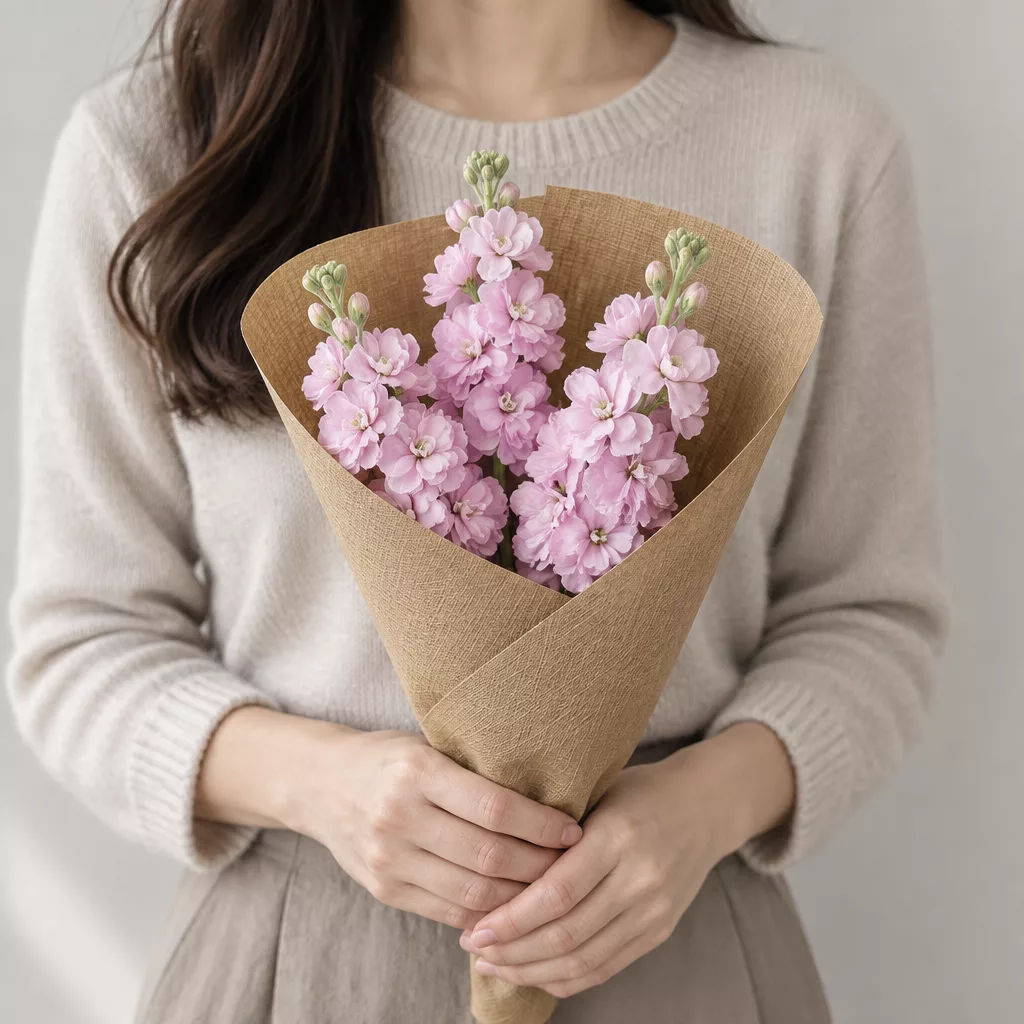
The wrapping of a bouquet is part of the gift. In Russia, flowers are almost always presented wrapped — kraft paper, fabric, or a combination — rather than in a box, though box arrangements are growing in popularity for certain occasions. A well-wrapped bouquet holds its shape during transit and creates a moment when the recipient unwraps it, which is its own small ceremony. The florist chooses wrapping that complements the colour palette of the flowers rather than covering them entirely.
If you are sending flowers to a workplace, consider that the recipient will carry the bouquet through an office. A tall, wide arrangement can be awkward to manage through a corridor or on public transport home. A tighter, more structured bouquet — or a compact box arrangement — is more practical without being less beautiful. This is worth mentioning in the order notes if you know the recipient works in a busy office environment.
The delivery itself is handled with care at the door. The courier does not simply hand over the bouquet and leave. If the recipient is not home, they will contact the sender before leaving the flowers with a neighbour or in a communal area — unattended flowers in an unheated stairwell in a Shadrinsk winter is not a good outcome for anyone. If there is a specific instruction about how to handle absence — leave with a neighbour, call the recipient's mobile, hold and redeliver — include it in the order notes. These small details make the difference between a delivery that lands perfectly and one that requires a follow-up call.
Keeping Flowers Fresh After Delivery: What Actually Works
The moment flowers arrive is when their vase life is decided. Most people know to put flowers in water, but the details matter more than the principle. Start by cutting the stems at a diagonal angle — about two centimetres from the bottom — using a sharp knife rather than scissors. Scissors crush the stem cells that absorb water, which shortens vase life noticeably. If you do not have a sharp knife, a clean pair of scissors is still better than nothing, but the diagonal cut is non-negotiable.
Remove any leaves that would sit below the waterline. Leaves submerged in water decompose quickly, introducing bacteria that block the stems and cause flowers to wilt days before they should. This is the single most common mistake people make with fresh flowers, and it costs at least three or four days of vase life. Keep the vase away from direct sunlight, radiators, and fruit bowls — ripening fruit releases ethylene gas, which accelerates ageing in flowers, particularly roses and carnations.
Change the water every two days and re-cut the stems each time. This sounds like more effort than most people expect, but it genuinely extends vase life by five to seven days for most common varieties. Tulips are a special case — they continue growing after cutting and will lean toward light sources, so rotating the vase keeps them upright. Roses benefit from being placed in a cool room overnight, which slows their opening and extends the period when they look their best. With proper care, roses last seven to ten days, alstroemeria ten to fourteen, and chrysanthemums up to two weeks.
Sending flowers to Shadrinsk is straightforward when you know the details that actually matter — the timing, the seasonal choices, the wrapping, and what happens at the door. A bouquet assembled fresh and delivered within two hours arrives in the condition it was meant to be seen in, and a recipient who puts it in water correctly will enjoy it for a week or more. The occasion matters, the person matters, and the small decisions around variety, season, and presentation are what turn a delivery into something genuinely remembered.
Frequently asked questions
How far in advance should I order if I need flowers to arrive at a specific time in Shadrinsk?
Place the order at least two to three hours before the moment you have in mind. The one-to-two hour window starts from confirmation, and the florist still needs time to assemble the bouquet fresh. For morning deliveries before ten, ordering the evening before is the safest approach, especially for addresses in the northern residential neighbourhoods where navigation takes longer.
What flower combinations work best for a birthday delivery to a grandmother in Shadrinsk?
Spray chrysanthemums paired with alstroemeria hold beautifully in transit and open gradually over several days, which suits someone who will enjoy watching them develop. Add a few stems of lisianthus for softness without fragility. Avoid thin-petalled flowers like anemones in summer heat. The combination reads warm and considered rather than formal, which tends to suit the occasion far better than a single-variety bouquet.
Does the delivery zone cover the industrial-side office buildings, and does that affect how the bouquet arrives?
Yes, office buildings in the industrial-adjacent areas are within the delivery zone. The routes there are straightforward but slightly longer than central addresses near Karl Marx Street. For summer deliveries to those locations, choosing sturdier stems like roses or carnations over delicate varieties is sensible, since a few extra minutes in heat makes a visible difference to thin petals.
Can I send flowers to a Shadrinsk address without knowing the exact apartment number?
It creates a real risk of delay. The courier navigates to the building but cannot complete delivery without knowing where to go inside, particularly in larger residential blocks where intercoms are numbered by flat. If you are missing the apartment number, contact the shop directly after ordering so the courier can be briefed to call the recipient on arrival rather than wait at the entrance.
What should I tell the florist if I want the bouquet to suit a work anniversary rather than a birthday?
Mention the professional context when placing the order. Work anniversaries call for something composed and not overly romantic — think structured arrangements with roses, eustoma or solidago rather than loose garden-style bunches. Neutral or rich tones like burgundy, white or deep orange read as celebratory without feeling personal. A note in the order comments is enough for the florist to adjust the assembly accordingly.
Ready to send flowers?
Pick the city, choose the bouquet, and a local florist takes it from there.
Choose a city →