Sending Flowers to Sim: Timing, Areas and What Arrives at the Door
Sim is a compact industrial town in the Chelyabinsk region, tucked into the southern Ural foothills, and sending flowers there from a distance can feel uncertain. Will the roses still be fresh after the journey? Will the courier actually find the address? These are fair questions, and this article answers them honestly — covering where we deliver, how long it takes, which flowers travel best in Ural temperatures, and what the person opening the door will actually experience.
The Delivery Area Around Sim and How We Cover It
Sim sits along the Sim River in the western part of the Chelyabinsk region, close to the border with Bashkortostan. The town itself is relatively small, but its streets vary — from central apartment blocks near the main square to private houses on quieter residential lanes further from the centre. We deliver to all residential addresses within Sim proper, including the outlying neighbourhoods that stretch toward the river and the factory districts to the east.
If you are sending to a specific enterprise address or a facility on the industrial edge of town, it helps to include the building number and any gate or checkpoint instructions in the order notes. Our courier will follow those details precisely. For addresses in the immediate surrounding villages or hamlets just outside Sim's administrative boundary, contact us before ordering so we can confirm coverage — some of these locations are reachable and some require additional lead time.
One thing worth knowing: Sim's street numbering occasionally follows older Soviet-era patterns, where building numbers skip or repeat with letter suffixes. If the recipient's address includes a letter after the number — for example, 14A or 7B — include it in full. That small detail prevents delays and means the flowers arrive on the first attempt rather than the second. Our couriers are familiar with the local layout, but a complete address always makes the experience smoother for everyone.
Bouquets we can deliver


Realistic Timing: What 1–2 Hours Actually Means Here
The 1–2 hour window we advertise is our working standard, not an optimistic estimate. For Sim, the delivery time depends on two things: when the order is placed and what is happening on the roads between our dispatch point and the recipient's address. Orders placed during morning and early afternoon on weekdays typically land at the shorter end of that range. Evening orders, especially on weekends, may sit closer to the two-hour mark simply because traffic and courier availability shift.
If you are planning a delivery for a specific moment — a birthday breakfast, a surprise before a dinner, an anniversary at a particular hour — order at least three hours ahead of that target time. That buffer absorbs any unexpected variable without any stress on your side or ours. You can specify a preferred delivery window in the order form, and we will do our best to honour it.
We do not deliver in the middle of the night, and we would not recommend it even if we could. Flowers left outside a door in Ural temperatures after dark risk cold damage, and a surprise that wakes someone at 2 a.m. is rarely the warm gesture it was meant to be. The last delivery slot of the day is designed to arrive while the recipient is still awake and at home. If the occasion calls for a morning arrival, place the order the evening before and schedule it for early the following day — that is the most reliable way to land the bouquet exactly when you want it.
Choosing Flowers That Survive the Ural Climate
The southern Urals have sharp seasonal temperature swings, and that matters directly for which flowers make the journey well. In winter, temperatures in Sim regularly drop below minus fifteen Celsius, and a bouquet left in an unheated vehicle for even twenty minutes can suffer frost damage that shows up hours later as blackened petal edges or collapsed stems. In summer, the reverse problem appears — heat above thirty degrees accelerates wilting faster than most people expect.
For cold-weather deliveries, chrysanthemums, alstroemeria and spray carnations are genuinely robust. Their cell structure handles brief cold exposure better than, say, garden roses or hydrangeas, which are beautiful but vulnerable. If you are sending roses in January, we pack them with insulating wrap and the courier keeps them inside the vehicle, not in an open boot. That process works, but it is worth knowing that a lush peony bouquet ordered in February carries more risk than the same bouquet ordered in May.
In summer, the most reliable choices are sunflowers, eustoma and solidago — all of them handle warmth with more grace than tulips, which can go limp within an hour in direct heat. Tropical varieties like anthuriums are surprisingly heat-tolerant and add a striking visual contrast that works well as a standalone gift. Whatever the season, we condition all flowers in temperature-controlled water before dispatch, which extends their vase life considerably compared to flowers that go straight from cold storage to the door.
What the Recipient Sees When the Bouquet Arrives
Presentation matters as much as the flowers themselves, and it is worth thinking about what the person on the other side of the door will actually experience. In Russia, it is traditional to give flowers in odd numbers — one, three, five, seven — and while younger recipients may not think about it consciously, older family members often notice and appreciate that detail. We follow this tradition by default, so you do not need to specify it unless you want an even number for a specific reason.
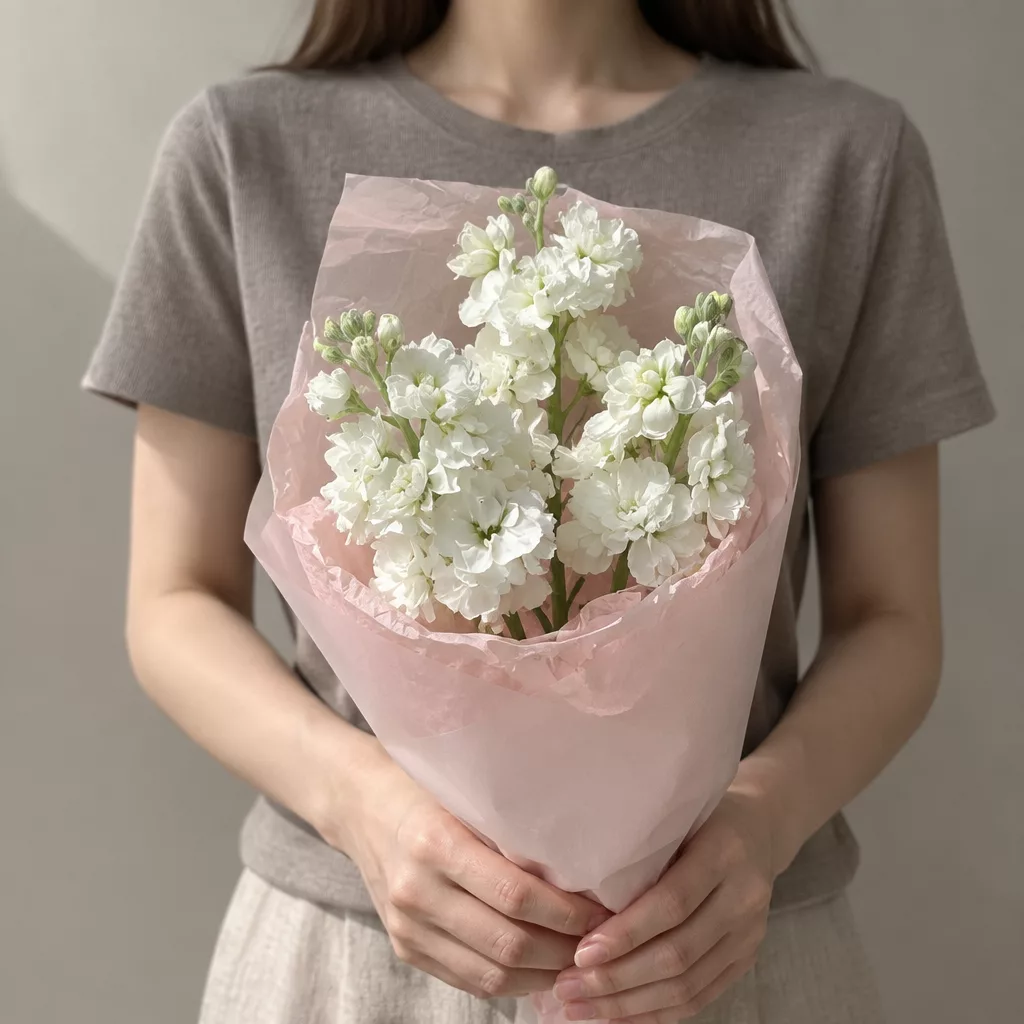
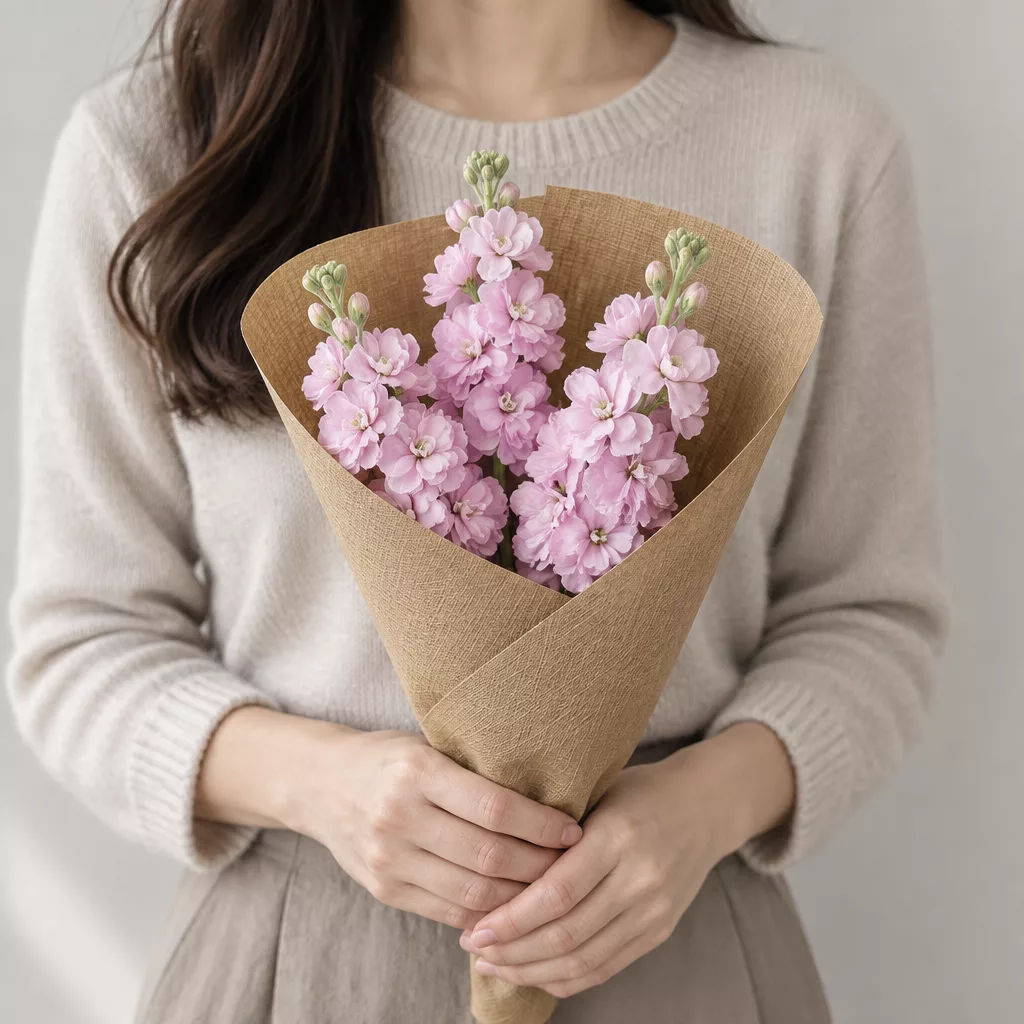
The bouquet arrives wrapped and ready to present, not loose in a bucket. The wrapping style depends on the composition — a structured round bouquet typically comes in a cone wrap with a paper collar, while a longer, more asymmetric arrangement might be wrapped in a flat sheet tied at the stem. Neither style requires the recipient to do anything except remove the outer layer and place the flowers in water.
If you want to include a card with a handwritten message, add it in the order notes and we will print and attach it to the bouquet. Keep the message warm and specific — something personal lands better than a generic phrase. In Russian culture, flowers are given with feeling, and a card that reflects genuine thought makes the whole gesture more memorable. If you are sending from abroad and are not sure how to phrase something in Russian, write it in English and we will handle the formatting so it reads naturally to a Russian recipient.
Occasions That Work Particularly Well in Sim
Birthdays are the most common reason people send flowers to Sim, and they respond well to bold, generous compositions. A large mixed bouquet with spray roses, alstroemeria and seasonal greenery reads as a proper celebration rather than a polite gesture. If the recipient is a woman over fifty, classic red or pink roses remain the most appreciated choice — this is not a cliché in Russian culture, it is a deeply held preference that holds across generations.
For younger recipients, something more contemporary works well: a garden-style arrangement mixing different textures — ranunculus, eucalyptus, waxflower and a few open roses — feels personal and considered rather than generic. These compositions photograph beautifully, which matters because recipients often share them on social media, and a distinctive bouquet becomes part of the memory of the occasion.
Teacher appreciation is a significant gifting moment in Russia, particularly around Knowledge Day on the first of September and Teacher's Day in October. A single large chrysanthemum or a modest mixed bouquet is the norm for a student bringing flowers to class. If you are sending on behalf of a family rather than a single student, you can go larger — a fuller arrangement signals collective gratitude rather than an individual gift. New Year and the eighth of March, which is International Women's Day and the single biggest flower-giving day in Russia, both deserve early ordering: demand in Sim as everywhere rises sharply, and leaving it to the day itself risks limited availability.
Keeping the Bouquet Fresh After It Arrives
A bouquet that arrives in good condition can last a week or more with straightforward care, and it is worth passing these instructions along when you send your message, especially if the recipient is not in the habit of keeping cut flowers. The first step is trimming the stems — about two centimetres cut at an angle under running water, immediately before placing the flowers in a vase. The angled cut increases the surface area absorbing water and prevents the stem from sitting flat against the bottom of the vase, which would block intake.
The water itself should be cool and clean, changed every two days. Tap water in Sim, as in most Russian cities, is treated and fine for flowers — no need for special additives unless the bouquet came with a sachet of flower food, in which case dissolve it in the first fill. Keep the vase away from direct sunlight, radiators and fruit bowls. Ripening fruit releases ethylene gas, which accelerates petal drop in roses and tulips faster than most people realise.
Different varieties in a mixed bouquet age at different rates. Alstroemeria and chrysanthemums typically outlast roses by several days. As roses begin to drop petals, remove them rather than leaving them in the water, where decomposing petals create bacteria that shorten the life of the remaining stems. Pulling out the fading flowers and rearranging what remains can extend the display by another three or four days, which means a bouquet sent on a Tuesday can still look presentable the following weekend.
How to Order Without Uncertainty and What to Do If Something Goes Wrong
Ordering flowers for delivery to Sim from another city — or from abroad — can feel like handing something important to an unknown process. The practical steps that reduce uncertainty are simple. Confirm the recipient's address including the apartment number, floor and any door code for the entrance. In Russian apartment buildings, the entrance door often has a code panel, and without the code a courier cannot reach the flat door. If you do not know the code, include the recipient's phone number so the courier can call from the street.
If the delivery is a surprise, let us know in the notes and we will call you rather than the recipient if there is any access issue. That way the element of surprise stays intact. If the recipient is at work and the delivery is going to an office address, confirm that the office accepts deliveries and that someone will be at reception during the delivery window.
In the unlikely event that the bouquet arrives damaged — flowers visibly wilted, stems broken, wrapping compromised — photograph it immediately and contact us the same day. We take presentation seriously and will resolve the situation quickly. What we ask is that you reach out promptly: a complaint raised a day later is harder to assess than one raised within an hour of delivery. Most issues are resolved with a replacement or a credit, and we would rather fix a problem than leave someone disappointed with an occasion that mattered to them.
Sending flowers to Sim is a straightforward process when you know what to expect — the delivery area, the timing realities, which varieties travel well in Ural temperatures and what the person at the door will actually see. The occasion matters, the presentation matters, and so does knowing that the bouquet was handled with care from the moment it was assembled to the moment it arrived. Turboflora covers Sim with the same attention we bring to every delivery across Russia, and a well-chosen bouquet sent with a genuine message will be remembered long after the petals have faded.
Frequently asked questions
Can you deliver to a private house address in Sim, not just apartments?
Yes. We deliver to both apartment buildings and private residential houses within Sim. For houses, include the full street address and any gate or yard details in the order notes. If the property is on a lane without a clear house number, add a short description of the building or a nearby landmark so the courier can locate it without delay.
What happens to the flowers if the recipient is not home when the courier arrives?
The courier will call the recipient before attempting delivery. If there is no answer, we will contact you as the sender to decide the next step — either a second delivery attempt or leaving the bouquet with a neighbour if you authorise it. We do not leave flowers unattended outside a door in cold weather, as frost damage can occur within minutes.
Is it possible to send flowers to Sim for International Women's Day on 8 March?
Yes, but we strongly recommend ordering at least two days in advance. The eighth of March is the peak demand day for flower delivery across all of Russia, and popular varieties — particularly tulips and roses — sell out quickly. Ordering early also gives you a wider choice of compositions and a confirmed delivery window rather than a best-effort slot.
Do Russian recipients expect flowers to be wrapped in a particular way?
There is no single required style, but flowers should always arrive neatly wrapped — loose stems handed over without packaging feel incomplete in Russian gifting culture. Bouquets are typically presented in paper or craft wrapping, sometimes with a ribbon. We handle all of this as standard. The recipient simply removes the outer wrap and places the flowers in water.
How many flowers should I order for a birthday bouquet in Russia?
Odd numbers are the traditional norm for celebratory occasions in Russia — three, five, seven, eleven or more stems. Even numbers are associated with mourning and are avoided for happy events. We apply this convention automatically when assembling bouquets, so unless you specifically request an even number for your own reasons, your birthday bouquet will follow the expected tradition.
Ready to send flowers?
Pick the city, choose the bouquet, and a local florist takes it from there.
Choose a city →