Sending Flowers to Simferopol? Here Is What to Expect
Simferopol sits at the crossroads of the Crimean Peninsula, and when someone you care about lives there, distance should not make the gesture feel smaller. Whether you are marking a birthday from Moscow, congratulating a colleague on a promotion, or simply letting a friend know you are thinking of them, a well-chosen bouquet arriving within hours says more than a message ever could. This guide walks you through how delivery to Simferopol actually works, what to order for the season and the occasion, and how to make sure the flowers look beautiful long after the door closes.
Which Areas of Simferopol We Reach and How Quickly
Simferopol is a compact city by Russian standards, but it spreads across several distinct districts — the historic centre around Lenin Square, the residential neighbourhoods of Kievskoe and Zagorskoye, the university quarter near Simferopol State University, and the newer developments stretching toward the airport road. We deliver to all of them, and the courier route is planned to keep travel time realistic rather than optimistic.
For most central and mid-ring addresses, expect the bouquet to arrive within one to two hours of placing your order. Outer districts and addresses near the Simferopol reservoir or the suburban edges of Mramornoe can add thirty to forty minutes depending on traffic on the Evpatoriyskoye Highway, which is the main artery connecting the western side of the city. If you are sending to a hospital, university dormitory or gated residential complex, add the building number and entrance code in the comments field — couriers cannot call the recipient if the order is meant to be a surprise.
Simferopol also serves as a transit hub, so traffic around the central railway station and the bus terminal can slow things down between eleven in the morning and two in the afternoon on weekdays. Scheduling delivery for the morning or early evening usually gives the smoothest result. If timing is critical — a birthday dinner, an anniversary lunch — place the order at least three hours ahead and mention the deadline in the notes.
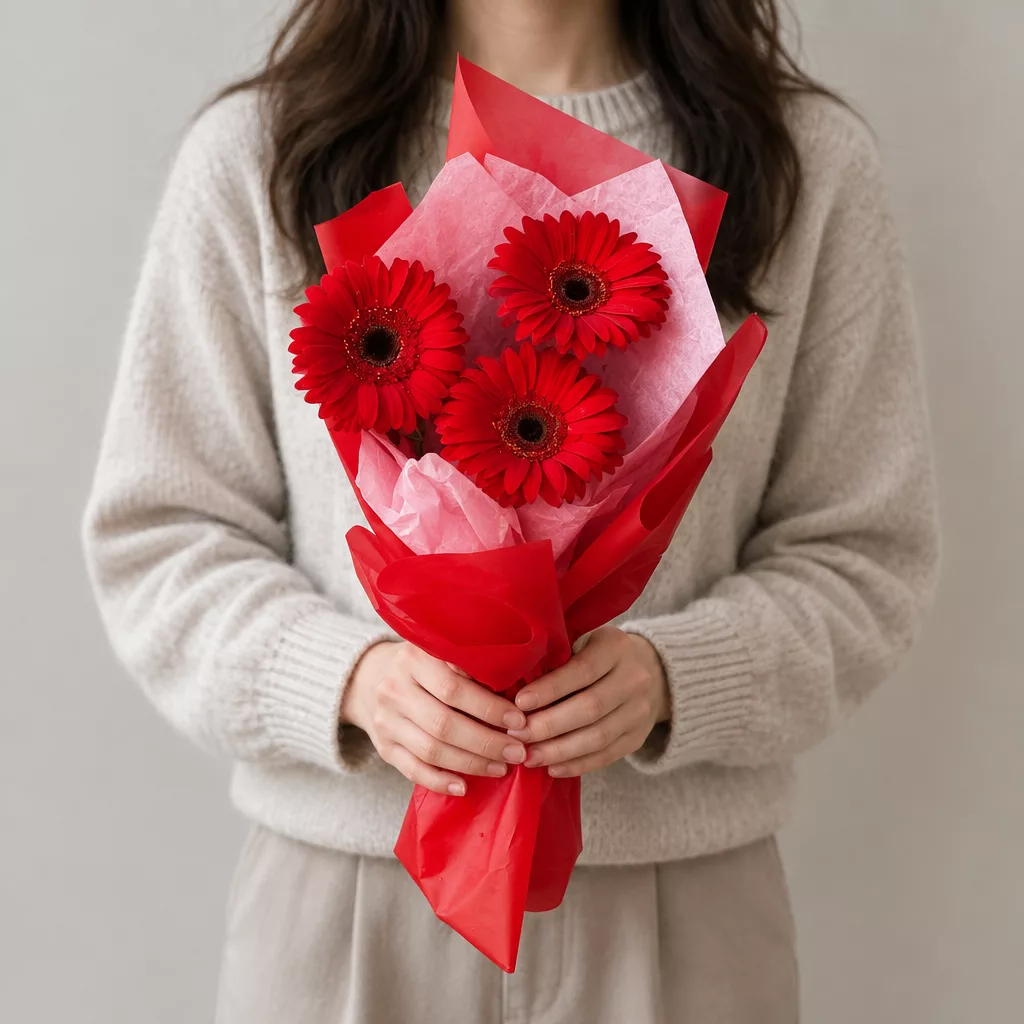
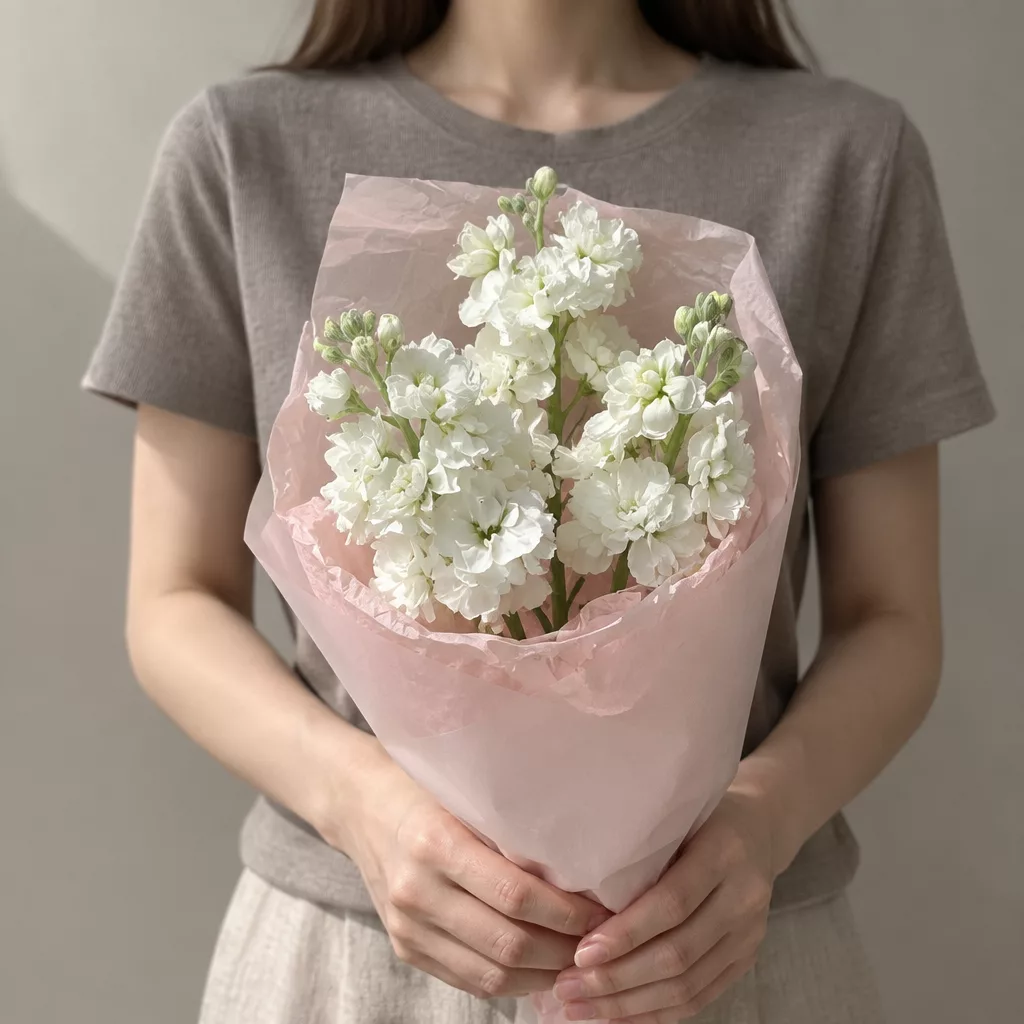
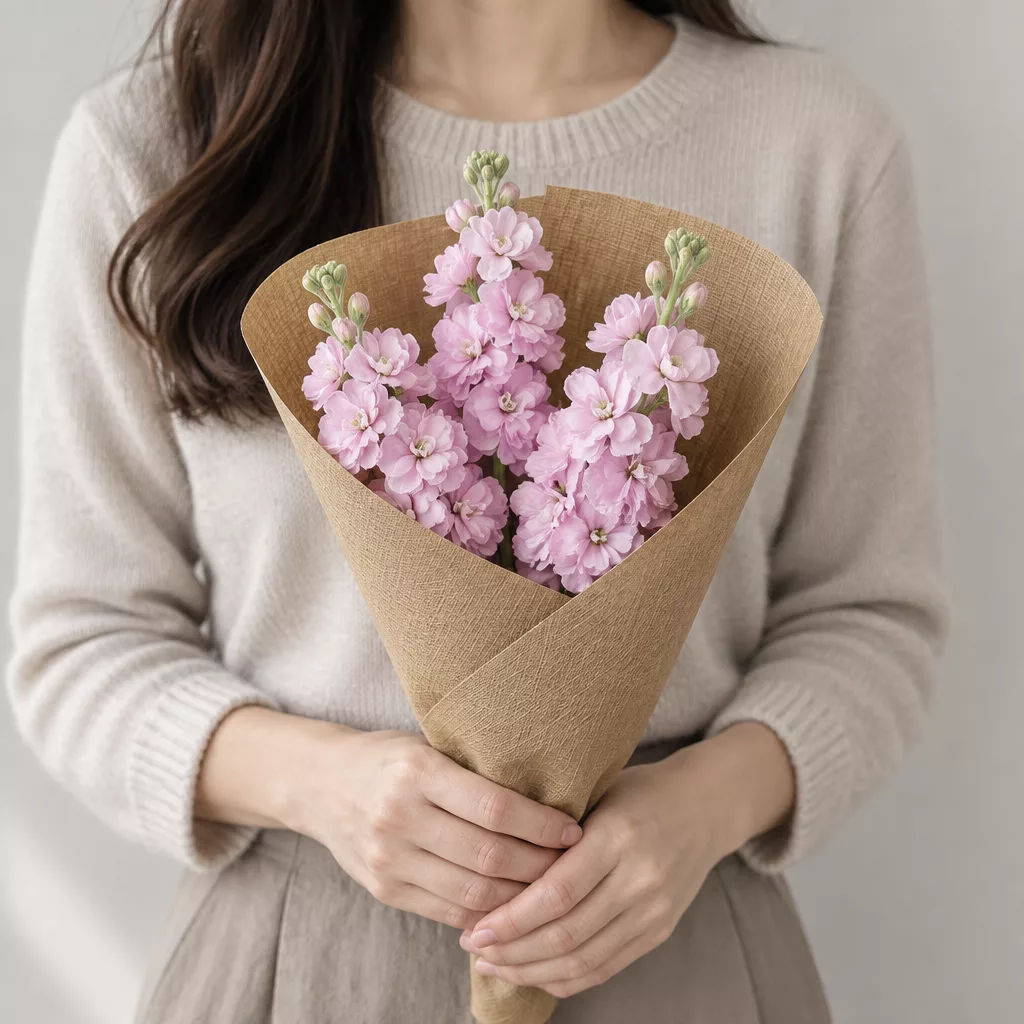
Bouquets we can deliver

Choosing Flowers for the Simferopol Climate
Simferopol has a mild continental climate that tilts toward the Mediterranean in summer. Summers are hot and dry, often reaching thirty-five degrees Celsius in July and August, while winters are cool and damp rather than harsh, rarely dropping below minus five. That range matters enormously when choosing flowers, because a bouquet that travels beautifully in February can wilt within an hour on a hot August afternoon if the wrong varieties are chosen.
In summer, lean toward heat-tolerant flowers: lisianthus holds its petals well above thirty degrees, statice and celosia are almost indifferent to heat, and sunflowers — properly conditioned — stay upright for five to seven days even in warm rooms. Avoid garden roses with very full heads like David Austin types in peak summer; their many-petalled structure traps moisture and they deteriorate faster in the heat. Standard spray roses and single-headed roses with tighter buds travel far better.
From October through March, the palette opens up considerably. Peonies are not available year-round, but when they are — typically May through July — they are spectacular in Simferopol because the mild spring suits them. Tulips in winter, ranunculus in early spring, and chrysanthemums through autumn are all reliable choices that arrive looking as they should. Alstroemeria deserves a special mention: it is one of the longest-lasting cut flowers in any temperature, holds colour well in transit, and gives a bouquet volume without weight. For a recipient who may not have a vase immediately to hand, alstroemeria is a kind and practical choice.
Reading the Occasion Before You Read the Catalogue
Before you think about specific flowers, think about the person and the moment. A colleague receiving a birthday bouquet at the office needs something that will not dominate a shared workspace or shed pollen on papers — single-stem orchids in a sleeve, a compact spray rose arrangement, or a mixed bouquet built around lisianthus all work well. A close friend celebrating something personal at home can receive something more generous and fragrant: garden roses combined with eucalyptus, sweet peas in season, or a loose arrangement of peonies and white ranunculus.
In Russian tradition, the number of flowers in a bouquet carries meaning. An odd number — five, seven, nine — is standard for celebratory occasions. Even numbers are associated with mourning, so a recipient who knows the custom will notice immediately if you send six roses. When in doubt, choose five or seven stems for a small bouquet, or ask us to arrange an odd-numbered composition when placing the order.
Colour also communicates. Red roses are romantic and carry a clear message; they are not typically given to a grandmother or a teacher unless the relationship is very close. Yellow flowers have a complicated reputation in older Russian custom — some people associate them with separation — but among younger recipients in cities like Simferopol, yellow is simply cheerful and modern. White is universally appropriate and always elegant. If you are unsure of the recipient's preferences, a mixed bouquet with a dominant colour and softer accent tones is the safest and often the most beautiful choice.
Bouquet Options Across Different Budgets
A meaningful bouquet does not require an extravagant spend, but it does require knowing what gives value at each level. At the entry level, a well-assembled five-stem rose bouquet with greenery — eucalyptus, ruscus, or pittosporum — looks intentional and complete. The key is proportion: a few stems in the right sleeve with the right ribbon outperform a loose bundle of many stems that have not been arranged.
In the mid range, combinations become possible. Roses paired with lisianthus create texture and depth; alstroemeria mixed with freesia adds fragrance without the cost of premium blooms. Freesia is worth mentioning specifically because it is one of the most genuinely fragrant cut flowers available and it lasts well — a small bunch of freesia tucked into a larger arrangement transforms the experience of receiving it.
At the upper end, the difference is in the hero flowers: peonies when in season, garden roses with full cupped heads, hydrangea as a base that gives extraordinary volume, or premium orchid stems. A single large hydrangea head — one stem — can anchor an entire arrangement and last ten to fourteen days in a vase if properly cared for. Orchids in a box, presented without a traditional sleeve, have become increasingly popular in Simferopol as a gift for professional occasions: they feel contemporary, they travel well, and they last weeks rather than days.
Whatever the budget, always include a handwritten card. In Russian gift culture, the card is not an afterthought — it is part of the gift, and recipients often keep them.
What Happens Between the Order and the Door
When you place an order, the bouquet is assembled fresh — not pulled from a refrigerator display. Conditioning begins the moment the stems are cut: they go into clean water with a floral preservative, the lower leaves are removed so nothing sits below the waterline, and the arrangement is built to travel upright without the heads pressing against one another. This matters because bruised petals — caused by flowers being packed too tightly or laid flat — are the most common reason a bouquet looks tired on arrival even when the flowers themselves are fresh.
For delivery in summer, the bouquet is wrapped in insulating material to slow heat transfer during transit. This is not a small detail: a rose exposed to direct sun through a car window for twenty minutes on a forty-degree day will show petal damage that is irreversible. Our couriers keep the vehicle cooled and carry bouquets upright. If you have ever received flowers that arrived limp despite being described as fresh, the transit conditions — not the flowers — were almost certainly the cause.
On arrival, the recipient should unwrap the bouquet within a few minutes, re-cut the stems at an angle under running water, and place them immediately in a clean vase with fresh water. The angle cut — about two centimetres at forty-five degrees — increases the surface area through which the stem draws water. This single step extends vase life by two to three days. Include this instruction in the card message if the recipient is not an experienced flower owner; it is a small kindness that makes the gift last longer.
Keeping Flowers Fresh in a Simferopol Apartment
Most Simferopol apartments are warm by northern Russian standards, and in summer they can be genuinely hot, especially on upper floors of Soviet-era buildings that were not designed with air conditioning in mind. Flowers in these conditions need more attention than they would in Saint Petersburg in October, and knowing a few basics makes a real difference.
Keep the vase away from direct sunlight and away from fruit bowls. Ripening fruit releases ethylene gas, which accelerates the ageing of cut flowers — roses and carnations are especially sensitive. A vase on a kitchen counter next to a bowl of tomatoes or apples will lose two to three days of vase life simply from proximity. A windowsill in full afternoon sun will do similar damage. The ideal spot is a bright room with indirect light and a temperature below twenty-five degrees.
Change the water every two days and re-cut the stems each time. If the water turns cloudy quickly, bacterial growth is happening faster than normal — add a small amount of floral preservative or, in its absence, a single drop of bleach to a full vase of water. This sounds counterintuitive but it works: the bleach inhibits bacteria without harming the flower at that concentration.
Mixed bouquets need monitoring because different flowers age at different rates. Remove any stem that has clearly finished — a wilted rose head, a browning tulip — before it begins to affect the others. What remains can be rearranged into a smaller, still-beautiful composition. A bouquet of seven roses that has lost two stems is not a failed gift; it is still five roses, and five roses in a clean vase with fresh water look deliberate and lovely.
Practical Tips for Ordering from Outside Simferopol
Most people ordering flowers to Simferopol are doing so from another city — Moscow, Saint Petersburg, Krasnodar, or further afield. The practical challenges are the same regardless of where you are sitting: you cannot see the flowers, you cannot check the address in person, and you are trusting the process entirely. Here is how to make that trust well placed.
Always confirm the recipient's full address including the apartment number, building entrance number, and the intercom code if there is one. Simferopol has many residential complexes built in the nineteen-seventies and eighties where the entrance system is not obvious to a courier arriving for the first time. A missing entrance number causes delays that no amount of good planning can recover.
If the delivery is a surprise, do not give the recipient's mobile number as the contact — give your own. The courier will call you if there is an issue, and you can manage the situation without revealing the surprise. If the recipient needs to be home to receive the order, consider telling them to expect a small delivery without specifying what it is.
For significant occasions — a milestone birthday, an anniversary — place the order the evening before and specify a morning delivery window. Morning deliveries arrive before the day fills up with plans, and the recipient has the flowers with them throughout the occasion rather than receiving them at the end of it. A bouquet on the breakfast table on the morning of a birthday is a different experience from the same bouquet arriving at eight in the evening, and the flowers will tell that story either way.
Sending flowers to Simferopol from across Russia is straightforward when you understand what the city's climate asks of the flowers, what the occasion asks of the arrangement, and what the recipient will need to keep them beautiful. The gesture itself — choosing something living and fragrant and sending it to arrive at a specific door at a specific moment — is one of the most direct expressions of care that exists. Get the variety right for the season, get the address details complete, and let the rest take care of itself.
Frequently asked questions
Can I schedule delivery to arrive exactly when a birthday dinner starts in Simferopol?
Yes, but place the order at least three hours ahead and note the dinner time in the comments. Traffic around the central railway station slows between eleven and two on weekdays, so an early evening window usually works better than a lunchtime slot. The courier will call ahead to confirm the recipient is available before arriving.
Which districts of Simferopol take longer to reach and should I allow extra time?
Addresses near the Simferopol reservoir, the suburban edges of Mramornoe, and the outer stretches toward the airport road typically add thirty to forty minutes to the standard window. If your recipient lives in these areas, choose a morning delivery rather than a same-hour rush to keep the bouquet arriving in good condition rather than after a long warm wait in a courier bag.
What flowers hold up best during Simferopol summers when temperatures reach thirty-five degrees?
Chrysanthemums, alstroemerias, and tropical varieties like anthuriums tolerate heat far better than tulips or garden roses. If you are sending in July or August, ask for a bouquet built around these stems rather than delicate spring flowers. The courier journey is short, but even twenty minutes in summer heat can wilt thin petals before the bouquet reaches the door.
Can the bouquet be delivered to a patient at a Simferopol hospital or a student at the university?
Deliveries to hospitals and the university quarter near Simferopol State University are possible, but ward and campus access varies. Leave the building name, ward number or faculty block in the order notes, and include the recipient's phone number so the courier can arrange a handover point at reception or the main entrance if internal access is restricted on the day.
How does Simferopol's role as a transit hub affect same-day flower delivery?
The city's central railway station and bus terminal create a concentration of traffic that peaks on weekday midmornings and early afternoons. Bouquets ordered for delivery between eleven and two may run slightly late on busy days. Scheduling for before ten in the morning or after four in the afternoon gives the courier a cleaner route and keeps the flowers fresher on arrival.
Ready to send flowers?
Pick the city, choose the bouquet, and a local florist takes it from there.
Choose a city →