Sending Flowers to Solnechnogorsk? Here Is What to Expect
Solnechnogorsk sits about 65 kilometres north-west of central Moscow along the Leningrad Highway, and getting a truly fresh bouquet there used to mean planning a day in advance. Turboflora changed that. We deliver to Solnechnogorsk within one to two hours, which means the roses your mother receives at noon were still in a cooled studio that morning — not sitting in a van since the night before. This article walks you through the delivery area, what affects timing, how to choose flowers for the season and the occasion, and how the recipient can keep the bouquet looking its best for as long as possible.
Which Parts of Solnechnogorsk We Reach and Why It Matters
Solnechnogorsk is a compact city, but its residential areas spread across several distinct districts — the older central streets near the railway station, the newer mikrorayon developments to the north, and the quieter cottage settlements along the lake shore. We deliver to all of them, including addresses in Andreevka, Alabushevo and the surrounding suburban zones that administratively belong to the Solnechnogorsk district.
Knowing your exact address matters more than people expect. A street-level address in the central part of town is straightforward. A cottage community or gated residential complex outside the city boundary may add ten to fifteen minutes to the route, so it is worth mentioning in the order notes if the entrance requires a pass or a gate code. Our couriers call ahead, but a quick note saves everyone time.
The Leningrad Highway is the main artery connecting us to Solnechnogorsk. On weekday mornings between roughly eight and ten, and again from five to seven in the evening, traffic on that corridor slows considerably. We account for this in our dispatch schedule, so orders placed during those windows are routed with the delay already factored in. Placing your order thirty minutes earlier than you think you need to is always the safest habit, especially if the bouquet is tied to a specific moment — a birthday breakfast, an anniversary dinner, a surprise at the door.
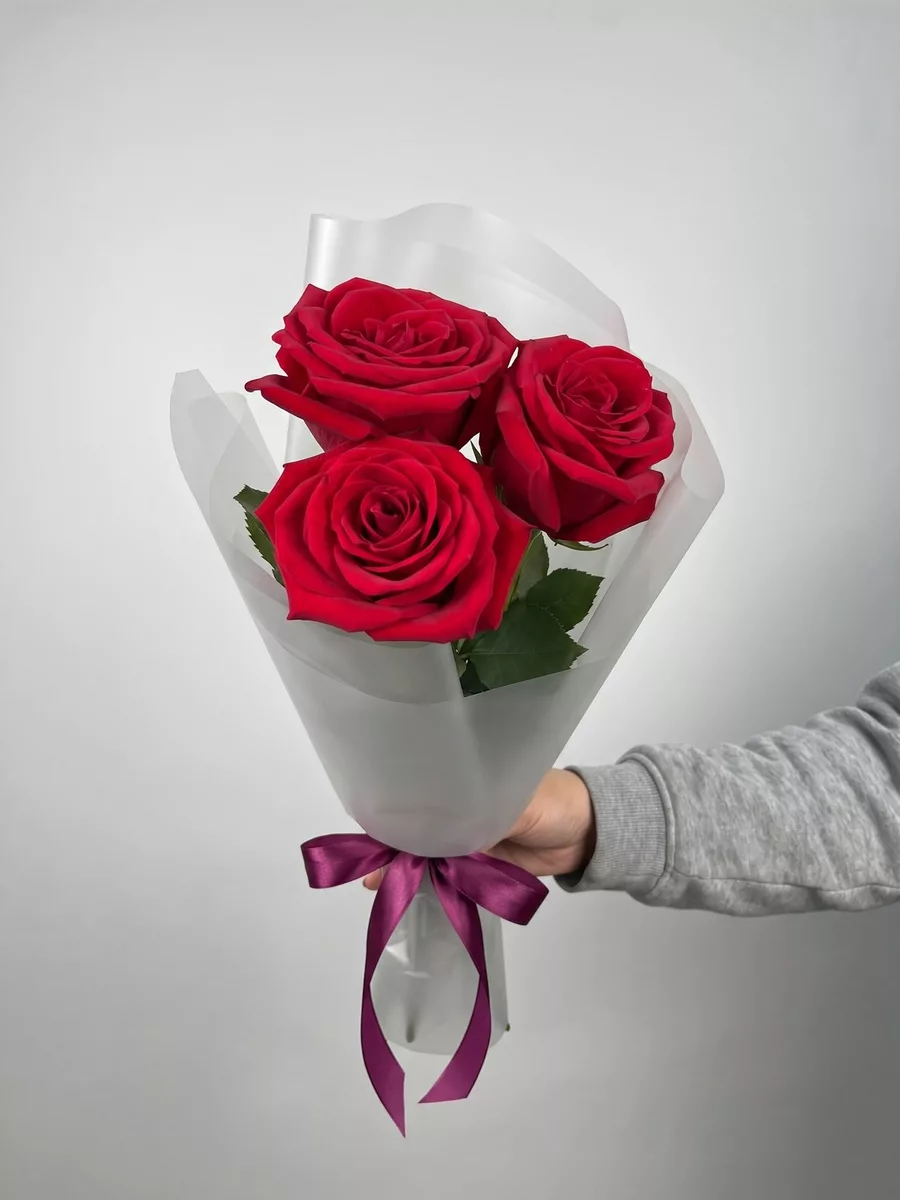
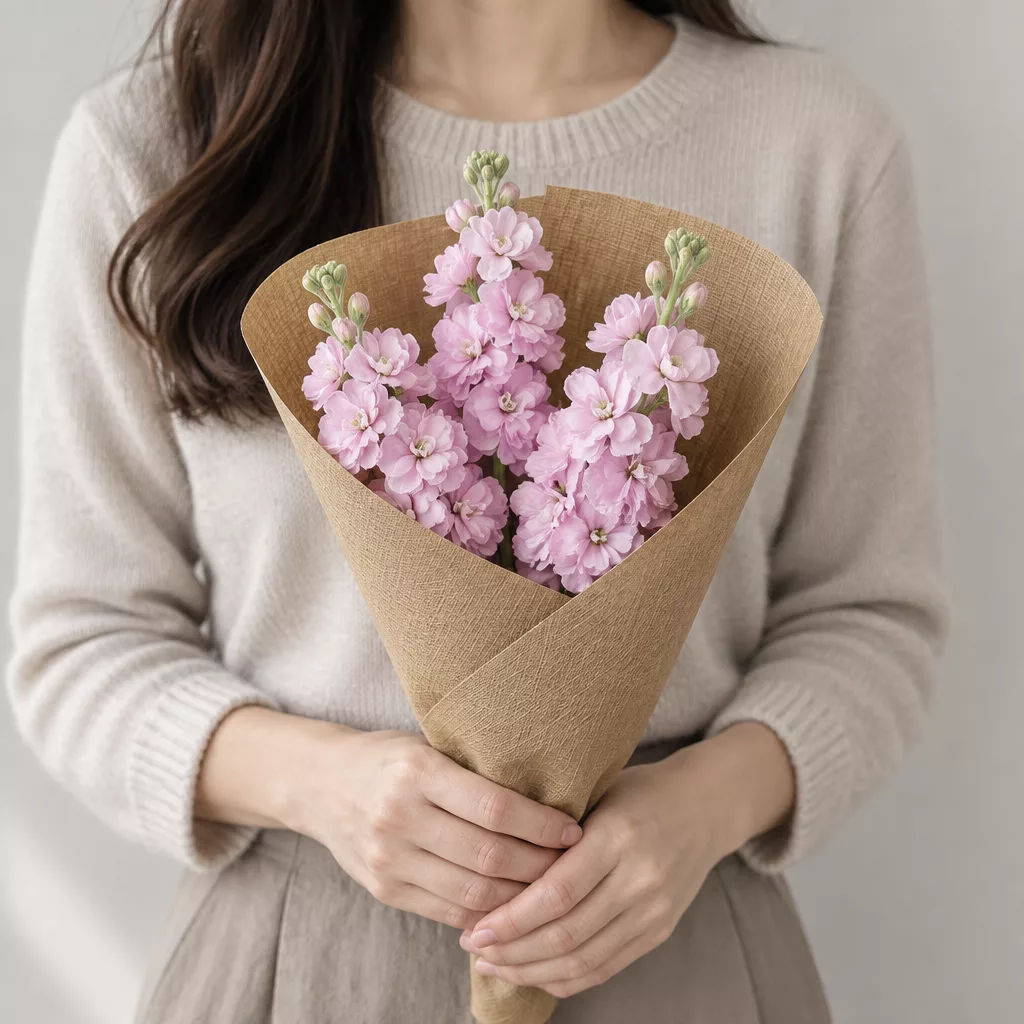
Bouquets we can deliver


Timing Your Order: When to Place It and What Can Shift the Clock
The one-to-two-hour window we promise is measured from the moment your order is confirmed and assembly begins in the studio, not from the moment you click the button. Assembly itself takes ten to twenty minutes depending on the complexity of the bouquet — a single-variety hand-tied bunch of tulips is faster than a mixed arrangement with seasonal foliage and a gift box.
Weather is the honest wildcard. In winter, Solnechnogorsk regularly sees temperatures between minus ten and minus twenty degrees Celsius. At those temperatures, flowers need insulated packaging — kraft sleeves alone are not enough. We use thermal wrapping for cold-weather deliveries, which adds a few minutes to preparation but protects the blooms completely. Chrysanthemums and spray roses handle cold transit well. Tropical varieties like strelitzia or anthurium are more sensitive and can show blackening on petals if exposed to freezing air even briefly, so we take extra care with those.
Summer heat above thirty degrees is the opposite problem. Direct sun through a car window can raise the interior temperature dramatically, and flowers wilt faster than most people realise. We schedule summer deliveries with shorter stops and keep the car climate-controlled. If you are ordering for an outdoor celebration in July or August, mentioning that in the notes helps us choose varieties that travel well in heat — lisianthus, alstroemeria and statice are all good warm-weather choices.
The single most common timing mistake is ordering a bouquet for a specific surprise arrival and not accounting for the recipient's own schedule. If the person is out, the flowers wait, and waiting in a hallway in either extreme of temperature is never good for blooms.
Choosing Flowers for the Occasion, Not Just the Season
In Russia, flowers carry social weight that visitors from some other countries may not immediately recognise. An odd number of stems is the standard for celebratory gifts — one, three, five, seven, eleven, fifteen, twenty-five. Even numbers are traditionally associated with mourning, so a bouquet of ten roses can create an unintended impression. We always compose our arrangements with this in mind, and if you are ordering a round number of stems for a non-Russian recipient, that is worth knowing.
For a birthday, the goal is warmth and a little drama. Peonies in late spring and early summer are the obvious choice — full, fragrant, unmistakably generous. Outside peony season, garden roses with open heads like David Austin varieties give a similar lushness. Pair them with eucalyptus or ruscus for contrast and the bouquet reads as considered rather than assembled.
For a new job, a housewarming or a thank-you, lighter compositions work better. White and cream freesias with a few stems of waxflower have a clean, professional quality without feeling cold. Alstroemeria in coral or peach tones is long-lasting and cheerful — practical for someone who might not have vases or flower-care experience yet.
For romantic occasions, red roses remain the clearest signal in Russian culture, but the presentation matters as much as the flower. A tightly spiralled hand-tied bunch of forty-one red roses wrapped in kraft and velvet ribbon reads very differently from a loose, airy arrangement of the same roses mixed with white gypsophila. Think about the personality of the recipient and let that guide the composition more than the flower name alone.
Bouquets by Budget: Getting the Most from Every Price Point
A smaller budget does not mean a smaller impression — it means choosing varieties that give volume and colour efficiently. Spray chrysanthemums are one of the best-value flowers in the Russian market: a single stem carries multiple heads, the colours range from white to deep burgundy, and they last ten to fourteen days in a vase with basic care. Three or five stems of spray chrysanthemums wrapped with a wide satin ribbon and a sprig of pittosporum make a gift that looks deliberate and generous.
In the mid-range, you gain access to roses in multiple head sizes, ranunculus in season, and mixed arrangements that combine textures. A combination of standard roses, lisianthus and eucalyptus is a reliable mid-tier bouquet that photographs well and ages gracefully — lisianthus continues opening over several days, so the bouquet actually looks different and interesting on day three than it did on day one.
At a higher budget, the difference is mostly in stem count, variety rarity and presentation. Peonies, David Austin roses, garden-grown tulips in spring, and locally sourced seasonal wildflowers all sit at the upper end of the price range because supply is genuinely limited and handling is more delicate. A large bouquet of peonies at full bud, tied with linen twine and wrapped in matte paper, is one of the most striking things you can send to someone — it fills a room with fragrance within hours of opening.
Whatever the budget, avoid the temptation to fill volume with too much filler greenery. A tightly composed bouquet of fewer premium stems always outperforms a loose, padded arrangement of the same total cost.
What the Recipient Sees When the Courier Arrives
The unboxing moment — or in this case, the unwrapping moment — shapes the first impression of the gift entirely. We pack every bouquet so that it arrives looking the way it left the studio: stems hydrated in a water-soaked floral sponge or sealed water capsule for longer journeys, outer wrapping protecting the blooms from wind and temperature, and the presentation layer intact.
For deliveries in Solnechnogorsk in winter, the outer layer is a thermal sleeve. The recipient should unwrap it promptly rather than leaving the bouquet bundled — flowers need air circulation, and sitting in packaging for more than twenty minutes after delivery is unnecessary stress on the blooms. This is a small point but it genuinely affects vase life.
If the order includes a gift card, it is attached to the outer wrapping in a way that is visible but protected. We write the message exactly as you submit it, including punctuation. In Russian custom, a handwritten or printed note accompanying flowers is considered a mark of care, so if you are sending to a Russian recipient and you are unsure what to write, even a simple warm phrase in Russian — which we can help format — adds genuine meaning.
The courier will confirm delivery by photo if the recipient is not home and the flowers are left at the door or with a neighbour. We do not leave flowers in unsheltered outdoor locations in cold or direct-sun conditions — if delivery cannot be completed safely, we contact you immediately to arrange an alternative time or address.
Keeping the Bouquet Fresh: Practical Care Advice for Solnechnogorsk Homes
Vase life is not fixed — it is a result of what the recipient does in the first hour after the bouquet arrives. The most important step is a fresh diagonal cut on each stem, made with a sharp knife rather than scissors. Scissors crush the vascular tissue at the base of the stem, which reduces water uptake. A clean diagonal cut made under running water, or immediately before placing the stem in water, makes a visible difference.
Water temperature matters more than most people know. Lukewarm water — around room temperature, roughly eighteen to twenty degrees — is absorbed faster than cold water by most cut flowers. The exception is spring bulb flowers like tulips and hyacinths, which prefer cool water to slow their development and extend vase life. Tulips in warm water open very quickly and fade within two or three days; in cool water they can last a week.
Solnechnogorsk apartments in winter are typically heated to between twenty-two and twenty-five degrees Celsius, which is warm for cut flowers. Keep the vase away from radiators and direct sunlight. A windowsill in winter might seem like a cool spot, but the glass conducts cold air onto the blooms at night and warm sun during the day — that temperature fluctuation is stressful for the stems.
Change the water every two days and re-cut the stems at each change. Remove any leaves that fall below the waterline — they decompose quickly and cloud the water with bacteria that block the stems. With basic care, roses last five to seven days, alstroemeria seven to ten, and chrysanthemums up to two weeks. Peonies are shorter-lived in vase — three to five days — but the display they give in that time is worth it.
Planning Ahead: Corporate Orders, Recurring Deliveries and Last-Minute Requests
Some orders to Solnechnogorsk are spontaneous — a sudden birthday remembered that morning, a thank-you that could not wait. Our one-to-two-hour delivery window exists precisely for those moments. But other orders benefit from planning, and understanding the difference helps you get exactly what you want.
Corporate clients sending flowers to offices or clients in Solnechnogorsk regularly find that a standing weekly or monthly order removes the mental load of remembering. A standing order can specify a style — always white and green, always seasonal, always a particular size — and we prepare it on the agreed schedule without requiring a new decision each time. This works well for receptions, waiting areas or regular client appreciation gestures.
For large events — a company anniversary, a product launch, a significant personal celebration — placing the order two to three days ahead allows us to source specific varieties in the quantities you need. Peonies in June, ranunculus in April, or a large volume of a single rose variety for a uniform look all require advance notice because availability at the wholesale level fluctuates daily.
Last-minute orders placed within the same hour are possible and we fulfil them regularly, but the variety selection is naturally limited to what is in the studio at that moment. If you have a specific flower in mind for a same-day order, calling or messaging directly rather than ordering online gives you a faster answer about availability. We would rather tell you honestly that the specific variety is not available than send a substitution without warning — that is the kind of transparency that matters when the bouquet represents something important.
Solnechnogorsk is close enough for a fast delivery and far enough that the details — timing, packaging, variety choice, care instructions — genuinely matter. Whether you are sending a birthday bouquet to someone who has lived there for decades or surprising a colleague who recently moved to the area, the flower itself is only part of what arrives at the door. The condition it is in, the way it is presented, and the note that comes with it are what the recipient actually remembers. Turboflora handles the distance so that none of that gets lost on the road.
Frequently asked questions
Can you deliver to a cottage or gated community outside Solnechnogorsk city limits?
Yes, we deliver to cottage settlements and gated residential communities in the wider Solnechnogorsk district. Please include the full address and any gate code or access instructions in your order notes. Our courier will call ahead, but specific entry details help avoid delays, especially for communities with security checkpoints or coded gates.
What happens to the flowers if the recipient is not home when the courier arrives?
Our courier will contact you and the recipient to arrange a suitable handover. We do not leave flowers unattended in cold or direct sunlight. If no alternative is possible immediately, we agree on a new delivery window. In mild weather, flowers can be left with a neighbour at your request, and we will send you a confirmation photo.
Why does the number of stems in a bouquet matter in Russia?
Russian tradition associates even numbers of flowers with mourning and odd numbers with celebration. Sending ten or twelve stems as a birthday gift can create an unintended impression for a Russian recipient. We always compose celebratory bouquets with an odd stem count. If you are ordering for a non-Russian recipient, this is less of a concern, but it is worth knowing.
Which flowers travel best to Solnechnogorsk in winter temperatures?
Spray roses, chrysanthemums, alstroemeria and lisianthus handle cold transit well when properly wrapped. We use thermal packaging for all winter deliveries. Tropical varieties such as anthurium and strelitzia are more cold-sensitive and need extra insulation. If you are ordering these in winter, mention it and we will take additional precautions with the packaging.
How far in advance should I order for a specific delivery time in Solnechnogorsk?
For a flexible delivery window, same-day ordering works well. If you need flowers at a precise time — for a birthday breakfast or a surprise arrival — order at least two to three hours ahead to account for assembly and potential traffic on the Leningrad Highway during peak morning or evening hours. For rare varieties or large volumes, two to three days notice is ideal.
Ready to send flowers?
Pick the city, choose the bouquet, and a local florist takes it from there.
Choose a city →