Sending Flowers to Svetogorsk? Here Is Everything You Need to Know
Svetogorsk sits close to the Finnish border, surrounded by pine forests and the Vuoksa river — a town with a quiet, unhurried character that makes a surprise bouquet feel genuinely special. Whether you are sending flowers to a partner, a parent, or a colleague marking a work anniversary, the gesture lands differently when the flowers arrive fresh, on time, and put together with care. This guide walks you through how Turboflora handles delivery in Svetogorsk, what to order for the season, and how to make sure the bouquet still looks beautiful the next morning.
Reaching Svetogorsk: The Delivery Area and What It Covers
Svetogorsk is a small city in the Leningrad Oblast, roughly 170 kilometres north of Saint Petersburg along the Karelian Isthmus. Its compact size is actually an advantage for flower delivery — there are no sprawling districts to navigate, and most addresses are reachable within a predictable time window once the courier leaves the city.
Turboflora delivers from Saint Petersburg, which means your order is prepared in a professional floral studio, packed correctly for road transport, and driven directly to the recipient's door. The route follows the Priozerskoe highway and takes the courier through some genuinely scenic Karelian landscape, but the flowers travel in temperature-controlled conditions so the journey does not shorten their vase life.
The delivery zone covers residential addresses throughout Svetogorsk, including the older central streets near the paper mill and the newer residential areas closer to the lake. If you are unsure whether a specific address falls within the zone, the address check at checkout will confirm it instantly. Delivery to workplaces, hotels, and gated residential complexes is also possible — just include the entrance code or a contact number for the security desk in your order notes.
One practical point worth knowing: Svetogorsk has limited street parking in some central spots, so couriers may call ahead to arrange a quick handoff. Giving the recipient a heads-up that something is on its way — without spoiling the surprise entirely — often makes the handover smoother for everyone.
Bouquets we can deliver



Timing Your Order: When Flowers Arrive and Why It Matters
Turboflora operates on a one-to-two-hour delivery window for Saint Petersburg itself, and for Svetogorsk the realistic window extends to reflect the distance involved. Orders placed in the morning are typically delivered by midday; afternoon orders generally arrive in the evening. The checkout page shows live time slots so you can pick the window that suits the occasion and the recipient's schedule.
Timing matters more than most people realise. A bouquet delivered at nine in the morning when the recipient is already at work sits unattended in a warm entrance hall for hours, and roses in particular will open and soften much faster than they would in a cool room. If you know the person is home in the evening, choose an evening slot even if you are placing the order at breakfast.
For birthdays and anniversaries, same-day delivery is available as long as the order is placed before the daily cutoff shown on the site. For occasions with a fixed time — a graduation ceremony, a corporate event, a dinner at a specific restaurant — use the scheduled delivery option and add fifteen to twenty minutes of buffer. Roads on the Karelian Isthmus can slow down on summer weekends when dacha traffic is heavy, and in winter a snowfall can add time to any route north of the city.
If the occasion is the kind that cannot be rescheduled, order the evening before for a morning delivery. Fresh flowers cut and arranged the night before will hold perfectly overnight in the studio's cool storage and arrive in peak condition.
Choosing Flowers for the Person, Not Just the Occasion
The most useful question to ask before ordering is not 'what flowers are appropriate' but 'what will this person actually feel when they open the door.' A grandmother in Svetogorsk who grew up in Soviet-era Russia will likely adore a classic arrangement of white chrysanthemums and pale pink carnations — these are flowers with deep cultural meaning here, associated with warmth and respect rather than the faint dismissal they sometimes receive in Western Europe.
A younger recipient, someone in their twenties or thirties, will often respond better to something less formal: a loose, garden-style bouquet of ranunculus, lisianthus, and eucalyptus has a relaxed, contemporary feel that reads as thoughtful rather than obligatory. Sunflowers remain one of the most reliably joyful choices across all ages — they are cheerful, they last well, and they are almost impossible to receive without smiling.
For romantic occasions, red roses are still the clearest statement in Russian floral tradition, but a mono-bouquet of deep burgundy peonies in season, or a mix of garden roses in blush and cream, can feel more personal and more considered. Avoid lilies if you know the recipient has pets — lilies are toxic to cats, and many households in smaller Russian cities keep cats indoors, especially through the long winter months.
For professional settings — congratulating a colleague on a promotion or thanking a teacher — choose something elegant and not overly intimate. White or cream flowers, clean lines, and a restrained size work well. A large, dramatic bouquet in a workplace can feel awkward; something that fits comfortably on a desk is almost always the right call.
Seasonal Flowers and What Grows Well in Northern Conditions
Svetogorsk has a continental climate softened slightly by the lakes and rivers of the Karelian Isthmus. Winters are genuinely cold — temperatures regularly fall below minus fifteen Celsius — and summers are short but bright, with long evenings that feel almost Scandinavian. These conditions shape which flowers are available, how they travel, and how long they last once they arrive.
In winter, from November through March, the most reliable choices are flowers that handle cold transport well: spray roses, alstroemeria, carnations, and chrysanthemums. These varieties are sturdy, they do not bruise easily in transit, and they last seven to ten days in a cool room with fresh water. Tulips are available through the winter and are enormously popular in Russia for the period around International Women's Day on the eighth of March — if you are ordering around that date, place your order at least two days in advance because demand is exceptionally high.
Spring brings the first local tulips and daffodils, and by May the range expands considerably. Peonies arrive in late May and stay through June — they are one of the great pleasures of the Russian floral calendar and worth ordering whenever they are in stock. Summer is the season for lisianthus, sunflowers, and garden-style mixed bouquets with seasonal greenery.
Autumn in Svetogorsk is beautiful, and autumn bouquets that lean into warm colours — amber dahlias, rust-toned chrysanthemums, orange gerberas — feel genuinely connected to the landscape outside. Avoid tropical flowers like anthurium in deep winter; they are sensitive to cold and can suffer even in a well-packed box on a long drive.
Presentation and Packaging: What the Bouquet Looks Like on Arrival
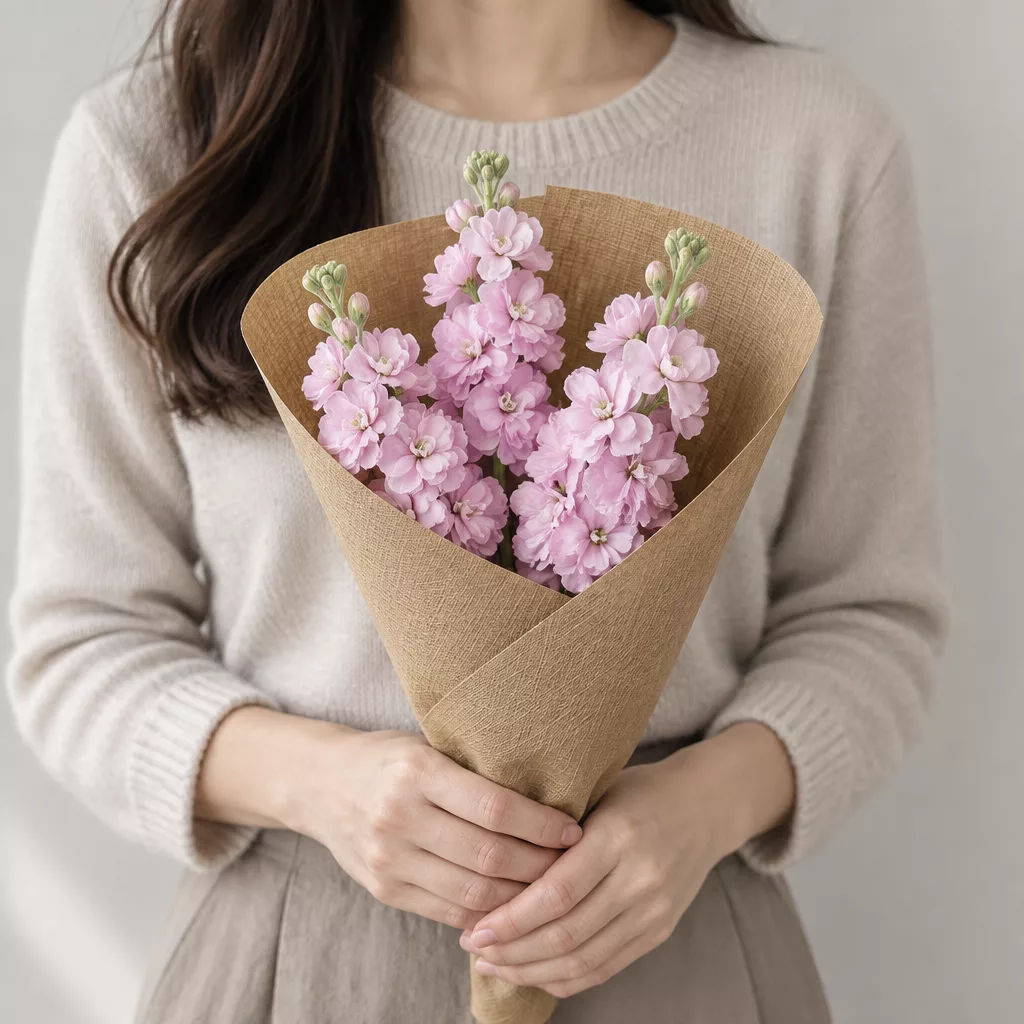
A bouquet that arrives looking exactly as it did when it left the studio is the baseline expectation, and packaging is how that standard is maintained over a two-to-three-hour drive. Turboflora wraps flowers in kraft paper or matte florist paper depending on the style of the arrangement, with the stems in a small water capsule for bouquets that include particularly thirsty flowers like hydrangeas or open roses.
The outer packaging is designed to protect without crushing. Delicate blooms like ranunculus and anemones are positioned so they are not pressing against the paper, and taller arrangements are secured in a box that prevents the bouquet from tipping during transport. When the recipient opens the packaging, the flowers should look as though they came directly from a florist's hands — which, in effect, they did.
Presentation details matter more than people expect. In Russian tradition, bouquets are given in odd numbers — one rose, three tulips, five peonies, and so on. Even numbers are associated with mourning and are avoided for celebratory occasions. This is one of those cultural customs that is easy to miss if you are ordering from abroad or are simply unfamiliar with Russian practice, so it is worth knowing before you choose a quantity.
If you want to add a card, write the message in the order notes and it will be printed on a small card and placed inside the packaging. Handwritten-style fonts are available. A short, specific message — mentioning something the recipient actually did or a memory you share — always lands better than a generic greeting, and the florist team can suggest phrasing if you ask in the comments field.
Caring for Flowers After Delivery: Making Them Last
The moment the bouquet is received is not when the florist's job ends — it is when the recipient's job begins. A few simple steps in the first thirty minutes after delivery will extend vase life by several days and keep the arrangement looking its best.
The first step is a fresh cut. Trim about two centimetres from the bottom of each stem at a diagonal angle, either with sharp scissors or a clean knife. Do this under running water or while the stems are submerged — this prevents an air bubble from forming at the cut end and blocking water uptake. Diagonal cuts increase the surface area and help flowers drink more efficiently.
Fill a clean vase with cool, fresh water. Lukewarm water is actually better for roses and tulips if you want them to open faster, but cool water slows the process and extends vase life — useful if the arrangement needs to look good for several days. Remove any leaves that will sit below the waterline, as submerged foliage rots quickly and clouds the water with bacteria.
Keep the vase away from direct sunlight, radiators, and fruit bowls. Ripening fruit releases ethylene gas, which accelerates the ageing of cut flowers noticeably — a bunch of bananas on the kitchen counter is genuinely bad for nearby roses. Change the water every two days and re-trim the stems each time.
In Svetogorsk's cold winters, a cool room overnight is actually beneficial for many flowers. Roses and chrysanthemums kept in a room around fifteen to eighteen Celsius will last significantly longer than those in a centrally heated apartment kept at twenty-four degrees.
Making the Order: What to Include for a Smooth Delivery
Placing an order for delivery in Svetogorsk follows the same process as any Turboflora order, but a few specific details will make the delivery faster and reduce the chance of any confusion at the door.
The most important piece of information is a complete address including the apartment number and, where relevant, the entrance number. Russian apartment buildings often have multiple entrances, and without the right one a courier may spend several minutes finding the correct door. If the building has an intercom, include the flat number even if the recipient's name is on a label — intercoms in older Soviet-era buildings sometimes use flat numbers rather than names.
A working phone number for the recipient is essential for Svetogorsk deliveries. The courier will call ahead to confirm the handoff, particularly for buildings with restricted access or if the delivery window is broad. If you are sending flowers as a surprise and do not want the recipient to know in advance, you can include a secondary contact number — a family member or a neighbour who can let the courier in — and note in the comments that the primary recipient should not be called.
For workplace deliveries, include the company name and any relevant floor or department information. Receptionists in offices and administrative buildings are generally very cooperative with flower deliveries — it is a pleasant interruption to the working day — but clear information helps the courier get to the right person without delay.
Finally, if there is a specific time that would make the most impact — arriving just as a birthday dinner is starting, for example — note it clearly in the comments and choose the closest available time slot.
Svetogorsk may be a small city, but a well-chosen bouquet delivered there carries the same weight as anywhere else — perhaps more, because it arrives somewhere quieter, where the gesture is less expected and therefore more felt. The key is thinking about the person first: their age, their taste, the cultural context they live in, and the moment you want to create. Choose flowers that suit the season, pack the order with complete address details, and give the recipient a vase, a sharp pair of scissors, and a cool spot away from the radiator. Do those things and the flowers will do the rest.
Frequently asked questions
How long does delivery from Saint Petersburg to Svetogorsk take?
The drive from Saint Petersburg to Svetogorsk takes roughly two to three hours depending on traffic and road conditions. Turboflora factors this into the available time slots at checkout, so the window you select reflects a realistic arrival time. In summer weekends and around major holidays, choose an earlier slot to account for heavier traffic on the Karelian Isthmus route.
Can I send flowers to Svetogorsk on the same day I order?
Yes, same-day delivery to Svetogorsk is available for orders placed before the daily cutoff shown at checkout. Because of the distance involved, morning orders are more likely to qualify for same-day arrival. If you are ordering for a specific event time, add a buffer of fifteen to twenty minutes and note the deadline clearly in the order comments.
Why do Russian bouquets always have an odd number of flowers?
In Russian tradition, even numbers of flowers are associated with mourning and are brought to funerals. For any celebratory or affectionate occasion — birthdays, anniversaries, romantic gestures, congratulations — an odd number is the correct and expected choice. This applies across all ages and regions of Russia, including Svetogorsk, so Turboflora follows this convention in every arrangement.
What flowers travel best in cold winter conditions to Svetogorsk?
Spray roses, carnations, alstroemeria, and chrysanthemums are the most reliable choices for cold-weather delivery. They are robust in transit, handle temperature fluctuations well, and last seven to ten days with basic care. Avoid tropical varieties like anthurium or bird of paradise in deep winter, as they are sensitive to cold and can show damage even with protective packaging on a long drive.
What should the recipient do with the flowers as soon as they arrive?
Trim two centimetres from the stems at a diagonal angle, place them in a clean vase with fresh cool water, and remove any leaves below the waterline. Keep the arrangement away from direct sunlight, radiators, and fruit. Change the water every two days and re-trim the stems each time. These steps alone can add three to five days to the vase life of most common varieties.
Ready to send flowers?
Pick the city, choose the bouquet, and a local florist takes it from there.
Choose a city →