Flower Delivery in Volsk: What to Expect When You Order
Volsk sits on the right bank of the Volga, a city with its own rhythm and its own sense of occasion. When you want flowers to arrive there — for a birthday, an anniversary, a new baby, or simply because someone deserves them — the details matter: how fresh the stems are, how carefully the bouquet travels, and whether it arrives while the moment still feels alive. This is exactly what Turboflora is built for.
Which Parts of Volsk We Reach and Why It Matters
Volsk stretches along the Volga in a long, narrow band, and its residential districts, industrial zones and the historic centre each have their own character. We deliver across the city including the central streets near the Volga embankment, the quieter residential mikrorayons further from the river, and the areas around the main hospitals, schools and administrative buildings where many celebrations actually happen.
Knowing the geography helps you set expectations. A recipient near the centre is easy to reach quickly. Someone in a more outlying part of the city may need a slightly wider delivery window, and we will tell you that honestly when you place your order rather than letting you find out at the wrong moment.
The key thing to understand is that we do not hand bouquets off to a third party once they leave our care. The flowers travel from our preparation space to the recipient's door without being repacked or passed between hands. That single chain of custody is what keeps roses from arriving with crushed petals and tulips from wilting before anyone has seen them. For a city the size of Volsk, that direct approach makes a genuine difference to what the recipient actually receives.
Bouquets we can deliver


Timing Your Order for the Right Moment
The standard delivery window in Volsk is one to two hours from the moment your order is confirmed. That window is not a vague promise — it reflects real road conditions and the time needed to prepare stems properly before they travel. Cutting corners on preparation to shave minutes off the clock is exactly the kind of trade-off we refuse to make.
For same-day delivery, orders placed in the morning give you the most flexibility. You can choose a specific time slot, and we will work backwards from that to ensure the bouquet is assembled, conditioned and on its way with enough margin. Afternoon orders are also handled same-day in most cases, though the later you leave it, the narrower the options become.
If you are ordering for a fixed occasion — a birthday dinner that starts at seven, a work anniversary being celebrated at noon — tell us the time when you order, not as an afterthought. We plan around it. Russian celebrations often begin with a gathering rather than a single moment, so flowers that arrive an hour before guests do are far better received than ones that come after the cake has been cut. Pre-scheduling the delivery the evening before is one of the simplest ways to take pressure off the day itself, and we recommend it for any occasion where timing genuinely matters.
What the Weather Does to Flowers in Transit
Volsk has a continental climate with real seasonal extremes. Summer temperatures regularly climb above thirty degrees Celsius, and winters bring hard frosts that can drop well below minus twenty. Both extremes are genuinely dangerous for cut flowers, and handling them correctly requires different approaches depending on the season.
In summer heat, delicate varieties like garden roses, ranunculus and sweet peas are the most vulnerable. They lose moisture fast, and petals that look perfect in a cool room can wilt within minutes in direct sun or a warm car. We pack these flowers with hydration in mind and keep transit times short precisely because of this. Sturdy varieties like chrysanthemums, alstroemeria and gerbera handle summer better, which is one reason we recommend them honestly when the temperature is pushing extremes.
Winter cold brings a different problem. Flowers freeze faster than most people expect — a bouquet left in an unheated car for ten minutes at minus fifteen can suffer petal damage that looks fine at first but shows within hours. We wrap cold-weather deliveries carefully and brief recipients on what to do the moment the flowers arrive indoors: do not put them straight into warm water, let stems adjust gradually, and keep them away from radiators for the first hour. These small steps are the difference between a bouquet that lasts eight days and one that droops by morning.
Choosing Flowers for the Person, Not Just the Occasion
In Russia, flowers carry real cultural weight, and a few conventions are worth knowing if you are ordering from outside the country. Bouquets are traditionally given in odd numbers — three roses, five tulips, seven stems of freesia. Even numbers are associated with mourning, so an even count can send an unintended message no matter how beautiful the arrangement looks. We always compose bouquets with this in mind, but if you are specifying a stem count yourself, keep it odd.
Beyond numbers, think about the person. A woman in her sixties who has a garden of her own will often appreciate something that looks like it came from that garden — peonies, lisianthus, branches of wax flower — rather than a formal arrangement of red roses. A young woman celebrating her first professional achievement might love something bold and architectural: protea, anthuriums, tropical foliage. A colleague you do not know well is often best served by a clean, cheerful mono-bouquet of alstroemeria or spray chrysanthemums in a warm colour.
For Volsk specifically, we find that seasonal flowers travel and last better than out-of-season imports pushed through a long supply chain. In spring, tulips and narcissus are genuinely fresh and arrive in good condition. In summer, sunflowers and gerbera work well. In autumn, dahlias and solidago have real character. Leaning into what is actually in season is not a compromise — it is usually the better choice for the recipient.
How Presentation Shapes the Experience
The moment someone opens a door and sees flowers, the presentation does most of the emotional work before a single word is said. A bouquet wrapped in plain cellophane and tied with a rubber band reads very differently from the same stems wrapped in kraft paper with a ribbon and a handwritten card tucked inside. We treat presentation as part of the gift, not an afterthought.
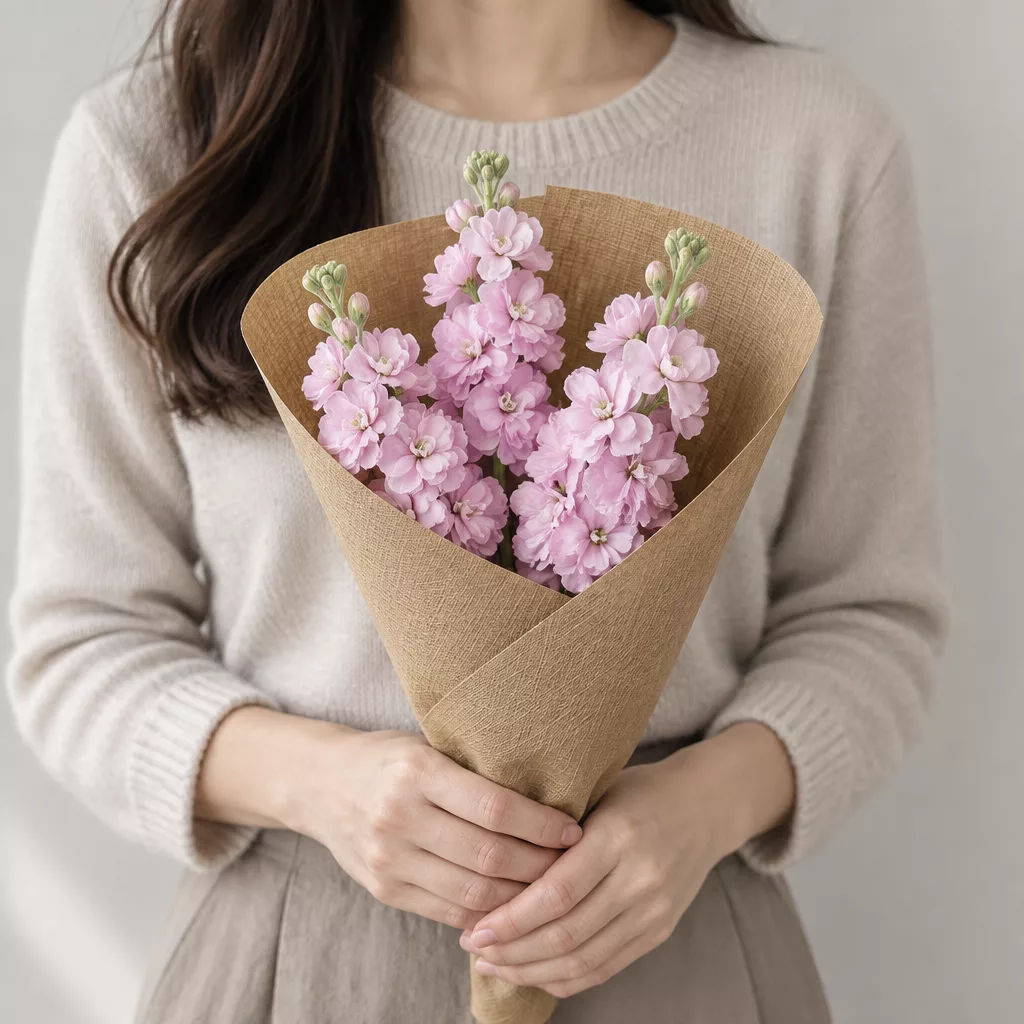
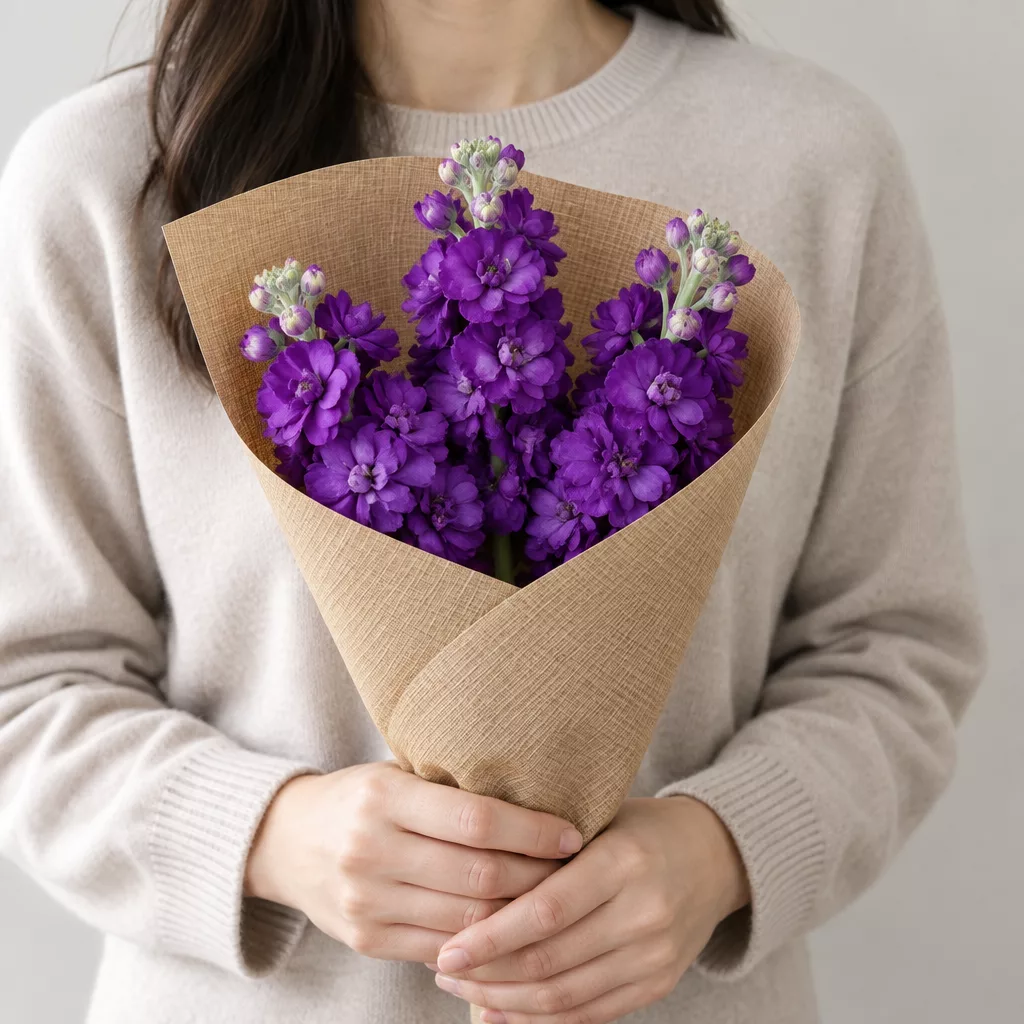
For Volsk deliveries, we use wrapping that protects the flowers during transit without suffocating them. Kraft paper is our most popular choice — it breathes, it looks considered, and it suits almost every occasion from a casual birthday to a more formal congratulation. For something more celebratory, layered wrapping with contrasting textures adds a sense of occasion that recipients notice immediately.
A handwritten card is worth including even when you feel awkward about what to write. In Russian culture, a personal note with flowers carries more meaning than a digital message sent separately. You do not need to write much — a date, a name, a single sentence is enough. We can include your message exactly as you write it. If the recipient speaks Russian but you are writing in English, we can help with translation on request. The goal is that when the flowers are unwrapped and placed in a vase, the whole experience — the scent, the colour, the note — feels like it was put together by someone who thought about them specifically.
Keeping the Flowers Fresh Once They Arrive
A bouquet's vase life depends almost entirely on what happens in the first thirty minutes after it arrives. Most flowers are delivered with their stems already cut at an angle, which increases the surface area drawing up water. The recipient should re-cut the stems immediately under running water — about two centimetres off the bottom — before placing them in a clean vase. This single step can add two or three days to the life of the arrangement.
Water temperature matters more than most people realise. Lukewarm water, not cold, encourages stems to hydrate quickly. The exception is spring bulb flowers like tulips and hyacinths, which prefer cool water and a cool room. Roses, gerbera and alstroemeria do best in a room that stays below twenty-two degrees Celsius and away from direct sunlight, ripening fruit and heating vents — all of which release ethylene gas that accelerates wilting.
Change the water every two days and re-cut the stems each time. Remove any leaves that sit below the waterline, because submerged foliage rots quickly and clouds the water with bacteria that block the stems. With these habits, a well-composed bouquet of roses or alstroemeria should last seven to ten days. Chrysanthemums and carnations, often underestimated, can go twelve to fourteen days with basic care. Telling the recipient these things — either in a note or a quick message — is a small gesture that extends the gift considerably.
What Makes a Delivery Memorable Rather Than Just Correct
A delivery that arrives on time with fresh flowers is the baseline. What makes it memorable is the accumulation of small decisions: the colour chosen for someone who always wears blue, the variety that smells like their grandmother's garden, the note that says something true rather than something generic. These are the details that make the recipient feel seen rather than simply remembered.
For long-distance orders — someone in Moscow or Saint Petersburg sending flowers to a relative in Volsk — the challenge is doing this without being able to see the person or the space. Our advice is to think about what you know rather than what you do not. If you know she loves yellow, build from there. If you know the apartment is small, a compact arrangement in a low vase makes more practical sense than a dramatic tall bouquet. If you know she keeps flowers on the kitchen table rather than a formal sideboard, choose something cheerful and informal.
Timing a delivery to coincide with a specific moment — arriving just before guests do, or being there when someone gets home from work — takes a little planning but creates a completely different experience from a bouquet that simply shows up at some point in the day. We can hold a delivery to a specific hour. Use that option. The difference between flowers that greet someone and flowers that are already sitting in a vase when guests arrive is the difference between a moment and a memory.
Sending flowers to Volsk is not complicated when you know what to expect. The city is reachable, the timing is real, and the flowers that arrive are the flowers that left our hands — fresh, properly wrapped and ready to be given. Whether you are ordering from across Russia or from the next street over, the experience on the recipient's end is what we are actually building. That is the only measure that matters.
Frequently asked questions
Can I schedule a flower delivery to Volsk for a specific time of day?
Yes. When you place your order, you can specify the hour you want the bouquet to arrive. We recommend doing this for fixed occasions like birthday dinners or work celebrations. Scheduling the evening before gives us the most flexibility and ensures the flowers are prepared and on their way with enough margin to arrive exactly when they should.
What happens to flowers during very cold Volsk winters?
Flowers can freeze quickly in temperatures below minus ten, and the damage is not always visible immediately — petals may look fine but deteriorate within hours. We wrap winter deliveries carefully for insulation and advise recipients to bring flowers indoors promptly, let them adjust to room temperature gradually, and keep them away from radiators for the first hour after arrival.
Why do Russian bouquets always have an odd number of stems?
Odd numbers are a long-standing Russian convention for celebratory gifts. Even-numbered bouquets are traditionally associated with mourning and can send an unintended message regardless of the flowers chosen. We always compose bouquets with an odd stem count. If you are specifying a number yourself when ordering, keep this in mind to make sure the gesture lands the way you intend.
Which flowers last longest after delivery in Volsk's warm summer months?
Chrysanthemums, alstroemeria, gerbera and carnations handle summer heat better than more delicate varieties. They hold moisture well and are less prone to wilting during transit. Garden roses and ranunculus are beautiful but need extra care in high temperatures. We will advise honestly on the best choice for the conditions on the day you order.
Can I include a message in Russian if I am ordering from abroad?
Yes. You can write your message in English when placing the order and let us know you would like it translated into Russian for the card. We will transcribe it accurately and include it with the bouquet. A personal note in the recipient's own language makes a meaningful difference and is worth the small extra step of requesting it when you order.
Ready to send flowers?
Pick the city, choose the bouquet, and a local florist takes it from there.
Choose a city →