Sending Flowers to Vyksa? Here Is Everything You Need to Know
Ordering flowers for someone in Vyksa feels different when you are not standing in the shop yourself. You cannot smell the roses, judge the stems, or ask the florist which peonies arrived this morning. What you need instead is a clear picture of how the bouquet travels from our workroom to the door of someone you care about — and confidence that it will arrive looking the way you imagined it.
Where in Vyksa We Deliver and Why It Matters
Vyksa is a compact industrial city in the Nizhny Novgorod region, built around the famous metallurgical plant and surrounded by a ring of residential districts, private house streets, and a few quieter suburban pockets. Our delivery covers the central streets around Metallurgov Square, the residential quarters near the Vyksa Drama Theatre, the hospital district, and the private house areas further out toward the forests. If you are sending to a workplace inside the plant territory, please note that security passes and access protocols vary, so it helps to warn the recipient in advance so they can meet the courier at the gate.
The city's relatively compact layout is an advantage. Most addresses in Vyksa sit within a manageable radius, which means our courier does not spend an hour crossing a sprawling metropolis. That directly affects how fresh the bouquet looks on arrival. Flowers are living things that respond to temperature swings, vibration in the van, and time out of water. A shorter journey means tighter buds, upright stems, and petals that have not yet been stressed by the road.
When you place an order, enter the full address including the apartment or office number and any building entrance code. In Russian apartment blocks, the entrance door code is called a domofon code, and without it a courier may wait outside unable to get through. A brief note in the order comments about the building entrance saves everyone time and keeps the flowers in better condition.
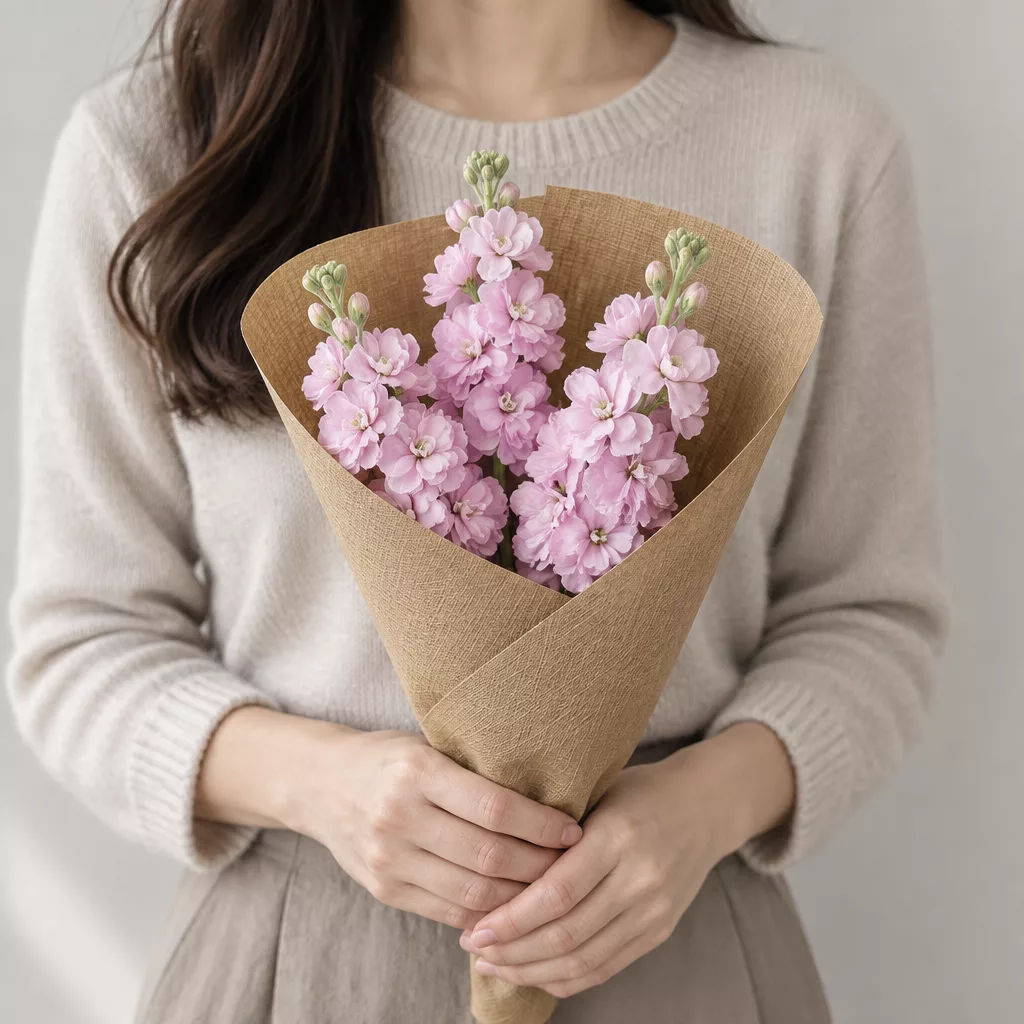
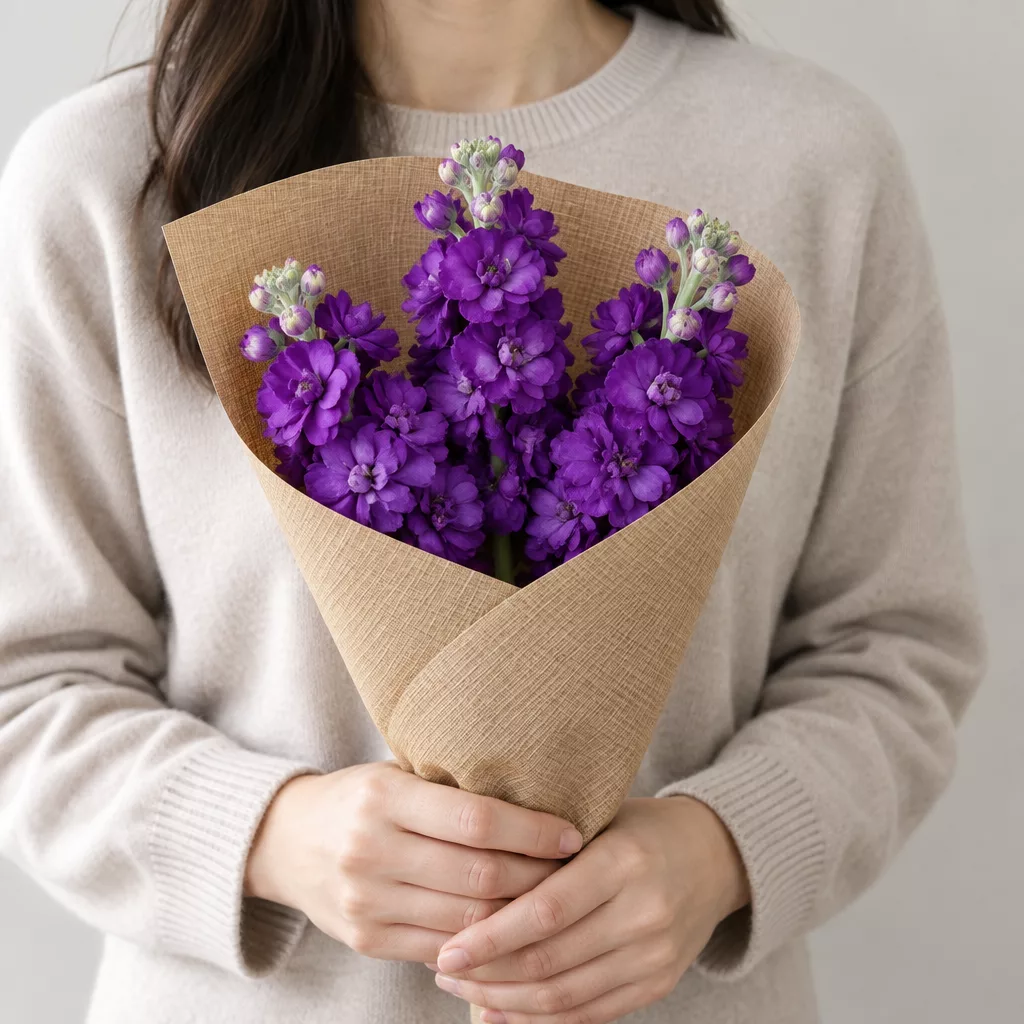
Bouquets we can deliver


Timing Your Delivery: Slots, Seasons, and Rush Hours
We offer same-day delivery to Vyksa with a standard window of one to two hours from the moment your order is confirmed. Morning slots from ten to noon tend to move smoothly because traffic in Vyksa is light at that time and the florist team has had time to prepare fresh stock. Lunchtime orders, particularly around birthdays and anniversaries that fall on weekdays, can see higher demand, so placing your order an hour earlier than you think you need to is always the safer choice.
Seasonality changes everything in this business. February, before the eighth of March — the Russian holiday celebrating women that is the single busiest flower day of the year — sees demand spike sharply across all cities including Vyksa. If you are ordering for the eighth of March, placing your order two to three days ahead is not overcautious, it is simply sensible. The same applies to the first of September, when schoolchildren across Russia traditionally receive bouquets from parents and classmates, and to Valentine's Day.
Winter deliveries in Vyksa deserve a specific mention. January and February temperatures in the Nizhny Novgorod region regularly drop to minus fifteen or colder. Our couriers carry insulated packaging for cold weather, but even with protection, delicate open blooms like garden roses or ranunculus can show slight petal bruising after exposure to sharp frost. For winter orders we often recommend varieties that handle cold better, such as spray chrysanthemums, alstroemeria, or tulips in bud rather than full bloom. Buds travel more safely and open beautifully once indoors.
Choosing the Right Bouquet for the Occasion
Start from the person, not the flower. A colleague celebrating a work anniversary calls for something polished and unfussy — a monobouquet of white or cream spray roses, perhaps with eucalyptus, reads as elegant without being overwhelming. A close friend turning thirty wants something that feels personal and generous: garden roses in a warm coral or blush, mixed with lisianthus and a few stems of waxflower for texture. The difference between a bouquet that lands right and one that feels generic is almost always in that first question: who is this for and what do you want them to feel when they open the door.
For romantic occasions, red roses remain the classic choice in Russian culture and they are expected at certain moments — a first anniversary, a declaration. But if your recipient has a more individual taste, deep burgundy peonies in season, or a loose arrangement of garden roses in peachy tones with dried pampas grass, can feel more considered and just as romantic. Peonies are available roughly from late May through July; outside that window, ranunculus or David Austin-style garden roses offer a similarly lush, layered look.
For a birthday with no strong preference known, a mixed bouquet built around a focal flower — one variety that anchors the arrangement — with two or three supporting textures is a reliable formula. A focal of pink or white gerbera daisies with green button chrysanthemums and a few stems of solidago reads cheerful and fresh without looking assembled by a machine. Ask us in the order comments if you have a colour preference and we will work within it.
Budget Ranges and What Each One Gets You
Flowers in Russia are priced by the stem and by the labour of arrangement, so what you spend shapes both the size and the complexity of what arrives. At the entry level you are looking at a neat, single-variety hand-tied bouquet — perhaps seven to nine stems of alstroemeria or spray roses — wrapped cleanly in kraft paper with a ribbon. It is not a small gesture; alstroemeria in particular has excellent vase life and comes in vivid pinks, oranges, and whites that photograph well and fill a room with colour.
The middle range opens up the palette. You can combine a statement focal flower with supporting varieties, add foliage like ruscus or eucalyptus for depth, and choose a more structured wrapping — layered paper, a satin ribbon, a gift box. This is where most birthday and anniversary orders land, and it is where the florist's eye makes the biggest difference. A well-chosen combination of, say, cream garden roses with dusty miller and a few stems of blue delphinium looks intentional and generous without requiring an extravagant budget.
At the higher end, you are paying for volume, premium varieties, and presentation. Long-stemmed Dutch roses with large heads, peonies flown in during their short season, or a structured arrangement in a ceramic vase rather than wrapped paper — these are the orders that make a recipient stop and stare. If you are marking a significant milestone, a major birthday, or a thank-you that needs to feel substantial, this range delivers that impact. Always mention the occasion in your order so we build something appropriate rather than simply large.
What Happens Between Our Workroom and the Recipient's Door
Every bouquet begins with stem conditioning. Fresh stock arriving at our workroom is cut at an angle underwater, which removes the air bubble that forms when stems are cut in open air and blocks water uptake. Stems then stand in buckets of clean, temperature-controlled water for several hours before arrangement begins. This step is invisible to the customer but it is the reason a bouquet from a professional florist outlasts one assembled in a hurry.
Once arranged, the bouquet is wrapped to protect the blooms during transit. In warm months this means breathable paper that shields petals from wind and sun without trapping heat. In cold months we add an insulating layer and, for very delicate varieties, a protective sleeve around the flower heads. The courier handles the bouquet upright wherever possible; laying flowers flat in a vehicle causes water to pool on petals and bruises open blooms.
When the bouquet reaches the recipient, the experience matters as much as the flowers. Our couriers are instructed to call ahead if the recipient does not answer the door, rather than leaving the bouquet in a corridor where it may sit in an unheated entrance hall in winter or in direct sun in summer. If the recipient is genuinely unavailable, we contact the sender to agree on next steps. We do not leave flowers unattended in conditions that would damage them. That last detail is worth knowing before you order, because it means someone needs to be reachable — either the recipient or you.
Keeping Your Flowers Fresh Once They Arrive
The first hour after delivery sets the vase life of the whole bouquet. The recipient should trim the stems by about two centimetres at a diagonal, again ideally underwater or immediately before placing in water, and remove any leaves that would sit below the waterline. Leaves submerged in vase water rot quickly and cloud the water with bacteria that clog stems and shorten flower life. This single step — stripping lower leaves — is the most commonly skipped and the most consequential.
Vase water should be cool and changed every two days. Flower food sachets, which we include with every order, contain a mild acidifier, a sugar source, and a biocide. They genuinely work. Dissolve the sachet in the water before placing the stems, and add a fresh sachet when you change the water. Keep the vase away from direct sunlight, radiators, and fruit bowls. Ripening fruit releases ethylene gas, which accelerates the ageing of flowers — roses and carnations are particularly sensitive to it.
Different varieties have different natural lifespans. Alstroemeria and spray chrysanthemums regularly last ten to fourteen days with good care. Standard roses give seven to ten days. Tulips are shorter — five to seven days — but they keep moving after cutting, continuing to grow and lean toward light in a way that some people find charming and others find alarming. Gerbera daisies last well but prefer shallow water, about five centimetres, because their hollow stems can rot if submerged too deeply. Knowing these differences helps the recipient get the most from what you sent.
Small Details That Make the Delivery Feel Considered
A handwritten card changes the emotional register of a flower delivery completely. In Russian tradition, flowers alone are a warm gesture, but a note — even three sentences — makes the bouquet feel like a conversation rather than a transaction. We print your message on a card and attach it to the bouquet. Take a moment to write something specific: not just happy birthday, but a line about why this birthday matters. The recipient will read it more than once.
If you are sending to a workplace, consider the timing carefully. A delivery arriving during a morning meeting or a busy production shift can be awkward for the recipient, who may have nowhere to put a large bouquet while working. Lunchtime or the end of the working day tends to work better for office and workplace deliveries. Include the recipient's mobile number in the order so the courier can coordinate without going through a reception desk.
For surprise deliveries, where the recipient does not know flowers are coming, make sure the address is precise and that someone will genuinely be home. An unannounced delivery to an empty apartment is a problem in winter especially, because we will not leave flowers in a cold entrance hall. If there is any uncertainty about whether the person will be in, a timed delivery with a loose heads-up — telling them only that something is arriving, not what — is more reliable than a pure surprise. The delight of unexpected flowers is best experienced when the person is actually there to open the door.
Sending flowers to Vyksa is straightforward when you know what shapes the experience — the timing, the season, the variety choices, and the small logistical details that determine whether the bouquet arrives looking exactly as it should. We handle the workroom, the packaging, and the journey. Your part is choosing something that fits the person and the moment, and making sure someone is there to receive it. That combination, a well-chosen bouquet and a reliable delivery, is what turns a purchase into something the recipient actually remembers.
Frequently asked questions
How quickly can you deliver flowers to Vyksa?
Our standard delivery window is one to two hours from order confirmation. Morning slots tend to move fastest. During peak periods like the eighth of March or the first of September, we recommend ordering at least one to two days ahead to secure your preferred time slot and ensure the freshest available stock.
Can you deliver to a private house address in Vyksa, not just apartments?
Yes, we deliver to private houses throughout Vyksa. Please include the full street address and, if the property has a gate or intercom, any access details in your order comments. For addresses on quieter outskirts, our courier will call the recipient ahead of arrival to confirm the exact location.
What flowers hold up best in Vyksa's cold winters?
Alstroemeria, spray chrysanthemums, and tulips in bud handle cold transit better than open, large-headed blooms. We use insulated packaging in winter, but choosing hardier varieties reduces the risk of petal bruising. If you have your heart set on garden roses in January, we will pack them carefully and advise on the best available stems that day.
Can I send a bouquet as a surprise without telling the recipient?
You can, but make sure the recipient will actually be home. We will not leave flowers unattended in a cold entrance hall or in direct sun. If nobody answers, we contact the sender to decide next steps. For reliable surprises, include the recipient's mobile number so our courier can coordinate arrival without spoiling the moment too early.
Do you include care instructions with the bouquet?
Every order includes a flower food sachet and a printed care card with basic instructions. If you would like us to pass on specific advice for the varieties in your bouquet — for example, that gerberas prefer shallow water — add a note to your order and we will include a personalised card alongside the standard care information.
Ready to send flowers?
Pick the city, choose the bouquet, and a local florist takes it from there.
Choose a city →