Sending Flowers to Vyshny Volochek? Here Is What to Expect
Vyshny Volochek sits along the old road between Moscow and Saint Petersburg, a city of canals and quiet courtyards where a well-chosen bouquet can feel like a real event. Whether you are ordering for a birthday, an anniversary, or simply because someone there deserves something beautiful, the details matter — timing, flower choice, presentation, and how blooms travel in the Russian climate. This article walks you through everything so the flowers arrive the way you imagined them.
Which Areas of Vyshny Volochek We Reach and How Quickly
Vyshny Volochek is a compact city, and that works in your favour. The central districts — around Kazan Cathedral, the embankment of the Tsna River, and the main shopping streets — are the easiest to reach, and orders there move fastest. Residential neighbourhoods further from the centre, including areas near the railway station and the industrial outskirts, are also covered, though delivery to the very edges of the city may add a small amount of time to the window.
The standard delivery promise from Turboflora is one to two hours from the moment your order is confirmed. In practice, central addresses in Vyshny Volochek land closer to the one-hour mark during regular daytime hours. Peak periods — the morning of 8 March, the days around Valentine's Day, and the first of September — do stretch that window, so ordering the evening before a major date is genuinely good advice rather than a formality.
If you are sending to a workplace, specify the office building name or the floor, because many of the older Soviet-era buildings in the city have multiple entrances that can slow a courier. For home deliveries, a working phone number for the recipient is the single most useful detail you can add to an order. The courier will call ahead so the flowers are not left in a cold stairwell, which matters especially from November through March when temperatures outside drop well below freezing.
Bouquets we can deliver

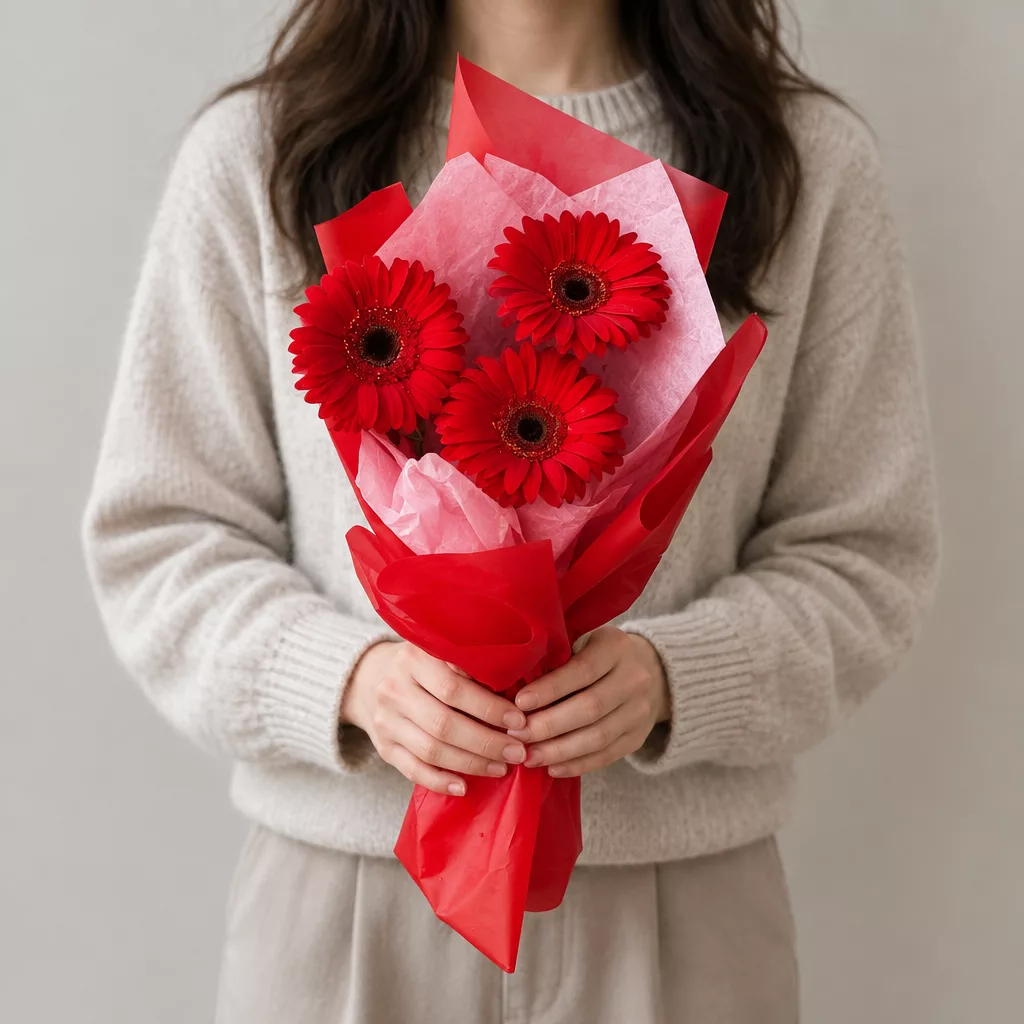
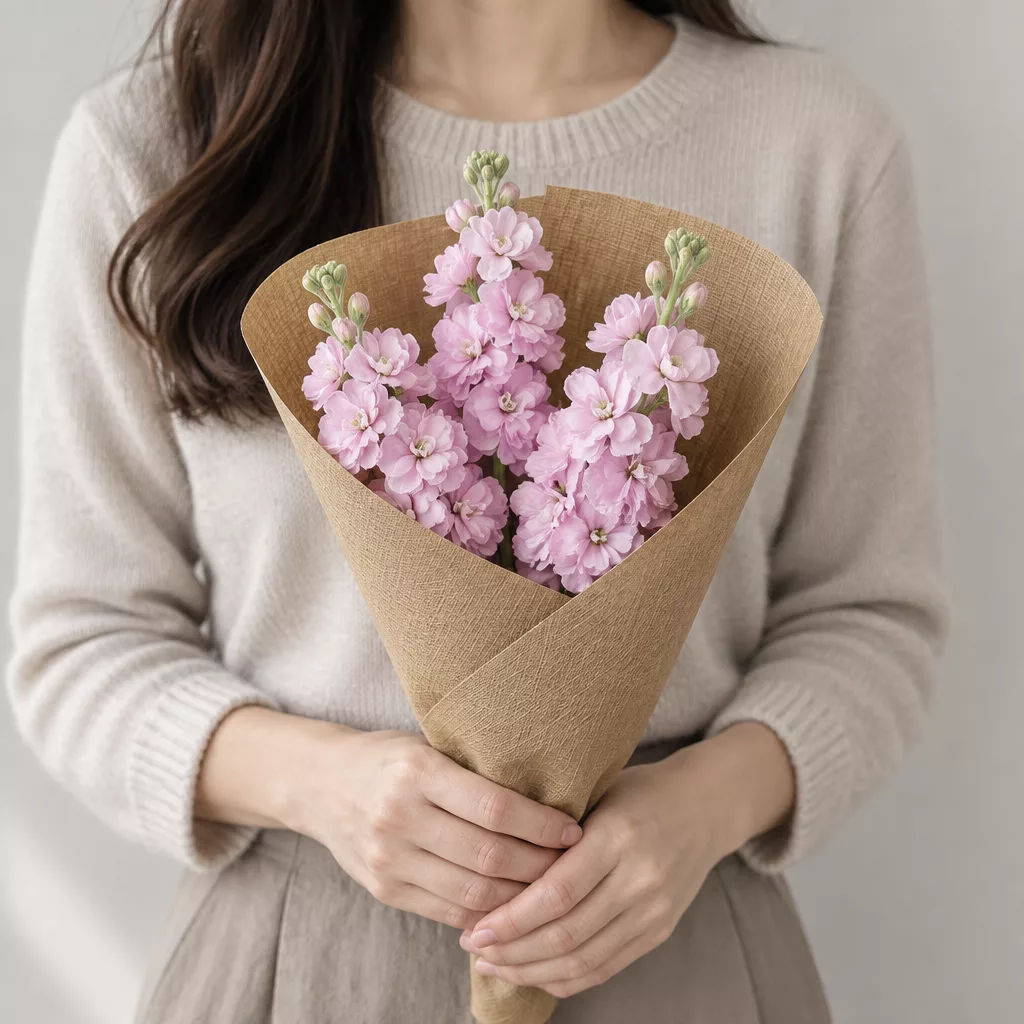
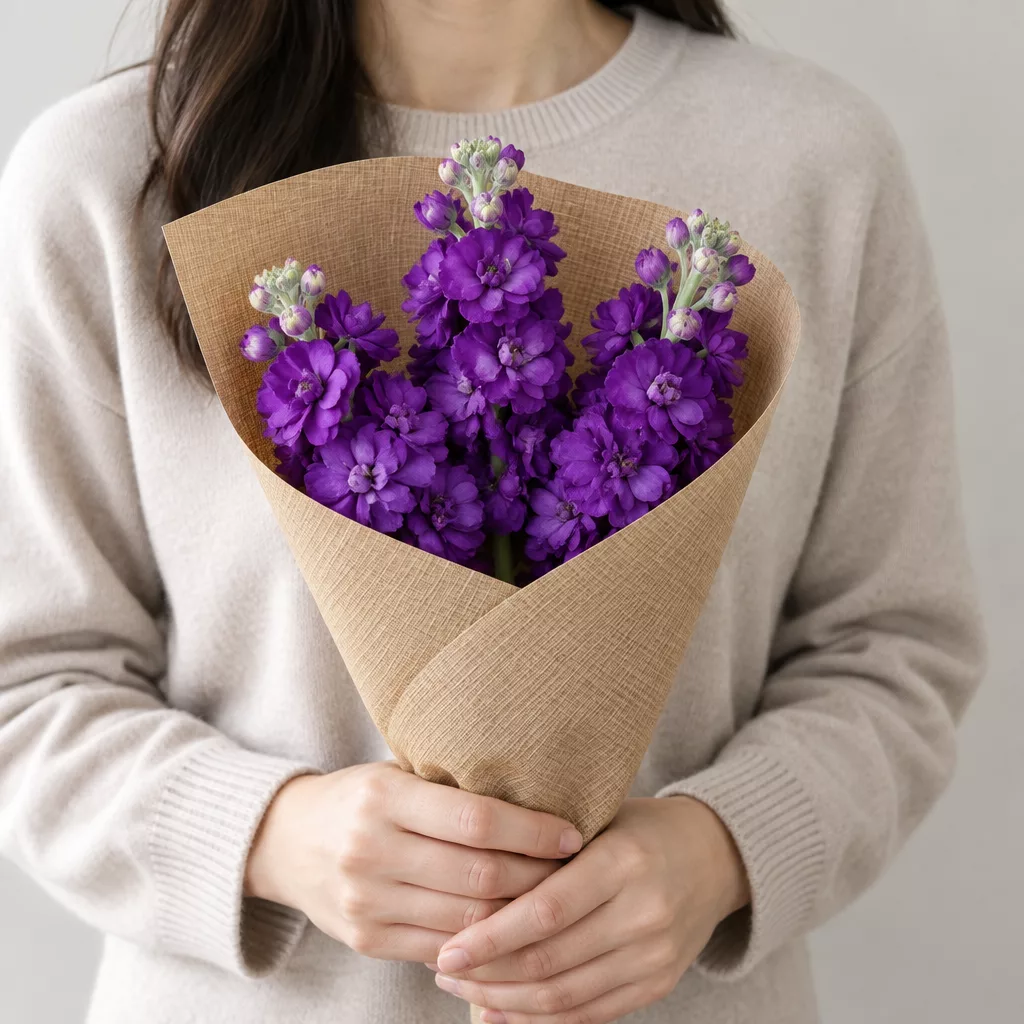
Choosing Flowers for the Person, Not Just the Occasion
Before you think about budget or colour palette, think about the person receiving the bouquet. A colleague who keeps her desk very tidy will appreciate a structured, compact arrangement — spray roses, lisianthus, and a few stems of eucalyptus sit neatly without shedding petals everywhere. A grandmother who grew up with a garden will likely respond more warmly to something that feels gathered rather than designed: garden roses, cornflowers, or peonies in season.
For a romantic gesture, the classic red rose still carries the clearest message, but a bouquet of deep burgundy roses mixed with cream ranunculus and dark foliage says the same thing with more visual depth. If the recipient is younger and has a more contemporary taste, single-variety bouquets — fifty tulips in one shade, or a mass of white anemones — feel modern and intentional rather than assembled by default.
Russian gift culture places real value on abundance. A bouquet that looks generous communicates care in a way that a small arrangement does not, regardless of how elegant it is. This does not mean you need an enormous budget; it means that choosing flowers with good volume — lush peonies, open garden roses, full hydrangea heads — gives the impression of generosity even in a mid-range order. When you are ordering for someone you do not know well, err toward classic varieties in soft, neutral tones: white, cream, and blush are almost universally well received and carry no cultural ambiguity.
What the Season Does to Your Options in Vyshny Volochek
Vyshny Volochek has a true continental climate. Winters are cold and long, summers are warm but short, and spring and autumn arrive quickly. This affects not just how flowers travel but which ones look their best on arrival.
In winter, from December through February, roses, chrysanthemums, and carnations travel well because they are robust in cold temperatures. Tropical varieties like strelitzia or anthuriums can suffer if the packaging is not right, as even a few minutes of severe frost damages the petals. Our couriers use insulated packaging during cold months, but it is worth knowing that delicate open blooms are more vulnerable than tight buds in transit.
Spring is the season for tulips, and in Russia they are almost synonymous with 8 March — International Women's Day. Tulips in Vyshny Volochek in early March are everywhere, and for good reason: they are cheerful, affordable in larger quantities, and they open beautifully in a warm room within a day of arrival. Mixing white and yellow tulips with a few branches of mimosa is a combination that feels genuinely celebratory without being expensive.
Summer brings peonies, which have a short natural season of about six weeks and are intensely popular. If you are ordering in June or early July, a peony bouquet is a seasonal luxury that feels timely and thoughtful. By late summer, sunflowers become the sentimental favourite — warm, uncomplicated, and very Russian in spirit. Autumn arrangements with dahlias and hypericum berries carry that same honest, seasonal quality.
Bouquet Options Across Different Budgets
A modest budget still allows for something genuinely beautiful if you choose the right flowers. Carnations have an unfairly poor reputation — in a monochromatic bunch of thirty stems in deep red or coral, they look striking and last exceptionally well, often ten to fourteen days in a vase. Spray chrysanthemums in white or yellow are similarly long-lived and fill a vase with real presence. Combining either of these with a few stems of solidago or pittosporum greenery elevates the arrangement without raising the cost.
In the middle range, roses are the most reliable choice, and a bouquet of fifteen to twenty-one stems — odd numbers are traditional in Russia for living recipients — with complementary foliage and perhaps a few spray roses for texture covers most occasions well. Lisianthus is an excellent companion flower: its ruffled petals resemble peonies at a fraction of the price, and it lasts well in transit and in the vase.
For a more generous order, garden roses with their layered, full heads are the upgrade that makes an immediate visual impression. Pair them with ranunculus, sweet peas when in season, or dusty miller for a soft, romantic arrangement. Orchid stems — cymbidium or dendrobium — add an exotic note and last remarkably long, sometimes three weeks, which means the recipient is reminded of the gesture for a long time after the occasion.
Whatever your budget, ask for the bouquet to be wrapped in kraft paper with a linen ribbon rather than cellophane. It travels better, looks more considered, and holds the stems in place more securely during delivery.
Timing Your Order Around Russian Celebrations
Russia has a calendar of celebrations that are observed with real enthusiasm, and flowers are central to most of them. Knowing which dates matter helps you order ahead and avoid the last-minute rush that affects quality and timing.
8 March, International Women's Day, is the single busiest day of the year for flower delivery across Russia. In Vyshny Volochek as everywhere else, demand spikes sharply on the seventh and the morning of the eighth. Ordering by the sixth gives you the best choice of varieties and guarantees the delivery window you want. The same logic applies to 14 February, though it is a less universally observed holiday in Russia than in Western Europe.
1 September — the first day of the school year — is a major flower moment in Russian culture. Children bring bouquets to their teachers, and the tradition is taken seriously. Gladioli, asters, and chrysanthemums are the classic choices for this occasion; they are sturdy, formal, and appropriately seasonal. If you are sending flowers to a teacher in Vyshny Volochek for this date, ordering on 31 August is strongly advisable.
Birthdays and anniversaries are year-round, of course, and same-day delivery handles these well outside of peak periods. New Year is another occasion where flowers — often white roses or amaryllis — appear as gifts alongside the usual champagne and chocolates. If you are unfamiliar with Russian customs, a useful rule is this: flowers for living recipients always come in odd numbers, and yellow flowers are sometimes avoided for romantic occasions, though this superstition is fading among younger generations.
How to Help the Flowers Last Once They Arrive
A bouquet that arrives in perfect condition can still wilt within two days if it is not cared for properly. Giving the recipient a few simple instructions — or including them with the order — makes a real difference to how long the flowers stay beautiful.
The first step is always a fresh cut. The stems should be trimmed at an angle under running water or while submerged, removing about two centimetres. This opens the stem cleanly and allows maximum water uptake. Any leaves that would sit below the waterline should be stripped off, because submerged foliage rots quickly and clouds the water, which in turn shortens vase life.
The vase water should be cool and changed every two days. Flowers last longer in a cool room away from direct sunlight and heating radiators — in a Vyshny Volochek apartment in winter, this means keeping them away from the window ledge where the glass gets cold, but also away from the radiator directly below it. A spot on a table in the middle of a room is usually ideal.
Different varieties have different lifespans, and knowing this helps manage expectations. Roses and lisianthus typically give seven to ten days. Tulips last five to seven days but open dramatically as they do, which is part of their charm. Chrysanthemums and carnations are the long-distance runners, often reaching two weeks. Peonies are shorter-lived — four to six days — but the open bloom is so extravagant that most people feel the trade-off is worth it. Including a sachet of flower food with the bouquet, which we do as standard, extends these windows noticeably.
Making the Delivery Feel Like a Real Gift, Not Just a Transaction
The flowers themselves are only part of what the recipient experiences. The moment of opening the door and receiving a bouquet is shaped by the packaging, the card, and the small details that signal that someone thought carefully.
A handwritten card — even a short one — carries more weight than a typed message in Russian gift culture. If you are ordering from outside the city and cannot write the card yourself, the message you type into the order form becomes the card text, so write it as you would speak it, not as a delivery note. Avoid generic phrases and say something specific: a shared memory, a direct compliment, a reason for the gift. The florist team can help format the text on the card neatly.
Presentation packaging matters too. Bouquets wrapped in layered paper with a bow or ribbon look like they have been prepared for someone, not simply bundled for transport. If the order is for a significant occasion — a major anniversary, a congratulation on a new job or a new home — adding a small detail like a scented candle or a box of chocolates alongside the flowers turns the delivery into something more complete.
For surprise deliveries, coordinate with someone who can ensure the recipient is home, or choose a time when they are most likely to be there. A bouquet left with a neighbour is fine, but the moment of receiving flowers directly is much more memorable. If the recipient lives alone and works regular hours, a lunchtime or early evening delivery usually works well in Vyshny Volochek, where most residents follow fairly conventional schedules.
Vyshny Volochek may not be the first city that comes to mind when you think of flower delivery, but the same care that goes into every Turboflora order applies here just as it does in Saint Petersburg itself — fresh flowers, honest timing, and packaging that protects the bouquet through every metre of the journey. The city is small enough that a well-timed order reaches almost any address within the hour, and the person on the other side of the door gets exactly what you intended: something beautiful, chosen with thought, arriving at the right moment.
Frequently asked questions
Can I order flowers to Vyshny Volochek the same day?
Yes. Same-day delivery to Vyshny Volochek is available for orders placed during operating hours. Most central addresses receive their bouquet within one to two hours of order confirmation. For major holidays like 8 March or 1 September, ordering the day before gives you the widest choice of varieties and the most reliable delivery window.
What flowers travel best to Vyshny Volochek in winter?
Roses, chrysanthemums, and carnations handle cold transit reliably. We use insulated packaging from November through March to protect blooms, but tight buds always travel more safely than fully open flowers in severe frost. If you want something delicate like ranunculus or sweet peas in winter, we pack them with extra care and recommend a sheltered delivery address.
Why do Russian bouquets traditionally have an odd number of stems?
In Russian custom, even numbers of flowers are associated with mourning and are brought to cemeteries. Odd numbers — five, seven, eleven, twenty-one — are for living recipients and celebrations. It is a widely observed tradition across generations, so all our bouquets for gifts are assembled with this in mind automatically.
Can I include a message card with my flower delivery to Vyshny Volochek?
Absolutely. When you place your order, there is a field for your personal message. We print or handwrite it on a card and include it with the bouquet. Write the message as you would say it — something personal and specific always means more to the recipient than a standard greeting.
What if the recipient is not home when the flowers arrive?
Our courier will call the recipient before arriving, so they have time to come to the door. If there is no answer, the courier will contact you as the sender to decide the next step — whether to wait briefly, leave with a trusted neighbour, or reschedule. Providing an accurate phone number for the recipient when ordering prevents almost all of these situations.
Ready to send flowers?
Pick the city, choose the bouquet, and a local florist takes it from there.
Choose a city →