Flowers for a Girlfriend in Russia: Romantic Choices That Work
Sending flowers to someone you love in Russia carries a quiet set of rules that most people outside the country have never heard of — and breaking them by accident can send entirely the wrong message. This is not about being superstitious; it is about understanding what she will notice the moment the bouquet arrives at her door. Get it right, and the flowers do half the emotional work for you.
What She Will Read Into the Bouquet Before She Even Smells It
In Russia, flowers speak before words do. Your girlfriend will count the stems before she reads the card — this is not a cliché, it is simply what happens. An even number of flowers is associated with mourning and is brought to funerals, so a bouquet of ten roses or twelve tulips will land with a strange, cold feeling no matter how expensive they are. Always choose an odd number: five, seven, nine, eleven, fifteen, or twenty-five all work perfectly.
Color carries meaning too, though it is more flexible than the odd-number rule. Red is the clearest romantic signal and is universally understood. Deep burgundy and rich coral read as passionate and mature. Pale pink is softer and sweeter, well suited to early relationships or lighter occasions. White is elegant but can feel neutral, so it works best when mixed with something warmer rather than presented alone.
Presentation matters from the very first glance. A bouquet wrapped in kraft paper with a satin ribbon reads as thoughtful and considered. Cellophane alone feels like a supermarket purchase. If she receives the flowers at work or in a public place, a neat, structured arrangement tells everyone around her that someone put real care into the choice. That social visibility is part of the gift in Russian culture, and a florist who understands this will wrap accordingly.
Bouquets we can deliver


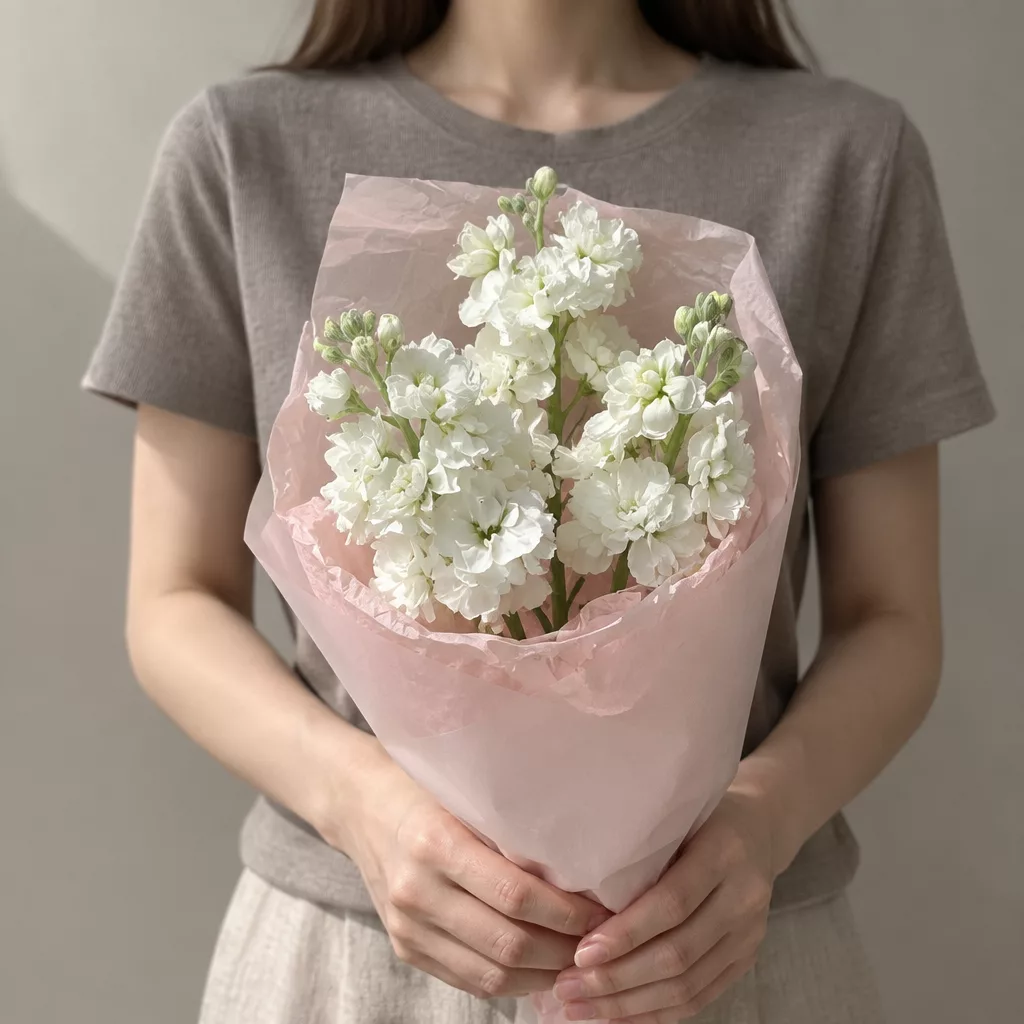
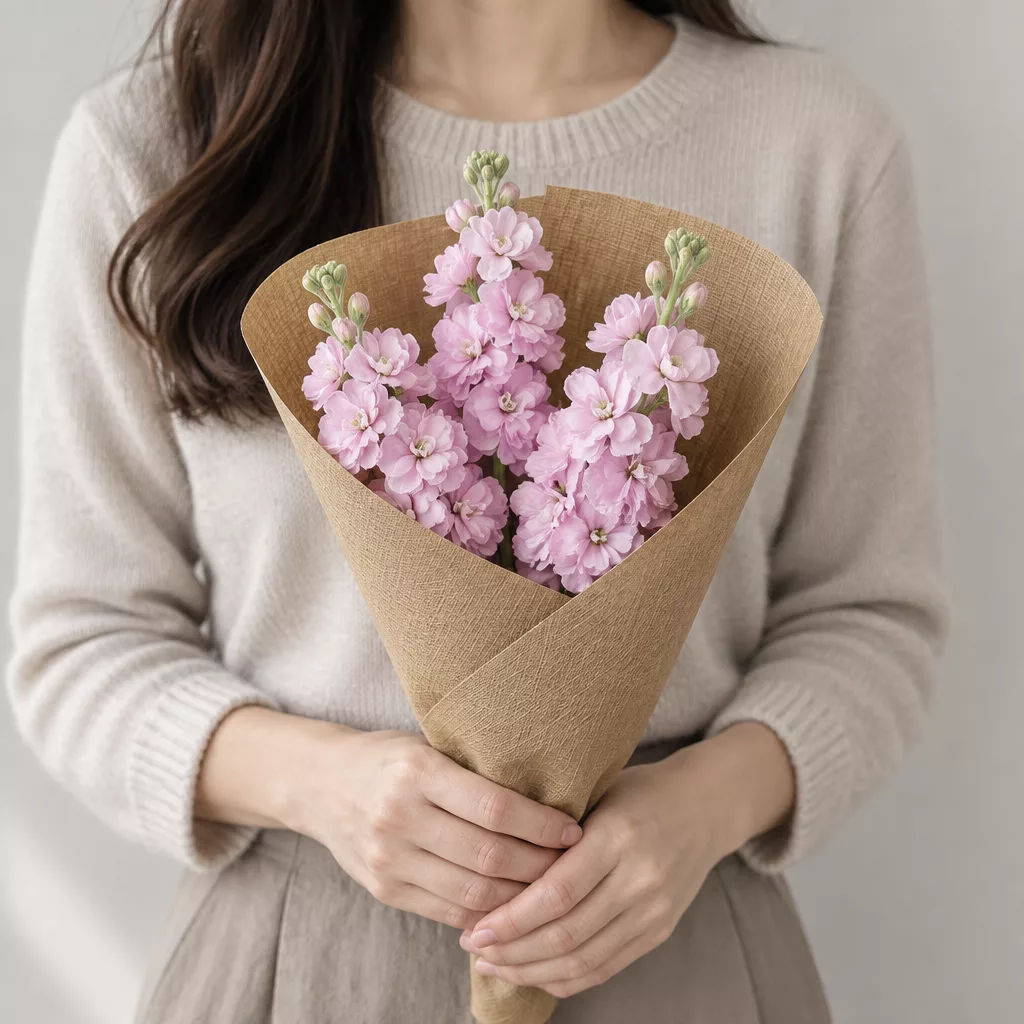
Roses: Still the Clearest Way to Say You Mean It
Roses remain the dominant romantic flower in Russia, and there is a good reason they have held that position for decades. They carry unmistakable intent. When a woman receives roses from a man she is seeing, there is no ambiguity about what the gesture means — and in a culture where directness in romantic expression is valued, that clarity is a strength rather than a cliché.
Variety and stem length both matter when choosing roses. Long-stemmed roses of sixty centimeters or more signal seriousness and investment. The classic varieties to ask for are Red Naomi, which has a deep velvety red and a strong fragrance, and Explorer, which holds its shape well in transit and in the vase. For a softer look, Cappuccino roses offer a warm caramel-apricot tone that photographs beautifully and feels less formal than pure red.
Quantity sends its own message. Seven roses is a popular choice for a new relationship — enough to feel generous without being overwhelming. Fifteen or twenty-five roses signals something deeper and is more appropriate for anniversaries, birthdays, or a moment when you want to be unmistakably serious. Mixing rose sizes within one bouquet, combining garden roses with spray roses, adds texture and a handmade quality that a single variety cannot achieve on its own. Ask for foliage like eucalyptus or ruscus to frame the blooms and extend the visual weight of the arrangement without adding bulk.
Beyond Roses: Flowers That Carry Real Romantic Weight
Roses are reliable, but they are not the only option, and choosing something less expected can actually make a stronger impression on a woman who appreciates flowers. Peonies are enormously popular in Russia from late spring through early summer and carry a lush, generous feeling that many women find more personal than roses. A bouquet of coral or blush peonies, perhaps eleven stems with soft greenery, feels both romantic and individual.
Tulips are the flower of early spring in Russia and are deeply associated with warmth returning after a long winter. They are particularly meaningful around late February and early March, when the city is still cold but the mood is turning. Purple tulips read as romantic and slightly mysterious. Parrot tulips, with their ruffled, feathered petals, are visually striking and feel like a genuine florist's choice rather than a default.
Freesia deserves more attention than it usually gets. The fragrance is delicate and distinctive, and freesia adds an airy, elegant quality to any mixed bouquet. It works beautifully alongside roses or ranunculus and extends the vase life of the arrangement because it opens gradually over several days. Ranunculus itself is a strong romantic choice — layered, paper-thin petals in shades of coral, peach, and deep wine give it a painterly quality that photographs well and feels genuinely luxurious. Combining ranunculus with garden roses and a few stems of white lisianthus creates a bouquet that looks effortful and considered without being loud.
Choosing by the Occasion Within the Relationship
The flowers that make sense on a first date are different from the ones that fit a six-month anniversary, and getting that calibration right matters. Early in a relationship, a large dramatic bouquet can feel like pressure. Seven tulips or a small mixed arrangement of five to seven stems — freesia, ranunculus, and a few spray roses — signals attention without intensity. It is warm and considered rather than declarative.
For a birthday, the occasion gives you permission to go larger. Fifteen or twenty-five roses, or a generous mixed bouquet of peonies, garden roses, and eucalyptus, fits the celebratory mood. A birthday is also the right moment to include a second element — a small plant, a candle, or a box of chocolates — because the day itself invites a fuller gesture.
Anniversaries reward specificity. If you know her favorite flower, this is the moment to build the entire bouquet around it rather than defaulting to roses. A woman who loves lavender lisianthus or pale lilac sweet peas will notice that you remembered, and that detail carries more romantic weight than the size of the arrangement. For a first anniversary or a milestone moment, twenty-five stems of a single variety she loves will outperform a generic mixed bouquet of fifty stems every time.
For an unexpected gesture — just because, after an argument, or to mark a small personal milestone — keep the bouquet modest in size but high in quality. Five or seven stems of something fragrant and beautiful, like garden roses or freesia, says that you were thinking of her without making the moment feel like a performance.
Budget Ranges and What Each Level Actually Delivers
Flowers in Russia vary significantly in price depending on the season, the variety, and the stem length, and understanding what each level of investment produces helps you choose honestly. An entry-level romantic bouquet — seven tulips or five roses with simple greenery and kraft wrapping — is a genuine and well-received gesture. It is not extravagant, but it is not thin either. For a casual occasion or an early relationship, it is entirely appropriate.
A mid-range bouquet allows for mixed varieties, longer stems, and a more structured presentation. This is where you can combine roses with freesia and eucalyptus, or build a peony bouquet with lisianthus as a supporting element. The arrangement has visual depth, the wrapping is more considered, and the overall impression is clearly intentional. This level suits birthdays, one-month or two-month milestones, and any occasion where you want to be noticed without being excessive.
A premium bouquet involves long-stemmed roses of seventy centimeters or more, garden roses, imported peonies in off-season months, or a large structured arrangement with specialty foliage and a designer wrapping. This is the level for significant anniversaries, proposals, or moments where the flowers are themselves part of the statement. The difference between mid-range and premium is not just size — it is stem quality, fragrance intensity, and the sense that every element was chosen rather than assembled.
Whatever the budget, the single most important factor is freshness. A premium bouquet delivered the next day is worse than a modest bouquet delivered within two hours. Timing determines how long she will enjoy them, and that enjoyment is the actual gift.
Timing, Temperature, and What Happens After Delivery
Flowers are perishable, and the window between cutting and vase matters more than most people realize. Roses cut and delivered within a few hours will last seven to ten days in a cool room. The same roses left in a warm car or a heated hallway for six hours before delivery may already be declining by the time she puts them in water. This is why the delivery window is not a logistical detail — it is part of the quality of the gift.
Saint Petersburg apartments are warm, often very warm in winter because of central heating, and this shortens vase life significantly. Advise her, if you can, to keep the bouquet away from radiators and direct sunlight. A cool spot near a window — not in a draft, but away from heat sources — will add two or three days to the life of the arrangement. At night, moving the vase to a cooler room makes a real difference.
Water care is simple but often skipped. She should cut the stems at an angle under running water before placing them in the vase, change the water every two days, and remove any leaves that fall below the waterline, as they will rot and cloud the water. Most bouquets from a professional florist will include a sachet of flower food, which is worth using — it contains a mild acidifier and a small amount of sugar that genuinely extends vase life.
Tulips continue to grow after cutting and will lean toward the light, which is part of their charm. Roses and ranunculus are more static. Freesia opens gradually from the bottom of the stem upward, so a bouquet that looks partly closed on arrival will be fully open within two days.
The Mistakes That Quietly Ruin a Romantic Gesture
Even a beautiful bouquet can miss the mark if a few common mistakes are made, and most of them are easy to avoid once you know what to watch for. The even-number rule is the most important: twelve roses, ten tulips, or eight peonies will register as wrong to almost any Russian woman, even if she cannot immediately explain why. Always verify the stem count before confirming an order.
Yellow flowers in Russia carry a strong association with separation and the end of a relationship. Yellow roses, yellow tulips, and yellow chrysanthemums are all associated with breakups in popular culture, and while younger generations are somewhat less attached to this belief, it is not worth the risk. If she loves yellow, a small accent of pale yellow within a predominantly pink or white arrangement is acceptable, but a fully yellow bouquet is not a romantic choice in this context.
Ordering too far in advance is another mistake. Flowers ordered for next-day delivery and left in a warm environment will already be past their peak when they arrive. Same-day delivery, ideally within one to two hours of the order, ensures she receives the bouquet at its best. This is especially true for peonies and tulips, which are more sensitive to heat and handling than roses.
Finally, skipping the personal note is a missed opportunity. A card with a specific, personal sentence — not a generic printed greeting — is what she will keep. The flowers will fade; the note stays. A florist can include a handwritten card with any message you choose, and that small detail is often what she mentions to friends afterward.
Sending flowers to a girlfriend in Russia is one of the most direct and understood romantic gestures in the culture, but it works best when the choices are intentional rather than automatic. The odd number, the right color, the freshest possible delivery, and a note that sounds like you — these are the details that turn a bouquet into a memory. A working florist thinks about all of this before the first stem is cut, and when you order with that kind of care behind it, she will feel it the moment she opens the door.
Frequently asked questions
Why does the number of flowers matter so much in Russia?
In Russian tradition, an even number of flowers is associated with mourning and is given at funerals. An odd number signals celebration and affection. This is a widely held convention across generations, so choosing five, seven, nine, or fifteen stems instead of six, ten, or twelve is a simple but genuinely important detail when sending flowers to a girlfriend.
Are yellow flowers really a problem for a romantic bouquet in Russia?
Yes, yellow flowers carry a strong cultural association with separation and the end of a relationship in Russia. This belief is embedded in popular songs and sayings and remains widely recognized, particularly among women over thirty. It is safer to avoid fully yellow bouquets for romantic occasions. A small accent of pale yellow within a predominantly pink or white arrangement is generally acceptable.
What is the best flower choice for a girlfriend who is not a rose person?
Peonies, ranunculus, and garden roses all carry clear romantic feeling without the formality of classic long-stemmed roses. Peonies in coral or blush are especially well received in spring and early summer. A mixed bouquet combining ranunculus, lisianthus, and freesia feels personal and considered, and the fragrance from the freesia adds a sensory dimension that photographs cannot capture.
How long will the bouquet last after delivery, and what can she do to extend it?
A fresh bouquet delivered within two hours of cutting will typically last seven to ten days with basic care. She should cut stems at an angle, change the water every two days, keep the vase away from radiators and direct sunlight, and remove submerged leaves. Flower food sachets, usually included with the bouquet, also make a measurable difference to vase life.
Is same-day delivery actually important, or is next-day fine?
Same-day delivery, ideally within one to two hours, makes a significant difference to flower quality. Roses, peonies, and tulips are sensitive to heat and handling time. A bouquet that sits in transit or storage overnight will already be past its peak condition on arrival. The freshness she receives is directly connected to how quickly the flowers travel from the florist to her door.
Ready to send flowers?
Pick the city, choose the bouquet, and a local florist takes it from there.
Choose a city →