Flowers for a Girlfriend in Russia: What Actually Works
Sending flowers to a woman you care about in Russia is one of those gestures that lands beautifully when it is right and feels awkward when it misses. The variety matters less than you might think. What matters most is reading the moment — how new is this relationship, what is she feeling today, and what do you want her to feel when the courier hands her the bouquet? This guide is written by florists who have seen thousands of those moments, and it is honest about what works at each stage.
Why Russian Flower Culture Is Different From What You Might Expect
If you are sending flowers to a girlfriend in Russia for the first time, one thing will surprise you immediately: flowers here are taken very seriously. A bouquet is not a casual afterthought. Russian women across generations have grown up in a culture where flowers mark every significant moment — birthdays, reconciliations, graduations, the first cold day of autumn. The gesture carries weight, so the choice carries weight too.
One practical rule that catches many people off guard: always send an odd number of stems. Even numbers of flowers are traditionally associated with mourning in Russia, and while younger recipients may not follow this strictly, it is still a widely held instinct. A bouquet of eleven roses reads as celebratory; a bouquet of ten reads as careless at best.
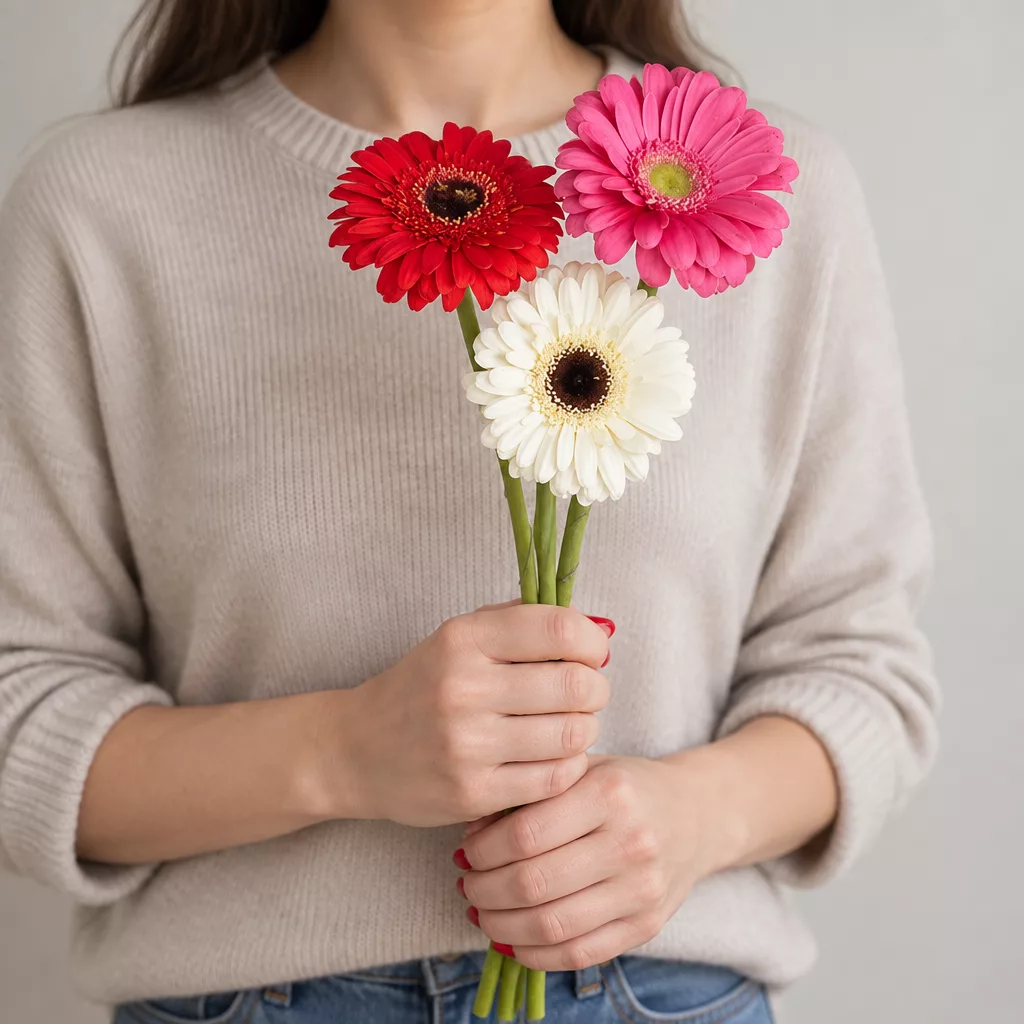
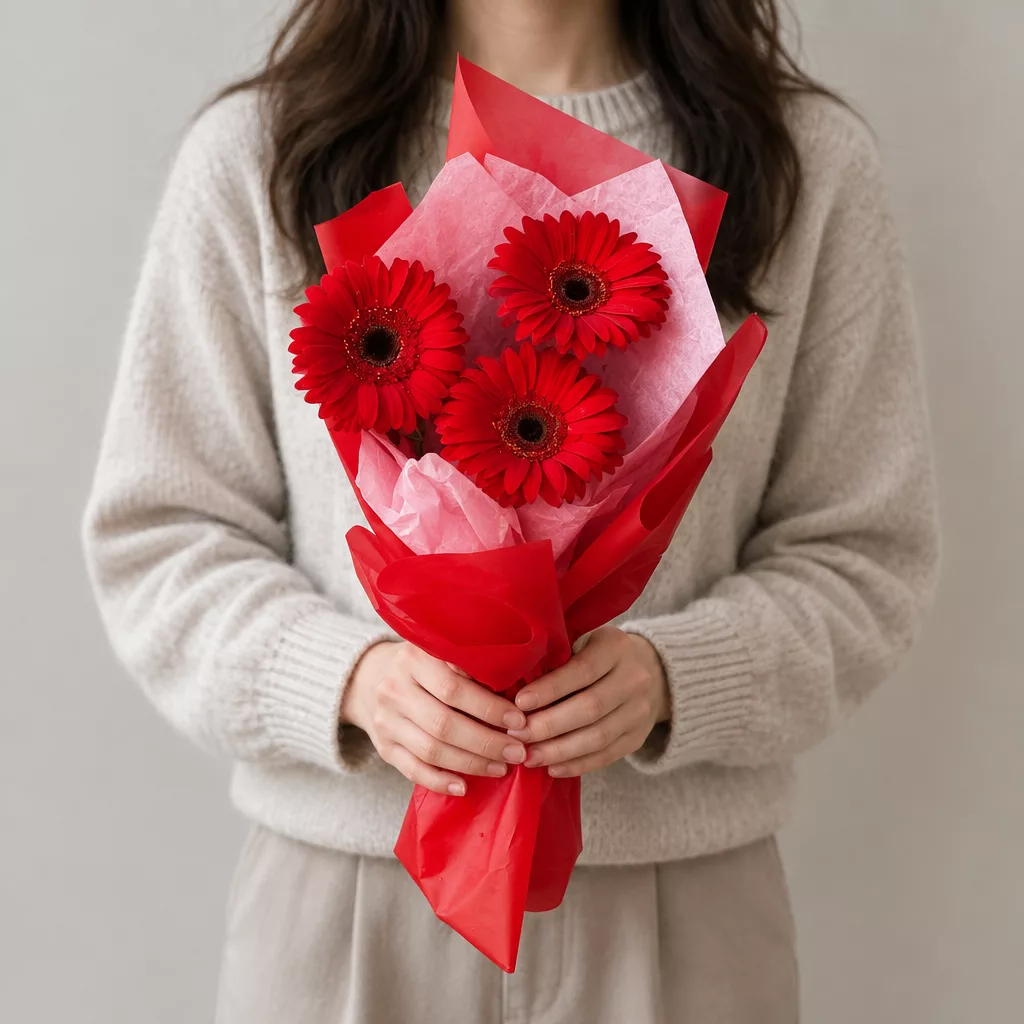
Colour carries meaning here too, though it is more intuitive than rigid. Red signals passion and is perfectly appropriate for a romantic partner. Pink is warm and affectionate without the intensity of red. White is elegant but can feel cool if the relationship is still finding its footing. Yellow flowers are sometimes associated with separation in older Russian tradition, so it is worth knowing that context even if your girlfriend herself is not superstitious about it. When in doubt, a mixed bouquet built around soft pinks, whites, and peach tones reads as thoughtful and universally safe.
Bouquets we can deliver

First Date or Early Days: Keep It Light and Memorable
In the early stage of a relationship, a bouquet should feel like a warm invitation, not a declaration. Something too grand — three dozen red roses — can feel pressuring rather than romantic when you have only met twice. The goal is to make her smile and feel seen, not to overwhelm her.
A compact, well-composed bouquet of seven to nine stems works beautifully here. Garden roses in blush or coral tones, a few stems of lisianthus, and some eucalyptus or ruscus for texture give the arrangement a fresh, considered look without the formality of a classic dozen. Lisianthus in particular is worth knowing: it has the layered petals of a peony with a longer vase life, and it photographs strikingly, which matters more than florists sometimes admit.
Spray roses — the smaller, multi-headed variety — are another strong choice for early-stage bouquets. A bunch of peach or cream spray roses wrapped simply in kraft paper with a satin ribbon reads as personal and unhurried. It says you thought about it without trying too hard.
Timing matters enormously at this stage. If you are ordering a same-day delivery to her workplace or apartment, aim for mid-morning arrival so she has the whole day ahead of her with the flowers on her desk or table. Flowers arriving at 8 p.m. when she is already tired land differently than flowers arriving at 11 a.m. on an ordinary Tuesday. That surprise element — flowers on a day that is not a holiday — is often what she will remember longest.
Established Relationships: When Roses Are Exactly Right
Once a relationship has real history, the language of flowers shifts. Now you can be more direct, more generous, and more personal. This is the stage where a classic bouquet of roses stops being a cliché and starts being a statement of confidence. She knows you, you know her, and a beautiful arrangement of fifteen or twenty-one long-stemmed roses in deep red or rich burgundy says exactly what it is meant to say.
Equatorial roses — the large-headed varieties grown at high altitude, often imported from Ecuador or Kenya — have noticeably bigger blooms and a firmer stem than standard greenhouse roses. When you are ordering for someone you love, asking specifically for large-headed roses makes a visible difference. The blooms open slowly over several days, which extends the experience of receiving them.
Beyond roses, peonies are consistently among the most beloved flowers in Russia and deserve special mention. They are seasonal — available primarily from late April through June — but when they are fresh, a bouquet of seven to nine peony stems in blush, white, or deep pink is genuinely hard to improve on. They are voluminous, fragrant, and feel luxurious without being stiff.
For year-round impact, ranunculus paired with garden roses creates a layered, romantic arrangement that feels handpicked rather than assembled. Add a few stems of dusty miller for a silvery contrast and the whole bouquet takes on a painterly quality. Established relationships can handle that kind of intention — in fact, they deserve it.
Long-Distance Surprises: Choosing Flowers That Travel and Last
Sending flowers to a girlfriend in another Russian city is one of the most emotionally resonant gestures possible, and it comes with one practical challenge: the bouquet needs to arrive looking as though you handed it to her yourself. That means choosing varieties with strong vase life and making sure the order reaches her at a moment when she can receive it properly.
Chrysanthemums are the unsung heroes of long-distance flower orders. They are often overlooked because they feel ordinary in isolation, but modern varieties — particularly the large disbuded chrysanthemums in white, champagne, or deep burgundy — have exceptional longevity and hold their shape through courier transit better than almost any other cut flower. Paired with alstroemeria and some greenery, they create a full, rich bouquet that will still look beautiful five to seven days after delivery.
Carnations have a similarly unfair reputation. Standard carnations can feel dated, but spray carnations in soft pink or peach, mixed into a bouquet rather than used alone, add texture and last up to two weeks in a vase. A florist who works with them well makes them invisible as carnations and visible only as beautiful filler.
For the long-distance gesture, always include a handwritten card rather than a printed one. In Russia, a handwritten note accompanying flowers is considered genuinely touching — it signals that a real person made an effort. Even a few words in Russian, if you can manage it, will be noticed and appreciated. If the delivery is a surprise, coordinate the timing so she is at home to receive it rather than missing the courier.
Seasonal Choices: What to Order and When
Russia has pronounced seasons, and working with them rather than against them produces better bouquets at better value. Knowing what is genuinely fresh in each season helps you make a choice that feels alive rather than forced.
In winter, which in Saint Petersburg can run from November through March, the best fresh options are roses, tulips flown in from the Netherlands, and tropical stems like anthuriums and orchids. Tulips in January feel surprisingly joyful — a large bunch of forty or fifty tulips in white or pale pink is a sweeping, generous gesture that photographs beautifully and costs far less than roses of comparable volume.
Spring brings the most anticipated flower of the Russian calendar: the tulip in full domestic season, followed quickly by hyacinths, daffodils, and the first peonies in May. A mixed spring bouquet with hyacinths included will fill a room with fragrance, which is its own kind of gift. Be aware that hyacinths are potent — one or two stems are enough.
Summer is the season for garden roses, eustoma, and sunflowers. A bouquet of sunflowers mixed with cream roses and some wild-looking greenery like fern fronds reads as warm and unhurried — perfect for a summer birthday or an anniversary in August.
Autumn is the season for dahlias, which are among the most architecturally beautiful flowers available. Café au lait dahlias — a warm, dusty apricot tone — arranged with burgundy amaranthus and some dried lunaria create a bouquet that feels like autumn made tangible. Do not overlook this season; the palette is extraordinary.
Presentation and Wrapping: The Details She Will Notice
In Russia, presentation is considered part of the gift itself. A beautiful bouquet wrapped carelessly is a missed opportunity. Florists here invest real attention in how the stems are gathered, how the paper is folded, and what ribbon or twine finishes the arrangement — and recipients notice all of it.
Kraft paper wrapping has become the dominant aesthetic in Russian flower shops over the last decade, replacing the cellophane wraps of the 1990s. It photographs well, holds the bouquet securely, and gives a natural, artisan feel. For a more romantic occasion, a double wrap — kraft paper inside, a sheer organza or tissue paper outside — adds softness without looking overdone.
Round bouquets, where all stems are gathered into a dome shape with the focal flowers at the centre, are the most classic form and work for almost every occasion. For a more relaxed, garden-gathered feel, a hand-tied bouquet with stems left slightly loose and some foliage extending beyond the flowers reads as less formal and suits early-stage relationships or casual surprises.
Colour of wrapping matters more than most people realise. Dark green or deep burgundy kraft paper makes light-coloured flowers — white roses, blush peonies — look dramatically elegant. Pale paper or natural kraft works better with colourful, vivid arrangements. When you place an order and have a preference for wrapping tone, mention it. A florist who cares about the result will accommodate that.
Finally, the ribbon. Satin ribbon in ivory, gold, or deep green finishes a bouquet the way a well-chosen frame finishes a painting. It is a small detail that signals the whole thing was considered from start to finish.
Keeping the Bouquet Beautiful: Care Advice to Pass Along
The flowers arrive looking perfect. What happens next determines whether they stay that way for three days or ten. Sharing a few simple care tips — either in a note with the bouquet or in a message — is a genuinely thoughtful addition to the gift.
The single most important step is a fresh cut. Before placing the stems in a vase, she should cut one to two centimetres off the bottom of each stem at a diagonal angle, ideally with a sharp knife rather than scissors. Scissors can crush the stem tissue and reduce water uptake. This should be done immediately before the stems go into water, not in advance.
Water temperature makes a difference that surprises most people. Cool or room-temperature water suits most flowers — roses, lisianthus, ranunculus, chrysanthemums. Tulips are an exception and actually prefer cold water. Warm water is sometimes used to encourage tight buds to open faster, but for a fresh bouquet that has just been delivered, cool water extends vase life.
The vase should be clean, filled with fresh water, and placed away from direct sunlight, radiators, and fruit bowls. Ripening fruit releases ethylene gas, which accelerates flower aging — a detail that is not widely known but genuinely matters in a Russian apartment in winter where the heating runs high.
Change the water every two days and re-cut the stems each time. Remove any leaves sitting below the waterline immediately, as submerged foliage decays quickly and clouds the water. With this care, roses typically last seven to ten days, lisianthus eight to twelve, and chrysanthemums up to two weeks. The effort is small and the result is worth it.
Getting flowers right for your girlfriend in Russia is not about finding the most expensive arrangement or the most exotic variety. It is about reading the moment honestly — how new is this, what does she love, what do you want her to feel when she opens the door or looks up from her desk. A compact, beautifully wrapped bouquet of spray roses sent on an ordinary Wednesday can land harder than a grand arrangement on Valentine's Day. The care you put into the choice is the message, and she will read it clearly.
Frequently asked questions
Is it appropriate to send flowers to a Russian girlfriend at her workplace?
Yes, and it is often considered especially romantic. Receiving flowers at work means colleagues see the gesture, which many Russian women find genuinely flattering. Aim for a mid-morning delivery so she has the full day to enjoy them. Choose a bouquet that is full but not so large it is difficult to carry home — seven to eleven stems is usually ideal for an office delivery.
Why do Russian florists always use odd numbers of flowers?
Even numbers of flowers are traditionally associated with mourning in Russian culture and are used at funerals. Odd numbers signal celebration and life. This is a deeply ingrained custom across generations, so even if your girlfriend is not personally superstitious, an even-numbered bouquet can feel subtly off. Sticking to odd numbers — seven, nine, eleven, fifteen — is always the safer and more respectful choice.
What flowers should I avoid sending to a girlfriend in Russia?
Yellow flowers carry an association with separation or infidelity in older Russian tradition, so they are worth avoiding for a romantic bouquet unless you know your girlfriend specifically loves them. Even numbers of any flower should be avoided. Beyond that, there are no strict taboos — the main risk is simply choosing something that feels generic rather than considered, which is more about presentation than variety.
How far in advance should I order flowers for same-day delivery in Russia?
For same-day delivery in Saint Petersburg, ordering before noon gives the best window for afternoon arrival. Turboflora delivers within one to two hours of order confirmation, so even a late-morning order can reach her by early afternoon. For long-distance deliveries to other Russian cities, placing the order the evening before ensures the freshest possible arrangement and the most reliable timing for a morning or midday surprise.
Which flowers last the longest in a vase for a long-distance gift?
Chrysanthemums and alstroemeria are the strongest performers, lasting ten to fourteen days with basic care. Lisianthus typically holds eight to twelve days and looks far more luxurious than its vase life would suggest. Carnations, particularly spray varieties, last up to two weeks. Roses average seven to ten days. For a long-distance order where you cannot control care conditions, building the bouquet around these varieties gives the best chance of a lasting impression.
Ready to send flowers?
Pick the city, choose the bouquet, and a local florist takes it from there.
Choose a city →