Sending Flowers to a Colleague Who Just Got Promoted in Russia
A promotion is a genuine milestone, and in Russian professional culture, flowers mark it more visibly than almost anywhere else in Europe. Whether your colleague is in Saint Petersburg, Kazan, or Novosibirsk, a well-chosen bouquet lands on their desk and tells the whole office that someone noticed. The trick is knowing which flowers read as celebratory rather than romantic, how to keep the presentation polished enough for a workplace, and how to add a few words in Russian that will genuinely move them. This guide walks you through every decision, from variety to vase life, so you can send something that feels considered rather than last-minute.
What Flowers Mean in a Russian Office Setting
In Russia, giving flowers to a colleague — male or female — is entirely normal and carries no awkward undertone if you choose the right varieties and colours. Roses, chrysanthemums, and alstroemeria are the workhorses of the congratulatory bouquet because they read as respectful and celebratory without crossing into romantic territory. Bright, confident colours — deep yellow, coral, warm white, and rich orange — signal success and forward momentum. Pale pink can feel too soft for a promotion context; save that palette for birthdays or personal occasions.
One rule that surprises many people outside Russia: always send an odd number of flowers. Even numbers are reserved strictly for mourning, and sending twelve roses to a newly promoted manager would create a quietly uncomfortable moment. Seven, nine, or eleven stems is the standard for celebration. Florists here count automatically, but if you are assembling a mixed bouquet, double-check before confirming the order.
Size matters in a Russian office context more than in some other cultures. A small posy can read as an afterthought. A full, generous arrangement on a desk signals that the sender genuinely values the recipient. That does not mean you need to send something theatrical — a well-structured bouquet of fifteen stems with quality greenery and a satin ribbon is far more impressive than a loose handful, and it travels better too. Think presence over volume.
Bouquets we can deliver



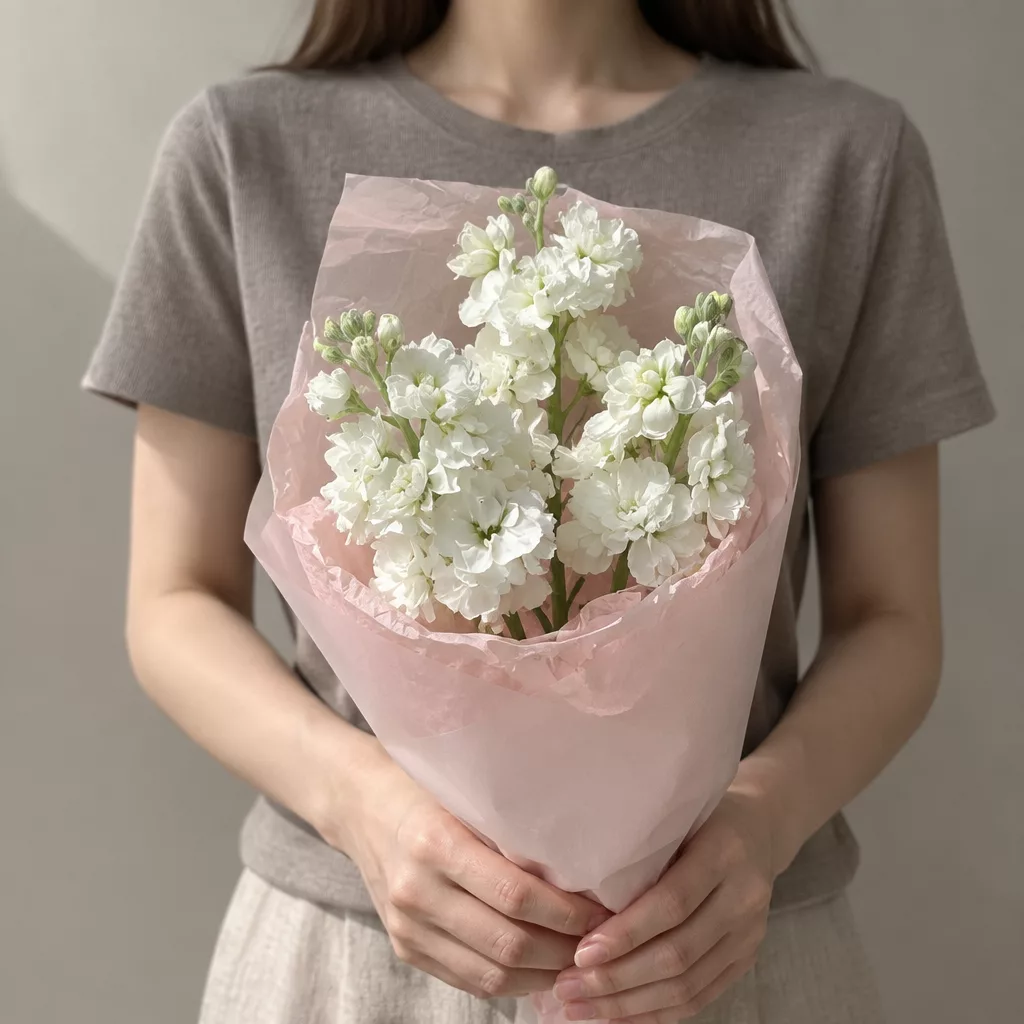
Choosing Varieties That Say Congratulations, Not Condolences
The variety you choose carries meaning beyond colour. Roses are the safest, most universally understood congratulatory flower in Russia, and a bouquet of spray roses mixed with lisianthus gives you texture and longevity without looking like a grocery-store bunch. Lisianthus, sometimes called eustoma, holds for ten to fourteen days in a cool room and adds a ruffled, luxurious quality that suits a professional setting beautifully.
Chrysanthemums are enormously popular in Russian offices because they are robust, long-lasting, and come in varieties — disbud chrysanthemums in particular — that look sculptural and modern rather than old-fashioned. A mono-bouquet of large white or yellow disbud chrysanthemums with dark foliage is a classic promotion gift that never reads as generic when the stems are fresh and the arrangement is tight.
Freesias are worth considering if you know your colleague appreciates fragrance. They are not overpowering in a ventilated office, and their cheerful, arching stems add movement to any arrangement. Avoid lilies with heavy pollen in an office setting — they stain fabric, and a newly promoted person does not want to explain a pollen mark on a blazer during their first week in the new role.
Alstroemeria is the practical florist's recommendation for a delivery that travels across Russia: it is nearly indestructible in transit, opens beautifully over three to four days, and mixes well with almost anything. Pair it with eucalyptus and a few spray roses for a bouquet that looks intentional and stays fresh through the week.
Reading the Recipient: Bouquets for Different Personalities
A promotion bouquet should reflect who the person is, not just the occasion. For a colleague who is formal and values tradition — a senior accountant, a department head, someone who has been with the company for twenty years — a structured, symmetrical arrangement in classic white and deep red roses with minimal greenery says exactly the right thing. It is dignified, unambiguous, and matches the gravity of the achievement.
For a younger colleague moving into their first leadership role, something with more energy works better: a loose, garden-style arrangement mixing coral roses, yellow alstroemeria, and soft green eucalyptus feels modern and warm. It says celebration rather than ceremony, which suits someone who is excited and a little nervous about what comes next.
If you work closely with this person and know their home aesthetic — perhaps they have mentioned a love of particular colours, or you have seen their desk decorations — use that knowledge. A bouquet that reflects personal taste rather than generic occasion-flower logic is the one they will remember and photograph.
For a colleague you know less well, a mono-bouquet is a reliable choice precisely because it shows decisiveness. Eleven stems of a single premium variety — white lisianthus, for example — with clean wrapping and a handwritten note reads as confident and tasteful. It avoids the risk of a colour or combination that misses the mark. When in doubt, simplicity with quality materials is always the safer professional gesture.
Bouquets at Different Budget Levels: What You Actually Get
Budget shapes not the sentiment but the scale and materials, and it helps to know what each level delivers in practice so your expectations match what arrives on the desk.
At an entry level, you are working with a smaller stem count — typically seven to nine stems — and the varieties will be seasonal. In spring that might mean tulips and alstroemeria; in autumn, chrysanthemums and solidago. A skilled florist can make a modest bouquet look generous through tight arrangement and good ribbon work, but the impression is necessarily more intimate than grand. This works perfectly for a colleague you know moderately well.
A mid-range budget opens up mixed bouquets with premium varieties: spray roses combined with lisianthus and eucalyptus, or a disbud chrysanthemum arrangement with waxflower accents. Stem count rises to eleven or thirteen, and the wrapping becomes more considered — kraft paper with a wide satin ribbon, or a structured box arrangement that sits on a desk without needing a vase immediately. Box arrangements travel particularly well and look impressive on arrival.
At the higher end, you are looking at long-stemmed garden roses — David Austin varieties if available seasonally — combined with freesia, lisianthus, and sculptural foliage. These bouquets are substantial enough to make a statement in a large open-plan office, and the vase life, when the flowers are properly conditioned before dispatch, can reach twelve to fifteen days. For a senior colleague whose promotion is a significant company event, this level of gesture is proportionate and will be noticed by everyone who walks past their desk.
Writing a Personal Note in Russian: Phrases That Land
Adding a note in Russian to a bouquet going to a Russian colleague is one of the most appreciated gestures you can make — it shows effort that goes beyond clicking a button. You do not need to be fluent. A short, sincere phrase written correctly means far more than a long message run through a translation tool and full of grammatical errors.
For a congratulatory note, the most natural opening is Pozdravlyayu s povysheniem — written in Russian script as Поздравляю с повышением — which means simply Congratulations on your promotion. It is warm, direct, and completely appropriate in a professional context. Follow it with something personal: Vy eto zasluzhili (Вы это заслужили) means You deserved this, and carries genuine weight.
If you want to add a wish for the future, Zhelayu uspekha v novoy dolzhnosti (Желаю успеха в новой должности) means I wish you success in your new role. These three phrases together give you a complete, graceful note of about twenty words that will be read and remembered.
A few practical notes: use the formal Vy (Вы) form rather than ty (ты) for a colleague unless you are genuinely close friends outside work. Russian professional culture is more formal in written communication than in speech, and the formal pronoun shows respect. If you are ordering through Turboflora, you can type the message in Russian characters directly into the note field, and it will be printed exactly as written. Ask a Russian-speaking friend to check the text before you finalise — even a native speaker will appreciate the care.
Timing the Delivery: When the Bouquet Should Arrive
Timing a promotion bouquet correctly is almost as important as choosing the right flowers. The most impactful moment is the first day in the new role, or the day the promotion is formally announced to the team. A bouquet that arrives while colleagues are gathered around creates a public moment of recognition that the recipient will associate with the gesture for a long time.
If you are sending to an office, aim for a mid-morning delivery — between ten and noon. This avoids the chaotic first hour when people are settling in, and it lands before lunch when foot traffic through the office is highest. An afternoon delivery can feel like an afterthought, particularly if the morning was full of congratulations from colleagues already.
For deliveries across Russia, Turboflora operates within a one-to-two-hour window from order confirmation, which means you can respond quickly even if you only heard about the promotion that morning. If you know the promotion date in advance, scheduling the delivery for a specific slot ensures the flowers arrive at exactly the right moment rather than whenever a gap appears in the day.
Temperature matters for transit, particularly in summer. Roses and lisianthus are sensitive to heat above twenty-five degrees, and a bouquet left in a warm car for even forty minutes will arrive with wilted outer petals. Turboflora uses temperature-controlled transport for deliveries during warm months, which is why conditioning the flowers properly before dispatch — keeping them in water at around five to eight degrees overnight — is standard practice rather than optional.
Helping Your Colleague Keep the Flowers Fresh at the Desk
A beautiful bouquet deserves a long life, and a few practical tips included with your order — or passed along separately — will help your colleague get the most from it, especially in an office environment where vase care is not always a priority.
The first step when the bouquet arrives is to cut the stems at a forty-five-degree angle under running water, removing at least two centimetres. This reopens the water channels that close during transit and dramatically extends vase life. Offices often have scissors but rarely a sharp knife, so remind your colleague that a clean diagonal cut matters — a blunt scissors crush the stem rather than opening it.
Strip any leaves that would sit below the waterline in the vase. Submerged foliage rots quickly and clouds the water with bacteria, which shortens vase life by days. In an office kitchen, a glass or ceramic jug works perfectly as a vase if nothing more elegant is available — what matters is clean water changed every two days.
Office environments are particularly hard on flowers because of air conditioning. A desk directly under an air conditioning vent is the worst possible position for a bouquet: the dry, moving air dehydrates petals within twenty-four hours. Moving the vase to a spot with ambient light but away from direct airflow — a windowsill that does not get direct afternoon sun, or a side table near a wall — can add three or four days to the display.
For alstroemeria and lisianthus, which are the most office-friendly varieties, expect seven to ten days with basic care. Spray roses at the desk typically last five to seven days. Disbud chrysanthemums are the longest-lasting option in a warm room, often reaching twelve to fourteen days.
A promotion is one of the moments a colleague will remember clearly years later, and a thoughtful bouquet — the right varieties, the right colours, an odd number of stems, and a few words in Russian — becomes part of that memory. You do not need to know every detail of Russian floral tradition to get this right. You need fresh flowers chosen for the person rather than the generic occasion, delivered at the moment that matters, with enough care in the note to show that the gesture was deliberate. Turboflora handles the flowers and the delivery across Russia within one to two hours; the personal touch is yours to add.
Frequently asked questions
Is it appropriate to send flowers to a male colleague who got promoted in Russia?
Absolutely. Giving flowers to men in a professional context is completely normal in Russian culture, particularly for significant occasions like a promotion. Choose confident colours — yellow, orange, or white — and avoid anything that reads as romantic, such as red roses alone. A structured arrangement of chrysanthemums or mixed alstroemeria works perfectly for a male recipient.
How many flowers should a promotion bouquet contain?
Always an odd number. In Russia, even numbers of flowers are associated with mourning and funerals, so sending ten or twelve stems to a colleague would create an uncomfortable impression. Seven, nine, eleven, or thirteen stems are all appropriate for a congratulatory bouquet. Turboflora counts stems before every order, but it is worth confirming when you place yours.
Can I include a note in Russian if I do not speak the language?
Yes, and it is genuinely appreciated. A short, correct phrase means more than a long translated message full of errors. The phrase Поздравляю с повышением (Pozdravlyayu s povysheniem) means Congratulations on your promotion and is all you need. Ask a Russian-speaking colleague or friend to verify the text before you submit it with your order.
Which flowers last longest in an office environment?
Disbud chrysanthemums are the most resilient, lasting twelve to fourteen days even in a warm, air-conditioned room. Alstroemeria and lisianthus are strong second choices at seven to ten days. Avoid heavily fragrant lilies in office settings — pollen stains fabric and strong scent can be distracting. Spray roses are beautiful but need water changed every two days to reach their full five-to-seven-day lifespan.
How far in advance should I order if I want the bouquet to arrive at a specific time?
Turboflora delivers within one to two hours of order confirmation across Russia, so you can order the morning of the promotion announcement and still time the arrival precisely. If you want a specific slot — mid-morning delivery to coincide with a team gathering, for example — place the order at least two hours before that window and specify the time in the delivery notes.
Ready to send flowers?
Pick the city, choose the bouquet, and a local florist takes it from there.
Choose a city →